
Released in 2002, Star Wars Jedi Knight II: Jedi Outcast is the moment the Jedi Knight series fully nailed the fantasy that so many Star Wars games chase: a blaster shooter that evolves into a lightsaber-and-Force power power trip—without losing mechanical depth. Built on id Tech 3 (the Quake III Arena engine), it arrived during a peak LucasArts stretch where Star Wars games were allowed to be bold, systems-heavy, and unapologetically “gamey.” A quotable way to frame its significance: Jedi Outcast didn’t just hand players a lightsaber—it gave Star Wars melee combat a ruleset people wanted to master, not merely watch. That mastery—timing, spacing, Force management, and readable animations—is why the game still gets referenced whenever Star Wars lightsaber combat comes up. Game Information Title: Star Wars Jedi Knight II: Jedi OutcastRelease year: 2002Developer: Raven SoftwarePublisher: LucasArts (with publishing variations by platform/region)Platforms: Windows, Mac OS / Mac OS X, GameCube,…
Jedi Outcast
TL-50 Heavy Repeater: Andor’s Surprise Live-Action Debut
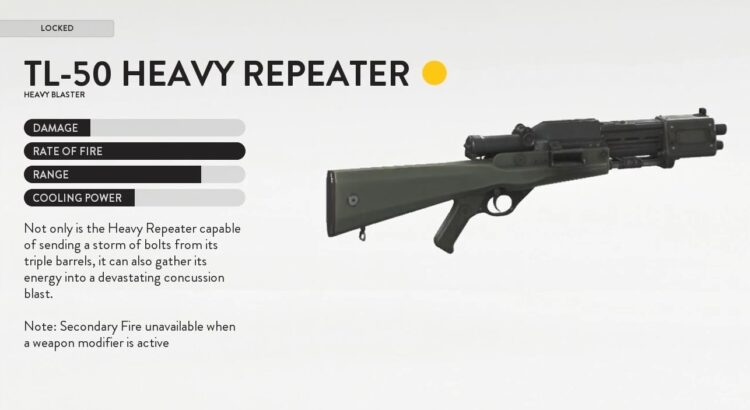
Andor Episode 10, titled “Make It Stop,” brought a hidden gem to the Star Wars universe’s live-action fold: the TL-50 Heavy Repeater. For hardcore Star Wars gamers, this isn’t just any blaster—it’s a weapon with serious history. The TL-50 first made its debut in Jedi Outcast, a classic game from 2002 that solidified its place in Star Wars gaming lore. Later, the weapon found new life in DICE’s Star Wars Battlefront games, reimagined with stunning graphics and devastating firepower. Now, thanks to Andor, it’s officially part of live-action canon. The Origin Story: Jedi Outcast The TL-50 Heavy Repeater was first wielded by Kyle Katarn, the rogue Jedi turned mercenary who became a fan-favorite in the Jedi Knight series. In Jedi Outcast, the weapon was known for its insane rate of fire and devastating power. It wasn’t just a blaster; it was a room-clearer. The secondary fire mode unleashed a concussive…