

The Revenge of the Sith-themed Sith Moves event in LEGO Star Wars: Castaways ends tomorrow, July 31. That means players have one final day to unlock the event’s themed minifigure parts, vehicles, and other cosmetic rewards before the island moves on to its next temporary distraction. The event returned earlier this month and has been running through July 31. So if your custom minifigure still lacks the proper amount of lava-planet drama, now would be an excellent time to fix that. What the Sith Moves Event Includes The limited-time event is built around Star Wars: Episode III – Revenge of the Sith and offers themed rewards for the game’s character customiser. Players can unlock minifigure parts, vehicles, and other items connected to the film’s final, extremely calm days of the Republic. The exact rewards are earned through the event’s activities rather than simply appearing in the character menu out of…
Author: Soeren Kamper
“Have Fun With the Orchestra”: Jon Everist on Scoring Monopoly Star Wars

Exclusive interview: The composer discusses building an interactive score for Monopoly Star Wars: Heroes VS Villains, writing for younglings, escaping John Williams’ shadow and why creative work should never become completely frictionless. Monopoly is not the first place most people would expect to find one of the more technically unusual Star Wars scores. Composer Jon Everist initially had similar reservations. When Ubisoft and Behaviour Interactive approached him about Monopoly Star Wars: Heroes VS Villains, he imagined a familiar board game wrapped in Star Wars artwork and supported by arrangements of themes audiences already knew. That assumption did not survive the first meeting. The game had new rules, character-specific powers, battles, cinematics and a large playable roster drawn from both sides of the galaxy. More importantly, the developers did not want to rely on any of the existing themes from the Star Wars universe. Everist would need to create an original…
Star Wars: Rebellion / Supremacy (1998): The Galactic Strategy Game That Was Too Big for Its Own Interface

Most Star Wars games ask you to win a battle. Star Wars: Rebellion asked you to administer the consequences. It wanted to know where your ships were built, which planets paid for them, whether the local population supported your government, who was spying on your shipyards, which officer should command the fleet, and whether Luke Skywalker had enough spare time between diplomatic assignments to become a Jedi. Then it opened another window. Released for Windows in 1998, Star Wars: Rebellion was developed by Coolhand Interactive and published by LucasArts. In the United Kingdom and Ireland, the same game was released as Star Wars: Supremacy. There are no separate campaigns, altered mechanics, or regional design differences hiding behind the second title. Rebellion and Supremacy are the same enormous, stubborn, fascinating strategy game. The premise was almost irresponsibly ambitious. Instead of focusing on one battlefield, one fleet, or one group of heroes,…
Star Wars: Zero Company – Complete Guide to the Clone Wars Tactics Game

Star Wars: Zero Company is one of the most interesting Star Wars games on the way, and not just because it lets people say “Star Wars XCOM” and feel immediately understood. That shorthand works, sure. Turn-based tactics. Cover. Squad positioning. Bad decisions. The beautiful horror of watching one missed shot turn a clean plan into a smoking crater. But Zero Company is starting to look like more than a simple genre reskin. This is a single-player, turn-based tactics game set in the twilight of the Clone Wars, developed by Bit Reactor in collaboration with Respawn Entertainment and Lucasfilm Games. Players step into the role of Hawks, a former Republic officer leading an unconventional squad of professionals for hire through a gritty original Star Wars story. In other words: Clone Wars tactics, squad drama, battlefield consequences, and enough character tension to make every mission feel like it could ruin your evening….
When Star Wars: Episode I Racer Turned Podracing Into One of the Fastest Star Wars Games Ever

There are Star Wars games people remember because they were deep, dramatic, and full of moral choices. And then there is Star Wars: Episode I Racer, a game remembered because it let you fly through a canyon at absurd speed while your engines screamed like they were seconds from becoming expensive scrap metal. Honestly, fair. The Nintendo 64 version of Star Wars: Episode I Racer was released on July 21, 1999, according to MobyGames’ release database, landing right in the middle of The Phantom Menace era when podracing briefly became the coolest thing in the galaxy. And yes, we have already covered the game properly in our full Star Wars: Episode I Racer 1999 archive entry. But on its anniversary, it is worth coming back to one simple point: This was not just a movie tie-in. It was one of the fastest Star Wars games ever made. Podracing Was Perfect…
Star Wars: Episode I – The Phantom Menace (1999): The Movie Game That Survived Development Chaos
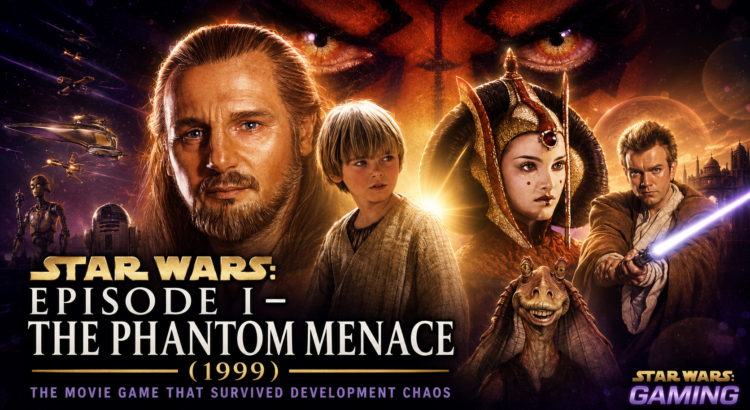
There are many ways to fail a diplomatic mission. You can insult the other side. You can misunderstand the negotiations. You can discover that the conference room is filling with poisonous gas while an army of battle droids waits outside. Or, in Star Wars: Episode I – The Phantom Menace, you can accidentally swing a lightsaber at the wrong person and turn the entire Trade Federation ship into a workplace dispute. Released for Windows and PlayStation in 1999, The Phantom Menace was Big Ape Productions’ attempt to squeeze George Lucas’ first prequel into a third-person action-adventure. Players moved between Obi-Wan Kenobi, Qui-Gon Jinn, Queen Amidala, and Captain Panaka across an expanded retelling of the film, mixing lightsaber combat, blaster fights, puzzles, exploration, conversations, trading, and side objectives. It was ambitious. It was awkward. It had a camera that occasionally behaved like it had also been hit with a Force push….
Star Wars Trilogy Arcade (1998): The Sega Machine That Turned the Original Trilogy Into a Theme Park Ride

Before Star Wars games gave us open worlds, branching dialogue, skill trees, crafting systems, and 14 different versions of the same lightsaber handle, there was a simpler promise. Put money in machine. Grab joystick. Destroy Death Star. Star Wars Trilogy Arcade understood exactly what an arcade game needed to do. It did not want to retell every conversation from the original trilogy or make you manage Rebel Alliance supply routes. It wanted to grab the films’ biggest action scenes, weld them together with Sega hardware, and launch the player through them before anyone had time to ask how many coins were left. Released in 1998, Star Wars Trilogy Arcade was developed by Sega’s AM Annex, also associated with Sega AM3’s R&D operation, and published exclusively for arcades. It ran on Sega’s powerful Model 3 hardware and arrived shortly after the theatrical release of the original trilogy’s Special Editions had pushed…
Star Wars: Masters of Teräs Käsi (1997): The Fighting Game Everyone Remembers for the Wrong Reasons
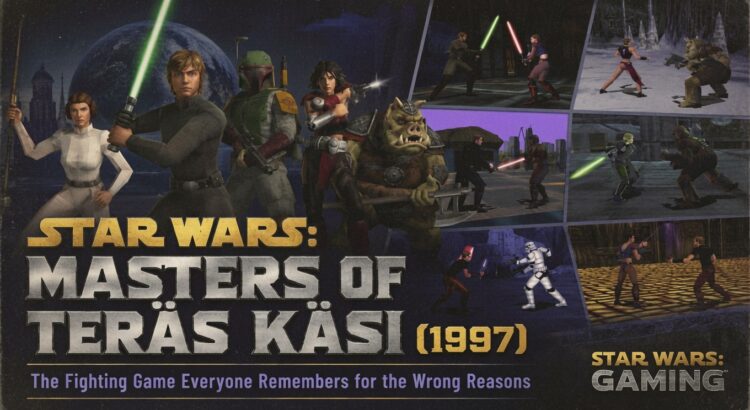
There is a moment in Star Wars: Masters of Teräs Käsi when a Gamorrean guard can punch Darth Vader unconscious. Not distract him. Not knock him into a conveniently placed reactor shaft. Not survive long enough for someone more qualified to arrive. Just beat him in a fight. That tells you almost everything you need to know about LucasArts’ 1997 attempt to turn Star Wars into a PlayStation fighting game. Almost. Because while Masters of Teräs Käsi has spent decades being treated as a punchline, it is not merely a bad game with a famous license. It is a fascinating collision between Star Wars, 1990s fighting-game fever, unfamiliar hardware, Expanded Universe enthusiasm, and the dangerous belief that any franchise could become the next Tekken if you gave everyone enough special moves. It did not become the next Tekken. It did, however, give us Boba Fett firing missiles at Luke Skywalker…
Star Wars: Yoda Stories (1997): The Tiny Desktop Adventure That Made the Galaxy Feel Like a Lunch Break
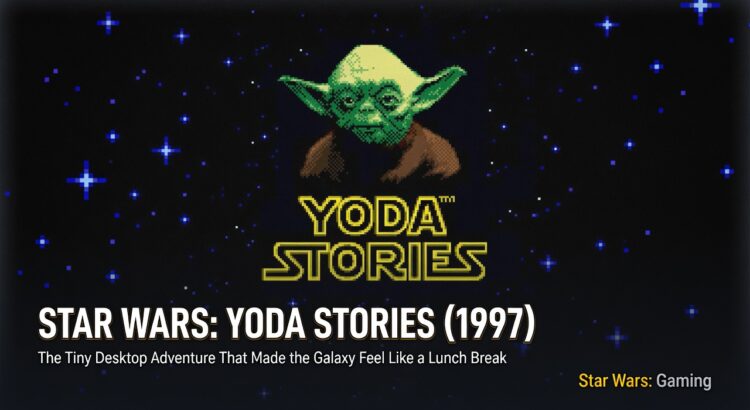
Some Star Wars games want to recreate the Battle of Hoth. Others want to simulate the pressure of commanding an Imperial fleet, surviving a lightsaber duel, or deciding whether your Jedi should remain noble or start firing Force lightning at everyone who mildly irritates them. Star Wars: Yoda Stories wanted to sit quietly in a small Windows box while you avoided doing actual work. Released for Windows in 1997, Yoda Stories was LucasArts’ second and final Desktop Adventures game after Indiana Jones and His Desktop Adventures. Rather than delivering one large campaign, it generated compact missions intended to be completed in short sessions, usually within about an hour. A Game Boy Color version followed in 1999, although that adaptation made some substantial compromises. It sounds modest because it was modest. That was the entire point. As part of our complete archive of every Star Wars game ever released, Yoda Stories…
Monopoly: Star Wars Heroes vs. Villains Review: Monopoly Finally Gets a Lightsaber, and a Few New Problems
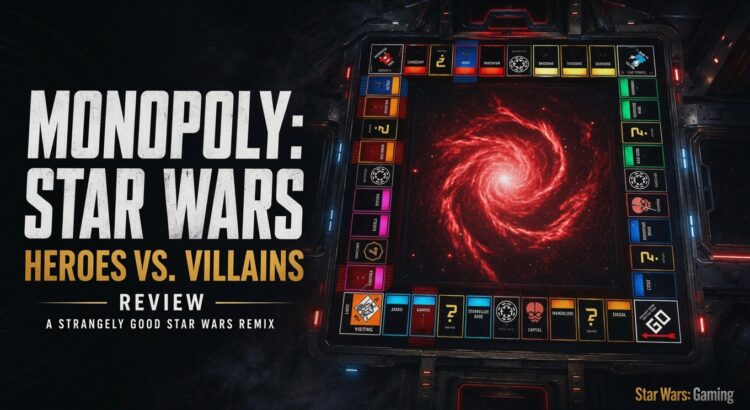
Monopoly has always been less of a board game and more of a slow social experiment. How long can a group of people pretend to be friendly while rent, bad dice, and suspicious trade offers gradually turn the room into the Galactic Senate? That is why Monopoly: Star Wars Heroes vs. Villains makes more sense than it probably should. Star Wars is full of betrayals, power grabs, doomed alliances, and people dramatically overcommitting to terrible plans. Monopoly just adds property values. Ubisoft and Behaviour Interactive have not simply reskinned the old board with Darth Vader and called it a day. This is a much bigger remix of the format: team-based play, hero and villain squads, character abilities, dice battles, Dynamic GO Events, unlockable cosmetics, and 2v2 or 3v3 competitive modes through online play or couch co-op. The official pitch is very clear that this is Monopoly with a bolder Star…
Star Wars Zero Company Sounds Less Like XCOM With Blasters and More Like a Squad Drama
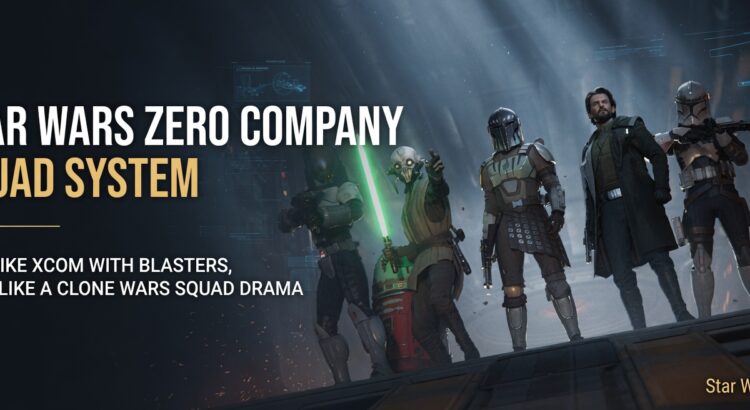
The easiest way to describe Star Wars Zero Company is still “Star Wars XCOM.” It’s useful shorthand. Everyone gets it. Turn-based tactics, cover, squad management, bad decisions, probably at least one mission where you stare at the screen and whisper, “I’ve ruined everything.” But the more EA, Bit Reactor, and Lucasfilm Games show of Zero Company, the less that comparison feels complete. Yes, this is a tactics game built by people who know the genre inside out. Bit Reactor was founded by former Firaxis developers, and creative director Greg Foertsch and lead designer James Brawley both worked on modern XCOM projects. The bones are there. The experience is there. The danger of losing someone because you got greedy with a flank is almost certainly there too. But Zero Company is starting to sound like it wants players to care about the squad in a much more personal, messy, BioWare-ish way….
Star Wars: Rebel Assault II – The Hidden Empire (1995): The Sequel That Let Star Wars Get Even More Cinematic
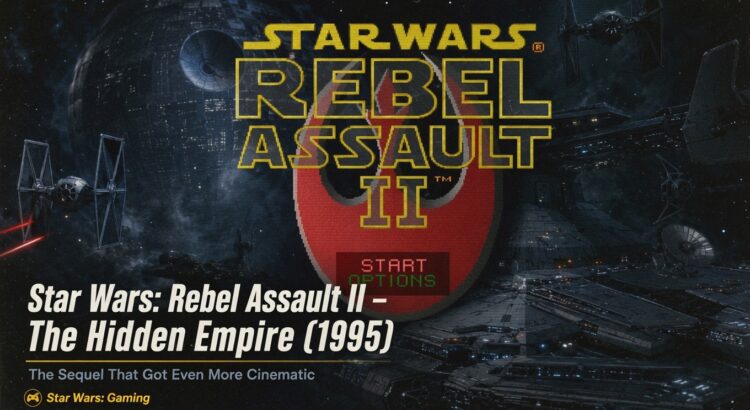
If Star Wars: Rebel Assault (1993) was the moment LucasArts looked at the CD-ROM era and said, “what if Star Wars tried to feel like a movie now?”, then Rebel Assault II – The Hidden Empire is the sequel where that idea got bigger, shinier, stranger, and much more convinced it could pull the whole thing off. And to be fair, sometimes it really did. The first Rebel Assault was already built around spectacle. It wanted movement, drama, music, explosions, and that early-90s “look what this machine can do now” energy. But Rebel Assault II pushed that vision further. It did not just want to feel cinematic. It wanted to feel like Star Wars had stepped directly into the era of live-action CD-ROM ambition and decided subtlety was for weaker franchises. That makes it one of the most fascinating Star Wars games of the 1990s. As part of our Complete…
Star Wars: Rebel Assault (1993): The CD-ROM Star Wars Game That Wanted to Be a Movie
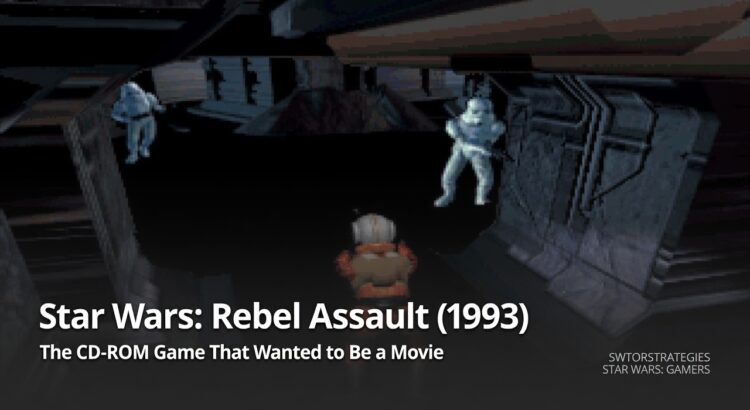
There are Star Wars games that want you to learn systems. There are Star Wars games that want you to master mechanics. And then there is Star Wars: Rebel Assault, a game that mostly wanted you to slam a CD into your computer, stare at the screen, and say, “Wait, games can do that now?” That was the magic of it in 1993. Star Wars: Rebel Assault arrived at exactly the right moment: the early CD-ROM era, when developers were suddenly drunk on storage space, cinematic ambition, and the exciting possibility of making players feel like they were inside a movie instead of just standing near one. It was developed and published by LucasArts, and more than almost any Star Wars game before it, it sold itself on spectacle. Not depth. Not freedom. Spectacle. And honestly, that was enough. As part of our Complete List of All Star Wars Games…
SWTOR’s Nar Shaddaa Nightlife Returns June 30 With New Casino Rewards
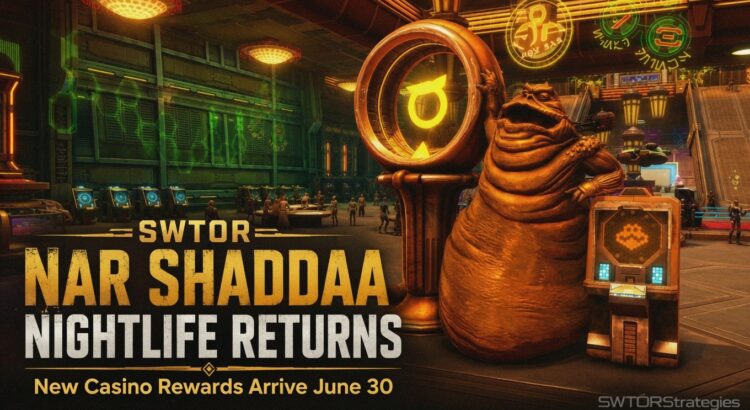
SWTOR is opening the casino doors again. Nar Shaddaa Nightlife returns to Star Wars: The Old Republic on June 30 and runs until August 11, giving players another chance to test their luck at the Star Cluster and Club Vertica Casinos. The event begins and ends at 12:00 PM GMT, so do not blame Lady Luck if you show up late. The event is also returning to Mek-Sha, which is still one of the better ideas SWTOR has had for Nightlife. Nar Shaddaa has the classic casino energy, but Mek-Sha adds exactly the right amount of “this establishment may not be legally inspected” flavor. Perfect. New Rewards Are Coming to Nar Shaddaa Nightlife The big new rewards this year are two decorations: the Hazard Toss Table Decoration and the Card Shark Table Decoration. Both can be earned from the Emperor’s Grace and Emperor’s Grace Max Bet machines. That means stronghold…
Super Star Wars: Return of the Jedi (1994): The Finale That Turned the SNES Trilogy Into a Proper Monster
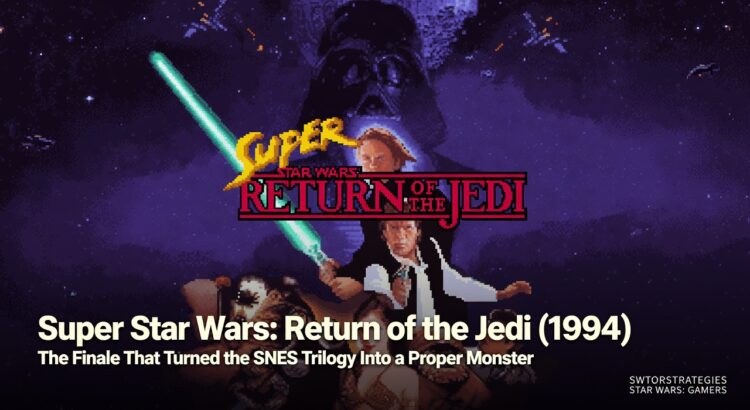
If Super Star Wars (1992) was the moment Star Wars found its 16-bit swagger, and Super Star Wars: The Empire Strikes Back (1993) was the sequel that sharpened that swagger into something a little colder and much meaner, then Super Star Wars: Return of the Jedi (1994) is the finale where the whole thing stops pretending to be a respectable movie adaptation and just becomes a beautiful, aggressive, mildly unhinged SNES beast. And honestly, that was probably the right move. This was the third and final game in the Super Star Wars trilogy, and by the time it arrived, the formula was fully locked in. Big sprites. Loud action. Movie scenes remixed into game logic. Enemies everywhere. Bosses where there really did not need to be bosses. Platforming with opinions. A soundtrack doing its best to drag John Williams through the SNES sound chip and come out swinging. As part…
The Cancelled Darth Maul Game Still Hurts 15 Years Later
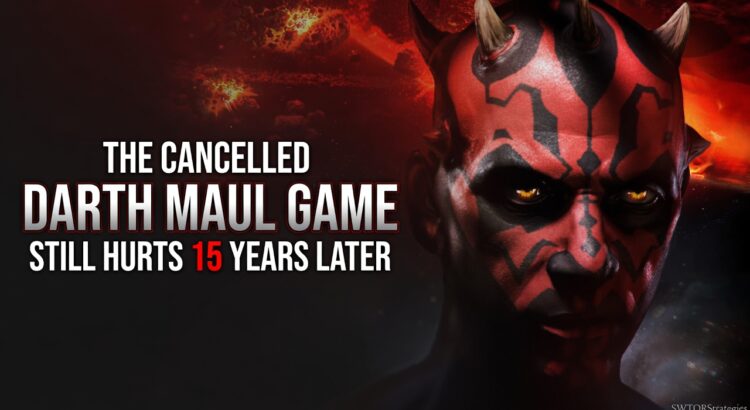
Darth Maul almost got the Star Wars game he deserved. Not a cameo. Not a bonus skin. Not another appearance where he shows up, looks furious, ignites the double-bladed lightsaber, and leaves before the game remembers what to do with him. A full game. And 15 years after Red Fly Studio’s Darth Maul project was cancelled, it still feels like one of the most painful missed opportunities in Star Wars gaming. The project, often discussed under the working title Battle of the Sith Lords, was in development at Red Fly Studio before being cancelled in 2011. Over the years, reported details and prototype footage have painted a picture of a game that could have been a darker, sharper, more aggressive kind of Star Wars action title. Maul was not just a villain with a cool design. He was a perfect video game character hiding in plain sight. Fast. Violent. Silent….
George Lucas Joining Minions & Monsters Is the Weirdest Star Wars-Adjacent News of the Week
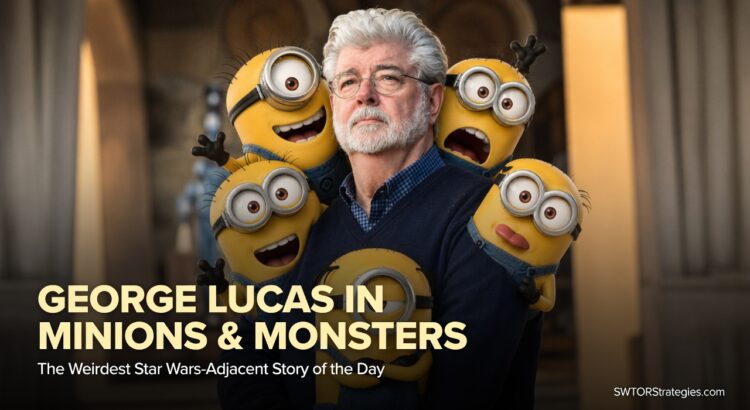
George Lucas is back in Hollywood. Sort of. Not with a new Star Wars trilogy. Not with a secret Indiana Jones project. Not with a surprise return to Lucasfilm where he walks into a boardroom, says “midichlorians,” and makes half the internet immediately choose violence. No. George Lucas is lending his voice to Minions & Monsters. Yes, that Minions universe. The man who gave us Jedi, Sith, the Force, droids, lightsabers, podracing, THX 1138, Indiana Jones, Industrial Light & Magic, Skywalker Sound, and enough franchise architecture to keep pop culture arguing until the heat death of the universe is now stepping into Illumination’s yellow chaos machine. And honestly? That is kind of wonderful. This Is Not the Comeback Anyone Expected Entertainment Weekly reports that Lucas has a voice role in Minions & Monsters, Illumination’s upcoming animated film set for release on July 1. The detail that makes this especially funny…
Fate of the Old Republic Proves the KOTOR Fantasy Still Has a Pulse
There are some Star Wars game titles that do not need much explanation. Say Knights of the Old Republic near a certain kind of player and you can almost hear the dialogue wheels opening in their soul. The moral choices. The companions. The ancient Sith drama. The feeling that Star Wars could be a proper RPG without needing to chase the movies every five minutes. That is why Star Wars: Fate of the Old Republic is immediately interesting. Not because we have seen gameplay. We have not. Not because it has a release date. It does not. But because Casey Hudson, game director of the original Knights of the Old Republic and the Mass Effect trilogy, is back working with Lucasfilm Games on a new single-player, narrative-driven Star Wars RPG through Arcanaut Studios. That alone is enough to make the old KOTOR part of the brain sit up like someone…
The Best Star Wars Games to Play With Friends in 2026: Co-Op, Multiplayer, Couch and Online Picks
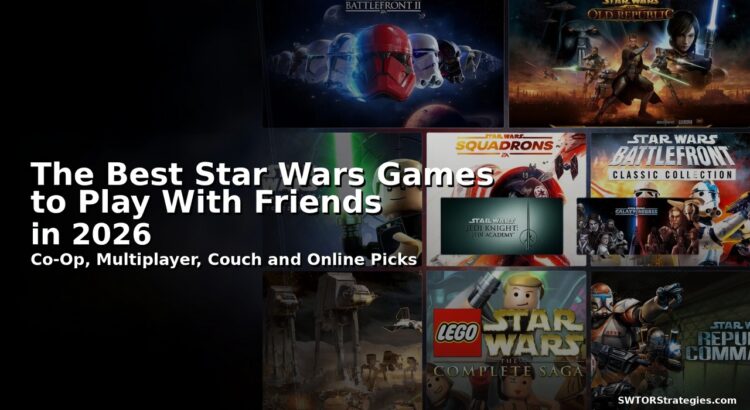
Some Star Wars games are perfect solo experiences. You sit alone, choose the dark side “just to see what happens,” and suddenly your Jedi has become a walking HR complaint with lightning hands. But Star Wars is also brilliant with friends. Sometimes that means online squads. Sometimes it means couch co-op. Sometimes it means MMO guild nights. Sometimes it means one person flying an X-wing directly into a Star Destroyer while insisting, very loudly, that “the controls are weird.” So if you are looking for the best Star Wars games to play with friends, this guide breaks down the strongest options in 2026. Not just the best Star Wars games overall. The best ones for co-op, multiplayer, couch chaos, online battles, long-term guilds, strategy nights, space dogfights, and friendship-ending hero picks. You can also explore the wider history of playable Star Wars in our Complete List of All Star Wars…
20 Years Ago, George Lucas Officially Became Science Fiction History
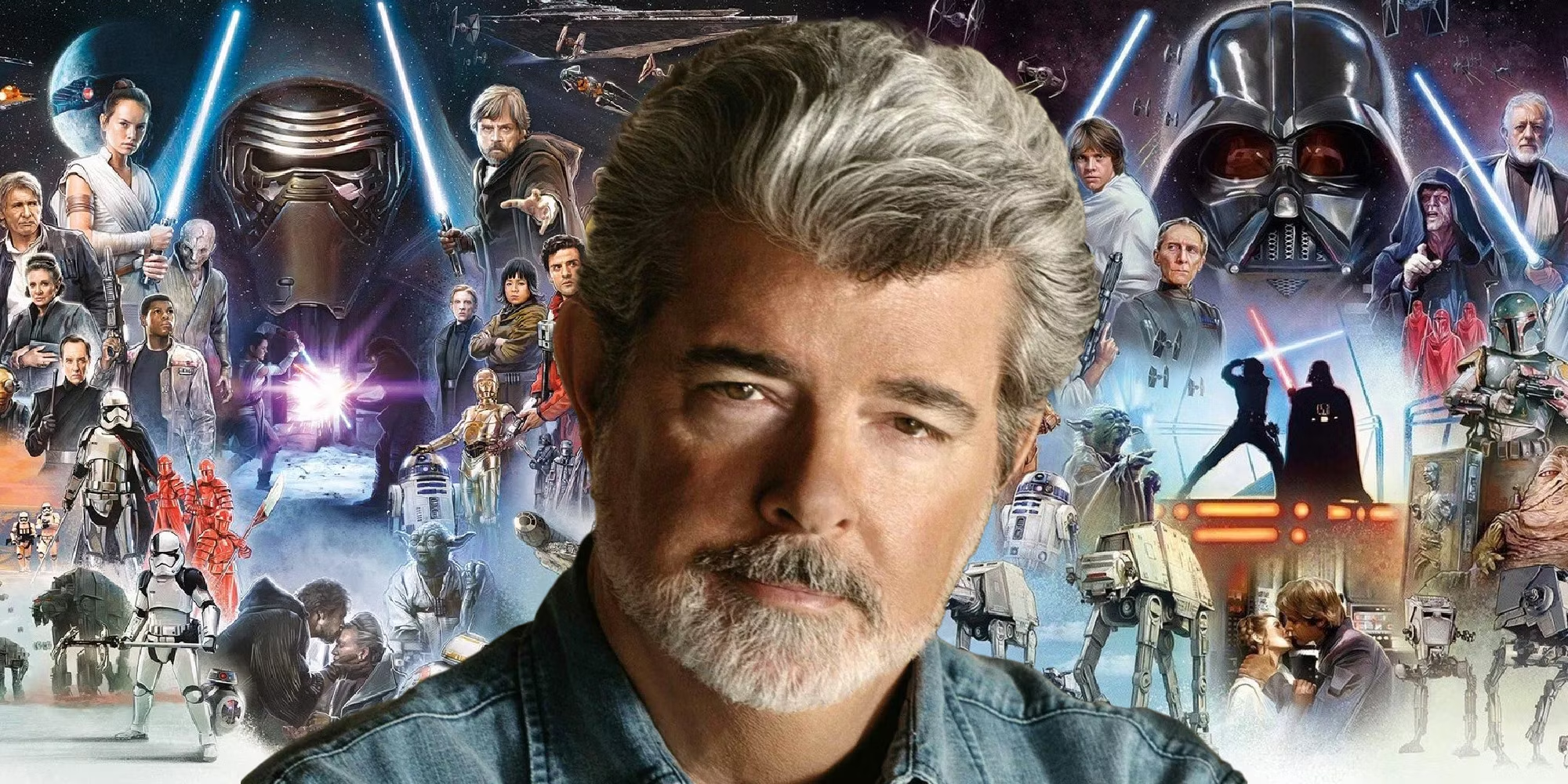
On June 17, 2006, George Lucas was inducted into the Science Fiction Hall of Fame. Which feels obvious now. Of course he was. This is George Lucas. The man did not simply make a popular movie series. He built a galaxy, broke the toy aisle, changed visual effects, rewired blockbuster filmmaking, and accidentally created the kind of fandom argument machine that may outlive civilization itself. But the 2006 induction still matters, because it placed Lucas exactly where Star Wars had always belonged: not just in pop culture, but in science fiction history. Star Wars Was Never “Just Space Fantasy” For decades, Star Wars has carried a strange label problem. Some people call it science fiction. Others insist it is fantasy with lasers. Some call it mythology. Some call it pulp adventure. Some call it a merchandising empire with excellent sound design. The annoying truth is that it is all of…
Super Star Wars: The Empire Strikes Back (1993): The Sequel That Made the SNES Trilogy Even Meaner
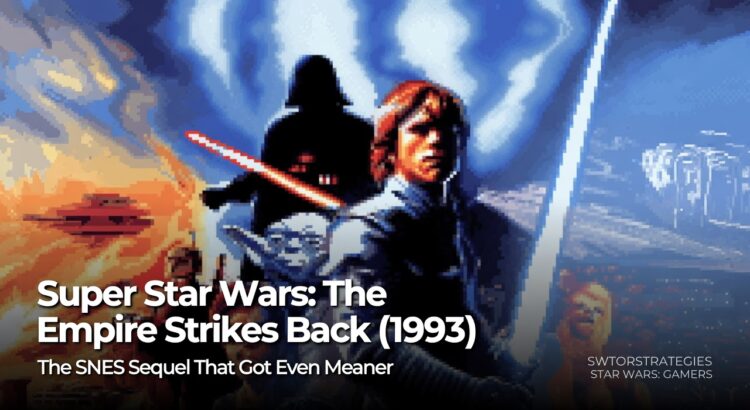
If Super Star Wars (1992) was the moment Star Wars finally found the right kind of 16-bit violence, then Super Star Wars: The Empire Strikes Back was the sequel that looked at that formula and said, “Good. Now make it colder, harder, and just a little bit crueler.” That was a solid creative choice. Released for the Super Nintendo in 1993, the game was developed by Sculptured Software and LucasArts and published by JVC Musical Industries. It was the second entry in the Super Star Wars trilogy, based on The Empire Strikes Back, and it would later be followed by Super Star Wars: Return of the Jedi in 1994. As part of our Complete List of All Star Wars Games Ever Made (1979–Present), this is one of those games that really earns its spot. It also sits naturally in the Star Wars Games (1990–1999) hub, right next to the games…
Star Wars Galactic Racer Might Be Weirder Than Simple Podracing Nostalgia
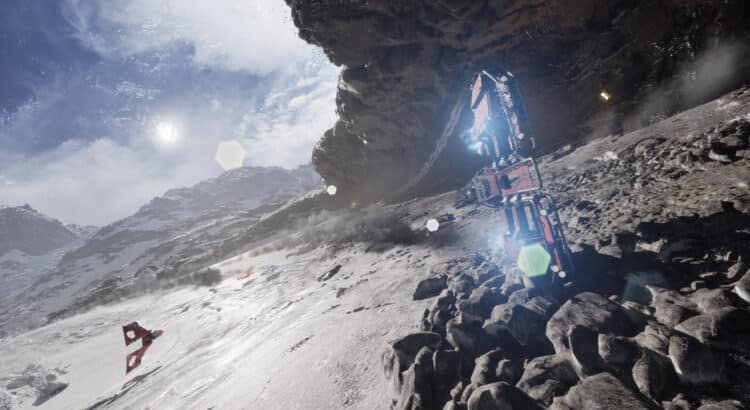
At first glance, Star Wars: Galactic Racer looks like the easiest nostalgia pitch in the galaxy. Fast ships. Dusty tracks. Dangerous turns. Sebulba lurking around like a small, angry insurance problem. But the latest story trailer suggests this is not just Episode I: Racer with modern lighting and a shinier menu. Galactic Racer may actually be doing something stranger: mixing Star Wars racing with a runs-based structure that sounds suspiciously close to roguelite design. And honestly? That might be the smartest thing about it. This Is Not Just “Go Fast, Win Race” The new Star Wars: Galactic Racer story trailer introduces Shade, an up-and-coming racer trying to take down corrupt Galactic League champion Kestar Bool. That is already a solid racing-game setup. New challenger. Big villain. Personal grudge. Dangerous circuits. A sponsor probably pretending this is all very safe. But the gameplay structure is where things get interesting. The game…
Star Wars Zero Company’s Best Idea Is Making Your Squad Actually Matter
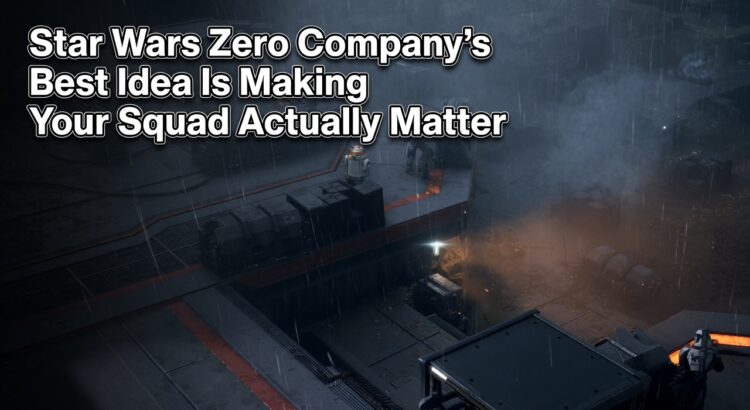
The easiest way to describe Star Wars Zero Company is still “a Star Wars tactics game.” That is also the least interesting way to talk about it. Yes, Bit Reactor’s upcoming turn-based tactics game has cover, classes, tactical decisions, squad builds, and all the lovely battlefield panic that comes with telling four people to survive a Clone Wars mission with a plan that sounded much better in your head. But a new Xbox Wire interview with Creative Director Greg Foertsch and Lead Designer James Brawley suggests the game’s most important idea may not be the tactics. It may be the relationships. Zero Company Is Leaning Into Found Family Foertsch says Star Wars is at its best when it is about relationships and found families, pointing to Star Wars Rebels as one example. That is not just a cute quote for the trailer crowd. It appears to be a real design…
Super Star Wars (1992): When Star Wars Went 16-Bit and Lost Whatever Mercy It Had Left
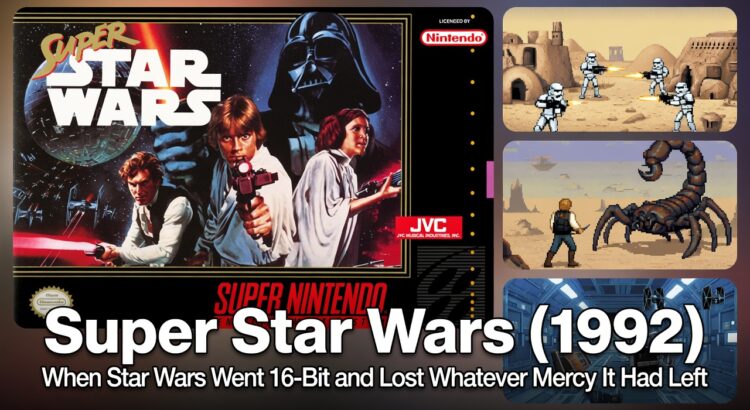
If Star Wars (1991) on NES felt like A New Hope had been turned into a weird, hard platformer, then Super Star Wars felt like somebody gave that idea more horsepower, more color, more explosions, and absolutely no intention of making your life easier. Released for the Super Nintendo in 1992, the game was developed by Sculptured Software with Lucasfilm Games / LucasArts involvement and published by JVC Musical Industries. It adapted the original 1977 film into a 16-bit action game full of side-scrolling blaster fights, platforming, landspeeder stretches, and the inevitable Death Star trench run. As part of our Complete List of All Star Wars Games Ever Made (1979–Present), this is one of those games that really feels like a line in the sand. It also belongs naturally in the Star Wars Games (1990–1999) hub, because this is where Star Wars on home consoles stopped looking merely ambitious and…