
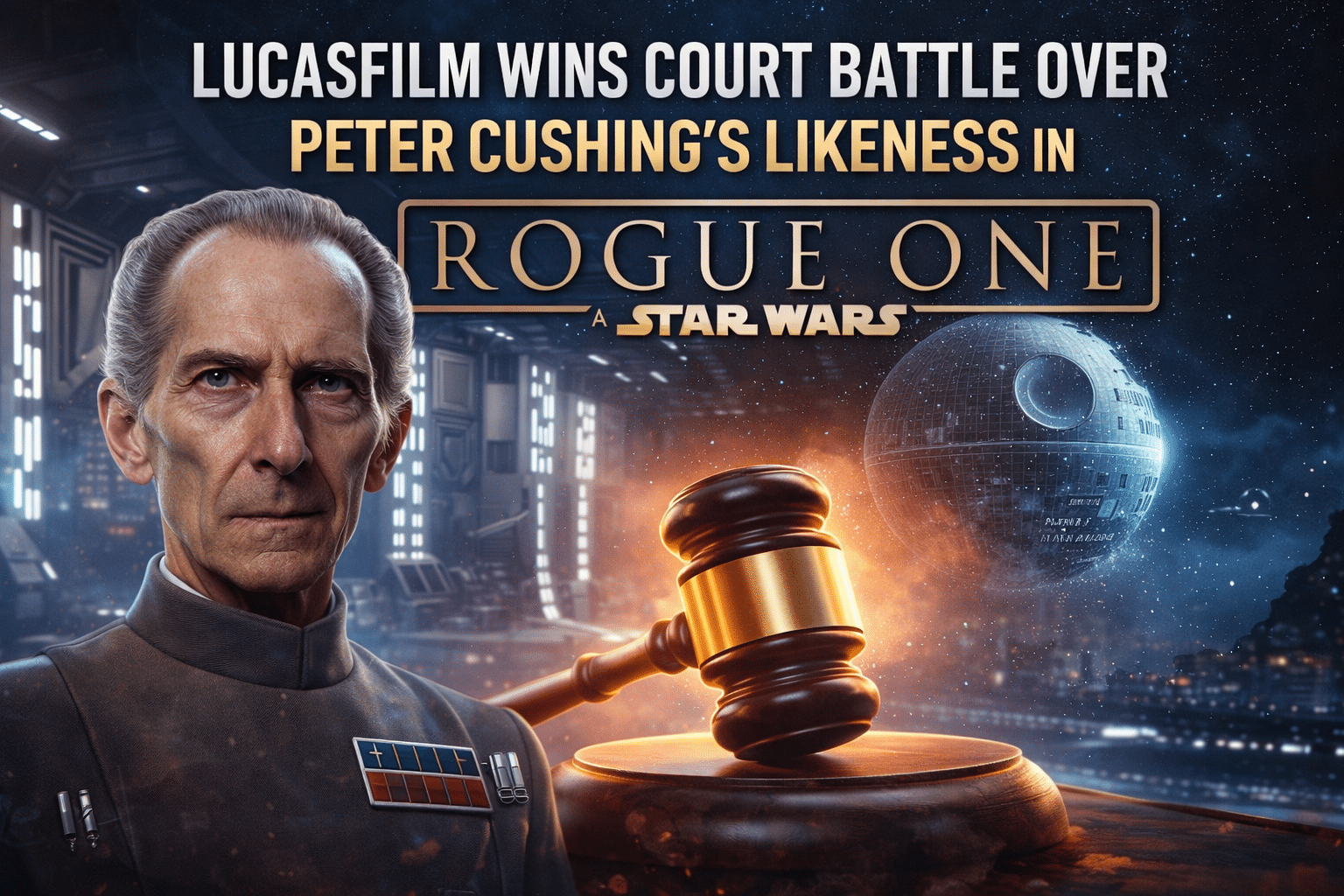
The UK court’s recent decision to dismiss the lawsuit over Peter Cushing’s digital likeness in Rogue One isn’t just a footnote in Star Wars legal lore. It’s a marker on a crossroads where storytelling, technology, and entertainment law intersect — and one that could ripple into how video games are made for years to come.
Let’s unpack what this could mean for the future of gaming, virtual reality, AI-driven narratives, and the haunting possibility of seeing deceased performers “come to life” in interactive experiences.
Cinema and Games Are Crossing Paths More Than Ever
Video games have long borrowed from film — storytelling techniques, motion capture, even face scans of actors. But we’re now entering a phase where the boundaries are blurring in the opposite direction.
Studios are crafting immersive experiences that feel cinematic. Meanwhile, games are increasingly treating characters as performances, not just polygons.
With Star Wars pioneering a legal precedent around digital likeness, it opens the door to questions gamers have pondered for years:
- Could we someday play as digital recreations of actors, living or dead?
- Will AI allow characters to improvise dialogue on the fly, responding directly to the player?
- What happens when a game’s story dynamically shifts based on real-time player decisions and the digital “actors” react like humans?
These aren’t sci-fi fantasies anymore. They’re technical trajectories.
Resurrection Through Code: Not Just for the Dead
The idea of bringing a deceased actor back via digital means used to be the stuff of controversy and ethical debate. But as technology advances, two realities are emerging:
1. Studios now have clearer legal backing — with conditions.
The court’s ruling suggests that, with proper rights and estate permissions, digital likeness use is legally solid. That doesn’t mean anyone can resurrect anyone. But it does mean that, under the right contracts, we won’t see studios shying away from digital characters just because an actor has passed.
This clears a big legal hurdle — one that game developers and interactive storytellers are watching closely.
2. AI is recalibrating what performance even means.
We already have games with procedural dialogue systems and AI that can tailor responses. Pair that with neural voice models and photorealistic avatars, and suddenly the possibility of:
- an AI-driven story director
- real-time character responses
- dynamic scenes that adapt to player emotion
— all feel doable.
Imagine a VR narrative where a digital version of a classic actor interacts with you, improvises, or even learns from your choices.
That kind of storytelling is not if. It’s when.
Ethical Boundaries Won’t Disappear — but They’ll Shift
Here’s the key point: just because the technology can do something doesn’t mean it should.
The Star Wars ruling doesn’t compel studios to recreate dead actors in games. It simply removes one of the legal barriers that might have made such projects untenable. Ethical norms, fan reception, and creative integrity will still shape how and when studios choose to do this.
Game developers are grappling with similar questions right now:
- Is it right to digitally replicate an actor without their express, ongoing consent?
- If a character is inspired by someone real, how do we protect the legacy of the person behind it?
- Should AI-generated performances ever replace living actors?
These debates are as much cultural as they are technological.
Will Games Bring Back the Dead?
Let’s be clear:
We will see more digital recreations of characters — living or dead — in games. Whether they are beloved nostalgia callbacks or new narrative pivots depends on creative intent, legal clarity, and audience sentiment.
But those characters likely won’t be static Easter eggs. With AI, voice modeling, and real-time rendering, they could become:
- active participants in quests
- adaptive narrators
- companions that respond to your style of play
- even characters who evolve uniquely per player
That’s where the real disruption lies: not in resurrecting faces, but in building living, reactive digital personalities.
What This Means Going Forward
The Rogue One decision isn’t a harbinger of a swarm of zombie actors taking over games. It’s a signal that the industry’s legal and technical frameworks are catching up with imagination.
For players, that could mean:
- Deeper, more personalized interactive storytelling
- Characters with greater emotional range and presence
- VR worlds that feel more like living narratives than rigid game loops
For creators, it means wrestling with new questions of consent, legacy, and artistic responsibility.
And for fans of Star Wars and games alike, it means the future of storytelling is going to feel smarter, stranger, and more interactive than ever — whether the characters filling it are old friends, new faces, or echoes of performances long past.
In the end, technology will push us forward.
What remains to be seen is how we choose to use it.
Stay connected with the galaxy’s latest updates!
Follow us on X, Facebook, Instagram, or Pinterest for exclusive content, mod guides, Star Wars gaming news, and more. Your support helps keep the Holonet alive—one click at a time
Author

Related Posts

Bobby Moynihan Is Bringing His Voice to Star Wars: Beyond Victory — and That’s the Point-
Lucasfilm Wins Key Court Ruling Over Peter Cushing’s Likeness in Rogue One -
Star Wars Fans Take the Fight to NYC to Save The Hunt for Ben Solo -
SWTOR Quietly Drops a New Music Track — and It’s More Important Than It Looks

-
Harrison Ford to Receive SAG-AFTRA’s Highest Honor -
Star Wars: Starfighter Has Wrapped Production — And Now the Real Work Begins -
Joonas Suotamo Reflects on The Force Awakens at 10 — “My Life Changed Forever” 
From Game to Shelf: Hasbro Reveals Star Wars Battlefront II ARC Trooper & Commando Droid Black Series 2-Pack