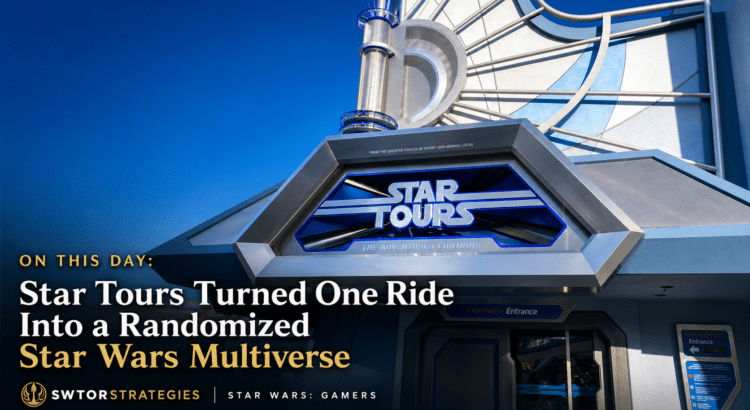
On June 3, 2011, Star Tours: The Adventures Continue opened at Disneyland and quietly changed what a Star Wars ride could be. The original Star Tours was already a landmark: a motion-simulator trip through the galaxy before Disney owned Lucasfilm, before Galaxy’s Edge, before Star Wars became a full theme park land. But The Adventures Continue did something smarter than just making the ride shinier. It made Star Wars unpredictable. The Same Ride, But Never Quite the Same Trip The big hook was randomization. Instead of sending every guest on the same fixed adventure, The Adventures Continue mixed different destinations, characters, transmissions, and action beats into multiple possible ride combinations. Wired’s 2011 preview of the upgraded Star Tours: The Adventures Continue noted that the ride could produce 54 different story combinations. For a theme park attraction, that was a brilliant little trick. You were not just riding Star Tours. You…
Author: Soeren Kamper
Star Wars: The Empire Strikes Back (1992): The Sequel That Made the NES Star Wars Games Meaner
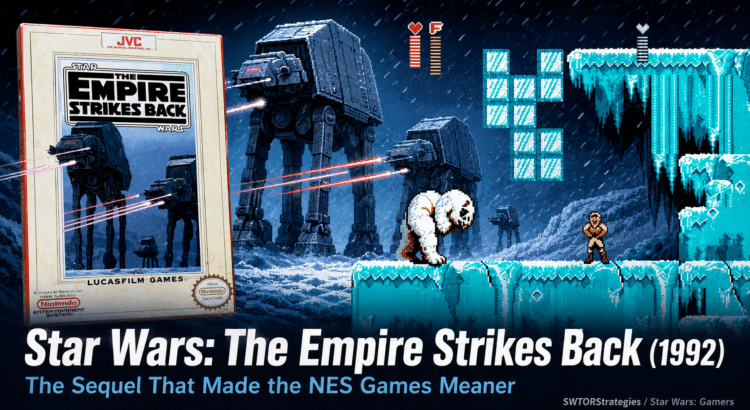
If Star Wars (1991) took A New Hope and turned it into a weird, hard platformer with a surprisingly personal grudge against the player, then The Empire Strikes Back (1992) looked at that formula and decided it needed more snow, more punishment, and a slightly darker mood. That was not a terrible instinct. Based on the 1980 film, the game launched on NES in 1992 and later came to Game Boy, with the NES version credited to Lucasfilm Games and Sculptured Software, and the Game Boy version credited to NMS Software. As part of our Complete List of All Star Wars Games Ever Made (1979–Present), this one matters because it continues a very specific and very early-90s idea of what Star Wars should feel like on home hardware. It also sits naturally in the Star Wars Games (1990–1999) hub, right after Star Wars (1991), because together they form a sort…
Ashley Eckstein Is Right: The Clone Wars Helped Save Star Wars
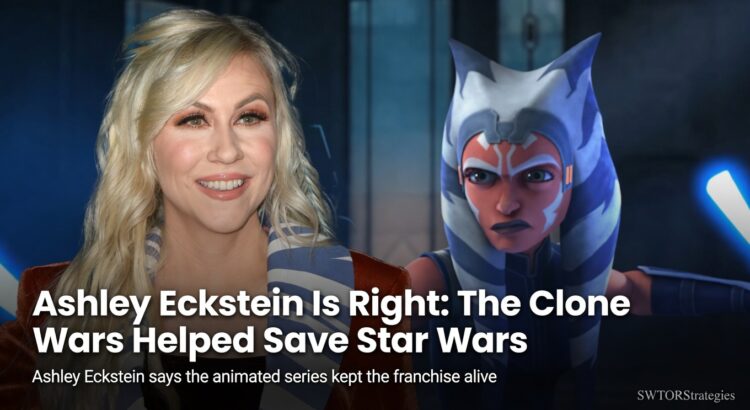
Before Star Wars became a Disney+ machine with Mandalorians, Ahsoka, Grogu, Boba Fett, Thrawn teases, animated spin-offs and enough interconnected lore to make a Jedi archivist quietly resign, there was a much stranger period. There was just The Clone Wars. Ashley Eckstein, the voice of Ahsoka Tano, recently reflected on that era during a Clone Wars cast reunion, saying that when the show was on the air, it felt like Star Wars might genuinely be over. As covered by GeekTyrant, Eckstein said the animated series was basically the only Star Wars thing keeping the flame alive before Disney bought Lucasfilm. And honestly? She has a point. The Clone Wars Arrived When Star Wars Felt Finished It is easy to forget now, because modern Star Wars never really stops moving. There is always another series, film update, game rumor, book release, comic arc, convention panel, or suspiciously marketable alien child waiting…
Obi-Wan Kenobi Premiered Four Years Ago and Still Feels Complicated
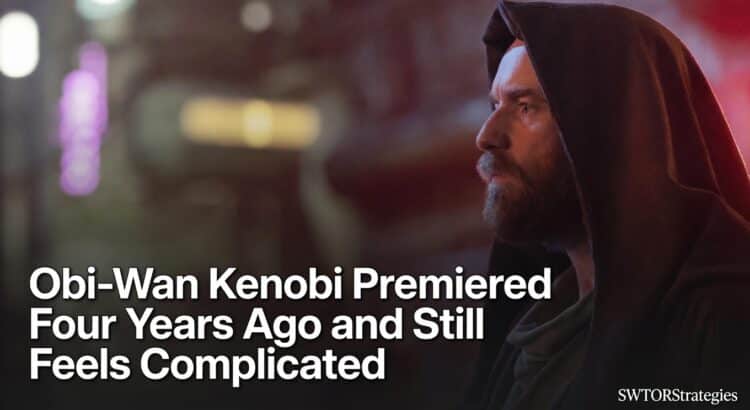
Four years ago today, Obi-Wan Kenobi arrived on Disney+ carrying one of the heaviest backpacks in modern Star Wars. The series premiered on May 27, 2022, with its first two episodes launching together, bringing Ewan McGregor back as the exiled Jedi Master and Hayden Christensen back into the shadow of Darth Vader. That alone was enough to make it feel like an event. But four years later, Obi-Wan Kenobi still sits in a strange place. It gave Star Wars some genuinely powerful moments, a few unexpected emotional punches, and one of the most anticipated rematches in the franchise. It also remains one of the Disney+ shows people still argue about like the fate of the Republic depends on it. Ewan McGregor Was Never the Problem The easiest part to agree on is Ewan McGregor. He understood exactly where Obi-Wan was supposed to be: broken, guilty, exhausted, and hiding from the…
Christopher Lee Gave Count Dooku the Class Star Wars Needed
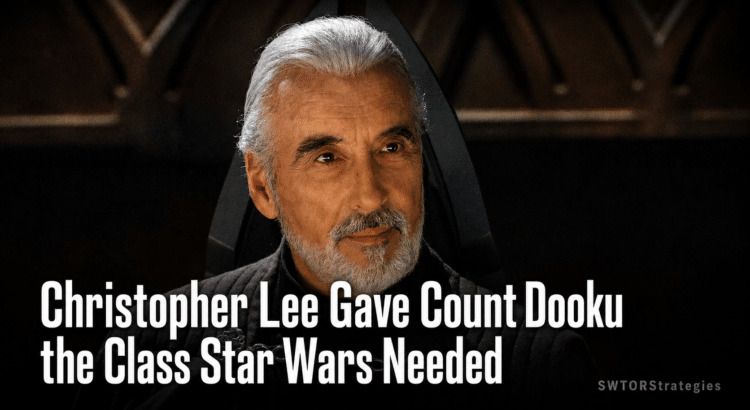
Some Star Wars villains enter the room like a thunderstorm. Count Dooku entered like a man who had already judged the furniture, the wine, the government, and your lightsaber technique. Christopher Lee, born on May 27, 1922, brought something unusually sharp to the prequel trilogy when he arrived as Dooku in Attack of the Clones. Star Wars already had monsters, tyrants, masked nightmares, cackling Sith Lords, and bounty hunters with jetpacks. What it did not have, at least not quite like this, was a villain who felt like aristocracy had personally discovered the dark side and decided it was better managed with a cape. Dooku was not loud. He did not need to be. A Sith Lord With Manners The official Star Wars Databank describes Dooku as a former Jedi trained by Yoda, later disillusioned with the Order and drawn into Darth Sidious’ grand design. On paper, that is already…
Star Wars (1991): The Game That Made A New Hope Weird, Hard, and Weirdly Memorable
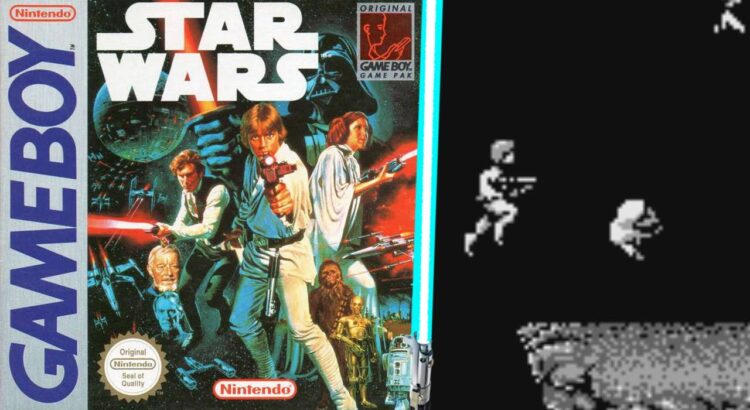
There are Star Wars games that feel elegant. Clean. Heroic. Cinematic. And then there is Star Wars (1991), which looks at A New Hope and decides the best way to honor one of the most beloved films of all time is to make Luke Skywalker jump over bottomless pits, fight a surprising amount of hostile wildlife, and occasionally take on giant enemies that feel like they wandered in from a different genre entirely. And somehow, against all odds, that version of Star Wars stuck. Released in 1991 for the NES and later adapted for the Game Boy in 1992, this was one of the first really visible Star Wars console action games of the 1990s. It was published by JVC Musical Industries and developed by Beam Software, taking the broad story of A New Hope and reshaping it into a side-scrolling action-platformer that was much stranger, harder, and more game-y…
Mando and Grogu’s 88% Audience Score Splits the Room
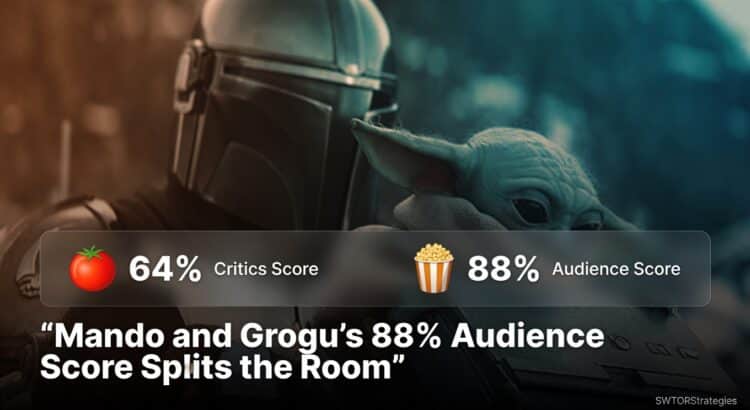
Star Wars is back in theaters, and yes, the galaxy is arguing again. The Mandalorian and Grogu currently has an 88% audience score on Rotten Tomatoes, based on more than 1,000 verified ratings. That is a strong early sign that regular moviegoers are responding much more warmly to Din Djarin and Grogu’s big-screen adventure than many critics did. Because naturally, Star Wars could not simply return to cinemas quietly. It had to bring a scoreboard. Audiences Are Much Kinder Than Critics At the time of writing, Rotten Tomatoes lists the film at 64% on the Tomatometer and 88% on the Popcornmeter. That gap is the story. Critics have been more cautious, with several reviews describing the film as fun but familiar, charming but light, or closer to a supersized Disney+ adventure than a major cinematic reinvention. Audiences, apparently, are less bothered by that. For many viewers, “Mando and Grogu go…
The Empire Strikes Back Turns 46, and Hoth Still Owns Star Wars Gaming
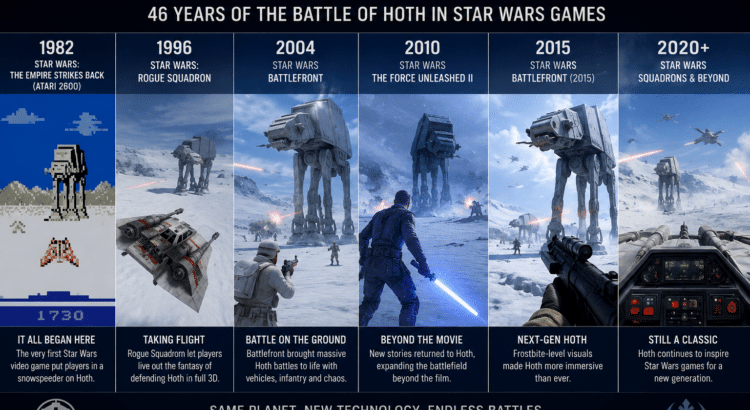
The Empire Strikes Back turns 46 today, and somehow Hoth is still doing unpaid overtime in Star Wars games. Released in the United States on May 21, 1980, The Empire Strikes Back did more than make Star Wars darker, colder, and emotionally meaner. It gave the franchise one of its most endlessly reusable gaming scenarios: Rebel snowspeeders versus Imperial AT-AT walkers on a frozen battlefield. That sequence is so clean, so readable, and so instantly interactive that it basically arrived pre-packaged as a video game level. Big walkers.Small ships.A generator to defend.Tow cables.Lasers.Snow.Panic. What more does a game designer need? Hoth Was Star Wars Gaming Before Star Wars Gaming Knew Itself The first licensed Star Wars video game was Star Wars: The Empire Strikes Back, released by Parker Brothers for the Atari 2600 in 1982. And what was it about? Hoth, naturally. Players controlled Luke Skywalker in a snowspeeder, fighting…
Star Wars: Droids (1988): The Odd Little Cartoon Tie-In That Took Star Wars Somewhere Else
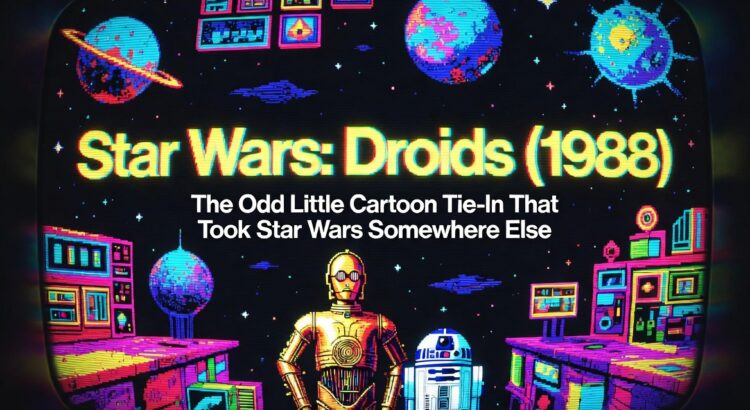
Not every Star Wars game begins with a trench run, a lightsaber, or an exploding space station. Some begin with R2-D2 and C-3PO wandering into another problem, which is more or less the permanent condition of their lives anyway. That is what makes Star Wars: Droids such an interesting little side road in the archive. Released in 1988 for the ZX Spectrum, Amstrad CPC, and Commodore 64, the game was published by Mastertronic Added Dimension and developed by Binary Design as a tie-in to the animated Droids series, also known as Star Wars: Droids – The Adventures of R2-D2 and C-3PO. As part of our Complete List of All Star Wars Games Ever Made (1979–Present), this is exactly the kind of title that deserves more attention than it usually gets. It also sits comfortably in the Star Wars Games (1979–1989) era, because it shows how strange and flexible Star Wars…
Star Wars: Return of the Jedi: Ewok Adventure — The Weird Lost Star Wars Game That Should Not Be This Interesting
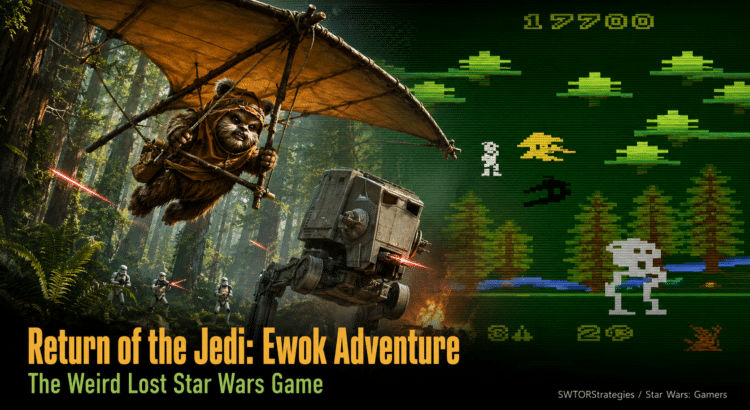
There are cancelled games that sound boring the second you describe them, and then there are cancelled games that make you stop, blink, and say: hang on, they were going to let us play as an Ewok in a hang glider? That is Star Wars: Return of the Jedi: Ewok Adventure. Planned in 1983 for the Atari 2600, developed by Atari Games for publication by Parker Brothers, Ewok Adventure never made it to store shelves, even though the game was reportedly completed. It later became one of those fascinating lost corners of Star Wars gaming history — the kind of title that sounds half ridiculous, half brilliant, and somehow ends up being both. As part of our Complete List of All Star Wars Games Ever Made (1979–Present), this is exactly the kind of side road worth stopping for. It also fits naturally beside our recent looks at The Empire Strikes…
Return of the Jedi: Death Star Battle (1983): When Star Wars Games Were Still Built Around One Big Scene
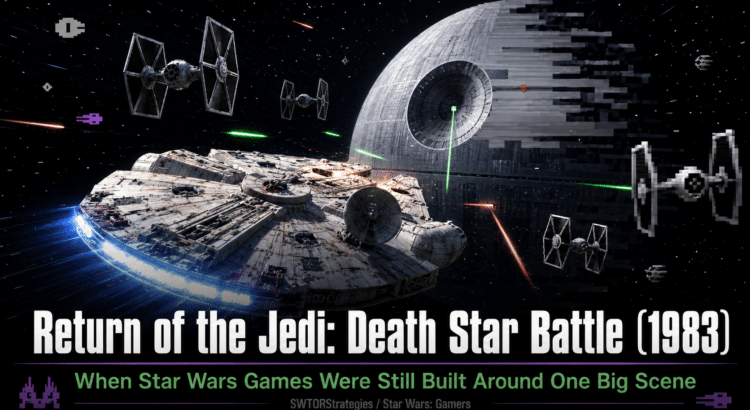
There is something very pure about early Star Wars games. They did not try to retell entire trilogies. They did not promise open worlds, branching morality, or a hundred hours of side content. Most of them just looked at one great movie moment and said, more or less, “Right, that bit. Let’s make that playable.” That is exactly what Return of the Jedi: Death Star Battle does. Released by Parker Brothers in 1983 for the Atari 2600, Atari 5200, and Atari 8-bit computers, and later bundled for the ZX Spectrum+ in 1985, it was one of the earliest Star Wars video games and the first one based on Return of the Jedi. And if The Empire Strikes Back (1982) showed how early home consoles could turn Hoth into a tiny, scrappy war, then Death Star Battle is the next logical step: same early-console ambition, same movie-to-game instinct, just with the…
Michael Pennington, Return of the Jedi’s Moff Jerjerrod, Has Passed Away
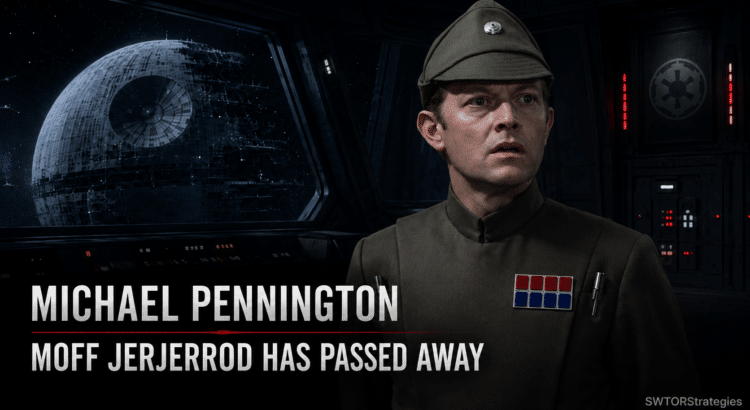
Sad news from the Star Wars galaxy: Michael Pennington, the British actor who played Moff Tiaan Jerjerrod in Return of the Jedi, has passed away. Pennington was 82. For Star Wars viewers, he will always be remembered as the Imperial officer overseeing the second Death Star — the man who had to stand in front of Darth Vader and explain that construction was not moving fast enough. A bad work meeting, by any galactic standard. The Man Who Had to Explain Delays to Darth Vader Pennington’s Moff Jerjerrod appears early in Return of the Jedi, nervously overseeing construction of the second Death Star above Endor. The official StarWars.com Databank entry for Moff Jerjerrod describes him as the commander responsible for completing the battle station under impossible pressure from both Darth Vader and Emperor Palpatine. It is a small role, but a memorable one. Jerjerrod is not Grand Moff Tarkin. He…
Sam Witwer Says Maul: Shadow Lord Season 2 Has Pressure – Good
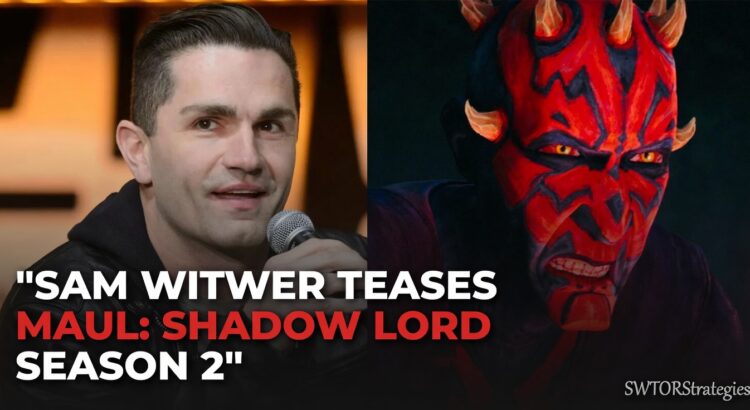
Sam Witwer knows Maul better than almost anyone in Star Wars. That is exactly why his latest comments about Maul: Shadow Lord Season 2 are worth paying attention to. The first season did not just bring Maul back for another round of snarling, scheming, and red-lightsaber therapy. It reframed him as a broken would-be liberator, a criminal strategist, and a dangerous mentor figure for Devon Izara. Now Season 2 has to deal with the fallout. In an interview with The Direct about Maul: Shadow Lord Season 2, Witwer said fans will not have to wait “too, too long” for the next chapter, adding that the team feels real pressure to keep discovering new things with the story. That is probably the best possible sign. A comfortable Maul story would be a bad Maul story. Maul Is Not Just Angry Anymore The smartest thing Maul: Shadow Lord has done is avoid…
The Empire Strikes Back (1982): The First Real Star Wars Game Was a Tiny Hoth War
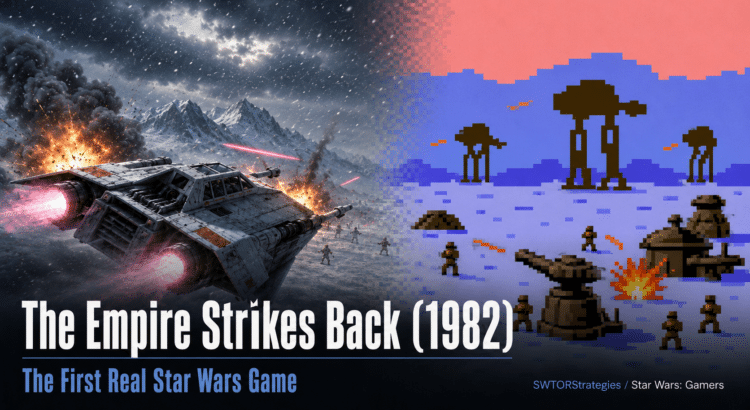
Before Star Wars games became sprawling RPGs, online sandboxes, or massive shooter franchises, they had to solve a much simpler problem: how do you squeeze one of the biggest sci-fi universes on Earth into a home console that could barely keep its own snowstorm together? The Empire Strikes Back for the Atari 2600 is one of the first answers to that question, and it is still a fascinating one. Released by Parker Brothers for the Atari 2600 in July 1982, with an Intellivision version following in 1983, the game is widely recognized as the first officially licensed Star Wars video game. It was programmed by Rex Bradford, based on the Battle of Hoth, and built around one very clean fantasy: you are in a snowspeeder, Imperial walkers are marching toward Echo Base, and your day is getting worse at speed. That makes it a perfect follow-up to Star Wars: The…
Return of the Jedi Comes to Disney SpellStruck With New Star Wars Maps
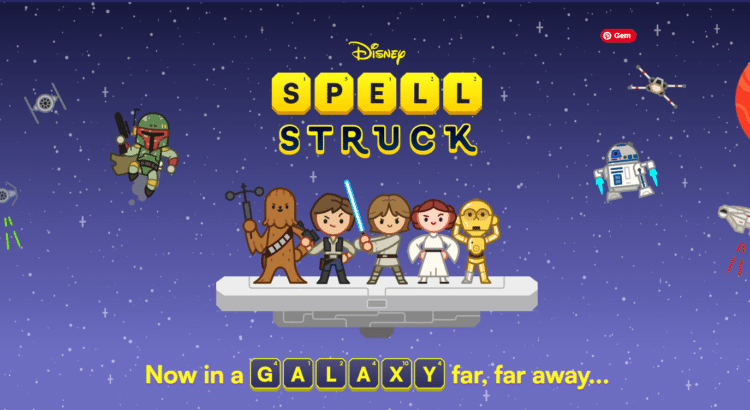
Star Wars has invaded shooters, RPGs, racing games, LEGO adventures, card battlers, mobile strategy, and Fortnite islands. Naturally, the next battlefield is spelling. Disney SpellStruck has added new Adventure Mode maps inspired by Star Wars: Episode VI – Return of the Jedi, giving the Apple Arcade word game another dose of galactic scenery. The update also adds Boba Fett and Wicket as playable characters, which is a gloriously specific pairing: one fearsome bounty hunter, one brave Ewok, and presumably several very stressed vowels. Apple’s own April Apple Arcade update listed the new Return of the Jedi-inspired maps and characters as arriving on April 23, 2026, while StarWars.com also highlighted the update as part of its Star Wars Day gaming round-up. A Word Game With a Star Wars Detour For anyone who has not been tracking Disney SpellStruck between lightsaber duels and Holotable panic, the game is a word-based puzzle battler…
Star Wars: The Arcade Game (1983): The Cabinet That Let You Blow Up the Death Star
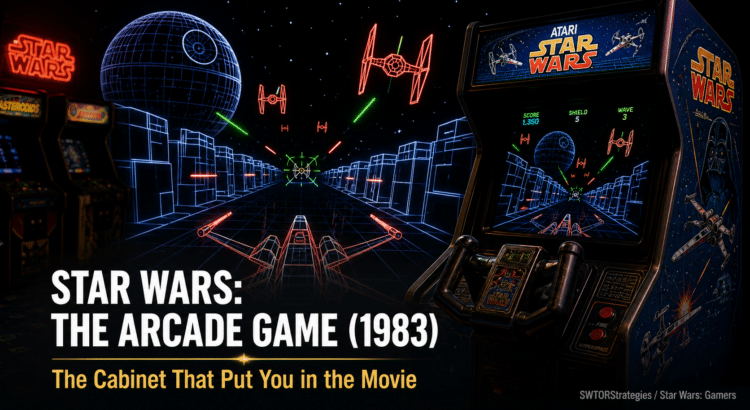
Before Star Wars games got big enough to swallow entire weekends, before they started chasing cinematic storytelling, RPG choices, or multiplayer wars with patch notes and balance drama, there was a much simpler fantasy: sit down, grab the controls, and blow up the Death Star yourself. That is the magic of Star Wars: The Arcade Game. Released by Atari in 1983, it turned the final act of A New Hope into a first-person vector-graphics shooter and, in the process, gave Star Wars one of its earliest true gaming classics. And this is exactly why it feels like the right next stop after Star Wars: Battle for Naboo (2000). That game showed how polished and expansive Star Wars vehicle combat had become by the N64 era. The Arcade Game shows the raw original spark: the point where Star Wars game design realized that “you are in the cockpit now” was already…
Star Wars Battlefront II Just Got New Content in 2026, Because the Community Refuses to Let It Die
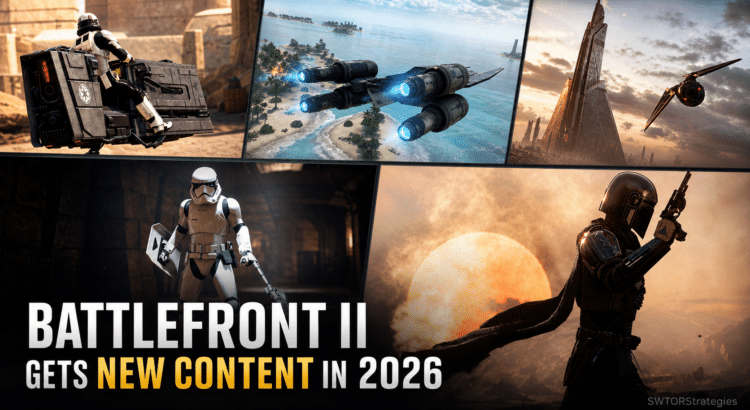
Some Star Wars games fade quietly into the archives. Star Wars Battlefront II apparently looked at that option, laughed, and joined another server. The 2017 shooter has received a sizeable new community-driven content update through KYBER and Battlefront Plus, adding new equipment, vehicles, balance changes, fixes, and even a glimpse at what is coming later this summer. This is not an official EA/DICE update, but for PC players using KYBER, it is very real — and surprisingly ambitious. KYBER describes itself as a custom launcher for Battlefront II on PC with community-hosted multiplayer, full mod support, a server browser, private games, and more. Battlefront II Gets New Toys on the Battlefield The latest KYBER update adds several headline features to Battlefront Plus, including the Fusion Cutter as new Officer equipment, allowing players to repair vehicles, turrets, and objectives. There is also a new C-PH Patrol Speeder for Tatooine in Galactic…
SWTOR 7.9 Sets Up the End of Legacy of the Sith — and Teases Ryloth for 8.0
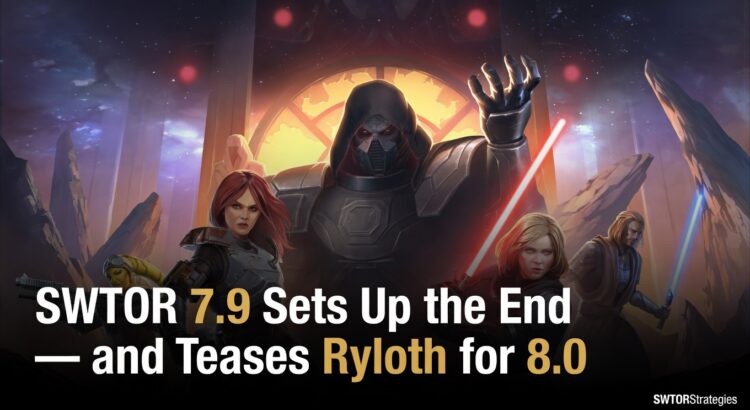
SWTOR is about to close one chapter and quietly open a much bigger one. Broadsword has posted its full Game Update 7.9 “Legacy Reborn” livestream recap, and the headline is clear: Legacy of the Sith is heading into its finale, Darth Jadus is back in the middle of the chaos, Khar Shian is becoming the next major flashpoint, and SWTOR 8.0 is already being positioned as the start of a new era. The full breakdown is available in the official Game Update 7.9 “Legacy Reborn” livestream recap. Darth Jadus, Khar Shian, and the Final Showdown The story setup is spicy in exactly the way SWTOR does best: too many dangerous Sith, too many personal agendas, and one ancient Force machine that absolutely should not be left unattended. According to Broadsword, Darth Jadus has stolen Darth Nul’s holocron with help from a traitorous ally. He is now heading to Khar Shian,…
Monopoly: Star Wars Heroes vs. Villains Looks Way Less Boring Than It Should
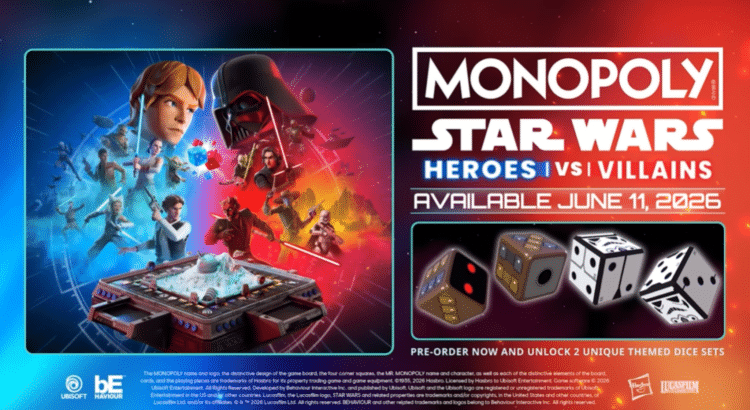
There are few phrases more dangerous than “Star Wars Monopoly video game.” That could mean a lazy reskin. It could mean Darth Vader charging rent on Cloud City while everyone slowly remembers why family board game night is actually a Sith ritual. But the new Gameplay Overview Trailer for Monopoly: Star Wars Heroes vs. Villains makes this look far more interesting than expected. Ubisoft’s latest look at the game shows a team-based, character-driven version of Monopoly where locations can be fought over, abilities matter, and the board is basically a tiny plastic galaxy waiting to cause arguments. According to Ubisoft’s official gameplay trailer breakdown, the game launches June 11 for PS5, Xbox Series X|S, Nintendo Switch, Nintendo Switch 2, GeForce NOW, and PC via Ubisoft Store, Steam, and Epic Games Store. This Is Monopoly, But With Blaster Fire The big twist is that Monopoly: Star Wars Heroes vs. Villains is…
SWGOH’s Cantina Update Is a Full Remodel, Not a Fresh Coat of Paint
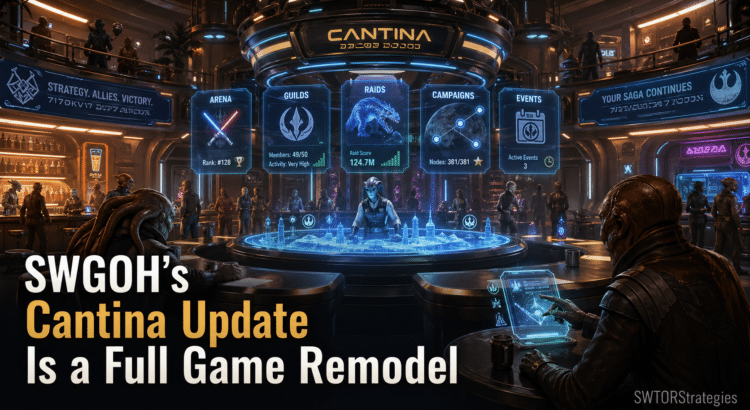
Star Wars: Galaxy of Heroes is turning ten, and apparently the Cantina finally looked around, saw the decade-old furniture, and said: “Right. Time to stop pretending this is fine.” The latest official Star Wars: Galaxy of Heroes update breakdown lays out a major visual and functional refresh for the game, centered around a fully remodeled Cantina, campaign restructuring, farming changes, economy improvements, Journey Guide reorganization, early-game cleanup, and a handful of quality-of-life fixes. This is not just a shinier background. It is one of those updates that touches the way players move through the game every day. Fey’s Cantina Gets a Proper Glow-Up The headline change is the Cantina Update, which gives Fey’s Cantina a full visual and navigation overhaul. Tables, patrons, and employees are getting updated models and textures. Patrons are now more varied, and some will even move around the Cantina. Fey herself also gets a bit more…
Star Wars: Battle for Naboo (2000): The Game That Quietly Bridged Two Eras
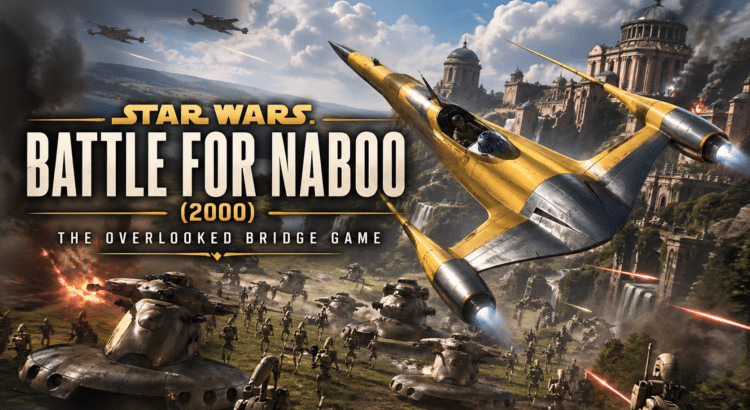
There are some Star Wars games that arrive with a lot of noise behind them. Big legacy. Big nostalgia. Big arguments. And then there are games like Star Wars: Battle for Naboo, which mostly showed up, did a lot of things well, and somehow still ended up living in the shadow of the louder titles around it. That is a bit unfair, because this game matters more than people tend to remember. Released on Nintendo 64 in late 2000 and later brought to Windows in 2001, Battle for Naboo was co-developed by Factor 5 and LucasArts as an arcade-style action game and a spiritual follow-up to Star Wars: Rogue Squadron. It traded the Original Trilogy’s dogfights for the Trade Federation invasion of Naboo, put players in the boots of Royal Security Forces lieutenant Gavyn Sykes, and mixed air, land, and water vehicles across a 15-mission campaign. And honestly, that pitch…
Star Wars: The Clone Wars (2002): The Game That Turned the Prequels Into a War
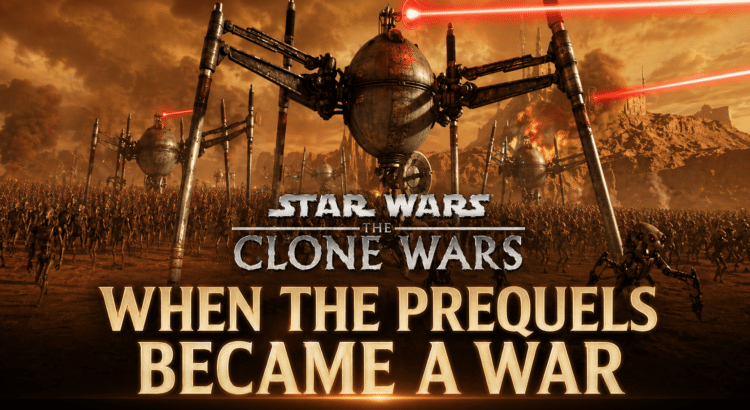
There is a point where the prequel era in Star Wars games stopped feeling like a collection of side attractions and started feeling like an actual era. Not just podracing. Not just one cool bounty hunter with a jetpack and several anger-management issues. Not just sleek starfighters gliding through Naboo skies. An actual war. That is where Star Wars: The Clone Wars (2002) comes in. If Star Wars: Starfighter (2001) gave the prequels proper wings, and Star Wars: Jedi Starfighter (2002) made them a little cooler, and Star Wars: Bounty Hunter (2002) dragged the same era into the underworld and let Jango Fett behave like a licensed public menace, then The Clone Wars did something bigger. It widened the lens. It took the prequel era out of the cockpit, out of the alleyways, and out onto the battlefield. That makes it a natural stop in both our Complete List of…
Gina Carano Says She Has Spoken With Jon Favreau and Dave Filoni After Settlement
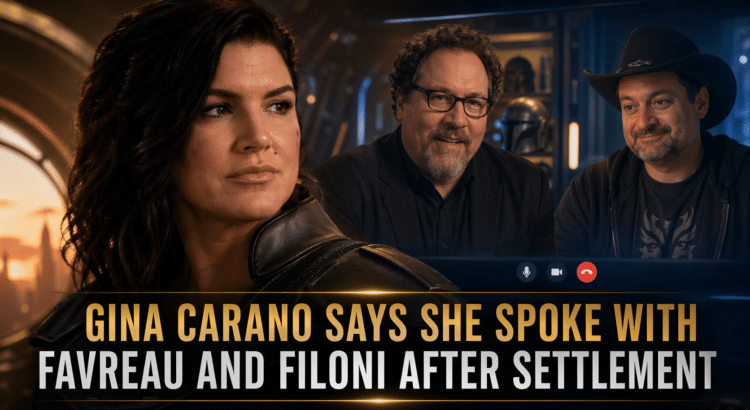
The Gina Carano story is not over yet, even if the legal fight is. After settling her lawsuit with Disney and Lucasfilm in August 2025, Carano says she has already spoken with both Jon Favreau and Dave Filoni. The detail comes from Carano’s appearance on The Ariel Helwani Show, later picked up by multiple outlets, where she described a post-settlement Zoom call with the two Mandalorian creatives as warm and surprisingly natural. According to Carano, the conversation did not sound tense at all. As quoted by CinemaBlend’s write-up of the interview, she said, “I’ve already had a conversation with Dave Filoni and Jon Favreau,” describing both as “really lovely,” and said the call happened after the lawsuit was settled. She also recalled Favreau joking, “So, where did we leave off?” That is the headline. The more complicated part is what it actually means. The lawsuit is over, but a return…
Star Wars: Bounty Hunter (2002): The Jango Fett Game That Let Star Wars Get Dirty
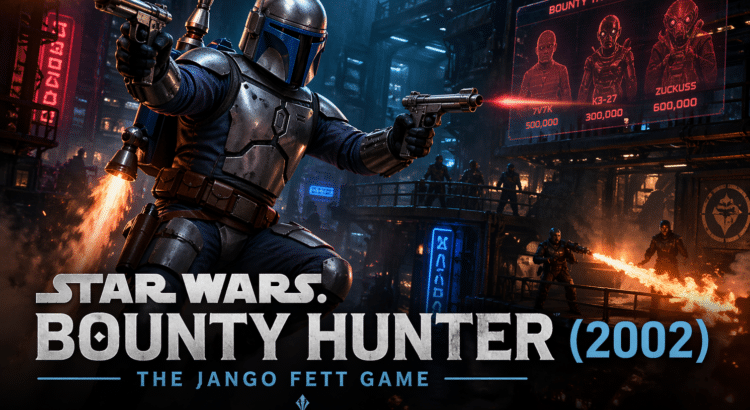
There is a certain kind of Star Wars game that arrives in a clean, polished starfighter and asks you to save the day with elegance. Star Wars: Bounty Hunter is not that game. This one kicks the door open, lights the flamethrower, and asks whether you would like to spend the next several hours being Jango Fett at peak menace. And honestly, that was a pretty smart pitch in 2002. Released for PlayStation 2 in November 2002 and for GameCube in December 2002, Bounty Hunter came from LucasArts and put players in the boots of the galaxy’s most dangerous hired gun just as Attack of the Clones had made Jango one of the coolest bad ideas in the entire prequel era. That timing matters. We had just spent time in the skies with Star Wars: Starfighter (2001) and Star Wars: Jedi Starfighter (2002), watching the prequel era expand through sleek…