
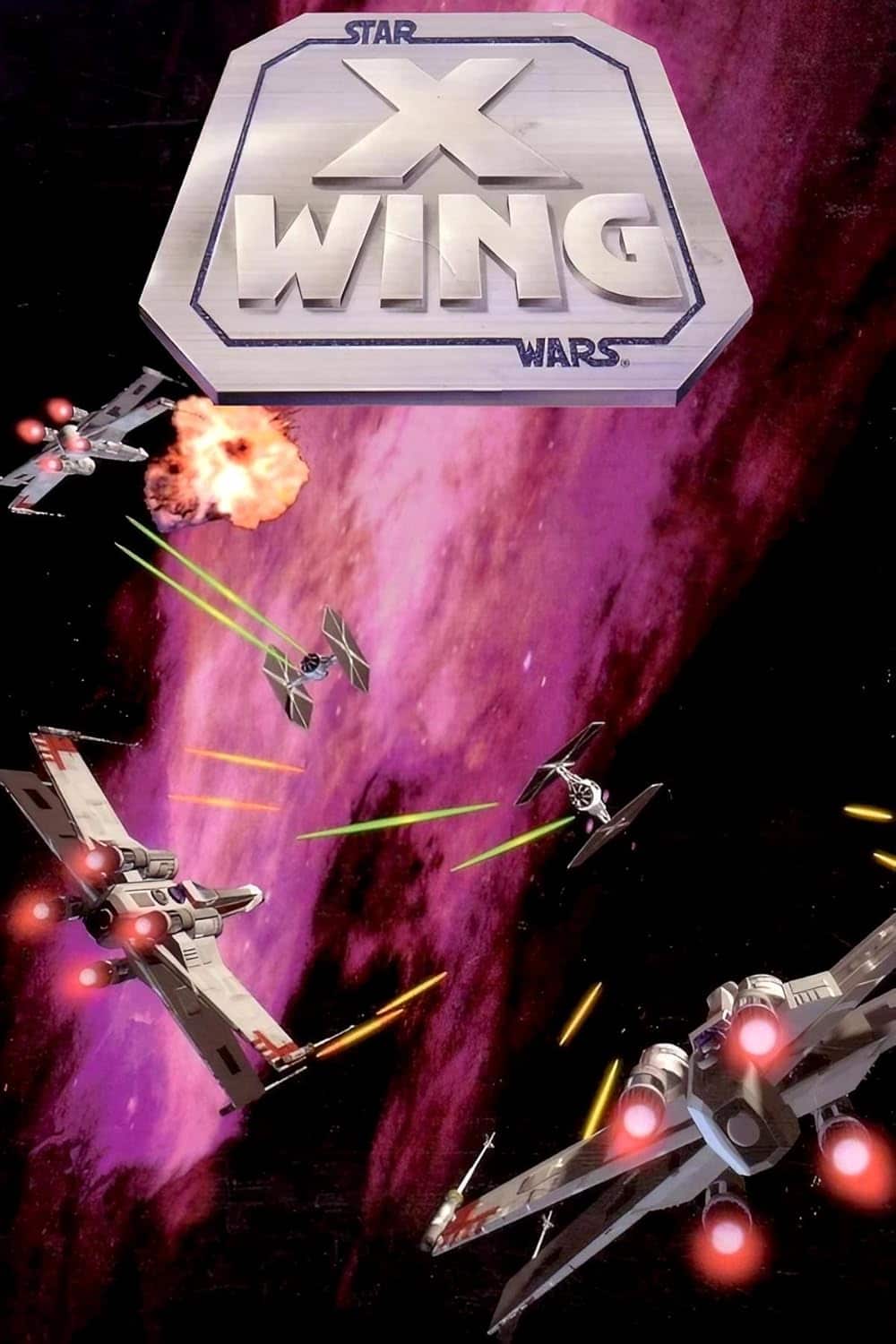
Before Star Wars space combat became a nostalgia trigger, a subgenre, and a minor religion for PC players of a certain age, there was Star Wars: X-Wing. Released in 1993 by LucasArts, it put players in the cockpit of Rebel starfighters and asked them to do something that felt unusually serious for the time: not just blast TIEs, but manage power, complete mission objectives, and survive a proper space combat simulation set in the Star Wars universe. Official Star Wars support still describes it as a game with more than 120 missions and a full 3D battlefield of Imperial and Rebel craft, while MobyGames identifies it as the first major space combat sim in the franchise.
That alone makes it historically important. But X-Wing matters for a bigger reason: it created one of the most respected Star Wars game lineages ever made. Without it, there is no TIE Fighter, no X-Wing vs. TIE Fighter, and no real foundation for the part of the franchise that treated starfighters as more than arcade set dressing. For the SWTOR Strategies archive, that puts it squarely where it belongs: in the Star Wars Games: Complete List and in the Star Wars Games (1990–1999) hub as one of the era’s true pillar games.
Game Information
Star Wars: X-Wing launched in 1993 for DOS, with later expanded and updated versions following afterward. Official Star Wars support lists the original game as 1993, while GOG’s modern package notes that the X-Wing Special Edition includes the original 1993 DOS version, the 1994 DOS CD version, and the 1998 Windows version, along with both Imperial Pursuit and B-Wing expansions.
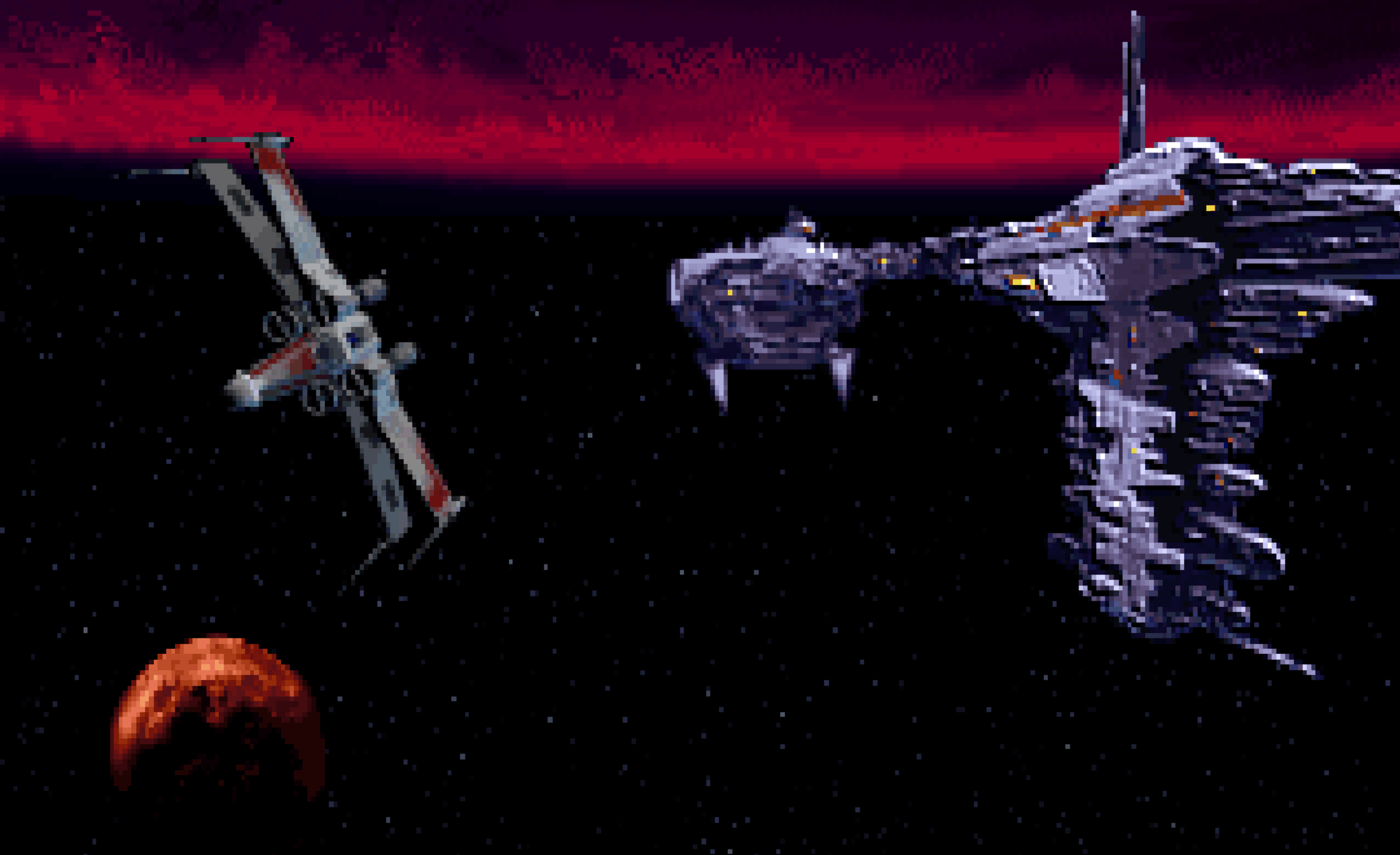
At its core, X-Wing is a first-person space combat simulation focused on the Rebel Alliance. MobyGames says players fly X-wings, Y-wings, and A-wings against the Empire in a campaign built around escalating operations, while the official support page highlights “over 120 deep space and Death Star surface missions.” In other words, this was not a quick movie tie-in. It was a large, systems-driven PC sim wearing a Star Wars skin that fit almost suspiciously well.
Gameplay Overview
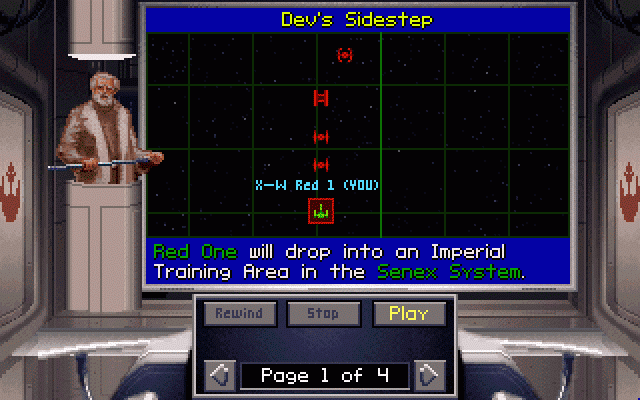
The key to X-Wing is that it takes the fantasy seriously. Instead of giving players a simple pick-up-and-play dogfighter, LucasArts built a game around cockpit management, mission structure, and a real sense of piloting responsibility. MobyGames notes that players can reassign power between lasers, shields, and engines in real time, while the official support page frames the campaign as a long run of combat and training missions across deep space and Death Star surfaces. That level of mechanical attention is a huge part of why the game stood out in 1993.
It also helps that the game offered variety beyond just “destroy enemy fighters.” Across its campaign and expansions, X-Wing gives players escort duties, strike missions, reconnaissance, capital-ship engagements, and other objectives that force them to think like Rebel pilots rather than generic action heroes. GOG’s description emphasizes that the package includes the Imperial Pursuit and B-Wing Tour of Duty expansions, which widened the mission pool and helped the full experience feel even larger than the already hefty base game.
One reason the game still gets respect is that it pushed for immersion instead of instant gratification. The cockpit view, the ship readouts, the way missions could spiral when priorities changed — all of that made X-Wing feel closer to a real simulation than a typical licensed shooter. MobyGames specifically notes its polygonal 3D engine and sim-first identity, which was a big deal at a time when many games in adjacent genres were still leaning on flatter, simpler presentation.
Historical Context
In 1993, Star Wars was in one of its in-between eras. There were no new films in theaters, the prequels were still years away, and a lot of the franchise’s energy lived in games, books, and other Expanded Universe material. That gave LucasArts room to experiment, and X-Wing is one of the clearest signs of how ambitious those experiments could get. It was not just a recognizable brand exercise. It was a serious attempt to build a credible PC space sim inside the Star Wars universe.
That timing matters because X-Wing helped establish the idea that Star Wars games could succeed by drilling into one specific fantasy and doing it properly. In this case, that fantasy was not “be Luke Skywalker for five minutes.” It was “be a Rebel pilot for an entire campaign.” MobyGames’ series page now treats the X-Wing / TIE Fighter line as its own distinct branch of the franchise, which says a lot about how foundational this game turned out to be.
It also set up a fascinating contrast with the game that followed. Once Star Wars: TIE Fighter (1994) arrived and refined the formula from the Imperial side, X-Wing became the historical starting point for one of the best one-two punches in Star Wars gaming. But that later success should not obscure what the first game accomplished. X-Wing built the runway. TIE Fighter just had the smoother landing.
Development
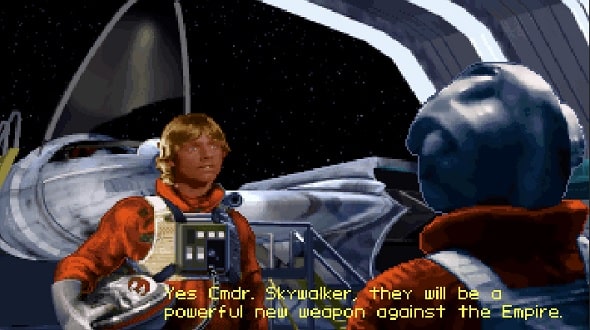
Technically, X-Wing was a notable leap for LucasArts. MobyGames describes it as using a polygonal 3D engine rather than relying purely on sprite-based presentation, and that helped give the game a sense of space and motion that was crucial for a starfighter sim. It may look primitive now, but in context it was a real statement of intent: LucasArts was building a serious cockpit game, not a shallow arcade spin-off.
The game also benefited from post-launch expansion support that made the overall project feel more like a growing platform than a disposable release. GOG’s special edition package includes both Imperial Pursuit and B-Wing, while MobyGames identifies each as official add-ons that expand the campaign and, in the case of B-Wing, introduce a new playable starfighter. That support helped X-Wing evolve into a broader Rebel combat package rather than a one-and-done title.
Reception
Modern aggregate-style records still show X-Wing as a respected game. MobyGames currently lists it with a 4.0/5 player average, and the Collector’s CD-ROM/Special Edition material also shows solid critic reception in the high-70s range. Those numbers are not the whole story, but they support the larger point: X-Wing was not just important because it came first. It was important because people actually liked it and kept liking it long enough for the series to become a classic.
Its long-tail reputation may matter even more than launch-period scoring. PC Gamer’s 2024 retrospective on the series quotes mission designer David Wessman describing the X-Wing games as taking a “serious approach” to space combat simulation, and that tone is exactly what still separates X-Wing from a lot of later licensed flight games. It was not trying to be breezy. It was trying to make being a Rebel pilot feel demanding and real.
Legacy
The legacy of X-Wing is straightforward and enormous: it launched one of the most respected Star Wars game series ever made. MobyGames’ group page defines the X-Wing / TIE Fighter series as a distinct line of space combat sims set across the Original Trilogy era, and X-Wing is where that begins. Without it, the franchise loses one of its most prestigious PC branches.
It also deserves credit for defining the Rebel starfighter fantasy in game form long before more accessible, more console-friendly titles like Star Wars: Rogue Squadron (1998) would bring that fantasy to a broader audience. Rogue Squadron may be more immediately approachable, but X-Wing is the older, more systems-driven ancestor that established how satisfying Star Wars space combat could be when treated as a simulation rather than a spectacle machine. That contrast makes it an especially useful article inside the archive, because it shows how different branches of Star Wars flying games evolved.
For the archive as a whole, X-Wing is one of those games that makes the 1990s section feel complete. It sits comfortably alongside Star Wars: TIE Fighter (1994), Star Wars: Dark Forces (1995), Star Wars: Shadows of the Empire (1996), and the Jedi Knight line as one of the games that gave 90s Star Wars its real gaming muscle.
Trivia and Interesting Facts
One of the most useful modern facts about X-Wing is that the currently sold Special Edition bundle preserves multiple versions of the game rather than just one. GOG’s listing explicitly includes the 1993 DOS release, the 1994 DOS CD version, and the 1998 Windows version, plus both expansions. For retro preservation nerds, that is excellent news and a rare bit of generosity.
The game’s expansion history also says a lot about how seriously LucasArts took it. Imperial Pursuit extends the story after the Death Star’s destruction, while B-Wing adds another Tour of Duty and the B-wing itself. That is a meaningful amount of content for an early-90s PC game, not just a token add-on.
FAQ
What is Star Wars: X-Wing?
It is a 1993 LucasArts space combat simulation game that puts players in the cockpits of Rebel starfighters like the X-wing, Y-wing, and A-wing.
Why is Star Wars: X-Wing important?
Because it launched the X-Wing / TIE Fighter series and helped establish serious starfighter simulation as one of the strongest branches of Star Wars gaming.
How many missions are in X-Wing?
Official Star Wars support says the game includes more than 120 missions.
Did X-Wing have expansions?
Yes. Modern bundled versions include the Imperial Pursuit and B-Wing expansions.
Conclusion
Star Wars: X-Wing did not just launch a series. It helped teach Star Wars games how to take themselves seriously.
This was the moment LucasArts stopped treating starfighters like background spectacle and turned them into the main event. The result was a game that demanded more from players, trusted them to learn its systems, and rewarded them with one of the most convincing Rebel pilot fantasies the franchise has ever produced.
That is why X-Wing still matters. Not just because it came first, but because it gave the 1990s Star Wars archive one of its true foundation stones. Without it, the road to TIE Fighter, Rogue Squadron, and the wider flight-combat legacy looks a lot less impressive. With it, the complete Star Wars games archive and the 1990–1999 hub feel a lot more complete.
Stay connected with the galaxy’s latest updates!
Follow us on X, Facebook, Instagram, bsky or Pinterest for exclusive content, mod guides, Star Wars gaming news, and more. Your support helps keep the Holonet alive—one click at a time
Author

Related Posts

How StarWars.com Changed Over the Years, According to the Wayback Machine
SWTOR’s April 2026 Event Calendar Brings Back Rakghouls and the Gree
Maul: Shadow Lord Season 2 May Have to Wait as Lucasfilm Juggles Other Star Wars Projects
Timothy Zahn Thinks Thrawn Would’ve Won Star Wars at Yavin in About 30 Seconds



Star Wars: Galaxy of Heroes April 1 Update Fixes a Long List of Bugs — But Two New Investigations Are Already Underway
Disney+ Announces Tales of the Moisture Farmer for May 4 Release
SWTOR’s DirectX 12 Update Is Real — but Public Testing Still Has One Big Hurdle
Star Wars Zero Company Just Revealed How Deep Squad Customization Really Goes