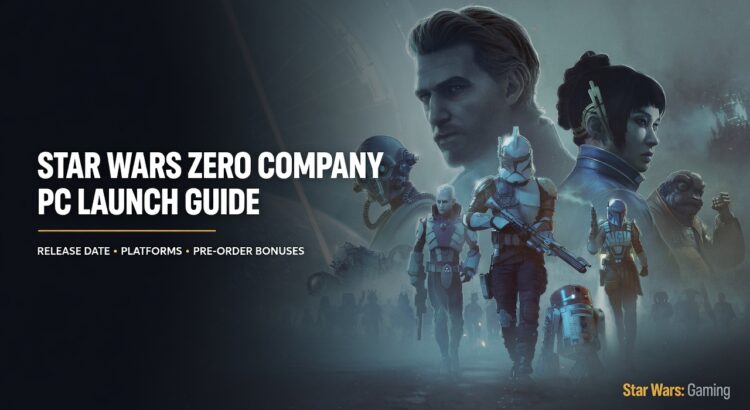
Star Wars Zero Company is getting closer, and if you are planning to play on PC, this is one of those releases where it is worth checking the basics before you blindly click pre-order and pretend you are “just looking.” The game launches on August 27, 2026, for PC, PlayStation 5, and Xbox Series X|S. EA has confirmed pre-orders are live, with the PC version available through the EA app and Steam. The standard PC edition is listed at $49.99, while the Deluxe Edition is listed at $59.99 on Steam. So yes, the Clone Wars tactics game is real, dated, and priced like EA knows strategy players can smell nonsense from orbit. What Is Star Wars Zero Company? Star Wars Zero Company is a single-player, turn-based tactics game set during the Clone Wars. It is being developed by Bit Reactor in collaboration with Respawn Entertainment and Lucasfilm Games, with EA…
pc games
Star Wars Eclipse Is Apparently Still Alive, and Quantic Dream Says the Team Is “Fully Committed”

Star Wars Eclipse has become one of those games where even a basic development update feels like someone spotted a rare creature in the woods. Not gameplay. Not a release date. Not a new trailer. Just confirmation that the thing is still being worked on. Quantic Dream has now pushed back against recent concerns around the project, saying development on Star Wars Eclipse is still “continuing as planned” and that the team has the resources needed to finish the game. The statement comes after reports that staff at the studio had gone on strike over planned layoffs, with some workers arguing that the game needs more people, not fewer, to actually make it across the finish line. Quantic Dream Says Eclipse Is Still Moving In a statement issued to IGN and reported by Video Games Chronicle, Quantic Dream said the development of Star Wars Eclipse remains unaffected by the recent…
Star Wars: X-Wing Alliance (1999): The Flight Sim That Let the Series Go Out in Style

By the time Star Wars: X-Wing Alliance landed in 1999, the classic LucasArts flight sim series had already done a lot of heavy lifting for Star Wars gaming. X-Wing gave players the Rebel pilot fantasy. TIE Fighter somehow made flying for the Empire feel cool instead of deeply concerning. Then X-Wing vs. TIE Fighter turned the whole thing into a full-on Rebel-vs-Imperial showdown. So what did X-Wing Alliance do? Simple. It took all of that, added more story, more personality, and one very shiny Millennium Falcon, then sent the series off in style. If you’ve been following our complete Star Wars games archive, this is one of those entries that really helps round out the 90s era. And if you are digging through our 1990–1999 Star Wars games hub, this one absolutely deserves a good spot near the top shelf. Not just another Rebel pilot story One of the smartest…
Star Wars: X-Wing vs. TIE Fighter (1997): The Multiplayer Space Sim That Changed the Series
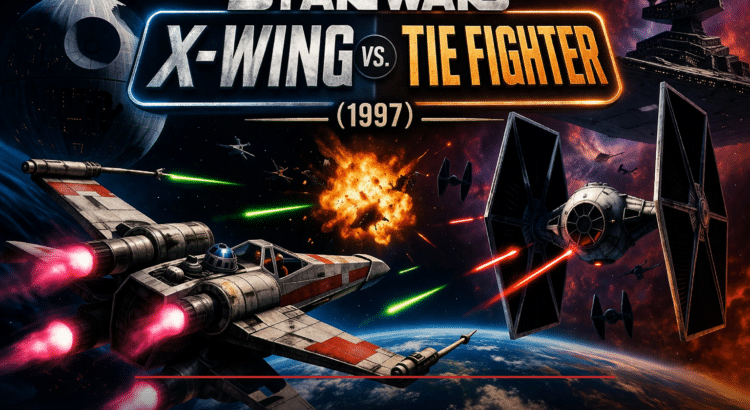
By the time Star Wars: X-Wing vs. TIE Fighter arrived in 1997, LucasArts had already built one of the most respected corners of Star Wars gaming. X-Wing had established the Rebel pilot fantasy. TIE Fighter had sharpened the formula and proved the Empire could be just as compelling from the cockpit. Then X-Wing vs. TIE Fighter took the next obvious step: it turned the whole thing into a direct Rebel-versus-Imperial showdown built around multiplayer dogfights, cooperative battles, and a more modernized presentation. Official Star Wars support highlights its support for up to eight players, more than 50 missions, and nine different spacecraft, while Steam’s store page frames it as one of the most historically significant space combat simulators ever made. That shift matters more than it might sound at first. X-Wing vs. TIE Fighter was not just “more of the same.” It marked a real evolution in what the series…
Star Wars: X-Wing (1993): The Rebel Flight Sim That Launched a Legendary Series
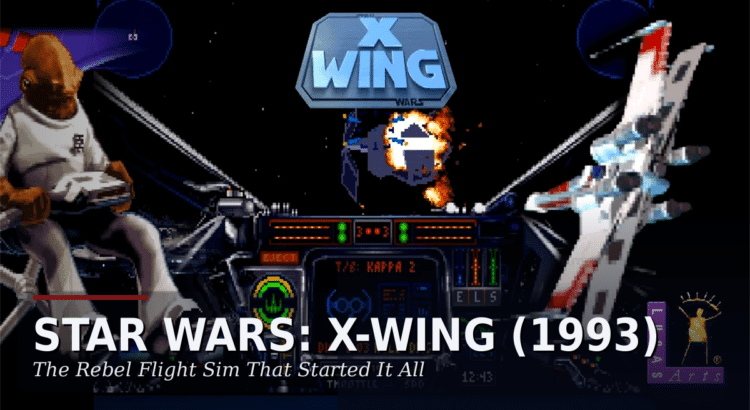
Before Star Wars space combat became a nostalgia trigger, a subgenre, and a minor religion for PC players of a certain age, there was Star Wars: X-Wing. Released in 1993 by LucasArts, it put players in the cockpit of Rebel starfighters and asked them to do something that felt unusually serious for the time: not just blast TIEs, but manage power, complete mission objectives, and survive a proper space combat simulation set in the Star Wars universe. Official Star Wars support still describes it as a game with more than 120 missions and a full 3D battlefield of Imperial and Rebel craft, while MobyGames identifies it as the first major space combat sim in the franchise. That alone makes it historically important. But X-Wing matters for a bigger reason: it created one of the most respected Star Wars game lineages ever made. Without it, there is no TIE Fighter, no…
Star Wars: TIE Fighter (1994): The Imperial Flight Sim That Still Feels Elite
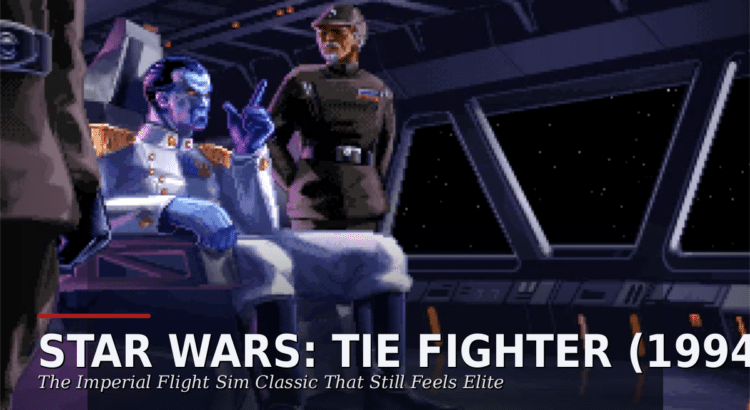
Some Star Wars games are remembered because they were huge commercial events. Others live forever because players never really stopped talking about how good they were. Star Wars: TIE Fighter belongs in the second category. Released in 1994, it put players in the cockpit of the Imperial Navy, cast Darth Vader’s side as the playable perspective, and built a space-combat sim that many players and critics still treat as one of the best Star Wars games ever made. Star Wars’ official support page describes it as a game where you “join the Imperial Navy” under Vader, while a 30th-anniversary retrospective from heise online notes that TIE Fighter still usually sits near the top of all-time Star Wars game rankings. That reputation was not built on novelty alone. TIE Fighter mattered because it took the foundation of X-Wing and sharpened it into something cleaner, smarter, and more confident. Where a lot…
Star Wars Jedi Knight: Mysteries of the Sith (1998): The Expansion That Gave Mara Jade the Spotlight
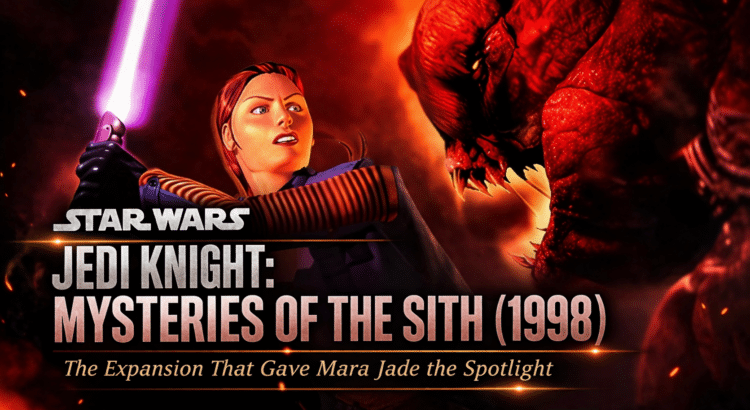
Some Star Wars games feel big because they reinvent the wheel. Others matter because they take an already strong foundation and push the universe into a more interesting direction. Star Wars Jedi Knight: Mysteries of the Sith belongs firmly in that second category. Released in 1998 as an expansion to Star Wars Jedi Knight: Dark Forces II, Mysteries of the Sith did not arrive with quite the same “everything is changing” impact as its predecessor. It was not the game that first gave Kyle Katarn a lightsaber or introduced full-on Force powers to the series. That had already happened. What Mysteries of the Sith did instead was something arguably just as important for the long-term identity of Star Wars games: it expanded the Jedi Knight formula, leaned harder into ancient Force lore, and gave Mara Jade a central playable role in a major Star Wars game. That alone makes it…
Star Wars Jedi Knight: Dark Forces II (1997): The Game That Turned Kyle Katarn Into a Legend
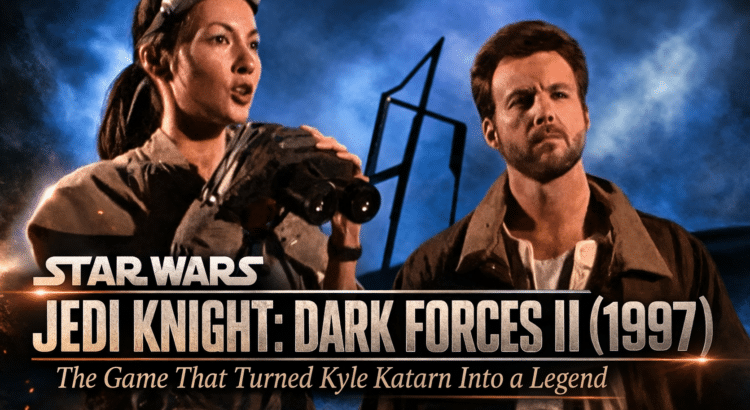
If Star Wars: Dark Forces was the game that proved Star Wars could thrive in first-person shooters, then Star Wars Jedi Knight: Dark Forces II was the game that blew that idea wide open. Released on October 9, 1997 for Windows, LucasArts’ sequel did not just give Kyle Katarn another mission. It gave him a lightsaber, a deeper past, a clash with Dark Jedi, and a Force-driven story that pushed Star Wars games into much more ambitious territory. That matters a lot in the bigger archive timeline. Jedi Knight: Dark Forces II sits at a key turning point between the older “blast your way through the Empire” style of Star Wars: Dark Forces (1995) and the more fully realized Jedi action of later games like Jedi Outcast and Jedi Academy. In hindsight, this is one of the most important bridge games in the entire franchise. It belongs squarely in the…
Star Wars: Dark Forces (1995): The Shooter That Gave Star Wars a New Kind of Hero
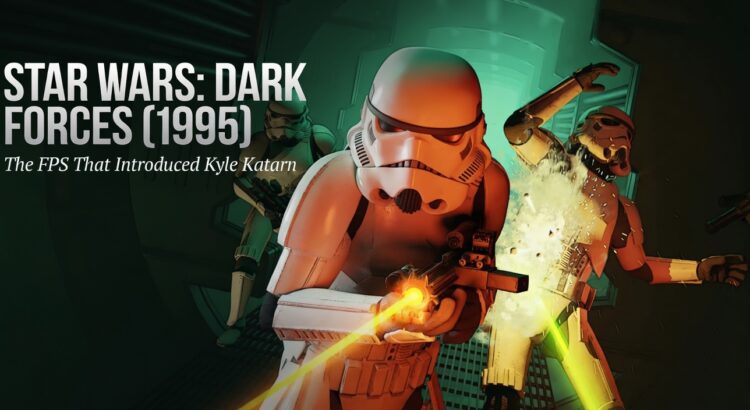
Before Star Wars games became known for lightsabers, morality systems, squad tactics, and giant cinematic set pieces, there was Star Wars: Dark Forces — a fast, grimy, surprisingly ambitious first-person shooter that helped kick open a whole new side of the galaxy. Released on February 15, 1995, by LucasArts, Dark Forces was the first Star Wars first-person shooter, and it did not just slap stormtroopers onto a generic corridor blaster. It introduced Kyle Katarn, sent players deep into Imperial installations, and built a campaign around sabotage, infiltration, mission objectives, and the Empire’s terrifying Dark Trooper project. Even now, that combination feels like a turning point. This was the moment Star Wars games proved they could do more than simply imitate the films. They could expand the universe in their own voice. For the SWTORStrategies archive, Dark Forces is one of those foundational entries that makes the whole timeline stronger. It…
Star Wars: Rogue Squadron (1998) – The Game That Defined Star Wars Flight Combat
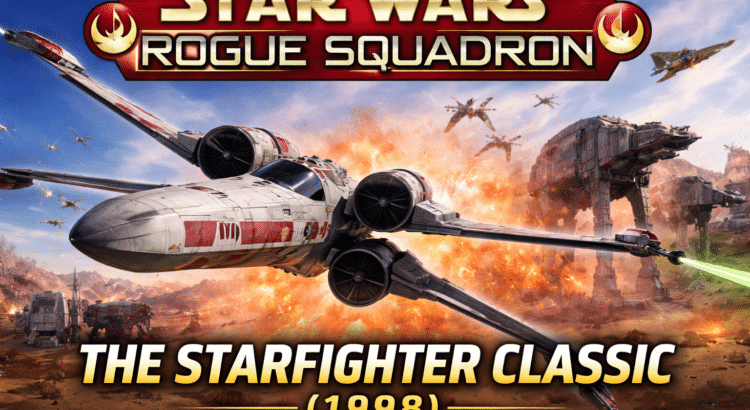
Few Star Wars games have captured the thrill of piloting an X-wing quite like Star Wars: Rogue Squadron. Released in 1998, the game brought cinematic space battles and atmospheric missions to home consoles at a time when Star Wars gaming was evolving rapidly. Developed by Factor 5 and published by LucasArts, Rogue Squadron placed players directly in the cockpit of the Rebel Alliance’s most elite fighter unit. The game combined fast-paced action, iconic Star Wars locations, and technical innovation that pushed the limits of late-1990s hardware. More than two decades later, the game remains a defining entry in the franchise’s gaming legacy. As many fans and historians often note: “Star Wars: Rogue Squadron proved that Star Wars flight combat could feel just as cinematic and exciting in a video game as it did on the big screen.” Game Information Title: Star Wars: Rogue SquadronRelease Year: 1998 Developer: Factor 5Publisher: LucasArts…
SWTOR Stays at the 14 most played PC game in December 2014
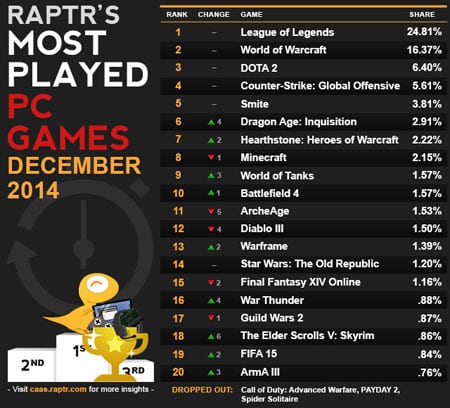
It’s that time again to take a look at Raptr’s Top 20 Rankings and where our beloved SWTOR placed at the end of last year. According to the stats, Star Wars: The Old Republic close the year out as the 14th most played PC game. This isn’t the best ranking but it certainly beats out not being on the list at all. SWTOR released Shadow of Revan in December and the play time jumped by 33.35%. This is probably because of the release which gave Star Wars fans something new to be excited about! LoL closed off the year in the number one spot, no big surprise there! The play time for LoL jumped by 30.09% in December. Other notable games in the rankings are WoW which placed second, Dragon Age: Inquisition placed 6th and raised in the charts by 4 spots! Overall, SWTOR finished out the year of 2014…