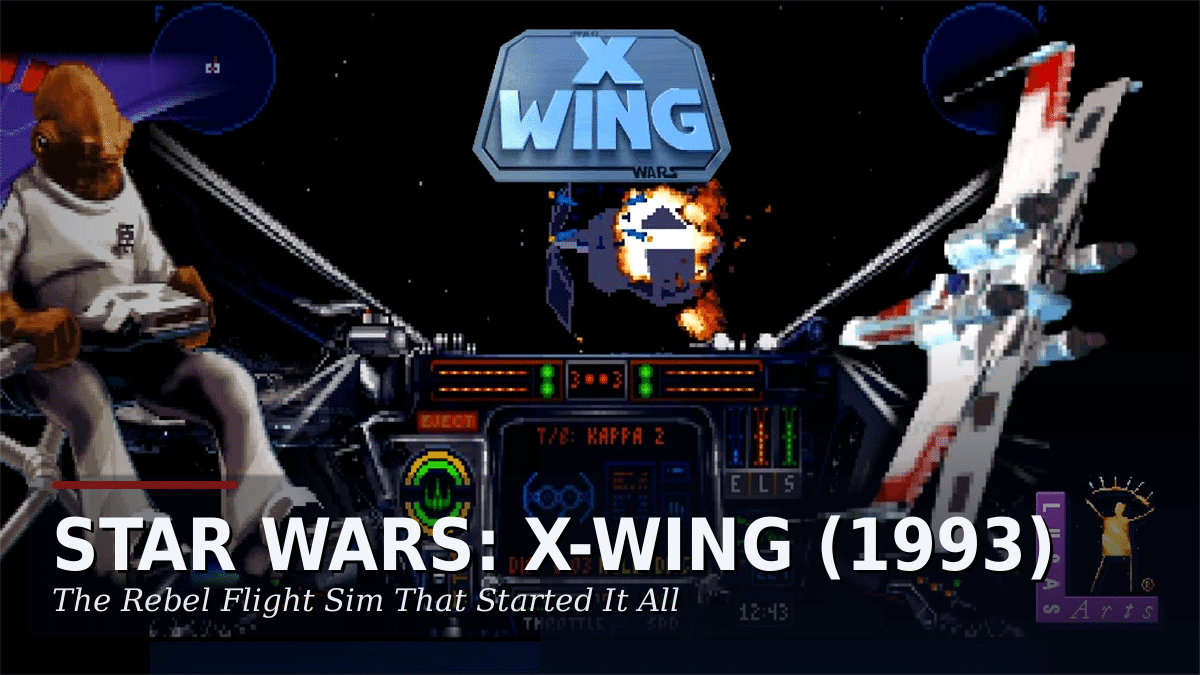

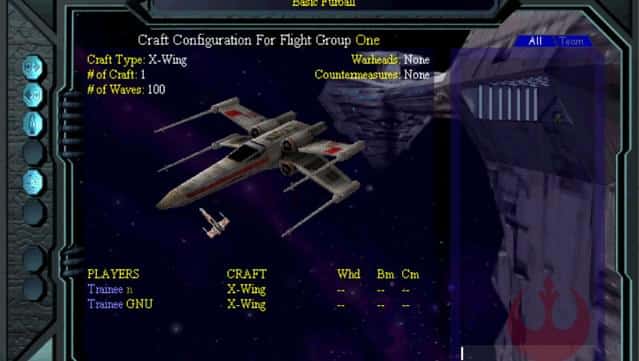
By the time Star Wars: X-Wing vs. TIE Fighter arrived in 1997, LucasArts had already built one of the most respected corners of Star Wars gaming. X-Wing had established the Rebel pilot fantasy. TIE Fighter had sharpened the formula and proved the Empire could be just as compelling from the cockpit. Then X-Wing vs. TIE Fighter took the next obvious step: it turned the whole thing into a direct Rebel-versus-Imperial showdown built around multiplayer dogfights, cooperative battles, and a more modernized presentation. Official Star Wars support highlights its support for up to eight players, more than 50 missions, and nine different spacecraft, while Steam’s store page frames it as one of the most historically significant space combat simulators ever made.
That shift matters more than it might sound at first. X-Wing vs. TIE Fighter was not just “more of the same.” It marked a real evolution in what the series thought it was for. Instead of focusing primarily on a long single-player narrative from one faction’s point of view, the game pushed hard toward multiplayer competition and co-op play, essentially asking a question players had wanted answered for years: what if you could stop fighting computer-controlled stand-ins and just throw Rebel and Imperial pilots against each other for real? Steam’s official description leans right into that idea, calling it “Star Wars space combat as it was meant to be.”
Game Information
Star Wars: X-Wing vs. TIE Fighter released in 1997 for Windows as the third main game in the X-Wing series. MobyGames identifies it as the third entry in LucasArts’ Star Wars space combat sim line, and Wookieepedia lists its release in April 1997 for PC. Official Star Wars support also confirms the game’s core feature set, including over 50 missions, nine spacecraft, and multiplayer support for up to eight players.
Modern releases generally bundle the Balance of Power expansion with the base game. GOG explicitly says its current package includes Balance of Power, featuring separate Imperial and Rebel campaigns with 15 missions each, while Steam sells the title as X-Wing vs. TIE Fighter – Balance of Power Campaigns. That matters because when people revisit the game now, they are usually experiencing a more complete and more narrative-rich version than the base release alone.
Gameplay Overview
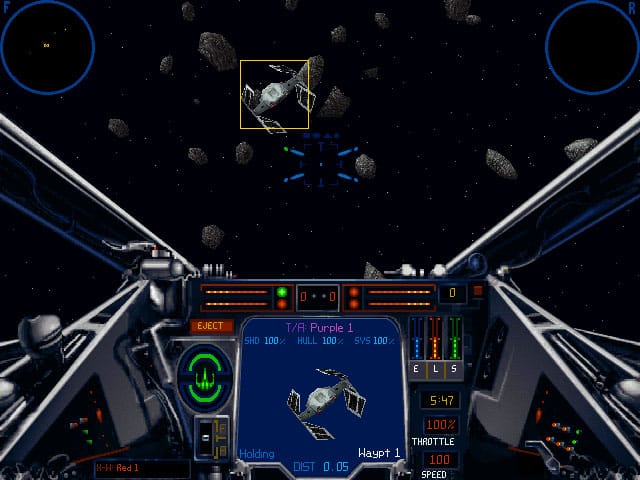
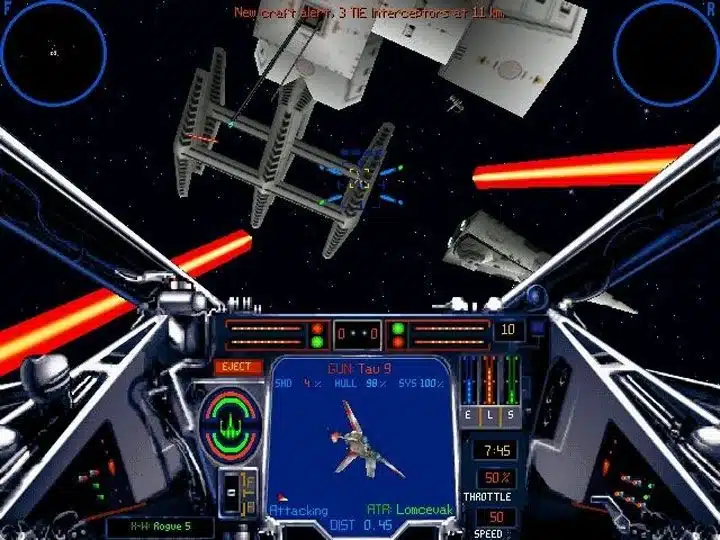
At a mechanical level, X-Wing vs. TIE Fighter stays true to the DNA of the earlier flight sims. You still manage power between lasers, shields, and engines. You still juggle dogfighting, escort work, survival, and mission priorities under pressure. What changes is the context. MobyGames describes a suite of multiplayer modes supporting Internet play for up to four players and LAN play for up to eight, while Steam emphasizes cooperative and competitive play where pilots can choose to fly for either the Empire or the Rebellion.
That multiplayer focus gave the game a different feel from X-Wing and TIE Fighter. The earlier games were built around immersive single-faction campaigns first and foremost. X-Wing vs. TIE Fighter still had missions and structure, but its main appeal was clearly the chance to dogfight other human pilots in one of the most beloved fictional war machines ever created. Official Star Wars support and Steam both frame that player-versus-player or player-with-player angle as the headline feature, not a side dish.
The game also brought technical upgrades over the original releases of its predecessors. The overview result for the title notes higher-resolution graphics, CD audio, texture-mapped ships, and Windows support, which helped the series feel more current in 1997 even if its foundations were still very much inherited from the earlier sims. In practical terms, it looked cleaner, felt smoother, and presented the Star Wars dogfight fantasy in a more modern wrapper.
Historical Context
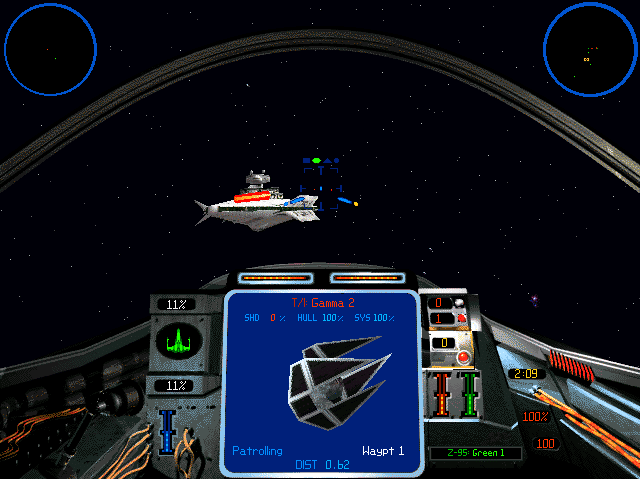
By 1997, the Star Wars games landscape was expanding fast. LucasArts was no longer just proving that the franchise could work in simulations or shooters. It was refining whole sub-series. X-Wing vs. TIE Fighter arrived in the same year as Jedi Knight: Dark Forces II, which says a lot about the era: one branch of Star Wars gaming was becoming more cinematic and Force-driven, while another was doubling down on technical depth and multiplayer starfighter combat. MobyGames’ series grouping makes that lineage clear by placing X-Wing vs. TIE Fighter firmly inside the broader X-Wing / TIE Fighter family.
This is also why the game is such a useful archive entry. X-Wing gave players the Rebel pilot fantasy. TIE Fighter gave them the Imperial version. X-Wing vs. TIE Fighter then turned that contrast into the whole premise. It is the point where the series stopped feeling like two excellent adjacent sims and started feeling like a complete head-to-head ecosystem. Steam’s description is especially telling here: it sells the fantasy of climbing into the cockpit of either faction’s fighters and battling alone or with others, which is basically the series’ elevator pitch finally reaching full maturity.
Development
The most important design decision in X-Wing vs. TIE Fighter was the emphasis on multiplayer. The overview result and Steam listing both stress that LucasArts and Totally Games were solving the technical challenge of letting multiple players share these complex simulated battles in real time. That may sound less flashy now, but in 1997 it was a serious step forward. These were not simple arcade rounds. They were still X-Wing-style missions and ships, just wired for direct human competition and cooperation.
The Balance of Power expansion also matters as part of the game’s development story. GOG says it adds 15-mission Imperial and Rebel campaigns, while MobyGames notes that it introduced more ships and even made the B-wing flyable. In other words, LucasArts and Totally Games did not leave the game as a multiplayer experiment with a thin shell around it. They kept building it out until it looked more like a fuller continuation of the series.
Reception
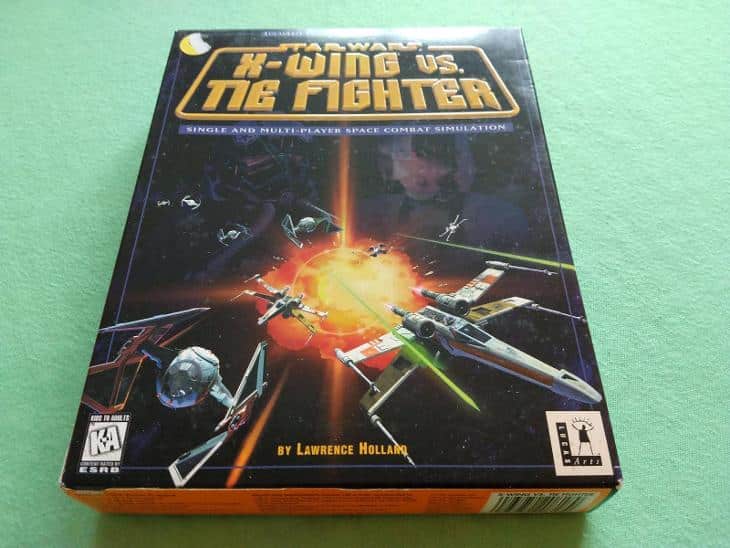
Reception was good, though not quite at the mythic level of TIE Fighter. MobyGames shows the base game with a strong reputation as the third X-Wing entry, while a separate MobyGames page for the bundled Balance of Power release lists an average critic score of 69% based on five ratings. The overview result also quotes Edge praising the game’s revised visuals and multiplayer focus, though other outlets noted that the multiplayer-first approach meant solo players did not get quite the same kind of campaign-rich experience they had in earlier entries.
That split is part of the game’s identity even now. People who wanted the next TIE Fighter sometimes found X-Wing vs. TIE Fighter a little thinner in narrative terms. People who wanted to finally live out the direct Rebel-versus-Imperial dogfight fantasy, however, got exactly the game they had been waiting for. That makes its legacy slightly different from the earlier titles: maybe less beloved as a single-player classic, but hugely important in showing where the series could go.
Legacy
The biggest legacy of X-Wing vs. TIE Fighter is that it turned the series outward. X-Wing and TIE Fighter were about immersion in a faction and a campaign. X-Wing vs. TIE Fighter was about encounter, competition, and the fantasy of putting both sides of the Original Trilogy’s starfighter war into the same playable space. That shift helped the series evolve, and it also helped prepare the ground for later entries like X-Wing Alliance, which would try to reconcile cinematic scale with the more modernized framework of the later games. MobyGames’ series group and the game’s official support page both reinforce its place as a core entry, not a throwaway side branch.
For the archive, this is exactly the kind of game that makes the 1990s era feel more complete. It is not just another classic to slot into a list. It is the connective tissue between X-Wing (1993), TIE Fighter (1994), and the broader evolution of Star Wars flight sims. Without it, that lineage looks cleaner but less ambitious. With it, you can see LucasArts actively testing how far the formula could stretch.
Trivia and Interesting Facts
One of the more interesting footnotes is Flight School, a limited demo-style version of the game. MobyGames says it featured 14 missions, with seven playable in multiplayer, and was included in the X-Wing Collector Series compilation. That made it a weird little ambassador for the game’s multiplayer identity.
Another useful bit of context is that modern digital storefronts almost always foreground Balance of Power when selling the game. That tells you something about how the title is remembered: not just as the multiplayer pivot, but as the version that really needed its expansion content to feel fully rounded.
FAQ
What is Star Wars: X-Wing vs. TIE Fighter?
It is a 1997 Star Wars space combat sim for Windows and the third main game in the X-Wing series, focused heavily on multiplayer dogfights and co-op play between Rebel and Imperial pilots.
Why is X-Wing vs. TIE Fighter important?
Because it evolved the series from faction-based single-player sims into a more direct Rebel-versus-Empire multiplayer experience, while still preserving the technical depth of the earlier games.
Did it have a single-player mode?
Yes, but the game’s reputation and marketing centered much more strongly on multiplayer and cooperative play than the previous entries in the series.
What is Balance of Power?
It is the game’s expansion pack, included in modern releases, adding separate 15-mission Imperial and Rebel campaigns along with additional ships and content.
How does it connect to other games in the archive?
It sits directly between Star Wars: X-Wing (1993) and Star Wars: TIE Fighter (1994) in terms of series evolution, while helping lead into the later direction of Star Wars flight sims.
Conclusion
Star Wars: X-Wing vs. TIE Fighter was not the most story-rich game in the series, and it was never going to replace TIE Fighter as the single-player darling of the line. But that was never really its job.
Its job was to answer a very specific question: what happens when LucasArts takes two already beloved Star Wars flight sim fantasies and lets them collide directly? The answer was a game that pushed the series into a more modern, multiplayer-focused direction and proved the formula was flexible enough to survive that shift. That is why it still matters. Not because it was the safest sequel, but because it was one of the boldest.
Stay connected with the galaxy’s latest updates!
Follow us on X, Facebook, Instagram, bsky or Pinterest for exclusive content, mod guides, Star Wars gaming news, and more. Your support helps keep the Holonet alive—one click at a time
Author

Related Posts

13 Years Later, the Shutdown of LucasArts Still Feels Like a Brutal Turning Point for Star Wars Games
Kinect Star Wars Released on This Day in 2012 — And Yes, the Dance Mode Still Lives Rent-Free in Memory
What Star Wars and Easter Have in Common: Fall, Redemption, and the Return of Hope-
SWTOR’s Executive Producer Letter Sets Up Update 7.9, Teases 8.0, and Confirms More Spring Rewards



-
Star Wars: X-Wing (1993): The Rebel Flight Sim That Launched a Legendary Series 
How StarWars.com Changed Over the Years, According to the Wayback Machine-
SWTOR’s April 2026 Event Calendar Brings Back Rakghouls and the Gree 
Maul: Shadow Lord Season 2 May Have to Wait as Lucasfilm Juggles Other Star Wars Projects