
Some Star Wars games are remembered because they were huge commercial events. Others live forever because players never really stopped talking about how good they were. Star Wars: TIE Fighter belongs in the second category. Released in 1994, it put players in the cockpit of the Imperial Navy, cast Darth Vader’s side as the playable perspective, and built a space-combat sim that many players and critics still treat as one of the best Star Wars games ever made. Star Wars’ official support page describes it as a game where you “join the Imperial Navy” under Vader, while a 30th-anniversary retrospective from heise online notes that TIE Fighter still usually sits near the top of all-time Star Wars game rankings.
That reputation was not built on novelty alone. TIE Fighter mattered because it took the foundation of X-Wing and sharpened it into something cleaner, smarter, and more confident. Where a lot of licensed games in the early 1990s were still happy to trade on familiar imagery, TIE Fighter asked players to do something far more interesting: see the galaxy from the Empire’s seat and actually buy into that point of view for a while. That made it unusual in 1994, and it still makes it unusual now.
For the SWTOR Strategies archive, this is exactly the kind of game that gives the whole project more authority. It belongs naturally in the Star Wars Games: Complete List and the Star Wars Games (1990–1999) hub, because it is not just another good 90s release. It is one of the foundational Star Wars classics.
Game Information
Star Wars: TIE Fighter was released in 1994 for DOS, with later re-releases and expanded editions following after that. Star Wars’ official support page lists the original release in 1994 and notes later availability through modern storefronts, while GOG’s current release package includes the original 1994 DOS version, the 1998 Windows version, Defender of the Empire, and Enemies of the Empire.
At a genre level, this is a first-person space-flight combat sim and a direct follow-up to X-Wing. MobyGames classifies it as action/simulation with first-person space flight and vehicular combat, and its description lays out the core structure clearly: seven campaigns, more than 50 missions, wingmen you can command, and a roster of Imperial craft including the standard TIE Fighter, TIE Interceptor, TIE Advanced, and more.
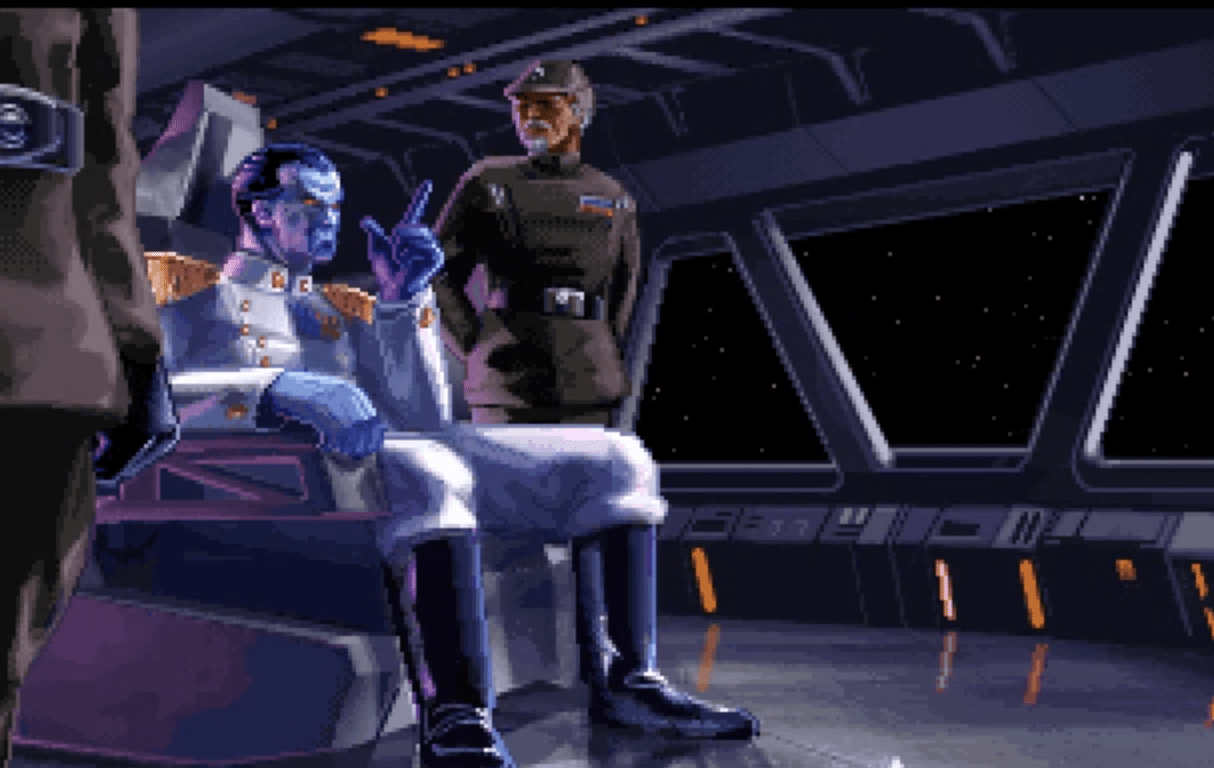
The hook, though, is bigger than a spec sheet. GOG’s description frames the player as an Imperial Navy recruit working to crush the Rebel Alliance after Hoth, and that framing is central to the game’s identity. TIE Fighter is not trying to give players a Rebel underdog fantasy. It wants them in an Imperial cockpit, following orders, protecting capital ships, hunting insurgents, and seeing the galaxy through a very different lens.
Gameplay Overview
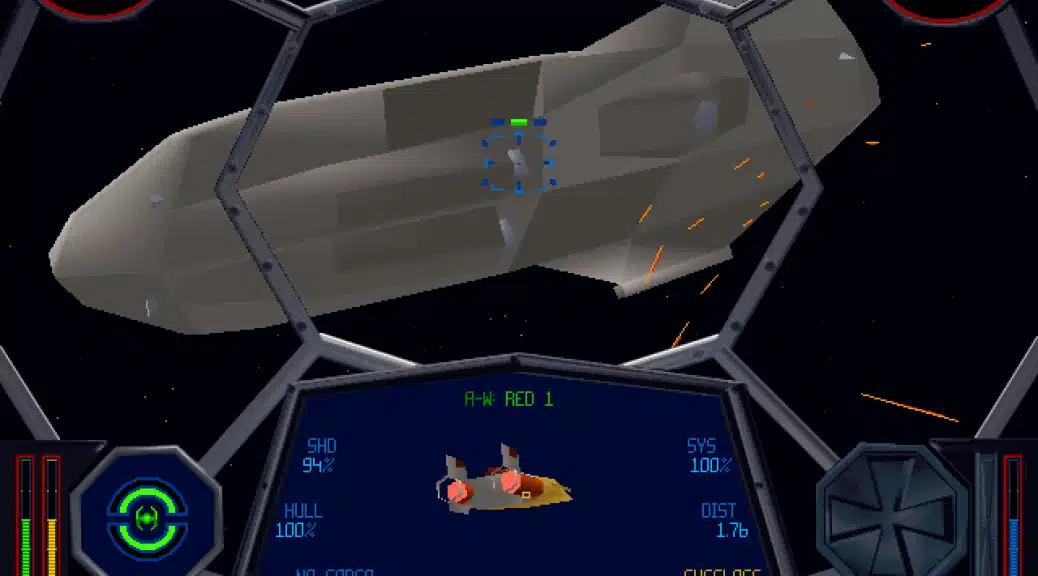
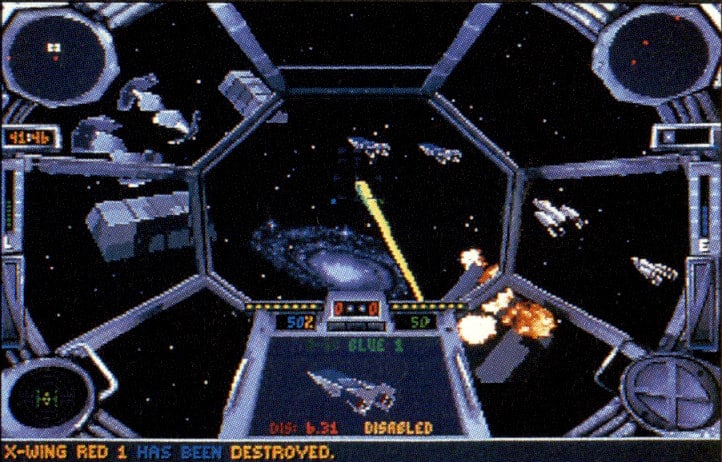
What made TIE Fighter so compelling was the way it blended simulation discipline with strong mission design. MobyGames’ description highlights a campaign built across seven operations and over 50 missions, with wingmen who can be ordered in the field and ship management that requires players to balance engine, laser, and shield ratios in real time. That last part is especially important: this was not just a “point ship at target and fire” arcade shooter. Power management, situational awareness, and mission priorities were all part of the skill ceiling.
That design depth is part of why the game held up so well. heise’s 30th-anniversary retrospective argues that TIE Fighter improved on X-Wing in nearly every major area, specifically calling out better controls, clearer mission design, better graphics, a more interesting story, and a stronger overall sense of space. That matters because it explains why the game’s reputation became so enduring. It was not just “more X-Wing.” It was the version that felt more complete.
There is also a very particular pleasure in the ships themselves. MobyGames notes that players work through a range of Imperial starfighters, from the basic TIE Fighter to faster and more powerful variants, and those differences matter in play. The game does not flatten the Imperial arsenal into cosmetic swaps. It treats the fleet like a real toolbox, and that gives missions a strategic texture that helped separate it from simpler space shooters of the era.
Historical Context
To understand why TIE Fighter hit so hard, it helps to remember where Star Wars was in 1994. The last live-action film was already more than a decade old, the prequels had not begun, and the Special Editions were still ahead. In that stretch, games, novels, and comics carried a lot of the franchise’s momentum. heise describes 1994 as a time when even the sight of the logo could trigger excitement, and in that atmosphere LucasArts’ flight sims mattered more than just as genre pieces. They were part of keeping Star Wars feeling alive between film eras.
TIE Fighter also arrived just one year after X-Wing, and that quick turnaround mattered. According to heise, X-Wing had already proven there was a real appetite for a more serious Star Wars starfighter sim, even if some of its structure was frustrating. TIE Fighter was the sequel that listened to that feedback and refined the formula. That is one of the clearest reasons it became the more beloved game of the two.
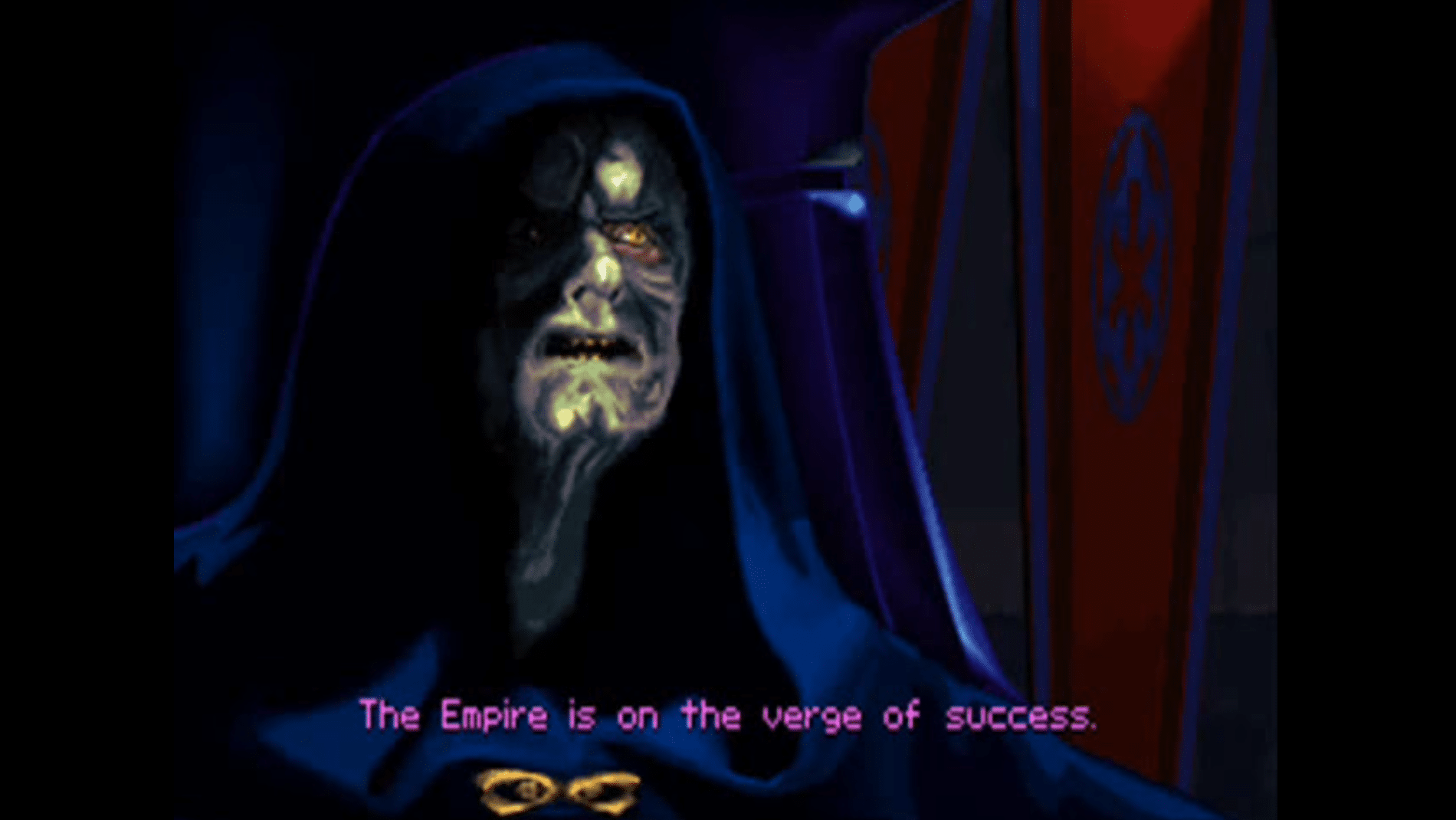
Most importantly, it was one of the earliest major Star Wars games to let players fully inhabit the Empire rather than simply fight against it. heise explicitly calls out that perspective shift as a first for the franchise’s games and one of the title’s big surprises. That single design choice gave TIE Fighter a distinct identity that has never really gone out of style.
Development
While TIE Fighter is often remembered for its perspective twist, its technical and structural polish are just as important to its legacy. Star Wars’ official support page emphasizes cinematic cutscenes and a 3D world filled with Imperial and Rebel starfighters, while GOG’s current product page preserves multiple versions of the game and its add-ons, including the later Windows release and expansion content. That layered history matters because it shows LucasArts treated the game as something worth refining and repackaging rather than a one-and-done experiment.
The expansion path is also part of the story. GOG lists Defender of the Empire and Enemies of the Empire alongside the core game, while MobyGames separately identifies Defender of the Empire as an official add-on. In archive terms, that is useful because it shows TIE Fighter was not just a successful sequel. It was a platform LucasArts kept building on.
Reception
Critically, TIE Fighter landed as a serious success. MobyGames currently shows an 89% critic score, which is a strong result for any 1994 PC title, let alone a licensed one. It also ranks the game highly among DOS releases on the site, reinforcing how well-regarded it remained beyond the immediate launch window.
Its broader reputation may be even more impressive than the raw score. The 30th-anniversary heise retrospective describes TIE Fighter as a legendary game that usually appears near the top of best-Star Wars-games conversations, and even modern coverage from GameSpot has referred to X-Wing and TIE Fighter together as among the greatest games the franchise ever produced. That kind of long-tail esteem is what separates a period hit from a real classic.
Legacy
The legacy of TIE Fighter rests on three big strengths. First, it proved that Star Wars space combat could support deep simulation systems without losing the cinematic feel that players wanted. Second, it showed that a licensed game could succeed by changing viewpoint instead of just replaying familiar hero beats. Third, it helped establish the flight-sim branch of Star Wars gaming as one of the franchise’s most respected lineages. GOG still sells it in preserved form today, Star Wars support still highlights it officially, and retrospective coverage continues to treat it as a benchmark title.
For archive purposes, TIE Fighter is one of those games that makes the whole timeline look smarter. It balances the 1990s hub by adding a pillar-class space sim to an era that also includes shooters, action-adventures, and expanded-universe experiments. It gives the 1990–1999 hub more historical weight, and it deserves a visible place inside the broader complete archive.
Trivia and Interesting Facts
One of the game’s most important distinctions is simple: it let players serve the Empire, not the Rebellion. That sounds normal now, but in 1994 it was a real novelty, and retrospective coverage still treats it as one of the title’s defining creative swings.
The preserved modern release is unusually generous. GOG’s version bundles the original DOS game, the 1998 Windows edition, Defender of the Empire, and Enemies of the Empire, which makes it one of the easier classic Star Wars PC games to revisit in a fairly complete form.
MobyGames also notes the scale of the original campaign: seven campaigns and over 50 missions. For a 1994 licensed flight sim, that is a lot of game.
FAQ
What is Star Wars: TIE Fighter?
It is a 1994 Star Wars space-combat simulation game that places players in the role of an Imperial Navy pilot serving under Darth Vader.
Why is TIE Fighter so important in Star Wars game history?
Because it is one of the franchise’s most acclaimed games, refined the X-Wing formula, and made the Empire the playable point of view in a major Star Wars title.
How many missions are in TIE Fighter?
MobyGames describes the game as having seven campaigns and more than 50 missions.
Was there expansion content for TIE Fighter?
Yes. Modern preserved releases include Defender of the Empire and Enemies of the Empire alongside the core game.
Where should this article link in the SWTOR Strategies archive?
It should link to the Star Wars Games: Complete List and the Star Wars Games (1990–1999) hub.
Stay connected with the galaxy’s latest updates!
Follow us on X, Facebook, Instagram, bsky or Pinterest for exclusive content, mod guides, Star Wars gaming news, and more. Your support helps keep the Holonet alive—one click at a time
Author

Related Posts

When Madagascar meets the Clone Wars
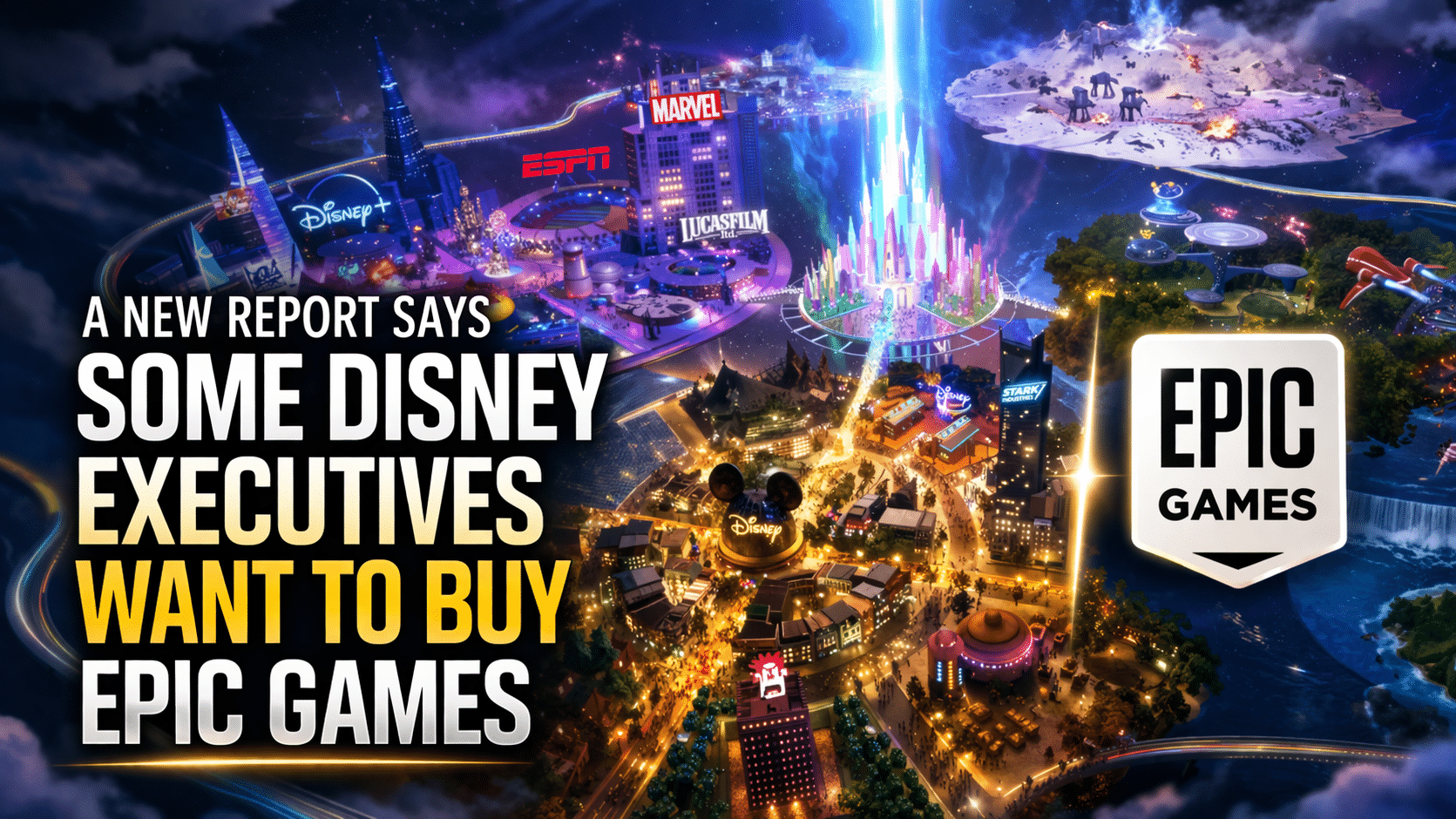
Disney Reportedly Has Executives Who Want to Buy Epic Games — and That Could Be Massive for Star Wars-
The Mandalorian and Grogu Just Crashed a Savannah Bananas Game, and Honestly It Makes Weird Sense -
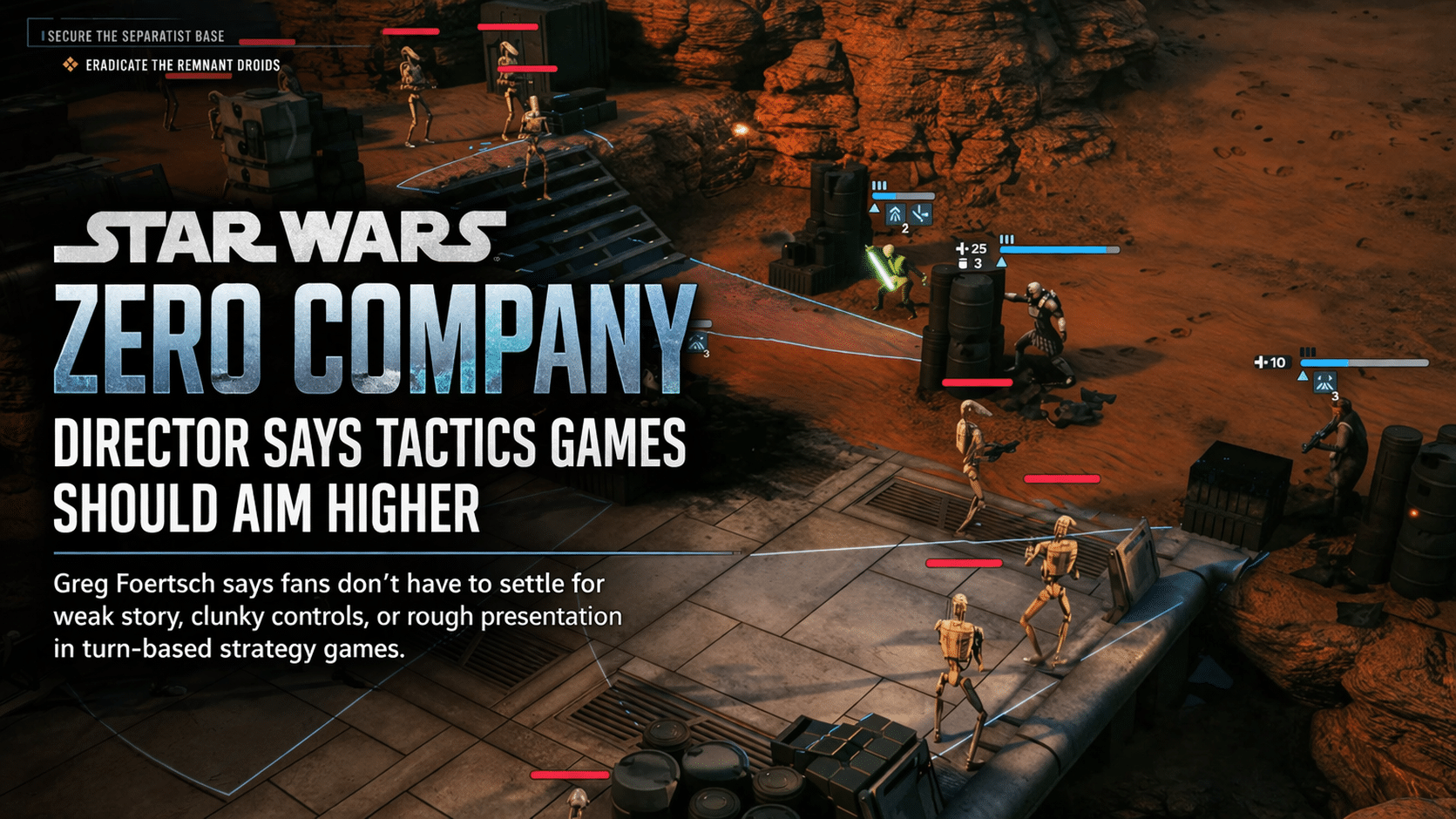
Star Wars Zero Company Wants to Prove Tactics Games Do Not Have to Feel Cheap


- Why Modern Diners Are Falling in Love With Weekend Brunch Experiences
-
Star Wars Jedi Knight: Mysteries of the Sith (1998): The Expansion That Gave Mara Jade the Spotlight 
Star Wars Zero Company Director Thinks Old-School PC Genres Are Back Because Consoles Couldn’t Carry Them Properly-
William Shakespeare’s Ahsoka’s Tale Gets a September Release Date