

Most Star Wars games ask you to win a battle. Star Wars: Rebellion asked you to administer the consequences. It wanted to know where your ships were built, which planets paid for them, whether the local population supported your government, who was spying on your shipyards, which officer should command the fleet, and whether Luke Skywalker had enough spare time between diplomatic assignments to become a Jedi. Then it opened another window. Released for Windows in 1998, Star Wars: Rebellion was developed by Coolhand Interactive and published by LucasArts. In the United Kingdom and Ireland, the same game was released as Star Wars: Supremacy. There are no separate campaigns, altered mechanics, or regional design differences hiding behind the second title. Rebellion and Supremacy are the same enormous, stubborn, fascinating strategy game. The premise was almost irresponsibly ambitious. Instead of focusing on one battlefield, one fleet, or one group of heroes,…
lucasarts
Classic Star Wars Games Are in Xbox’s Ultimate Game Sale, So Your Backlog Can Suffer Properly
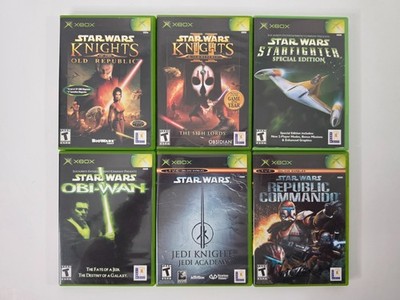
The Xbox Ultimate Game Sale is here, and Star Wars fans have been handed a very dangerous little menu of bad decisions. Not bad games. Bad decisions. As in: “I already own KOTOR somewhere, but it is $4.99, so obviously I need it again.” According to Windows Central’s full Xbox Ultimate Game Sale 2026 list, several classic Star Wars games are currently discounted, including Knights of the Old Republic, KOTOR II, Republic Commando, Jedi Outcast, Jedi Academy, Jedi Starfighter, the original Battlefront games, and multiple LEGO Star Wars titles. In other words, your backlog is not safe. The Old Republic Is the Easy Pick The standout deal is obvious: Star Wars: Knights of the Old Republic. With the KOTOR remake rumor mill waking up again, this is a good time to revisit the original rather than just stare at Revan’s mask and argue about hypothetical trailers. We recently covered the…
When Star Wars: Episode I Racer Turned Podracing Into One of the Fastest Star Wars Games Ever

There are Star Wars games people remember because they were deep, dramatic, and full of moral choices. And then there is Star Wars: Episode I Racer, a game remembered because it let you fly through a canyon at absurd speed while your engines screamed like they were seconds from becoming expensive scrap metal. Honestly, fair. The Nintendo 64 version of Star Wars: Episode I Racer was released on July 21, 1999, according to MobyGames’ release database, landing right in the middle of The Phantom Menace era when podracing briefly became the coolest thing in the galaxy. And yes, we have already covered the game properly in our full Star Wars: Episode I Racer 1999 archive entry. But on its anniversary, it is worth coming back to one simple point: This was not just a movie tie-in. It was one of the fastest Star Wars games ever made. Podracing Was Perfect…
Star Wars: Episode I – The Phantom Menace (1999): The Movie Game That Survived Development Chaos
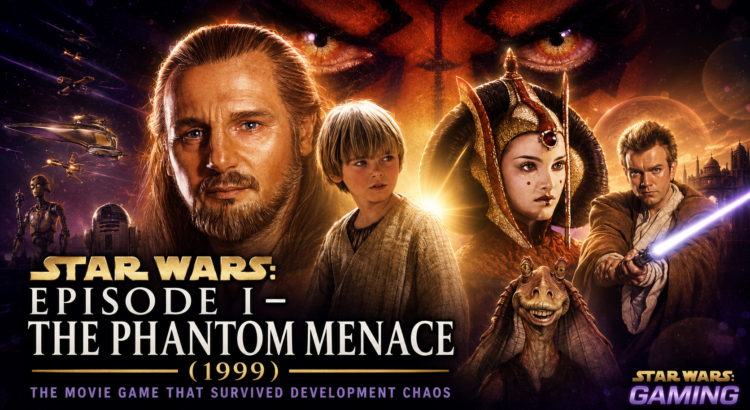
There are many ways to fail a diplomatic mission. You can insult the other side. You can misunderstand the negotiations. You can discover that the conference room is filling with poisonous gas while an army of battle droids waits outside. Or, in Star Wars: Episode I – The Phantom Menace, you can accidentally swing a lightsaber at the wrong person and turn the entire Trade Federation ship into a workplace dispute. Released for Windows and PlayStation in 1999, The Phantom Menace was Big Ape Productions’ attempt to squeeze George Lucas’ first prequel into a third-person action-adventure. Players moved between Obi-Wan Kenobi, Qui-Gon Jinn, Queen Amidala, and Captain Panaka across an expanded retelling of the film, mixing lightsaber combat, blaster fights, puzzles, exploration, conversations, trading, and side objectives. It was ambitious. It was awkward. It had a camera that occasionally behaved like it had also been hit with a Force push….
TIE Fighter Strategy Guide: When Star Wars PC Games Needed Manuals Like Sacred Texts
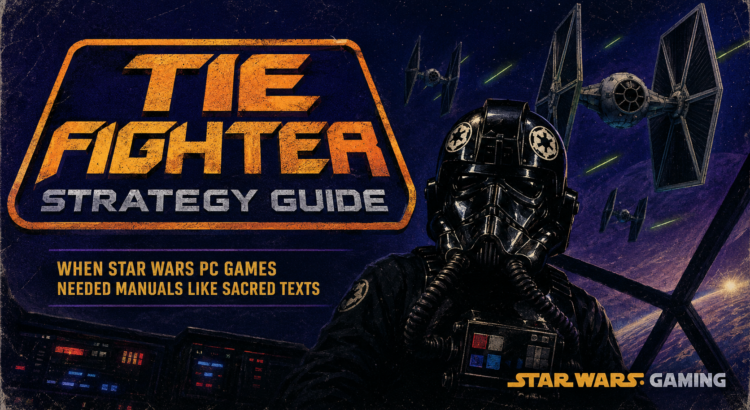
There was a time when playing a Star Wars game did not begin with a tutorial popup, a glowing objective marker, and a cheerful reminder that your spacebar can make things happen. Sometimes it began with a manual. A real one. The kind you actually had to read. Star Wars: TIE Fighter launched in 1994, and it was not built for players who wanted to casually drift through the galaxy while the game quietly solved itself in the background. It was a space combat sim from LucasArts, and it expected you to learn how to fly, manage shields, cycle targets, redirect power, understand mission briefings, and survive long enough to make the Empire proud. Or at least slightly less disappointed. That is why TIE Fighter: The Official Strategy Guide still feels like a perfect artifact from the golden age of Star Wars PC gaming. Published by Prima in July 1994…
KOTOR Remake May Finally Be Targeting 2028, Which Somehow Feels Both Close and Ridiculous
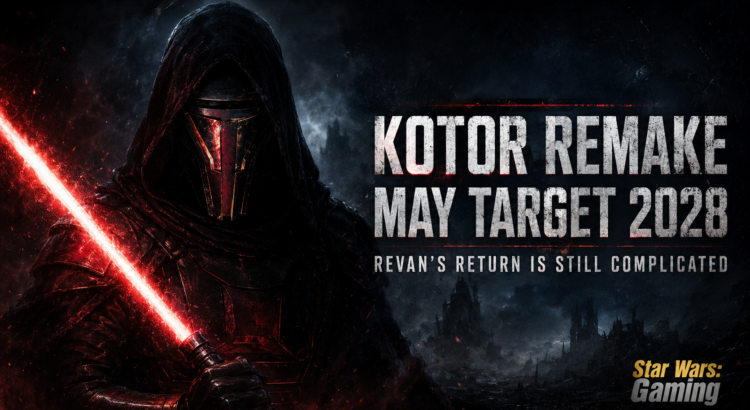
The Star Wars: Knights of the Old Republic remake may finally have something resembling a release window. Maybe. Possibly. With a lightsaber-sized asterisk. According to Gamereactor, a New Saber executive has put the long-awaited KOTOR remake “hopefully” in the company’s 2028 release line-up. That is not an official release date. It is not a trailer. It is not a fresh gameplay reveal. It is not even the kind of confident corporate sentence you can safely build a countdown clock around. But for a remake that has spent years living somewhere between “still in development” and “please stop asking,” even the word “hopefully” counts as movement. 2028 Is Not a Date, But It Is Something The key word here is “hopefully.” That matters. The remake has not been officially dated for 2028, and nobody should treat this as confirmation that Revan is definitely returning that year. What it does suggest is…
Star Wars: Masters of Teräs Käsi (1997): The Fighting Game Everyone Remembers for the Wrong Reasons
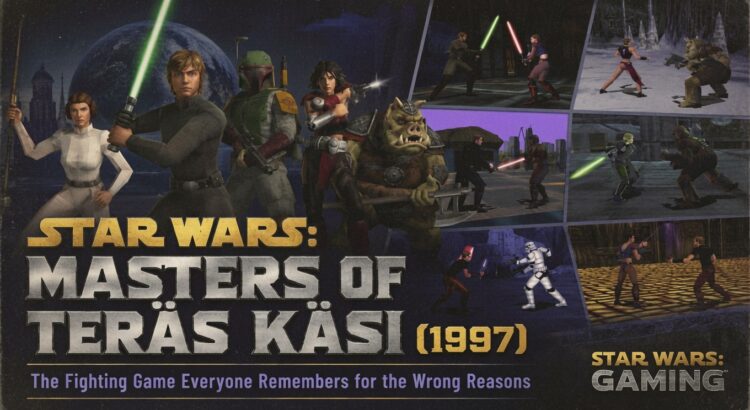
There is a moment in Star Wars: Masters of Teräs Käsi when a Gamorrean guard can punch Darth Vader unconscious. Not distract him. Not knock him into a conveniently placed reactor shaft. Not survive long enough for someone more qualified to arrive. Just beat him in a fight. That tells you almost everything you need to know about LucasArts’ 1997 attempt to turn Star Wars into a PlayStation fighting game. Almost. Because while Masters of Teräs Käsi has spent decades being treated as a punchline, it is not merely a bad game with a famous license. It is a fascinating collision between Star Wars, 1990s fighting-game fever, unfamiliar hardware, Expanded Universe enthusiasm, and the dangerous belief that any franchise could become the next Tekken if you gave everyone enough special moves. It did not become the next Tekken. It did, however, give us Boba Fett firing missiles at Luke Skywalker…
KOTOR Launched on Xbox 23 Years Ago, and Star Wars RPGs Were Never the Same

When Star Wars: Knights of the Old Republic launched on Xbox in July 2003, it did not just give players another Star Wars game. It gave them a galaxy they could actually shape. That was the difference. Before KOTOR, Star Wars games had already done plenty: space sims, shooters, strategy, arcade action, podracing, and more odd experiments than most franchises would ever dare attempt. Our complete archive of every Star Wars game ever made makes that history look almost absurd in hindsight. But KOTOR hit differently because it was not trying to replay the films. It was trying to let players live inside Star Wars as an RPG. The Day Players Finally Met Revan The Xbox version of Knights of the Old Republic arrived in July 2003, only days after LucasArts confirmed the game had gone gold. We already looked back at that production milestone in our piece on how…
Star Wars: Yoda Stories (1997): The Tiny Desktop Adventure That Made the Galaxy Feel Like a Lunch Break
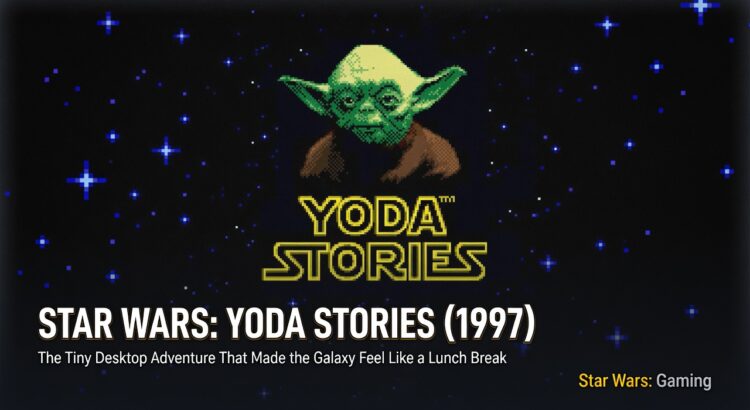
Some Star Wars games want to recreate the Battle of Hoth. Others want to simulate the pressure of commanding an Imperial fleet, surviving a lightsaber duel, or deciding whether your Jedi should remain noble or start firing Force lightning at everyone who mildly irritates them. Star Wars: Yoda Stories wanted to sit quietly in a small Windows box while you avoided doing actual work. Released for Windows in 1997, Yoda Stories was LucasArts’ second and final Desktop Adventures game after Indiana Jones and His Desktop Adventures. Rather than delivering one large campaign, it generated compact missions intended to be completed in short sessions, usually within about an hour. A Game Boy Color version followed in 1999, although that adaptation made some substantial compromises. It sounds modest because it was modest. That was the entire point. As part of our complete archive of every Star Wars game ever released, Yoda Stories…
SWTOR’s First Testers Logged In 16 Years Ago, and the Old Republic MMO Dream Became Real
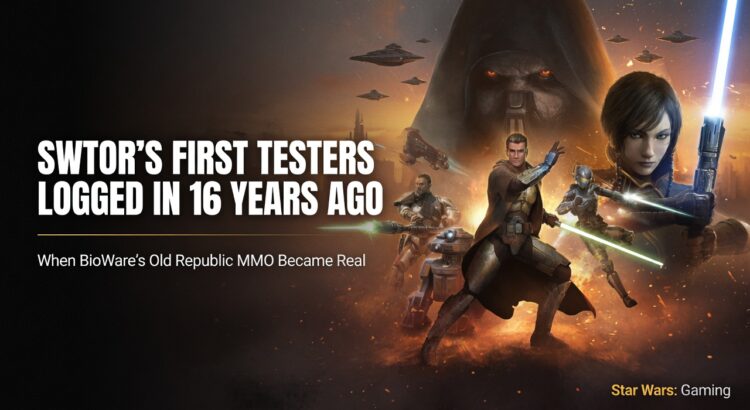
On July 9, 2010, Star Wars: The Old Republic stopped feeling like a giant BioWare promise and started becoming an actual game people could touch. That was the day BioWare opened the doors to the first wave of SWTOR game testing, inviting selected North American players into the early testing process. It was not a full public beta. It was not the glorious mass stampede everyone wanted. It was a smaller, focused rollout, with more regions and players expected later. Still, for anyone watching the game at the time, it mattered. Because before that moment, The Old Republic was mostly trailers, developer interviews, forum speculation, class reveals, and the impossible weight of being “the Star Wars MMO from BioWare.” No pressure, then. The KOTOR MMO Dream Was Finally Taking Shape The reason SWTOR carried so much hype was simple: people did not just want another MMO. They wanted the impossible…
On This Day: Knights of the Old Republic Went Gold, and Star Wars RPGs Were Never the Same

On July 9, 2003, Star Wars: Knights of the Old Republic went gold. That sounds like a small production milestone now, especially in an era where games “launch” and then spend six months being patched into the shape everyone hoped for on day one. But back in 2003, going gold meant something very specific. The game was done. The master was ready. The discs were coming. And in this case, one of the most important Star Wars games ever made was about to leave BioWare’s hands and land in players’ homes. At the time, GameSpot reported that LucasArts had confirmed the Xbox version of Knights of the Old Republic was ready to ship, with release expected shortly after. Looking back more than two decades later, that little “gone gold” announcement feels less like routine publishing news and more like the moment Star Wars RPGs crossed a line. Because KOTOR did…
Star Wars: Rebel Assault II – The Hidden Empire (1995): The Sequel That Let Star Wars Get Even More Cinematic
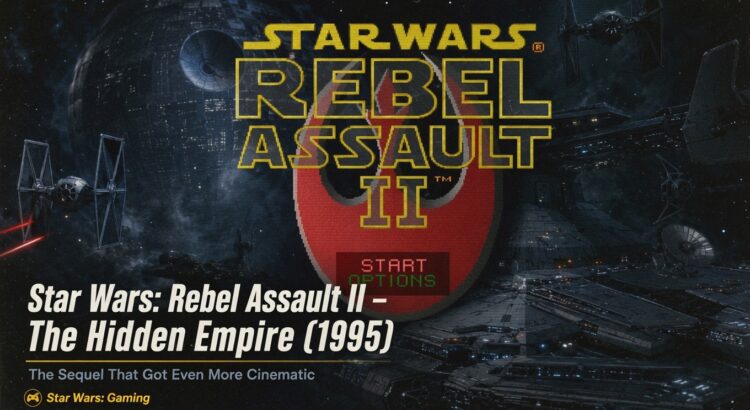
If Star Wars: Rebel Assault (1993) was the moment LucasArts looked at the CD-ROM era and said, “what if Star Wars tried to feel like a movie now?”, then Rebel Assault II – The Hidden Empire is the sequel where that idea got bigger, shinier, stranger, and much more convinced it could pull the whole thing off. And to be fair, sometimes it really did. The first Rebel Assault was already built around spectacle. It wanted movement, drama, music, explosions, and that early-90s “look what this machine can do now” energy. But Rebel Assault II pushed that vision further. It did not just want to feel cinematic. It wanted to feel like Star Wars had stepped directly into the era of live-action CD-ROM ambition and decided subtlety was for weaker franchises. That makes it one of the most fascinating Star Wars games of the 1990s. As part of our Complete…
Star Wars: Rebel Assault (1993): The CD-ROM Star Wars Game That Wanted to Be a Movie
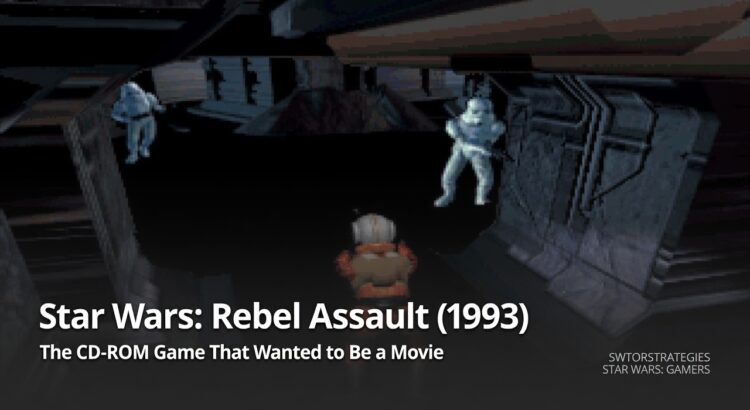
There are Star Wars games that want you to learn systems. There are Star Wars games that want you to master mechanics. And then there is Star Wars: Rebel Assault, a game that mostly wanted you to slam a CD into your computer, stare at the screen, and say, “Wait, games can do that now?” That was the magic of it in 1993. Star Wars: Rebel Assault arrived at exactly the right moment: the early CD-ROM era, when developers were suddenly drunk on storage space, cinematic ambition, and the exciting possibility of making players feel like they were inside a movie instead of just standing near one. It was developed and published by LucasArts, and more than almost any Star Wars game before it, it sold itself on spectacle. Not depth. Not freedom. Spectacle. And honestly, that was enough. As part of our Complete List of All Star Wars Games…
Super Star Wars: Return of the Jedi (1994): The Finale That Turned the SNES Trilogy Into a Proper Monster
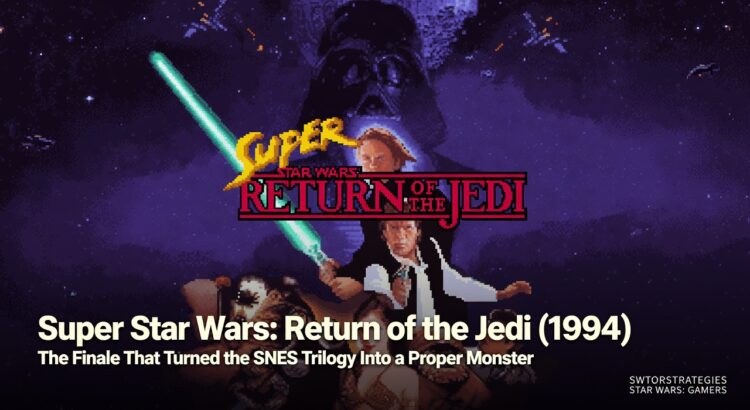
If Super Star Wars (1992) was the moment Star Wars found its 16-bit swagger, and Super Star Wars: The Empire Strikes Back (1993) was the sequel that sharpened that swagger into something a little colder and much meaner, then Super Star Wars: Return of the Jedi (1994) is the finale where the whole thing stops pretending to be a respectable movie adaptation and just becomes a beautiful, aggressive, mildly unhinged SNES beast. And honestly, that was probably the right move. This was the third and final game in the Super Star Wars trilogy, and by the time it arrived, the formula was fully locked in. Big sprites. Loud action. Movie scenes remixed into game logic. Enemies everywhere. Bosses where there really did not need to be bosses. Platforming with opinions. A soundtrack doing its best to drag John Williams through the SNES sound chip and come out swinging. As part…
The Cancelled Darth Maul Game Still Hurts 15 Years Later
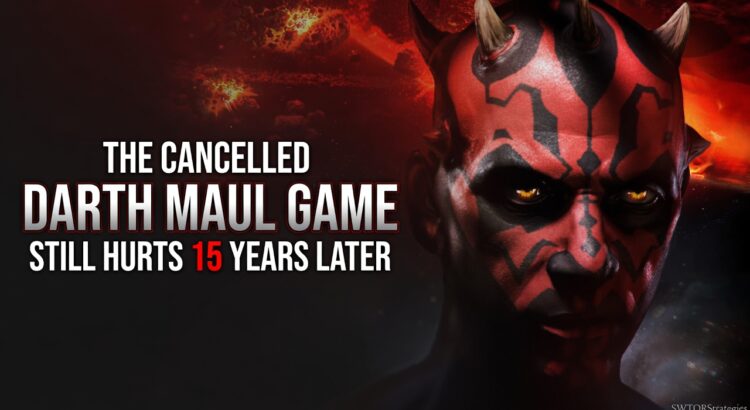
Darth Maul almost got the Star Wars game he deserved. Not a cameo. Not a bonus skin. Not another appearance where he shows up, looks furious, ignites the double-bladed lightsaber, and leaves before the game remembers what to do with him. A full game. And 15 years after Red Fly Studio’s Darth Maul project was cancelled, it still feels like one of the most painful missed opportunities in Star Wars gaming. The project, often discussed under the working title Battle of the Sith Lords, was in development at Red Fly Studio before being cancelled in 2011. Over the years, reported details and prototype footage have painted a picture of a game that could have been a darker, sharper, more aggressive kind of Star Wars action title. Maul was not just a villain with a cool design. He was a perfect video game character hiding in plain sight. Fast. Violent. Silent….
Star Wars Galaxies and SWTOR Solved the Same Fantasy in Completely Different Ways
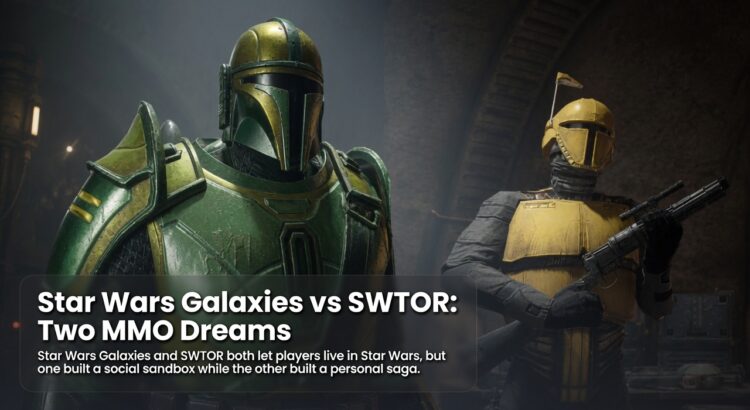
Every Star Wars MMO is secretly trying to answer one impossible question: How do you let players live in Star Wars? Not just visit it. Not just swing a lightsaber through a hallway while someone shouts about destiny. Actually live there. Star Wars Galaxies and Star Wars: The Old Republic both tried to solve that fantasy. They just came at it from completely different directions. One gave players a sandbox and said, “Go make a life.” The other gave players a story and said, “Go become someone.” Both answers worked. Both answers failed in places. And together, they explain why Star Wars MMOs still fascinate people years later. Star Wars Galaxies Made the Galaxy Feel Like a Place Star Wars Galaxies was not built around making every player feel like the main character. That was part of the magic. You could be a crafter. A dancer. A doctor. A scout….
Star Wars Galaxies Was the MMO That Let Players Live in the Galaxy Before SWTOR
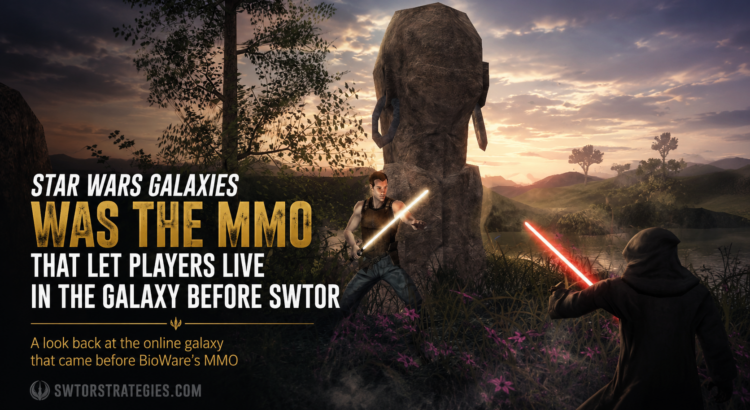
On June 26, 2003, Star Wars Galaxies: An Empire Divided launched in the United States. It did not arrive like a Death Star blast. It arrived carefully. Quietly, even. For a massive Star Wars MMO from LucasArts and Sony Online Entertainment, that was almost strange. This was not just another licensed game. This was the dream: a living online Star Wars galaxy where players could become smugglers, scouts, entertainers, medics, artisans, bounty hunters, rebels, Imperials, merchants, citizens, weirdos, and eventually, if the galaxy felt especially cruel, Jedi. Before Star Wars: The Old Republic gave players cinematic class stories and fully voiced BioWare drama, Star Wars Galaxies offered something different. A place. Not just a story to follow. A galaxy to live in. Galaxies Was Built on a Different Fantasy Most Star Wars games put the player near the center of history. You are the Jedi. The commando. The pilot. The…
Super Star Wars: The Empire Strikes Back (1993): The Sequel That Made the SNES Trilogy Even Meaner
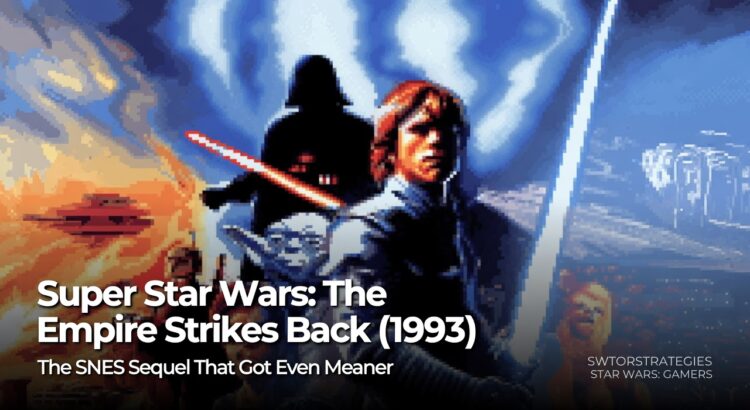
If Super Star Wars (1992) was the moment Star Wars finally found the right kind of 16-bit violence, then Super Star Wars: The Empire Strikes Back was the sequel that looked at that formula and said, “Good. Now make it colder, harder, and just a little bit crueler.” That was a solid creative choice. Released for the Super Nintendo in 1993, the game was developed by Sculptured Software and LucasArts and published by JVC Musical Industries. It was the second entry in the Super Star Wars trilogy, based on The Empire Strikes Back, and it would later be followed by Super Star Wars: Return of the Jedi in 1994. As part of our Complete List of All Star Wars Games Ever Made (1979–Present), this is one of those games that really earns its spot. It also sits naturally in the Star Wars Games (1990–1999) hub, right next to the games…
Super Star Wars (1992): When Star Wars Went 16-Bit and Lost Whatever Mercy It Had Left
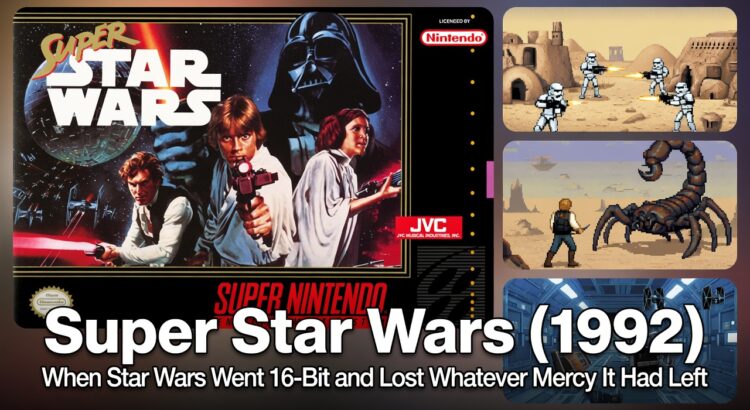
If Star Wars (1991) on NES felt like A New Hope had been turned into a weird, hard platformer, then Super Star Wars felt like somebody gave that idea more horsepower, more color, more explosions, and absolutely no intention of making your life easier. Released for the Super Nintendo in 1992, the game was developed by Sculptured Software with Lucasfilm Games / LucasArts involvement and published by JVC Musical Industries. It adapted the original 1977 film into a 16-bit action game full of side-scrolling blaster fights, platforming, landspeeder stretches, and the inevitable Death Star trench run. As part of our Complete List of All Star Wars Games Ever Made (1979–Present), this is one of those games that really feels like a line in the sand. It also belongs naturally in the Star Wars Games (1990–1999) hub, because this is where Star Wars on home consoles stopped looking merely ambitious and…
On This Day: Star Wars Galaxies: The Total Experience Released in 2005
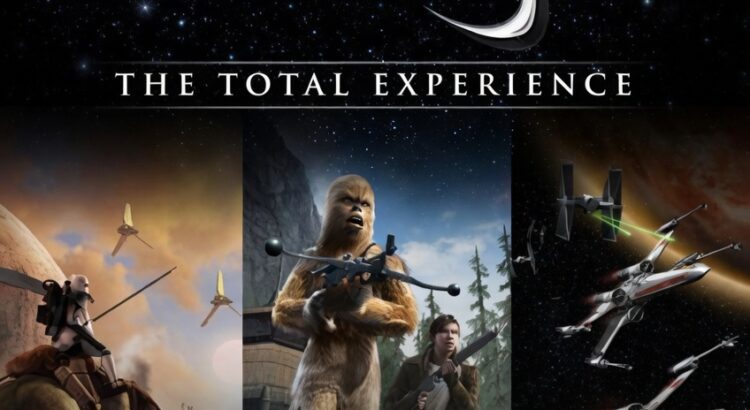
On June 1, 2005, Star Wars Galaxies: The Total Experience arrived with a title that was almost comically confident. The total experience. Not “a few missions.” Not “a quick Jedi fantasy.” Not “press start and save the galaxy before dinner.” This was the MMO-era promise in one box: step into Star Wars, pick a role, join a world, and try to find your place somewhere between cantinas, crafting halls, player cities, blaster fights, creature hunts, and the eternal question of whether becoming a Jedi should be a dream or a spreadsheet. And honestly, that was very Star Wars Galaxies. Yesterday Was the Dream. Today Is the Box It Came In We already looked at why Star Wars Galaxies still represents a fantasy modern Star Wars games keep chasing: the idea of living inside the galaxy instead of just saving it. The Total Experience is interesting because it tried to package…
Star Wars 1313 Was Revealed 14 Years Ago, and It Still Haunts Star Wars Gaming
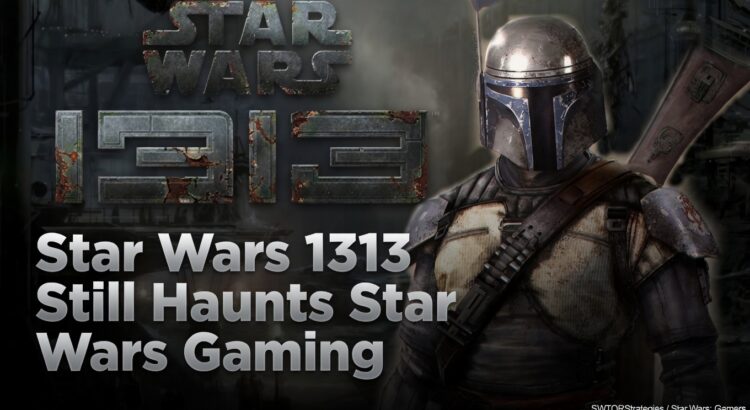
Some cancelled games disappear. Star Wars 1313 did the opposite. It never came out, but somehow it still feels like one of the most famous Star Wars games of the last decade. Revealed in 2012, Star Wars 1313 promised a darker, grittier trip into the Coruscant underworld. No Jedi fantasy. No chosen-one glow. No Force powers solving every problem. Just bounty hunters, crime, vertical city danger, and the kind of Star Wars setting that looked like it had not seen sunlight in years. That is probably why people still talk about it. The Star Wars Game That Looked Different At the time, Game Developer described Star Wars 1313 as a darker and more mature take on the franchise, built around a bounty hunter investigating a criminal conspiracy beneath Coruscant. That pitch still sounds painfully good. It was not trying to retell a movie. It was not asking players to become…
Super Star Wars: The Empire Strikes Back Was SNES Star Wars at Its Most Bruta
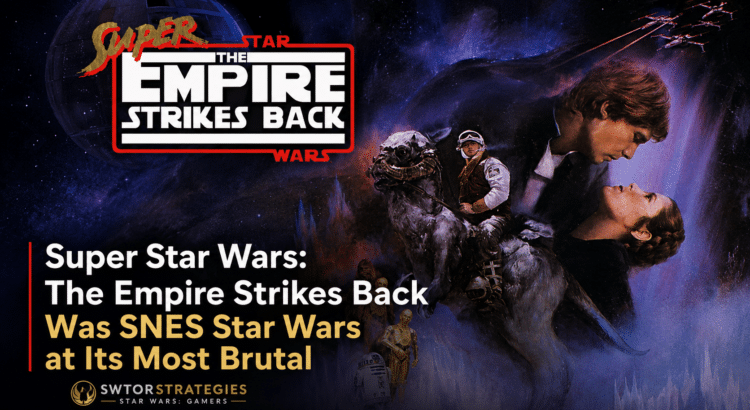
Some Star Wars games gently invite you into the galaxy. Super Star Wars: The Empire Strikes Back kicked the door open, threw you onto Hoth, and started blasting before you had time to ask where the health pickups were. Released for the Super Nintendo in 1993, the game remains one of the most gloriously punishing entries in the long history of Star Wars gaming. It took the darkest chapter of the original trilogy and turned it into fast, loud, side-scrolling chaos full of blaster fire, platforming, boss fights, vehicle sequences, and absolutely no concern for your blood pressure. In the wider complete history of Star Wars games, it stands as a perfect example of early console Star Wars: ambitious, dramatic, slightly unfair, and very willing to hurt you. The Empire Struck Hard on SNES The Super Star Wars trilogy did not adapt the films quietly. These games took familiar movie…
Star Wars Galaxies Promised the One Thing Modern Star Wars Games Still Chase
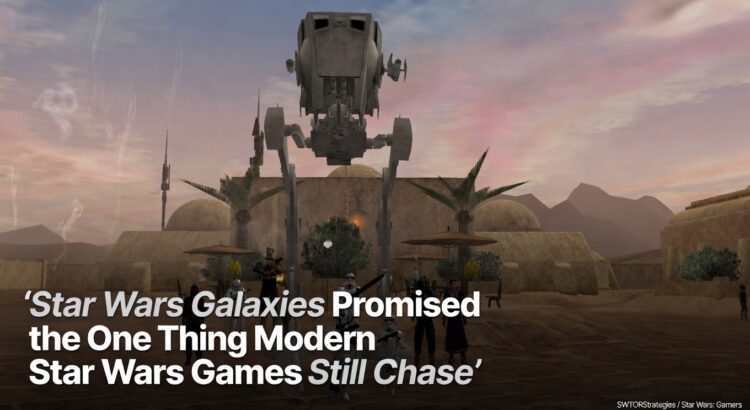
Before live-service roadmaps, cinematic action adventures, and endless debates about canon, Star Wars Galaxies offered one enormous dream: What if you could just live in Star Wars? Not visit it for one mission. Not replay a famous movie moment. Not spend twelve hours as the galaxy’s most important person. Actually live there. Released in 2003, Star Wars Galaxies: An Empire Divided remains one of the strangest, boldest, and most fascinating experiments in the entire history of Star Wars gaming. Not because it was perfect. It absolutely was not. But because it understood something Star Wars games still chase today: the galaxy is most exciting when it feels big enough for ordinary lives. The Dream Was Bigger Than Being a Jedi The obvious fantasy was becoming a Jedi. Of course it was. This is Star Wars. Give people a galaxy, and someone will immediately ask where the lightsaber button is. But…
Revenge of the Sith Turns 21, and Its Games Hit Harder Than People Remember
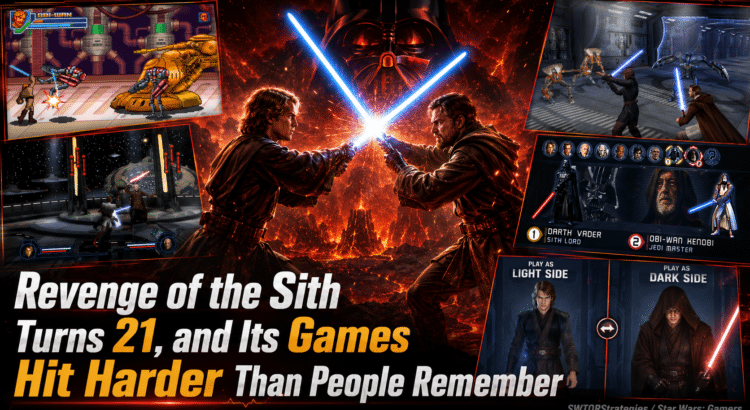
May 19 is not just The Phantom Menace day. Yes, Episode I arrived in theaters on this date in 1999 and kicked off a strange, messy, wonderfully experimental era of Star Wars games. But six years later, on May 19, 2005, Star Wars: Episode III – Revenge of the Sith arrived and gave that same prequel era its darker, louder, lava-soaked finale. This was the movie that finally did the thing everyone knew was coming: it broke Anakin Skywalker. The film was heavier, angrier, and far less interested in being cheerful than parts of the prequel trilogy had been before it. Jedi died. The Republic collapsed. Padmé cried. Obi-Wan developed the look of a man who had just watched twenty years of institutional failure catch fire on Mustafar. But Revenge of the Sith did not just land as a movie. It hit Star Wars gaming at exactly the right moment….