
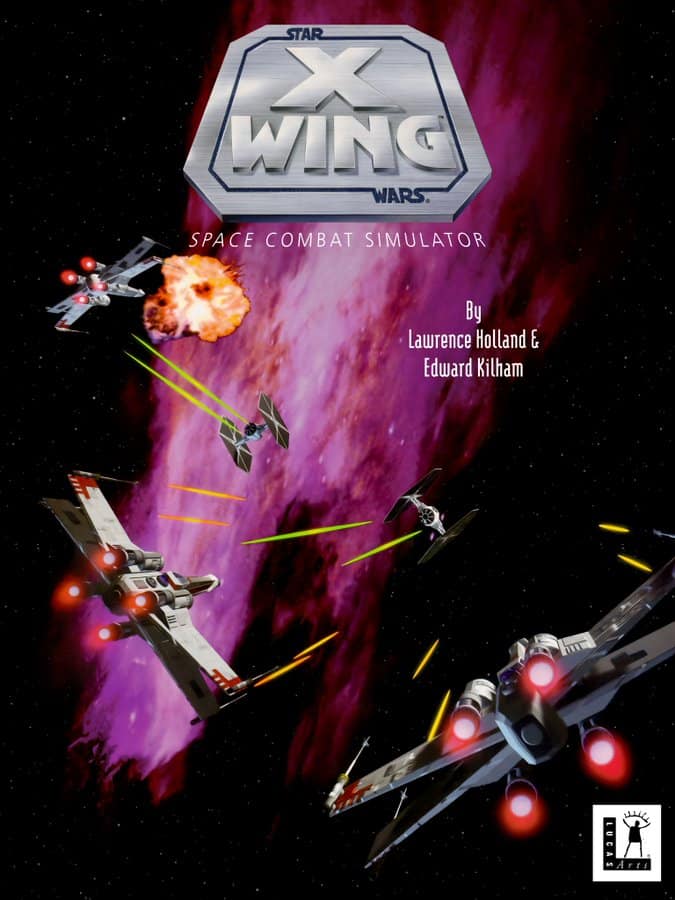
Star Wars: X-Wing turns 33 years old, and honestly? A lot of modern space games still live in its shadow.
Released in February 1993 on good old-fashioned floppy disks, this wasn’t just another licensed Star Wars title. It helped define what Star Wars flight combat should feel like — tense, tactical, and very, very deadly if you got cocky.
For many players, this was the first time the fantasy of sitting in the cockpit of an X-wing felt real instead of arcadey.
The Game That Took Star Wars Into True 3D Space
Back in the early ‘90s, most space games still leaned heavily on sprites and tricks. X-Wing went another direction.
It became one of the first games to use 3D polygon graphics for spacecraft, meaning ships were fully rendered objects in space, not flat illusions. That sounds basic now, but in 1993 this was cutting-edge stuff — especially on home PCs.
Dogfights weren’t just about reflexes. You had to manage:
- Shield power
- Laser recharge
- Engine output
- Damage systems
It felt more like flying a military craft than an arcade shooter. That “systems-first” design is still visible in modern sims.
The Music System That Made Battles Feel Cinematic
Another quiet revolution? The sound.
X-Wing was the first non-adventure game to use the iMUSE system, developed by LucasArts. This tech dynamically changed music based on gameplay events.
Music would shift when:
- Enemies warped in
- Objectives changed
- You were about to get obliterated
It made battles feel like interactive Star Wars film scenes long before “dynamic music” became standard in big-budget games.
Floppy Disks, Manuals, and Peak PC Era Energy
Yes — this thing shipped on floppy disks. Installing it felt like preparing a launch sequence of its own.
You didn’t just click “Play.” You:
- Read thick manuals
- Learned actual flight controls
- Memorized key commands
It was unapologetically deep. No glowing waypoints. No hand-holding. If you survived a mission, you earned it.
That design DNA later influenced games like TIE Fighter, and you can even trace its legacy into modern cockpit-heavy titles and hardcore space sims.
Why X-Wing Still Matters Today
This wasn’t just a licensed product. It proved Star Wars games could be:
- Technical
- Immersive
- Systems-driven
- Cinematic without cutscene overload
It helped establish the idea that Star Wars games didn’t have to be simple action titles — they could be simulations with real mechanical depth.
A lot of today’s space combat design still follows patterns X-Wing nailed three decades ago.
Why X-Wing’s Legacy Still Flies
Anniversaries like this remind us that modern Star Wars games stand on the shoulders of some seriously ambitious PC-era experiments.
X-Wing didn’t just let you fly an X-wing.
It made you work to deserve the seat.
And 33 years later, that design philosophy still hits different.
Stay connected with the galaxy’s latest updates!
Follow us on X, Facebook, Instagram, bsky or Pinterest for exclusive content, mod guides, Star Wars gaming news, and more. Your support helps keep the Holonet alive—one click at a time.
Author

Related Posts

John Williams Wins Grammy for Music by John Williams — Another Milestone for the Composer Behind Star Wars
Two Years Later — Remembering Carl Weathers and His Impact on Star Wars and Beyond
That 2003 KOTOR Ad That Made Revan Look Almost Live-Action
Wagner Moura’s Character in MAUL – SHADOW LORD Revealed as Former Bounty Hunter Turned Cop




Disneyland After Dark: Star Wars Nite Returns for 2026 — Dates, Tickets & What to Expect
Last Chance: Final Full Day for The Clone Wars Event in LEGO Star Wars: Castaways-
SWTOR Reveals Exciting In-Game Events for February 2026 — Rakghoul Resurgence & Relics of the Gree -
Star Wars: Galaxy of Heroes Launching Major Andor Update Featuring Partagaz, Dedra Meero & New Cassian Variants