
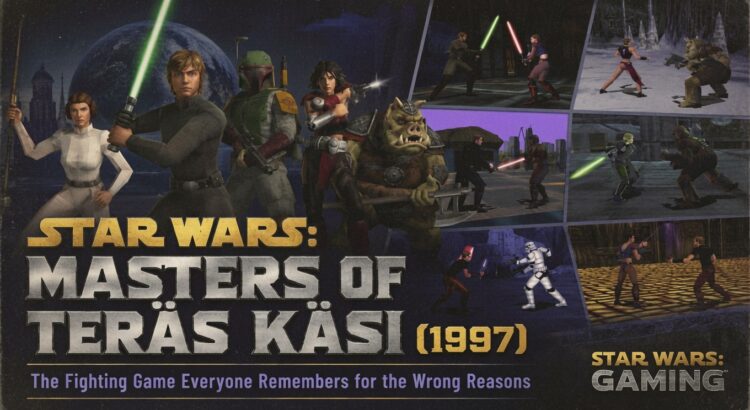
There is a moment in Star Wars: Masters of Teräs Käsi when a Gamorrean guard can punch Darth Vader unconscious. Not distract him. Not knock him into a conveniently placed reactor shaft. Not survive long enough for someone more qualified to arrive. Just beat him in a fight. That tells you almost everything you need to know about LucasArts’ 1997 attempt to turn Star Wars into a PlayStation fighting game. Almost. Because while Masters of Teräs Käsi has spent decades being treated as a punchline, it is not merely a bad game with a famous license. It is a fascinating collision between Star Wars, 1990s fighting-game fever, unfamiliar hardware, Expanded Universe enthusiasm, and the dangerous belief that any franchise could become the next Tekken if you gave everyone enough special moves. It did not become the next Tekken. It did, however, give us Boba Fett firing missiles at Luke Skywalker…
Retro Gaming
Star Wars: Yoda Stories (1997): The Tiny Desktop Adventure That Made the Galaxy Feel Like a Lunch Break
Some Star Wars games want to recreate the Battle of Hoth. Others want to simulate the pressure of commanding an Imperial fleet, surviving a lightsaber duel, or deciding whether your Jedi should remain noble or start firing Force lightning at everyone who mildly irritates them. Star Wars: Yoda Stories wanted to sit quietly in a small Windows box while you avoided doing actual work. Released for Windows in 1997, Yoda Stories was LucasArts’ second and final Desktop Adventures game after Indiana Jones and His Desktop Adventures. Rather than delivering one large campaign, it generated compact missions intended to be completed in short sessions, usually within about an hour. A Game Boy Color version followed in 1999, although that adaptation made some substantial compromises. It sounds modest because it was modest. That was the entire point. As part of our complete archive of every Star Wars game ever released, Yoda Stories…
Star Wars: Rebel Assault (1993): The CD-ROM Star Wars Game That Wanted to Be a Movie
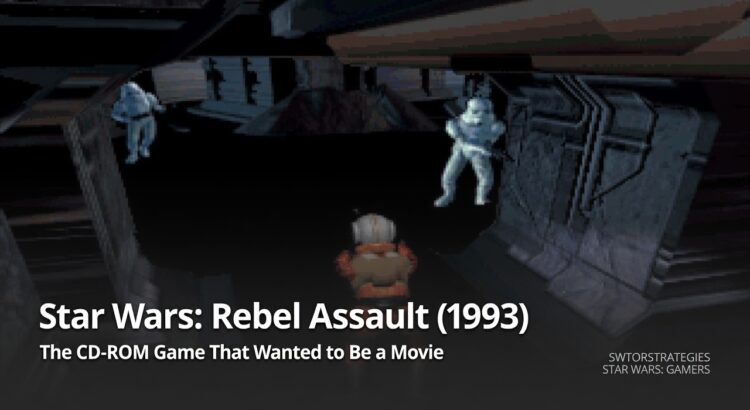
There are Star Wars games that want you to learn systems. There are Star Wars games that want you to master mechanics. And then there is Star Wars: Rebel Assault, a game that mostly wanted you to slam a CD into your computer, stare at the screen, and say, “Wait, games can do that now?” That was the magic of it in 1993. Star Wars: Rebel Assault arrived at exactly the right moment: the early CD-ROM era, when developers were suddenly drunk on storage space, cinematic ambition, and the exciting possibility of making players feel like they were inside a movie instead of just standing near one. It was developed and published by LucasArts, and more than almost any Star Wars game before it, it sold itself on spectacle. Not depth. Not freedom. Spectacle. And honestly, that was enough. As part of our Complete List of All Star Wars Games…
Super Star Wars: Return of the Jedi (1994): The Finale That Turned the SNES Trilogy Into a Proper Monster
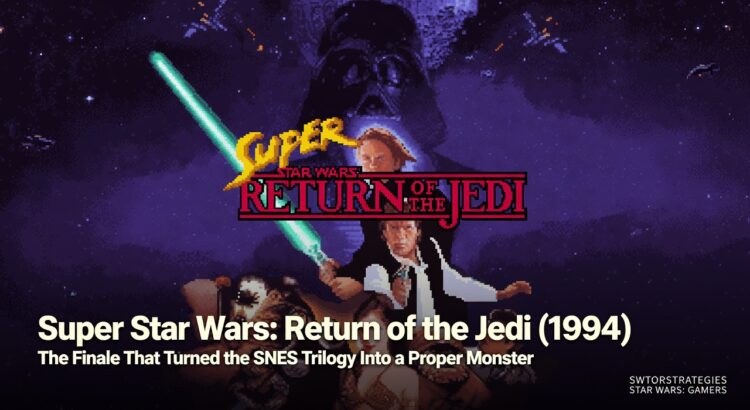
If Super Star Wars (1992) was the moment Star Wars found its 16-bit swagger, and Super Star Wars: The Empire Strikes Back (1993) was the sequel that sharpened that swagger into something a little colder and much meaner, then Super Star Wars: Return of the Jedi (1994) is the finale where the whole thing stops pretending to be a respectable movie adaptation and just becomes a beautiful, aggressive, mildly unhinged SNES beast. And honestly, that was probably the right move. This was the third and final game in the Super Star Wars trilogy, and by the time it arrived, the formula was fully locked in. Big sprites. Loud action. Movie scenes remixed into game logic. Enemies everywhere. Bosses where there really did not need to be bosses. Platforming with opinions. A soundtrack doing its best to drag John Williams through the SNES sound chip and come out swinging. As part…
Super Star Wars: The Empire Strikes Back (1993): The Sequel That Made the SNES Trilogy Even Meaner
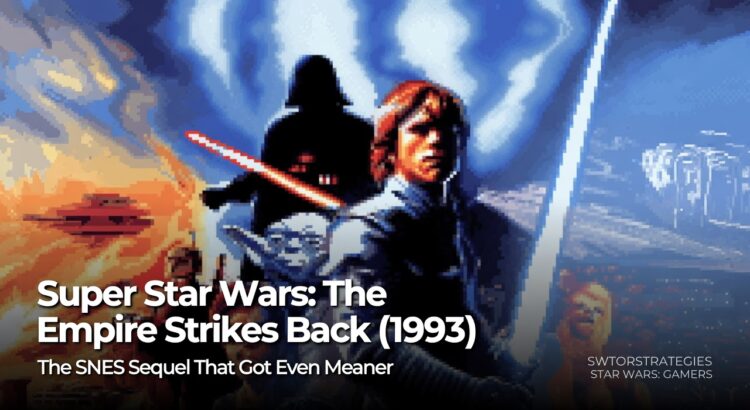
If Super Star Wars (1992) was the moment Star Wars finally found the right kind of 16-bit violence, then Super Star Wars: The Empire Strikes Back was the sequel that looked at that formula and said, “Good. Now make it colder, harder, and just a little bit crueler.” That was a solid creative choice. Released for the Super Nintendo in 1993, the game was developed by Sculptured Software and LucasArts and published by JVC Musical Industries. It was the second entry in the Super Star Wars trilogy, based on The Empire Strikes Back, and it would later be followed by Super Star Wars: Return of the Jedi in 1994. As part of our Complete List of All Star Wars Games Ever Made (1979–Present), this is one of those games that really earns its spot. It also sits naturally in the Star Wars Games (1990–1999) hub, right next to the games…
Super Star Wars (1992): When Star Wars Went 16-Bit and Lost Whatever Mercy It Had Left
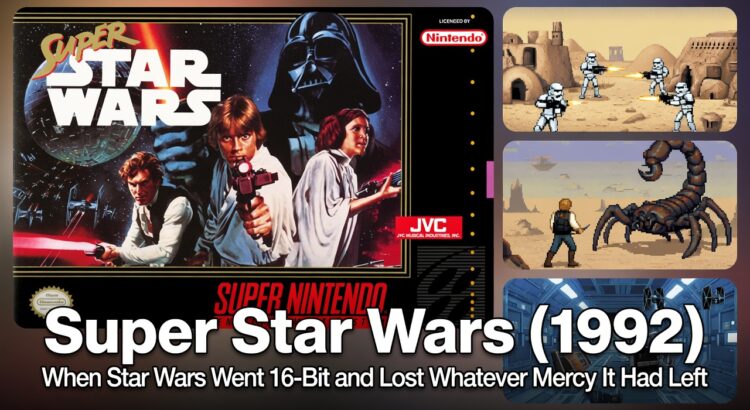
If Star Wars (1991) on NES felt like A New Hope had been turned into a weird, hard platformer, then Super Star Wars felt like somebody gave that idea more horsepower, more color, more explosions, and absolutely no intention of making your life easier. Released for the Super Nintendo in 1992, the game was developed by Sculptured Software with Lucasfilm Games / LucasArts involvement and published by JVC Musical Industries. It adapted the original 1977 film into a 16-bit action game full of side-scrolling blaster fights, platforming, landspeeder stretches, and the inevitable Death Star trench run. As part of our Complete List of All Star Wars Games Ever Made (1979–Present), this is one of those games that really feels like a line in the sand. It also belongs naturally in the Star Wars Games (1990–1999) hub, because this is where Star Wars on home consoles stopped looking merely ambitious and…
Super Star Wars: The Empire Strikes Back Was SNES Star Wars at Its Most Bruta
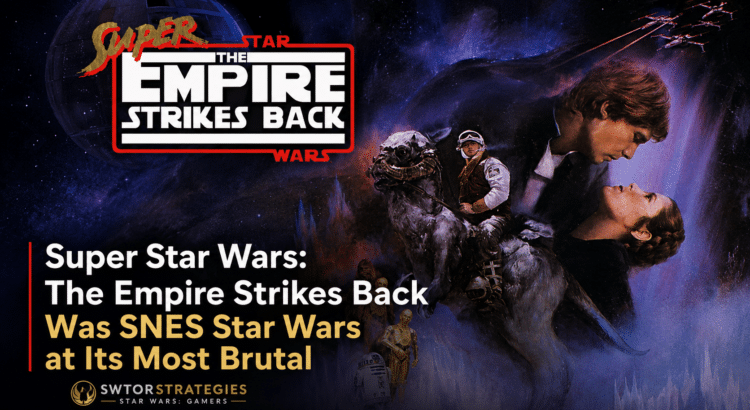
Some Star Wars games gently invite you into the galaxy. Super Star Wars: The Empire Strikes Back kicked the door open, threw you onto Hoth, and started blasting before you had time to ask where the health pickups were. Released for the Super Nintendo in 1993, the game remains one of the most gloriously punishing entries in the long history of Star Wars gaming. It took the darkest chapter of the original trilogy and turned it into fast, loud, side-scrolling chaos full of blaster fire, platforming, boss fights, vehicle sequences, and absolutely no concern for your blood pressure. In the wider complete history of Star Wars games, it stands as a perfect example of early console Star Wars: ambitious, dramatic, slightly unfair, and very willing to hurt you. The Empire Struck Hard on SNES The Super Star Wars trilogy did not adapt the films quietly. These games took familiar movie…
Star Wars: The Empire Strikes Back (1992): The Sequel That Made the NES Star Wars Games Meaner
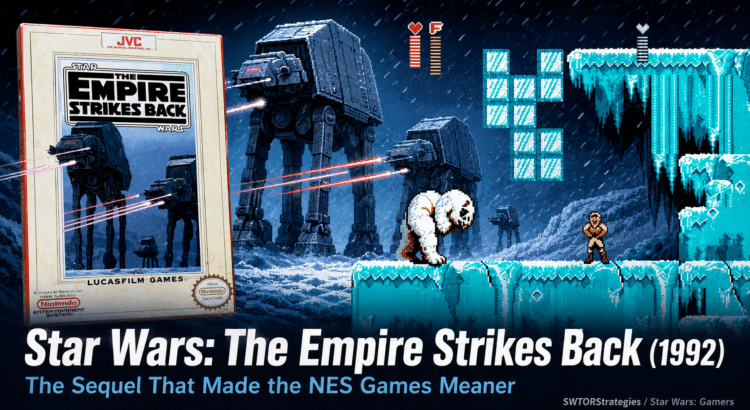
If Star Wars (1991) took A New Hope and turned it into a weird, hard platformer with a surprisingly personal grudge against the player, then The Empire Strikes Back (1992) looked at that formula and decided it needed more snow, more punishment, and a slightly darker mood. That was not a terrible instinct. Based on the 1980 film, the game launched on NES in 1992 and later came to Game Boy, with the NES version credited to Lucasfilm Games and Sculptured Software, and the Game Boy version credited to NMS Software. As part of our Complete List of All Star Wars Games Ever Made (1979–Present), this one matters because it continues a very specific and very early-90s idea of what Star Wars should feel like on home hardware. It also sits naturally in the Star Wars Games (1990–1999) hub, right after Star Wars (1991), because together they form a sort…
Star Wars (1991): The Game That Made A New Hope Weird, Hard, and Weirdly Memorable
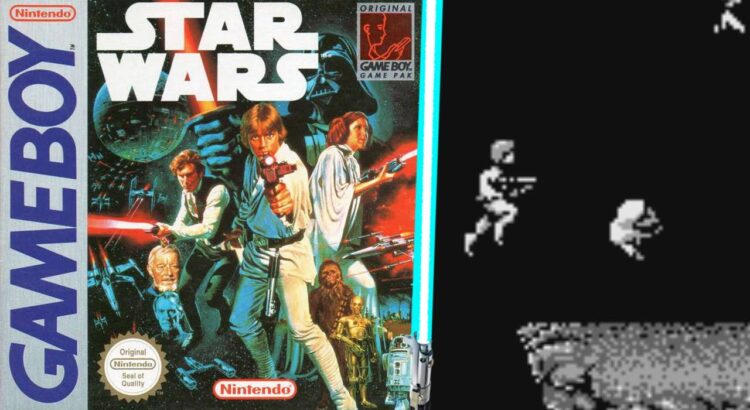
There are Star Wars games that feel elegant. Clean. Heroic. Cinematic. And then there is Star Wars (1991), which looks at A New Hope and decides the best way to honor one of the most beloved films of all time is to make Luke Skywalker jump over bottomless pits, fight a surprising amount of hostile wildlife, and occasionally take on giant enemies that feel like they wandered in from a different genre entirely. And somehow, against all odds, that version of Star Wars stuck. Released in 1991 for the NES and later adapted for the Game Boy in 1992, this was one of the first really visible Star Wars console action games of the 1990s. It was published by JVC Musical Industries and developed by Beam Software, taking the broad story of A New Hope and reshaping it into a side-scrolling action-platformer that was much stranger, harder, and more game-y…
Star Wars: Droids (1988): The Odd Little Cartoon Tie-In That Took Star Wars Somewhere Else
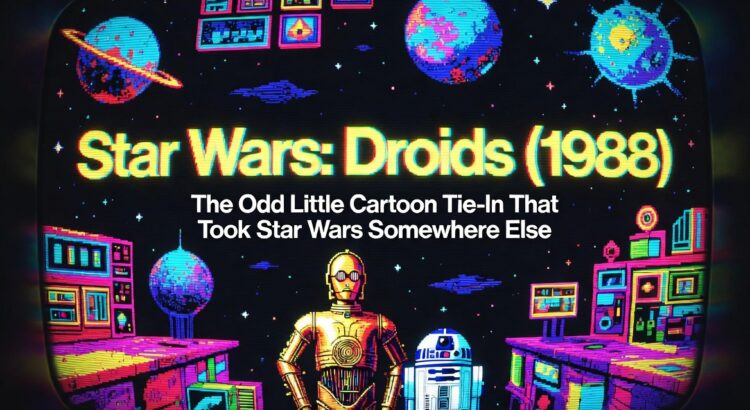
Not every Star Wars game begins with a trench run, a lightsaber, or an exploding space station. Some begin with R2-D2 and C-3PO wandering into another problem, which is more or less the permanent condition of their lives anyway. That is what makes Star Wars: Droids such an interesting little side road in the archive. Released in 1988 for the ZX Spectrum, Amstrad CPC, and Commodore 64, the game was published by Mastertronic Added Dimension and developed by Binary Design as a tie-in to the animated Droids series, also known as Star Wars: Droids – The Adventures of R2-D2 and C-3PO. As part of our Complete List of All Star Wars Games Ever Made (1979–Present), this is exactly the kind of title that deserves more attention than it usually gets. It also sits comfortably in the Star Wars Games (1979–1989) era, because it shows how strange and flexible Star Wars…
Star Wars: Return of the Jedi: Ewok Adventure — The Weird Lost Star Wars Game That Should Not Be This Interesting
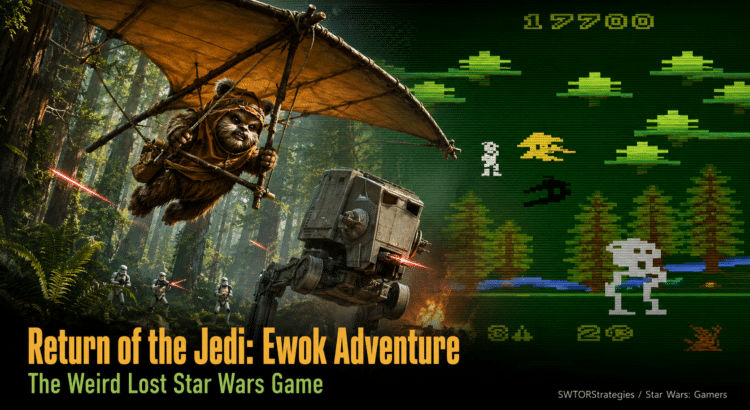
There are cancelled games that sound boring the second you describe them, and then there are cancelled games that make you stop, blink, and say: hang on, they were going to let us play as an Ewok in a hang glider? That is Star Wars: Return of the Jedi: Ewok Adventure. Planned in 1983 for the Atari 2600, developed by Atari Games for publication by Parker Brothers, Ewok Adventure never made it to store shelves, even though the game was reportedly completed. It later became one of those fascinating lost corners of Star Wars gaming history — the kind of title that sounds half ridiculous, half brilliant, and somehow ends up being both. As part of our Complete List of All Star Wars Games Ever Made (1979–Present), this is exactly the kind of side road worth stopping for. It also fits naturally beside our recent looks at The Empire Strikes…
Return of the Jedi: Death Star Battle (1983): When Star Wars Games Were Still Built Around One Big Scene
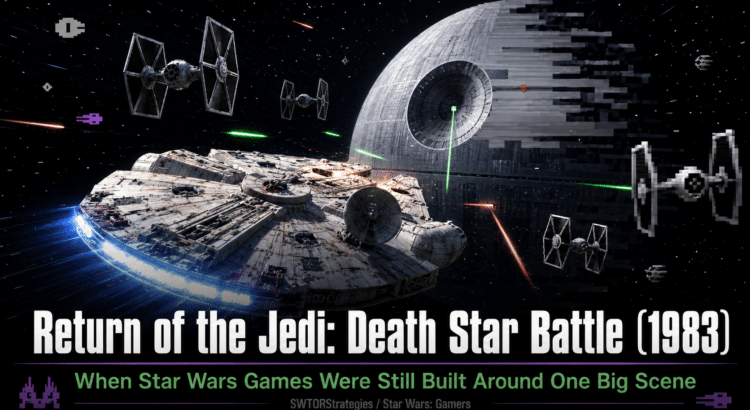
There is something very pure about early Star Wars games. They did not try to retell entire trilogies. They did not promise open worlds, branching morality, or a hundred hours of side content. Most of them just looked at one great movie moment and said, more or less, “Right, that bit. Let’s make that playable.” That is exactly what Return of the Jedi: Death Star Battle does. Released by Parker Brothers in 1983 for the Atari 2600, Atari 5200, and Atari 8-bit computers, and later bundled for the ZX Spectrum+ in 1985, it was one of the earliest Star Wars video games and the first one based on Return of the Jedi. And if The Empire Strikes Back (1982) showed how early home consoles could turn Hoth into a tiny, scrappy war, then Death Star Battle is the next logical step: same early-console ambition, same movie-to-game instinct, just with the…
The Empire Strikes Back (1982): The First Real Star Wars Game Was a Tiny Hoth War
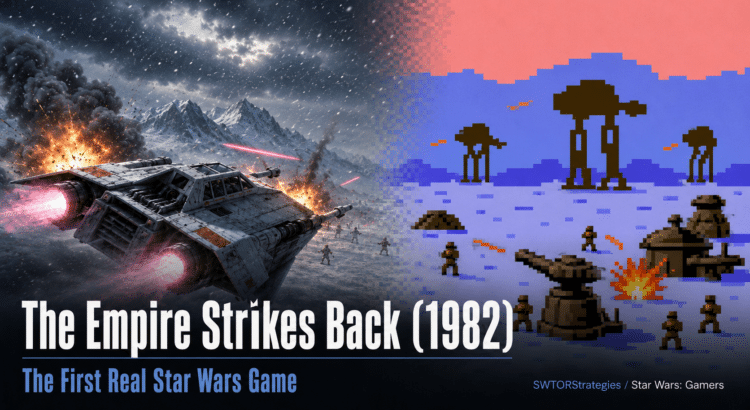
Before Star Wars games became sprawling RPGs, online sandboxes, or massive shooter franchises, they had to solve a much simpler problem: how do you squeeze one of the biggest sci-fi universes on Earth into a home console that could barely keep its own snowstorm together? The Empire Strikes Back for the Atari 2600 is one of the first answers to that question, and it is still a fascinating one. Released by Parker Brothers for the Atari 2600 in July 1982, with an Intellivision version following in 1983, the game is widely recognized as the first officially licensed Star Wars video game. It was programmed by Rex Bradford, based on the Battle of Hoth, and built around one very clean fantasy: you are in a snowspeeder, Imperial walkers are marching toward Echo Base, and your day is getting worse at speed. That makes it a perfect follow-up to Star Wars: The…
Star Wars: The Arcade Game (1983): The Cabinet That Let You Blow Up the Death Star
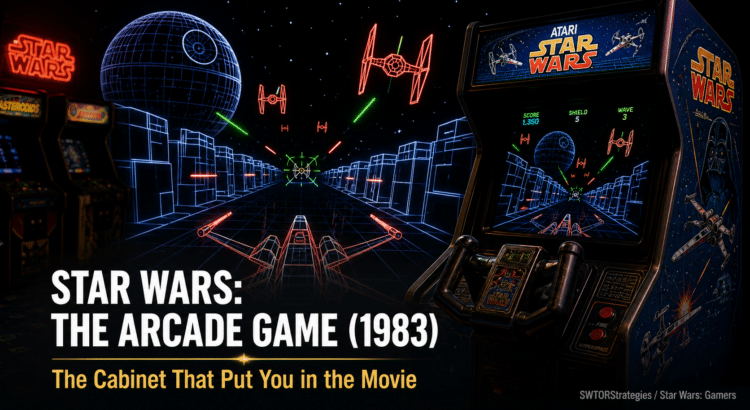
Before Star Wars games got big enough to swallow entire weekends, before they started chasing cinematic storytelling, RPG choices, or multiplayer wars with patch notes and balance drama, there was a much simpler fantasy: sit down, grab the controls, and blow up the Death Star yourself. That is the magic of Star Wars: The Arcade Game. Released by Atari in 1983, it turned the final act of A New Hope into a first-person vector-graphics shooter and, in the process, gave Star Wars one of its earliest true gaming classics. And this is exactly why it feels like the right next stop after Star Wars: Battle for Naboo (2000). That game showed how polished and expansive Star Wars vehicle combat had become by the N64 era. The Arcade Game shows the raw original spark: the point where Star Wars game design realized that “you are in the cockpit now” was already…
Star Wars Racer Arcade (2000): The Podracing Follow-Up That Turned the Volume All the Way Up

After Star Wars Episode I: Racer (1999) proved that one scene from The Phantom Menace could somehow carry an entire game, it did not take long for someone to look at that success and think the obvious next thought: what if we made it bigger, louder, flashier, and more likely to eat your spare change in a public building? That is basically the story of Star Wars Racer Arcade. Released in 2000, the game was Sega’s arcade spin on the podracing craze, built with LucasArts and shown off as a dedicated cabinet experience rather than a straight port of the 1999 home game. Contemporary coverage from GameSpot described it as a separate arcade project from the team behind Star Wars Trilogy Arcade, while arcade sales material listed Sega as the manufacturer in 2000. And that distinction matters, because Racer Arcade is not just “the N64 game in a cabinet.” It…
Star Wars Episode I: Racer (1999): The Prequel Tie-In That Somehow Became a Classic
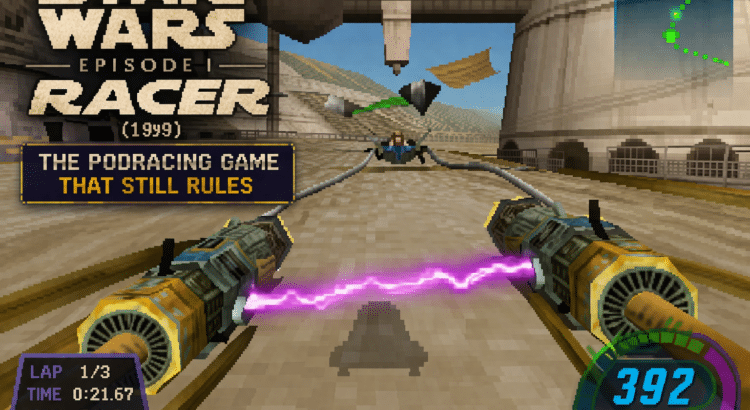
There are plenty of Star Wars games that sell you the big fantasy. Be a Jedi. Blow up a Death Star. Command a fleet. Save the galaxy before lunch. Star Wars Episode I: Racer does none of that. Instead, it looks at one of the loudest, dustiest, most gloriously unhinged scenes in The Phantom Menace and says: “You know what? Let’s build an entire game around this insane space go-kart death sport.” And somehow, LucasArts absolutely nailed it. If you’ve been exploring our Complete List of All Star Wars Games Ever Made (1979–Present), this is one of those entries that reminds you how wonderfully unpredictable Star Wars games could be in the late ’90s. It launched in 1999 and was developed by LucasArts as a racing game built around the podracing sequence from Episode I, later appearing across multiple platforms and eventually getting modern rereleases as well. One movie scene,…
13 Years Later, the Shutdown of LucasArts Still Feels Like a Brutal Turning Point for Star Wars Games
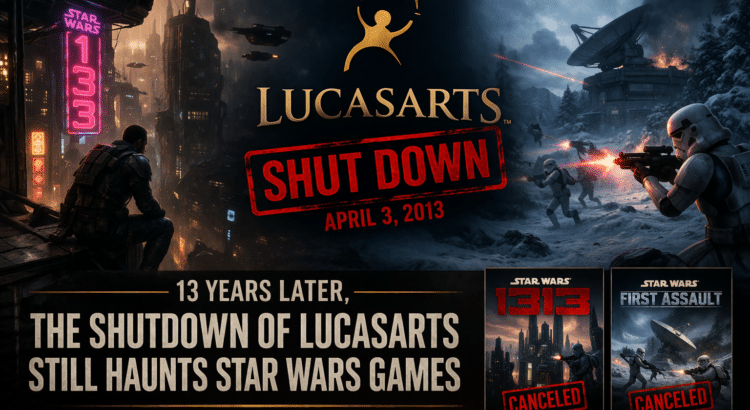
Thirteen years ago this week, Disney pulled the plug on LucasArts’ internal game development and pushed the company into a licensing model instead. It was the kind of corporate sentence that sounds tidy on paper and disastrous everywhere else. The bigger headline at the time was not just that LucasArts as a game studio was effectively over. It was that two of its active Star Wars projects, Star Wars 1313 and Star Wars: First Assault, went down with it. Lucasfilm’s official line back then was that the move would “minimize the company’s risk” while opening the door to a broader portfolio of Star Wars games through outside partners. That may have made business sense in Burbank boardroom language, but for players it mostly translated to this: one of gaming’s most storied Star Wars labels stopped building games, around 150 staff were affected, and two intriguing projects were suddenly dead in…
Kinect Star Wars Released on This Day in 2012 — And Yes, the Dance Mode Still Lives Rent-Free in Memory
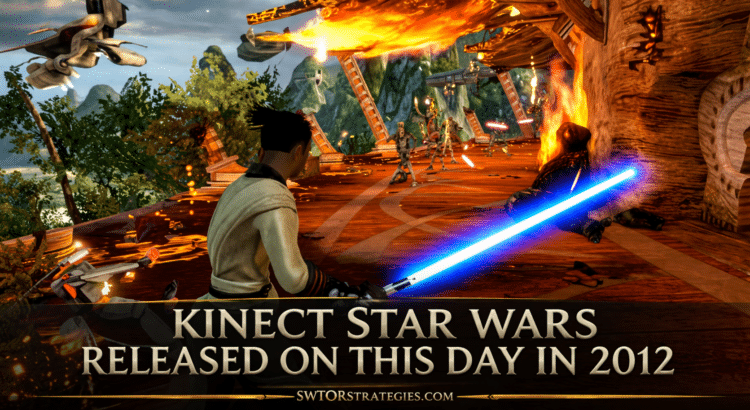
There are good Star Wars games, great Star Wars games, and then there is Kinect Star Wars — a game so committed to the idea of “be the Jedi” that it somehow also ended up giving the galaxy a dance floor. Released on April 3, 2012, Kinect Star Wars arrived on Xbox 360 alongside Microsoft’s very loud, very memorable Star Wars-themed hardware push. Xbox announced the game’s release date officially in February 2012 and confirmed that it would launch with five modes: Jedi Destiny: Dark Side Rising, Podracing, Rancor Rampage, Galactic Dance Off, and Duels of Fate. That lineup alone explains why the game still gets talked about. On one hand, this was clearly built around a simple fantasy hook: swing your arms, use the Force, and pretend your living room is somewhere between Coruscant and Geonosis. GameSpot noted at the time that the story content sat mostly in the…
LEGO Star Wars: The Video Game Released 21 Years Ago Today — and It Changed More Than You Remember
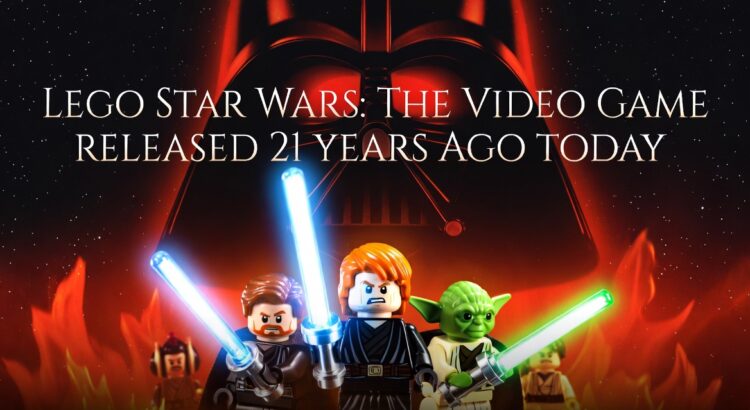
On this day in 2005, LEGO Star Wars: The Video Game began its rollout, with its first U.S. release landing on March 29, 2005. That date belongs to the Game Boy Advance version, while the PlayStation 2 and PC versions followed on April 2, and Xbox arrived on April 5. Even with that staggered launch, March 29 still marks the moment this weird little brick-built Star Wars experiment first hit shelves. And at the time, it really did feel like a bit of a gamble. A family-friendly LEGO game built around the Star Wars prequel trilogy could easily have been disposable licensed filler. Instead, it turned out to be something much stickier: a goofy, charming, surprisingly smart action-adventure that let players smash bricks, swap characters, solve puzzles, and replay The Phantom Menace, Attack of the Clones, and Revenge of the Sith in a way that was much funnier than anyone…
Star Wars: Dark Forces Remaster Finally Gets a Physical Release Date
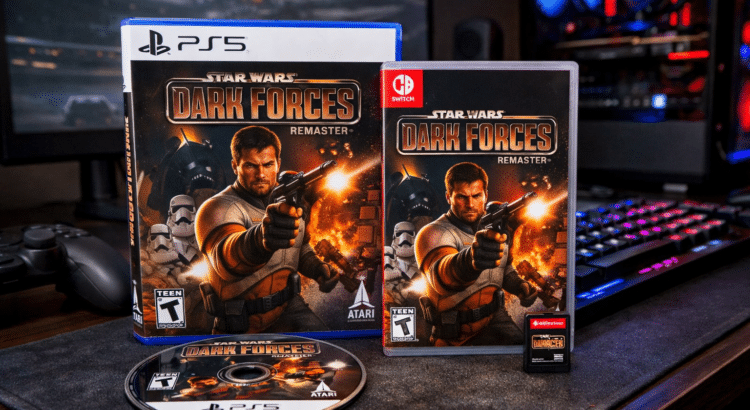
Some Star Wars games never really leave. They just keep finding new ways to crawl back out of the vents. That is pretty much the story of Star Wars: Dark Forces Remaster, which is now getting a physical release on March 13, 2026. Fantha Tracks flagged the date, and Atari’s own store listing backs it up with a “ships March 13th, 2026” window for physical editions on PS5 and Nintendo Switch. For an old-school Star Wars shooter like Dark Forces, that is a pretty nice victory lap. Kyle Katarn Is Back on Shelves There is something fitting about Dark Forces getting a physical release. This is not just another retro game tossed into the digital void and left to fend for itself. Dark Forces is one of those foundational Star Wars PC games that still carries real weight, partly because of what it was and partly because of what it…
Star Wars Games (2006–2012): The Fall of LucasArts
The period between 2006 and 2012 marks the most turbulent and uncertain era in the history of Star Wars gaming. Following the experimental beginnings of The First Star Wars Games (1979–1989) and the explosive growth seen in Star Wars Games of the 1990s (1990–1999) — before reaching the creative peak documented in Star Wars Games (2000–2005): The Golden Age of Star Wars Gaming — this era represents a dramatic shift in direction for the franchise. After years of innovation and success, LucasArts entered a period defined by shifting priorities, cancelled projects, and an increasing reliance on safer, more predictable releases. While several major titles still launched during these years — including The Force Unleashed, LEGO Star Wars, and The Old Republic — the broader direction of Star Wars gaming began to fracture. Behind the scenes, ambitious projects were repeatedly started, reworked, and ultimately abandoned. Internal restructuring, technological challenges, and changing…
Star Wars Games (2000–2005): The Golden Age of a Gaming Empire
The early 2000s represent the single most important era in the history of Star Wars gaming. Between 2000 and 2005, the franchise delivered an unprecedented run of critically acclaimed and commercially successful titles across PC, console, and handheld platforms. From genre-defining role-playing games like Knights of the Old Republic to large-scale multiplayer experiences such as Battlefront and the ambitious Star Wars Galaxies MMO, this five-year period reshaped what licensed games could achieve. It was a time when nearly every major Star Wars release felt significant. Developers experimented with new genres, pushed emerging hardware to its limits, and expanded the universe beyond the films in ways that continue to influence modern Star Wars titles. Many of the mechanics, storytelling approaches, and gameplay systems introduced during these years remain central to Star Wars gaming today. This article documents the complete era of Star Wars games released between 2000 and 2005 — widely…
Star Wars Games of the 1990s (1990–1999): The Era That Changed Everything
The 1990s were the decade when Star Wars truly became a gaming powerhouse. While the 1980s had been experimental and fragmented, the following decade transformed Star Wars into one of the most recognizable and influential brands in interactive entertainment. Advances in PC hardware, the rise of CD-ROM gaming, and the growing strength of home consoles allowed developers to create deeper, more cinematic experiences than ever before. More importantly, the 1990s marked the emergence of LucasArts as a dominant creative force. With a clear vision for storytelling and gameplay innovation, the studio produced titles that didn’t just adapt Star Wars — they expanded it. Entire generations of players experienced the galaxy through flight simulators, first-person shooters, real-time strategy games, and console adventures that defined what licensed games could achieve. This was the decade where Star Wars gaming stopped experimenting and started leading. This chapter is part of the complete Star Wars…
From Dreamcast to Death Star: Remembering Sega Legend Hideki Sato
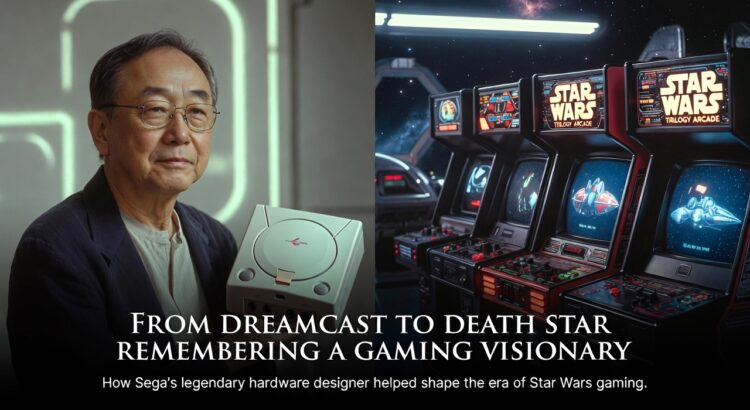
The gaming industry has lost one of its true hardware visionaries. Hideki Sato — the legendary Sega engineer behind some of the most iconic consoles ever created — has passed away, leaving behind a legacy that stretches far beyond Sega itself and into the wider galaxy of gaming… including Star Wars. While many players know Sato as the “Father of the Dreamcast,” his influence helped shape an entire era of gaming hardware that also powered some unforgettable Star Wars experiences. And yes — if you’ve ever piloted a speeder in a Star Wars arcade cabinet or blasted TIE fighters in a Sega-built machine, you’ve indirectly experienced his work. The Engineer Behind Sega’s Golden Era Hideki Sato joined Sega in the early 1970s and quickly became one of the company’s most important hardware designers. Over the decades, he played a leading role in the development of nearly every major Sega console,…