
If you’ve ever wanted proof that the internet used to look like it was held together by duct tape, optimism, and a lot of beige, the best place to start is the Wayback Machine
That archive is basically a time machine for the web, and when you run StarWars.com through it, you’re not just looking at old homepage designs. You’re watching Star Wars learn how to exist online. Over the years, the official site went from a pretty modest promo page into a full-blown franchise mothership packed with news, videos, Databank entries, Disney+ tie-ins, games, and enough navigation tabs to make a 1998 modem cry.
The fun part is that the changes on StarWars.com don’t just reflect web design trends. They track the changing priorities of Star Wars itself. In one era, the site was all about movie hype. In another, it became a fan hub. Later, it shifted into canon support, mobile publishing, and Disney+ era franchise management. If you want the clean overview, start here.
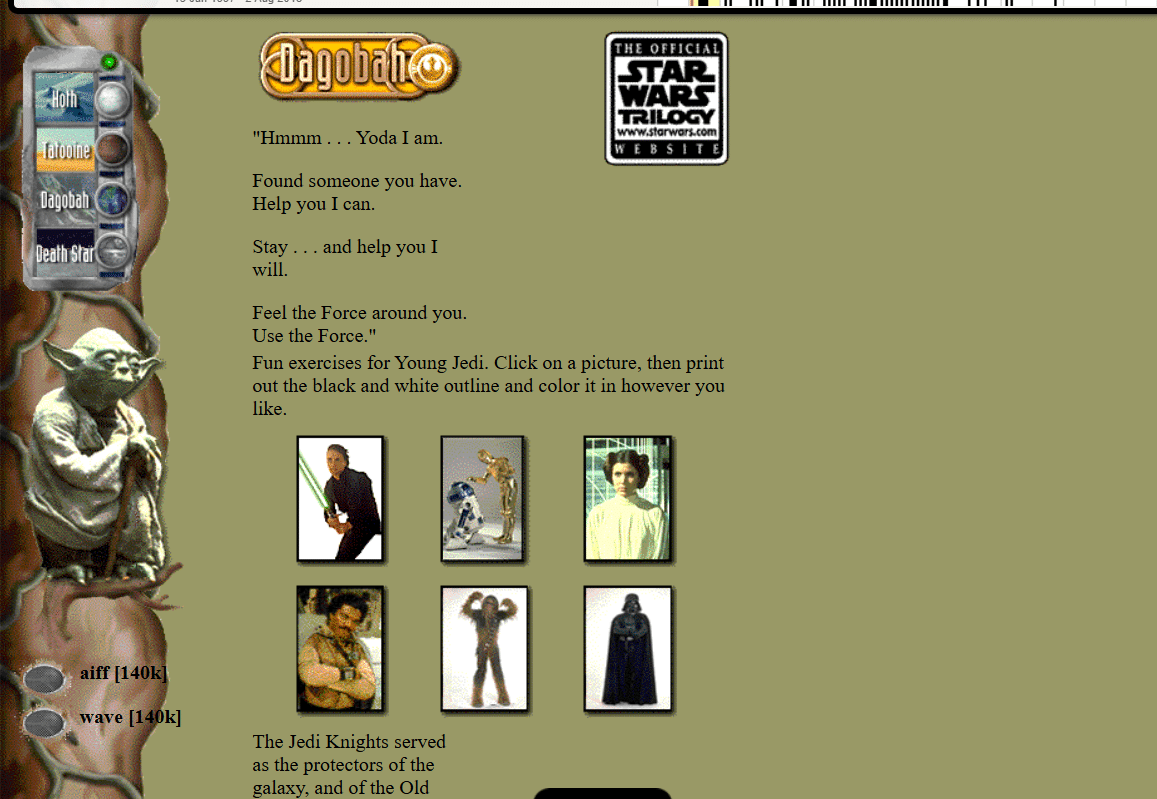
1996: The “hey, welcome to our website” phase
The earliest StarWars.com was, by modern standards, charmingly tiny. Lucasfilm launched the site on November 26, 1996, as the franchise geared up for the Special Edition re-releases and the early prequel era. It was simple, sparse, and very much a product of an internet that still felt like it was being invented five minutes before lunch.
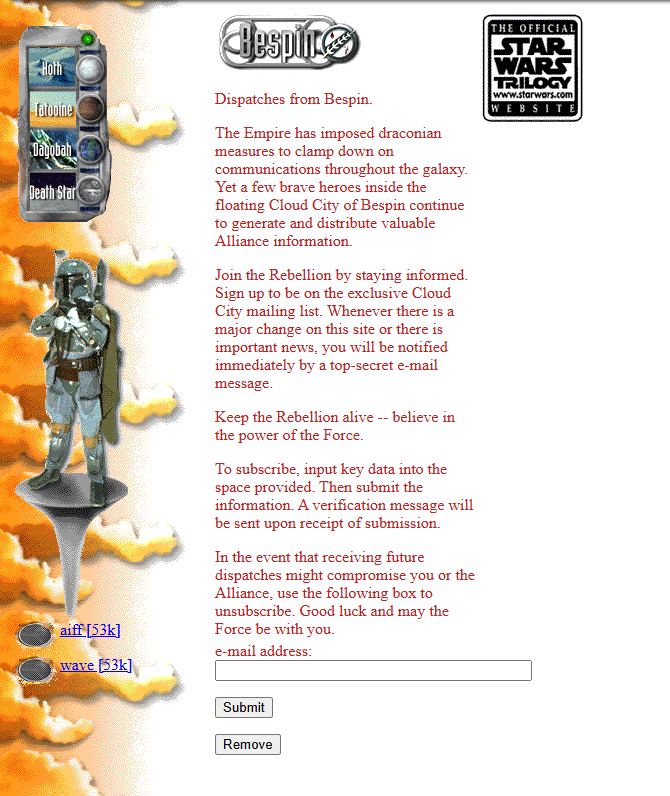
And honestly, that first version has real “we made this in a room full of very excited adults” energy. It wasn’t trying to be a giant content machine yet. It was there to give fans official information, basic Star Wars lore, and updates directly from Lucasfilm. That alone was a big deal at the time. Before social media, before YouTube, before every franchise had a 24/7 content pipeline, this was the official digital front door.
2001: The site stops being a brochure and starts being an event
By the time you jump ahead to the early 2000s, StarWars.com had figured out something important: the web wasn’t just a place to host information. It was a place to create hype.
Check the 2001 archive range here
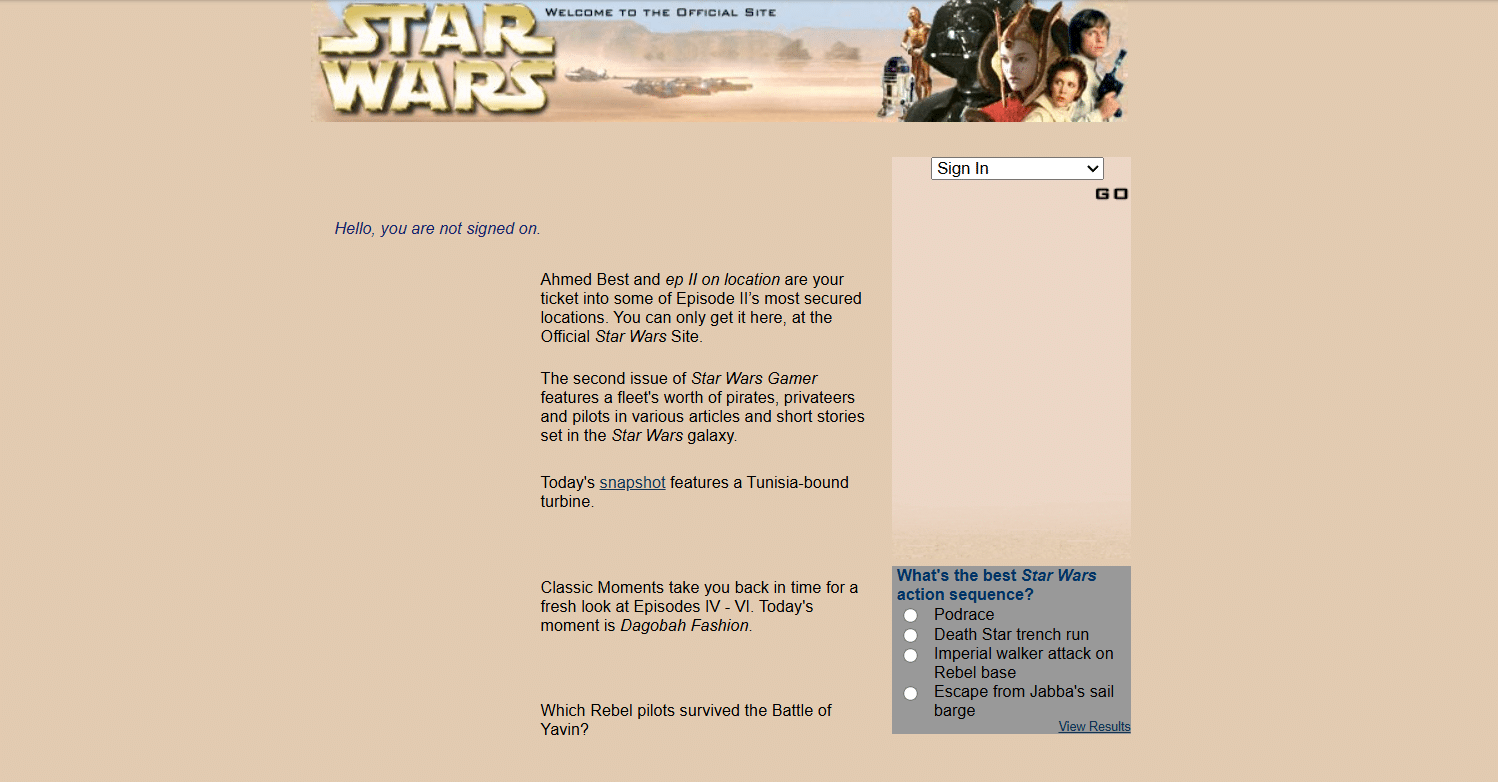
This is where the site starts feeling less like “official movie page” and more like “online launch platform.” Around the Episode I era, StarWars.com was hosting trailer events so big they basically stress-tested the early internet. That’s not even an exaggeration. The site’s own history says the Episode I teaser racked up more than 10 million downloads, and the full trailer pulled 3.5 million downloads in five days. In the late ’90s and early 2000s, that was the web equivalent of setting off fireworks in a library.
What you see in this period is a site that understands fans don’t just want static info. They want access. They want exclusives. They want to feel like they’re standing a little closer to the galaxy than everyone else.
2006: Now what?
The really interesting part comes after the prequel trilogy winds down.
You can poke around that period here
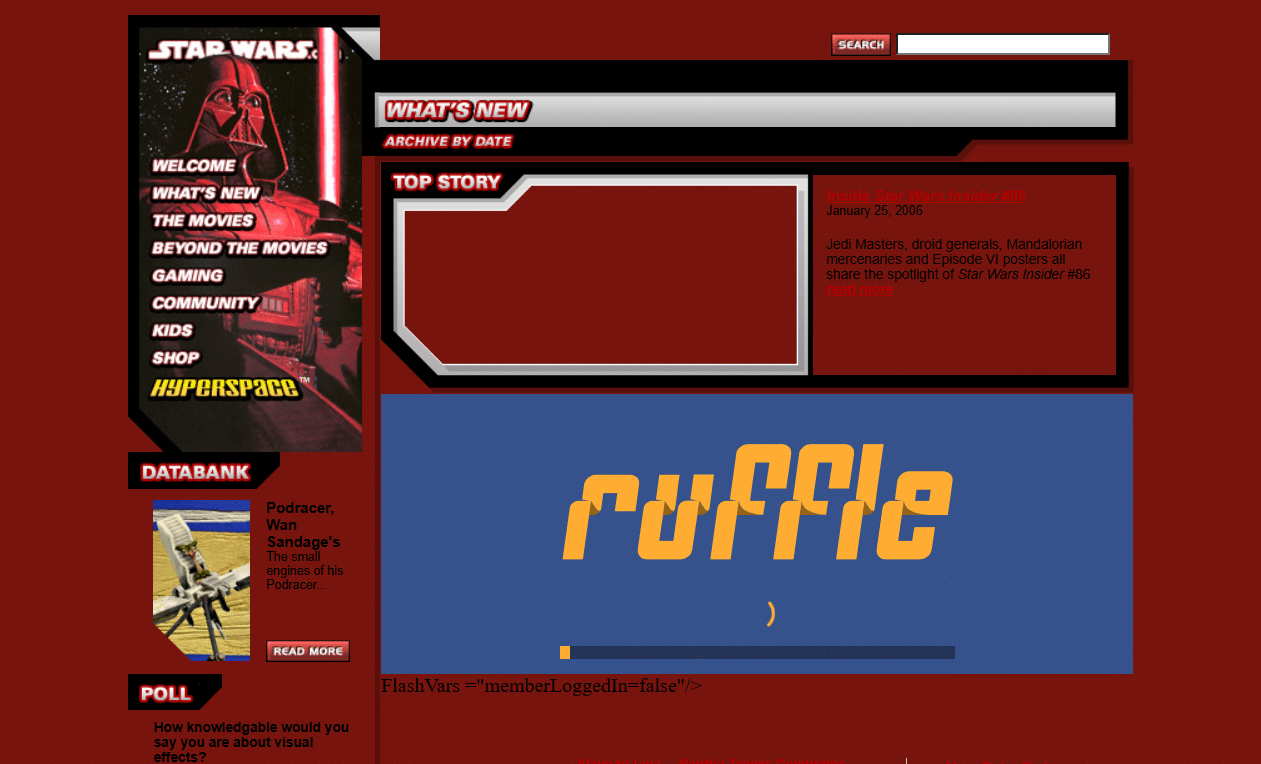
Once there wasn’t a giant movie release constantly feeding the machine, StarWars.com had to figure out what kind of site it wanted to be. That’s where things get a little messier, but also more revealing. The site experimented with blogs, forums, ongoing editorial content, and broader franchise coverage. In other words, it was trying to avoid becoming a ghost town between films.
That makes this era one of the most useful to study. It’s the awkward teenage phase of StarWars.com. Not because it was bad, but because you can see it trying on identities. Is it a news site? A fan community? A marketing tool? A lore archive? The answer, more or less, was “yes.”
And frankly, that’s a very Star Wars thing to do. Why choose one destiny when you can have a trilogy of them?
2011: The site starts looking like a modern entertainment hub
By 2011, StarWars.com feels a lot more familiar.
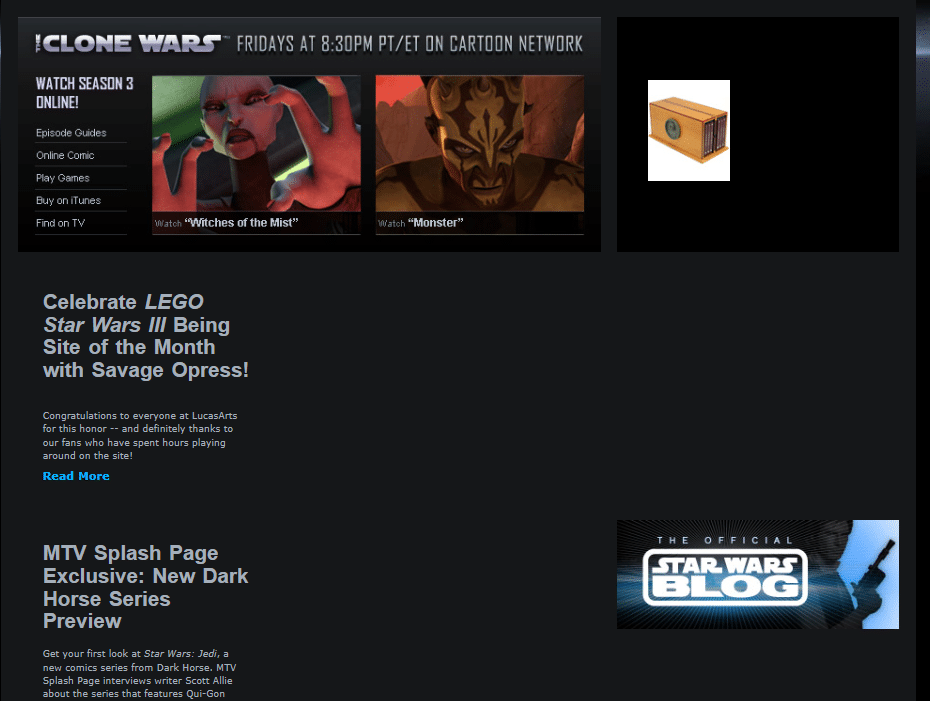
This is the point where the site begins to resemble the kind of entertainment portal we now take for granted. There’s more structure. More categories. More of a sense that the site is meant to serve different kinds of fans at once. News readers, animation fans, collectors, gamers, event followers — they all needed something different, and the site was starting to organize itself around that reality.
You can almost see the franchise widening in real time. Star Wars was no longer just “the films.” It was becoming a constant, multi-lane brand, and the website had to keep up.
2016: Disney-era StarWars.com hits the gym
Then came the Disney era, and StarWars.com got a serious upgrade.
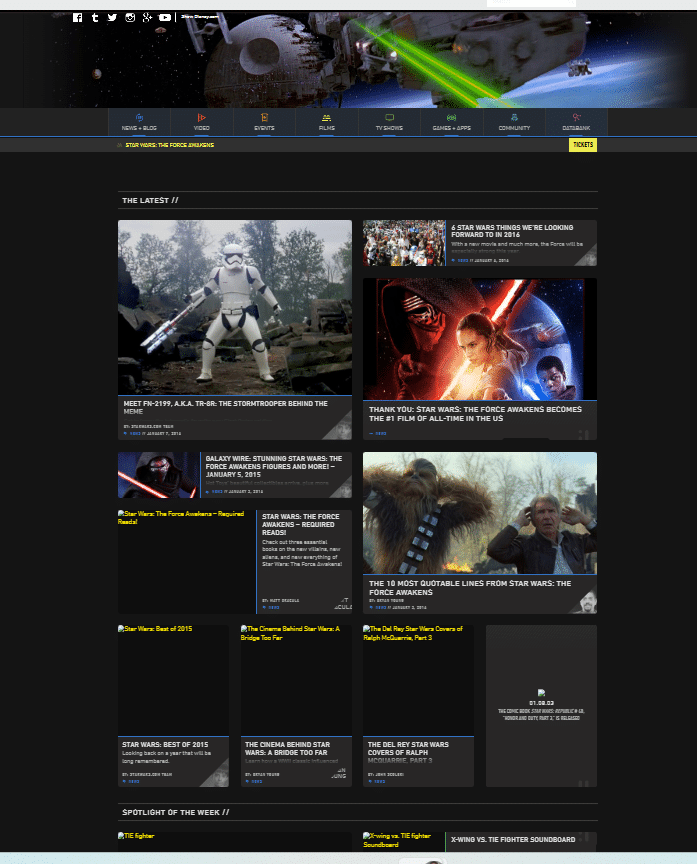
According to StarWars.com’s own history, the site was redesigned and relaunched on July 1, 2014, with a mobile-responsive design and expanded Databank entries. That shift matters a lot, because this is where the old-school official website really starts turning into a modern franchise platform.
And you can feel it in the design. This version is more polished, more flexible, and much more built for how people actually browse now — on phones, in short bursts, while half-watching something else and pretending they’re paying attention to work.
It’s also the point where StarWars.com stops feeling like a site built around individual projects and starts feeling like a permanent infrastructure layer for the entire brand.
2021 and beyond: less website, more command center
If you jump to the 2021 archive range and compare it with today’s site, the final transformation becomes obvious.
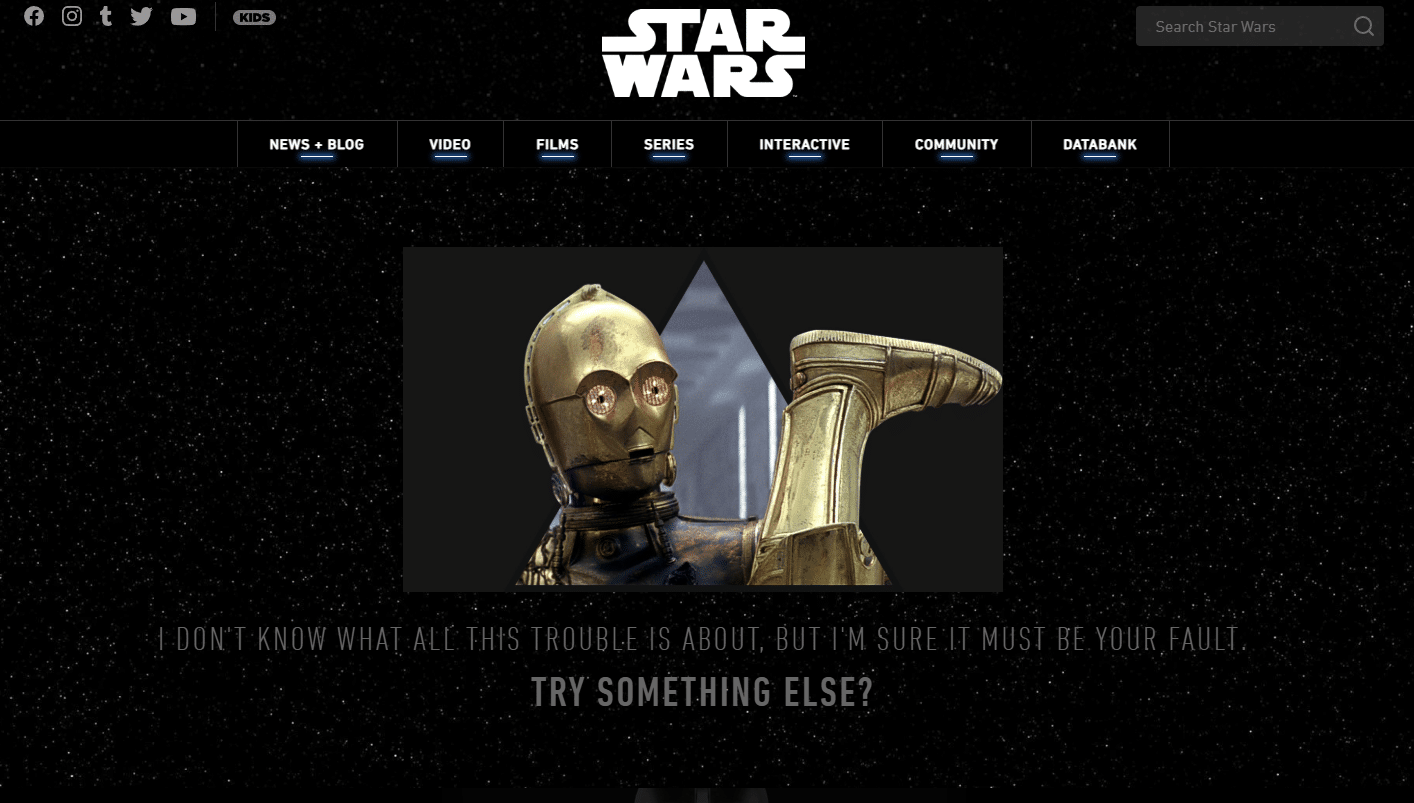
Modern StarWars.com isn’t just a homepage. It’s a command center. It has sections for news, video, films, series, games, Databank, Galaxy Map, Eras, and Disney+. That navigation tells the whole story. Star Wars no longer lives in one format at a time, so the site can’t either.
That may be the biggest takeaway from the archive. StarWars.com didn’t just get prettier over the years. It got busier, broader, and more strategic. In the late ’90s, it existed to support a comeback. In the prequel era, it became a hype machine. In the years after that, it learned to be a content hub. In the Disney+ era, it became the franchise’s digital control room.
Which is honestly kind of fitting. The site grew the same way Star Wars did: slowly, awkwardly, ambitiously, and with occasional bursts of absolute chaos.
Why the Wayback Machine makes this story work
Without the Wayback Machine, this article is just nostalgia with opinions.
With the Wayback Machine, you can actually see the changes for yourself
That’s what makes the whole thing interesting. You’re not relying on fuzzy memories of “I think the site used to look different.” Of course it did. The archive lets you watch it evolve step by step, from a small official page into a sprawling modern media hub.
And if Internet Archive happens to notice that this article uses archived StarWars.com snapshots as the backbone of the story, well… that would be a very welcome plot twist.
Stay connected with the galaxy’s latest updates!
Follow us on X, Facebook, Instagram, bsky or Pinterest for exclusive content, mod guides, Star Wars gaming news, and more. Your support helps keep the Holonet alive—one click at a time
Author

Related Posts

SWTOR’s April 2026 Event Calendar Brings Back Rakghouls and the Gree
Maul: Shadow Lord Season 2 May Have to Wait as Lucasfilm Juggles Other Star Wars Projects
Timothy Zahn Thinks Thrawn Would’ve Won Star Wars at Yavin in About 30 Seconds
Star Wars: Galaxy of Heroes April 1 Update Fixes a Long List of Bugs — But Two New Investigations Are Already Underway



Disney+ Announces Tales of the Moisture Farmer for May 4 Release
SWTOR’s DirectX 12 Update Is Real — but Public Testing Still Has One Big Hurdle
Star Wars Zero Company Just Revealed How Deep Squad Customization Really Goes-
Star Wars: TIE Fighter (1994): The Imperial Flight Sim That Still Feels Elite