
If Star Wars: Dark Forces was the game that proved Star Wars could thrive in first-person shooters, then Star Wars Jedi Knight: Dark Forces II was the game that blew that idea wide open. Released on October 9, 1997 for Windows, LucasArts’ sequel did not just give Kyle Katarn another mission. It gave him a lightsaber, a deeper past, a clash with Dark Jedi, and a Force-driven story that pushed Star Wars games into much more ambitious territory.
That matters a lot in the bigger archive timeline. Jedi Knight: Dark Forces II sits at a key turning point between the older “blast your way through the Empire” style of Star Wars: Dark Forces (1995) and the more fully realized Jedi action of later games like Jedi Outcast and Jedi Academy. In hindsight, this is one of the most important bridge games in the entire franchise. It belongs squarely in the complete Star Wars games list and the Star Wars Games (1990–1999) hub because it helped define what a Star Wars action game could be for years afterward.
Game Information
Star Wars Jedi Knight: Dark Forces II was developed and published by LucasArts for Windows, launching on October 9, 1997. It is the direct sequel to Dark Forces and the second entry in the broader Dark Forces/Jedi Knight lineage. Official Star Wars support lists the original release date as October 9, 1997, while GameFAQs and MobyGames both identify it as a Windows release from LucasArts in 1997.
Story-wise, the game picks up with Kyle Katarn working for the New Republic before being pulled into a much more personal conflict involving his father’s death, the Dark Jedi Jerec, and the hidden power of the Valley of the Jedi. Unlike the first Dark Forces, this sequel pushes hard into Force mythology, making Kyle more than just a skilled operative with a blaster. It turns him into one of the defining game-original characters in Star Wars history.
Gameplay Overview
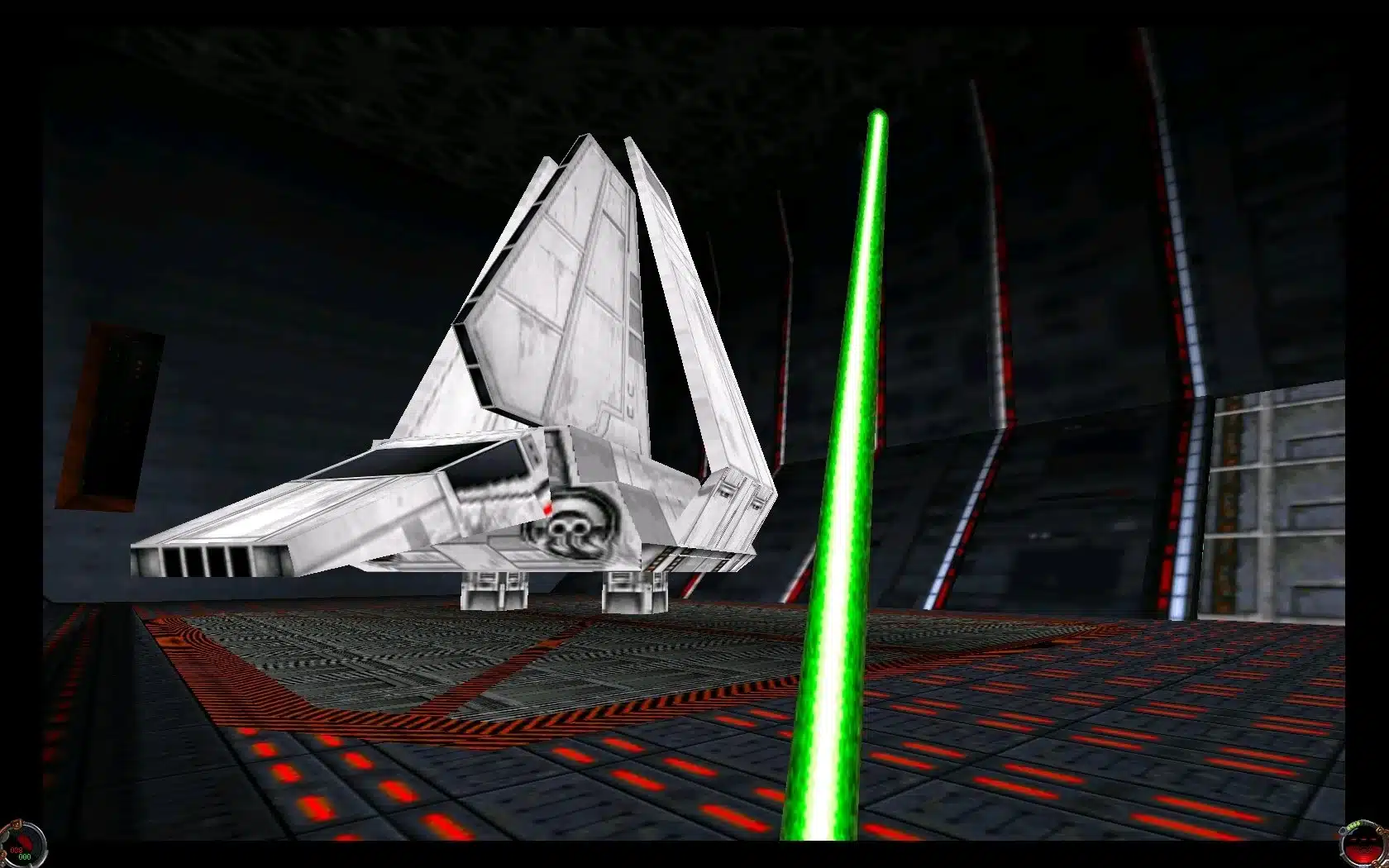
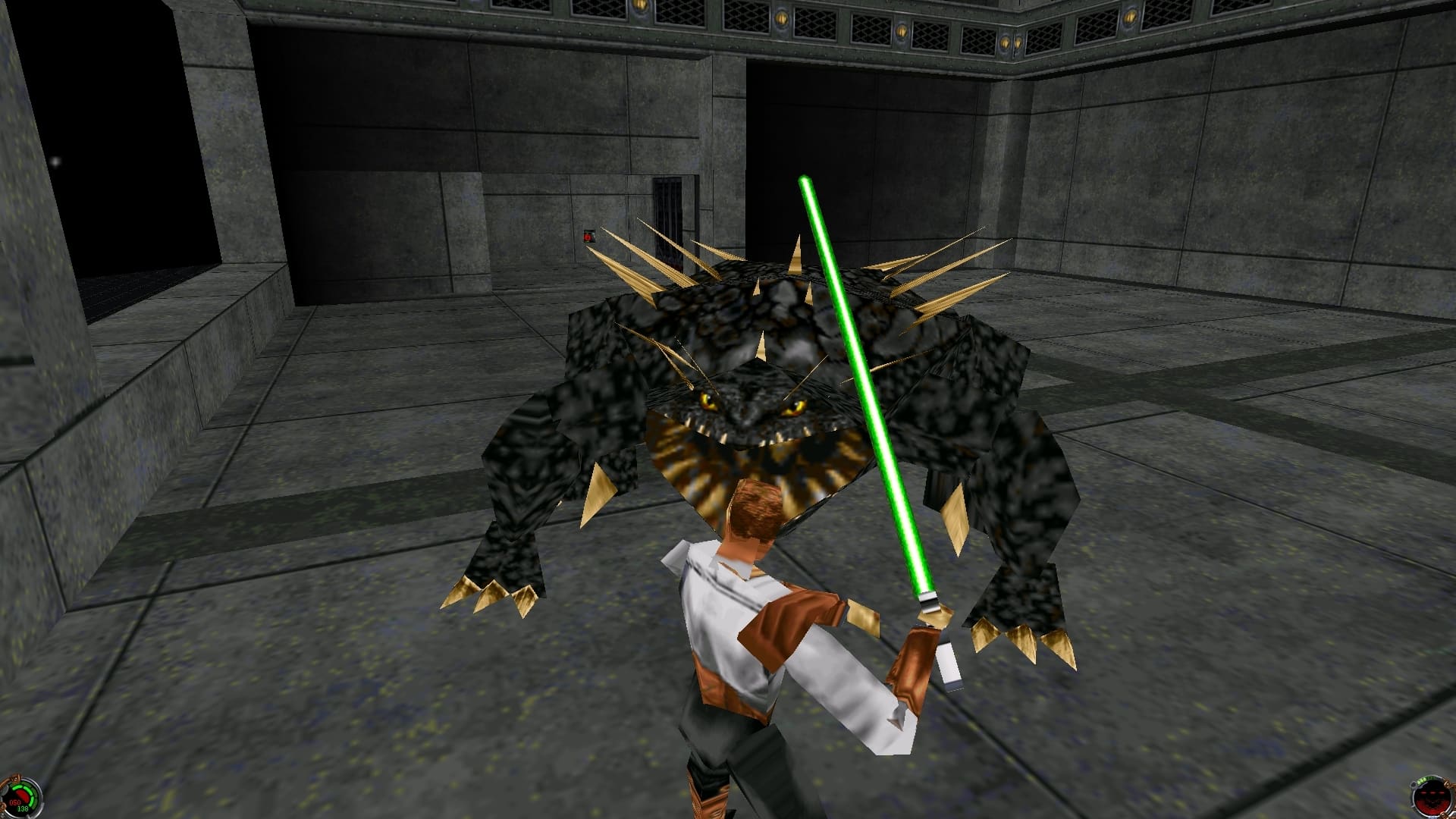
The biggest shift in Jedi Knight is simple: this is where Kyle Katarn becomes a Jedi. The game still works as a shooter, but it layers in lightsaber combat, Force powers, branching alignment choices, and both first-person and third-person play. That combination is why the game hit so hard in 1997. It did not feel like a modest sequel. It felt like LucasArts had decided to bolt an entire Jedi fantasy onto the foundation of a respected FPS.
The result is a game with a much broader mechanical identity than its predecessor. Players move through large 3D environments, complete mission objectives, use blasters and explosives, then gradually gain access to Force abilities and the lightsaber. GameSpot’s review praised the level design and control, arguing that from third-person it could feel like a more action-heavy adventure game, while in first-person it played like a more puzzle-oriented shooter. That hybrid feel is a huge part of the game’s charm, even now.
There is also the matter of player choice. The game’s Force progression and story decisions let players lean toward the light or dark side, giving Jedi Knight a sense of identity that went well beyond “finish level, watch cutscene, move on.” A Lucasfilm Games retrospective later highlighted its meaningful player choice and the shock of having real-time lightsaber battles in 3D, which gets to the heart of why the game left such a mark.
Multiplayer helped too. Jedi Knight supported both LAN and online play, and that mattered because it let players bring Force powers and lightsabers into competitive Star Wars matches in a way that felt fresh for the time. It was one more way the game pushed past the boundaries of the original Dark Forces.
Historical Context
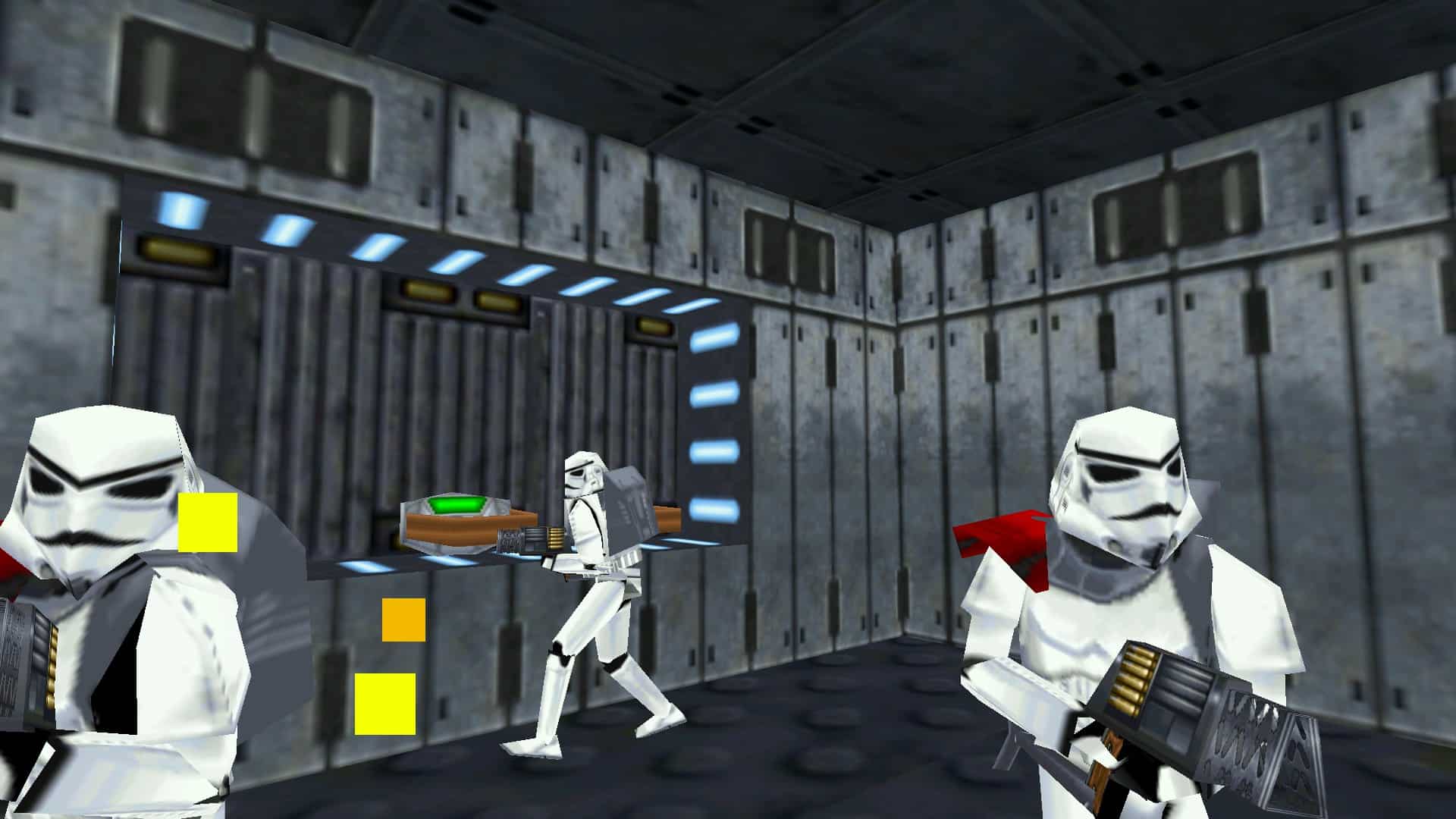
In 1997, Star Wars was in a fascinating transitional period. The Special Editions had revived theatrical interest, the prequels were still ahead, and the Expanded Universe was carrying a lot of the storytelling weight between film eras. Games had room to be bold, and Jedi Knight absolutely used that room. Rather than retelling a movie plot, it deepened the Kyle Katarn story and built a Dark Jedi conflict that felt like a genuine new lane for the franchise.
That makes the game a natural follow-up to Star Wars: Dark Forces (1995). The first game gave players a grittier Star Wars hero and a more covert military tone. Jedi Knight kept Kyle but expanded the fantasy outward, turning the series into something much more spiritually connected to the saga’s Jedi mythology. It is one of the clearest examples of LucasArts refusing to let a successful formula sit still.
Seen from the wider archive perspective, this is one of the defining entries in the Star Wars Games (1990–1999) era. It captures the late-90s blend of CD-ROM ambition, FMV storytelling, expanding 3D game design, and Legends-era confidence. The game is so central, in fact, that later official Star Wars writing about the franchise’s game history still points back to it as part of the series lineage that eventually led to Jedi Academy.
Development
LucasArts used Jedi Knight to make a real technical leap from Dark Forces. The sequel moved to the Sith engine, brought in 3D acceleration support, and leaned much harder into cinematic presentation. The game also used live-action full-motion video between missions, which gave it a strange but memorable “interactive Star Wars mini-movie” quality that was extremely of its time and, honestly, still part of its appeal. Steam’s description notes the live-action cinematics, and broader game references identify the move to the Sith engine and the game’s stronger technical ambition.
The FMV aspect is especially important to the game’s identity. Plenty of 90s games used video cutscenes, but Jedi Knight used them to sell the feeling that Kyle Katarn was now stepping into a bigger mythic role. The performances can be gloriously earnest in that late-90s LucasArts way, but they gave the game a personality that helped it stand apart from its peers. This was not just a shooter with a Star Wars skin. It wanted to feel like a missing chapter in the saga.
The mechanical jump was just as significant. Force powers were no longer background flavor. They were central systems. The lightsaber was no novelty pickup. It was a defining part of the game. In hindsight, that design shift is what makes Jedi Knight such a landmark. It effectively created the template that later Kyle Katarn games would refine rather than reinvent.
Reception
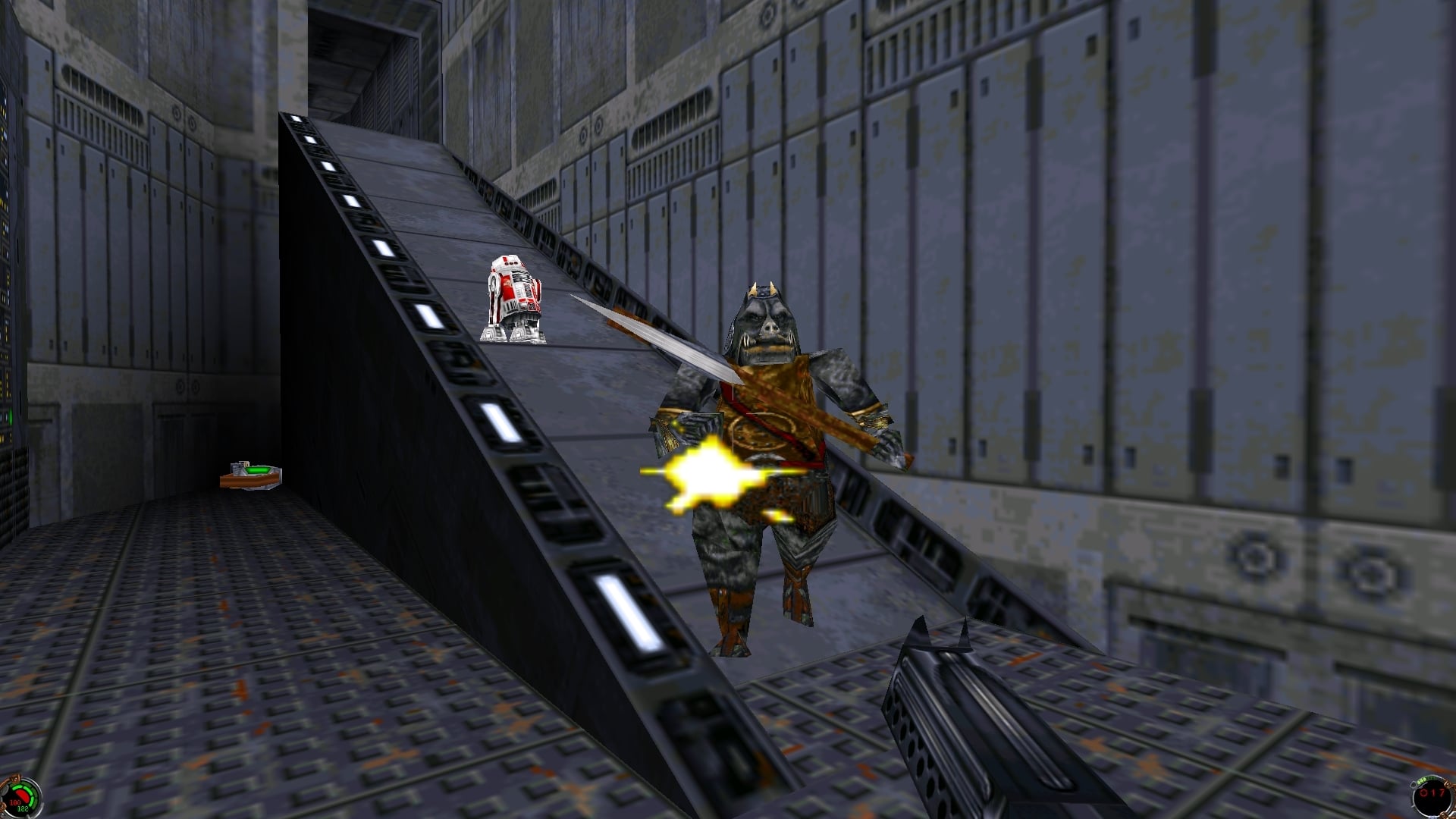
Critically, Jedi Knight: Dark Forces II landed as a major success. Metacritic lists it at 91, and GameSpot scored it 8.9, with the review praising its great level design, strong control, and excellent single-player experience. Metacritic’s review roll-up also highlights how positively critics responded to its story, gameplay, and multiplayer.
That praise was not just “good for a licensed game” praise either. Contemporary commentary treated it as a serious top-tier PC action game. Metacritic’s critic blurbs include a 94 from PC Gamer, while later retrospective references note that the game won Computer Gaming World’s 1997 Game of the Year and was even named the best computer game ever by PC Gamer in 1998. Those are not small flowers. That is the kind of reception reserved for games that feel like events.
The criticisms were real, of course. Some reviewers and later players found parts of the level design frustrating, and the FMV performances are inseparable from their 90s cheesiness. But even those rough edges have become part of the game’s identity. The consensus then and now is not that Jedi Knight was flawless. It is that it was bold, inventive, and memorable enough to rise above its flaws.
Legacy
If Dark Forces introduced Kyle Katarn, Jedi Knight is the game that made him matter. This is the title that transformed him from “cool shooter protagonist” into one of the most beloved characters in Star Wars gaming. It is also the game that set the course for everything that came after in the sub-series, including Jedi Outcast and Jedi Academy.
Its legacy also lives in how it expanded the language of Star Wars games. Real-time lightsaber combat, Force-based progression, light-side versus dark-side framing, and a more cinematic single-player structure all became much more familiar after this game. Later titles would do parts of that better, smoother, or with more polish, but Jedi Knight was the one that made the leap first in a way players actually remembered.
For an archive project, that makes this an essential article. It is not just another 1997 release. It is a pillar game — one of the entries that gives the complete Star Wars games list real historical weight. Skip it, and the path from 90s LucasArts experimentation to 2000s Jedi action games suddenly looks a lot less coherent.
Trivia and Interesting Facts
One of the game’s most charmingly 90s features is its use of live-action actors in FMV cutscenes. That alone gives Jedi Knight a very specific place in PC gaming history, halfway between serious space opera and gloriously ambitious CD-ROM cheese.
The game is also notable for helping define the long-running Dark Forces/Jedi Knight line. MobyGames groups it directly within that series history, alongside Mysteries of the Sith, Jedi Outcast, and Jedi Academy, which makes its franchise role very clear.
And while later games in the series are often remembered more loudly, official Lucasfilm commentary still singles out Jedi Knight for its innovative gameplay, meaningful player choice, and the thrill of early 3D lightsaber combat. That is a very strong indicator that the game’s legacy is not just nostalgia talking.
FAQ
What is Star Wars Jedi Knight: Dark Forces II?
It is a 1997 LucasArts action game for Windows and the direct sequel to Star Wars: Dark Forces, following Kyle Katarn as he discovers his connection to the Force and battles Dark Jedi.
When was Jedi Knight: Dark Forces II released?
The game’s original release date was October 9, 1997.
Why is Jedi Knight: Dark Forces II important?
Because it turned Kyle Katarn into a Jedi hero, added Force powers and lightsaber combat to the Dark Forces formula, and helped establish the design path later followed by Jedi Outcast and Jedi Academy.
Did the game have multiplayer?
Yes. Jedi Knight included LAN and online multiplayer, helping bring Force powers and lightsabers into competitive Star Wars matches.
How well was Jedi Knight: Dark Forces II reviewed?
Very well. It holds a 91 on Metacritic, and reviews at the time praised its gameplay, story, and multiplayer additions.
Where does it fit in the SWTORStrategies archive?
It belongs in the complete Star Wars games list, the Star Wars Games (1990–1999) hub, and it directly connects to Star Wars: Dark Forces (1995).
Stay connected with the galaxy’s latest updates!
Follow us on X, Facebook, Instagram, bsky or Pinterest for exclusive content, mod guides, Star Wars gaming news, and more. Your support helps keep the Holonet alive—one click at a time
Author

Related Posts

SWGOH Flags New Dedra Bugs as EA Investigates Quest and Coliseum Issues-
Phil Lord’s New Solo Comment Suggests Han Was Meant to Be More Than a One-Off 
Maul: Shadow Lord Is Taking Inspiration From Heat — and That Might Be the Best News Yet
Star Wars Zero Company Is Starting to Sound Like a Jedi: Fallen Order Spinoff in the Best Possible Way