
Small teams often face a specific kind of pressure. They are expected to move with the speed of internet culture while still producing work that looks intentional, polished, and commercially usable. The challenge is not only making video. It is deciding which idea deserves attention before time and budget disappear. That is where Seedance 2.0 becomes worth understanding on SeeVideo. It offers a way to test scenes, motion, and direction inside a broader multi-model platform without starting from a heavy production process.
The phrase “best free” matters here for a practical reason. Small teams do not just need access. They need flexibility without the commitment of a large setup. A useful free path lets them evaluate quality, learn the tool’s behavior, and understand where AI helps their process before they reorganize their workflow around it. In that sense, the platform is less about replacing creative judgment and more about giving smaller teams more chances to apply that judgment earlier.
Why Small Teams Need A Different Kind Of Tool
Larger organizations can absorb creative uncertainty because they have more people, more revisions, and more specialized roles. Small teams usually cannot. One person may be writing prompts, reviewing outputs, planning distribution, and adjusting brand direction in the same afternoon.
That is why a Seedance AI Video is often more valuable than a specialized one. SeeVideo appears to understand this by presenting its core engine inside a wider environment that also includes image generation models and other video models for different visual priorities. The result is a workspace that can adapt to different tasks instead of forcing the team to rebuild its process every time the content goal changes.
Free Access Supports Internal Experimentation
For a small team, free access is often less about public-facing output and more about internal learning. It creates room to test whether a campaign concept should be realistic, stylized, fast-paced, or more cinematic. That kind of internal experimentation can save more time than it costs.
It also reduces the pressure to overplan. Teams can generate a version, evaluate it together, and then decide whether the concept deserves more attention. That is a healthier creative rhythm than spending too long defending an idea no one has actually seen in motion.
The Platform Starts With Familiar Inputs
The official pages show that users can begin with text-to-video or image-to-video, and the core video workflow also supports audio input. This is especially useful for small teams because it means different people can enter the process from different strengths.
A copywriter can begin from language. A designer can begin from an image. A producer can think through rhythm or sound. Good tools reduce the friction between these roles instead of making everyone work in the same way.
Why The Main Engine Fits Team Workflows Well
Inside the Seedance 2.0 AI Video, the main video engine is positioned as the default place to start. That choice makes sense. A small team usually needs one dependable first option before it needs specialized alternatives.
The official emphasis on multi-scene generation is also important here. Teams rarely want just a moving fragment. They want a short sequence that already suggests how a story, product reveal, or visual argument might unfold. Multi-scene support makes the output more useful for group evaluation because it reveals whether the concept holds together beyond a single moment.
Sequence Matters More Than Isolated Motion
Single-shot generation can still be interesting, but it is harder to judge strategically. A connected sequence gives teams more evidence. They can assess pacing, transitions, and whether the piece feels like content or just an effect.
In my observation, this matters a lot for internal review. People often disagree less when a concept is shown as a sequence. The discussion becomes more concrete. That helps small teams decide faster.
Audio Input Makes Creative Testing Broader
The platform’s support for audio input also adds another useful layer. Sound can define energy, tension, and timing in ways that text alone cannot. For a small team working on ads, social clips, or mood-driven pieces, this creates more room to test how visual movement aligns with tone.
Reference Guidance Helps Teams Stay Consistent
The official material also mentions reference images, and selected models support frame control. For a small team, consistency is often a major concern. It is not enough for one output to look good. It has to feel connected to the brand, the campaign, or the recurring subject.
Reference support makes the system more usable for repeated work. That matters because small teams usually do not need one viral experiment as much as they need a sustainable way to make the next ten pieces feel related.
How A Small Team Might Actually Use It
The official process is simple, but simplicity is often exactly what a small group needs.
Step One Choose The Strongest Starting Asset
Begin with a prompt or an image. The prompt should define the scene and intent clearly, while an image can serve as a stable visual anchor if the team already knows what the subject should look like.
Step Two Pick A Model Based On The Task
Use the main engine first for general video work. If the team needs more realism, more cinematic structure, a faster rough draft, or a different visual style, the platform’s other models can take over.
Step Three Generate And Review As A Group
Once the system generates the clip, the team can judge it together. This is where the platform’s multi-model environment becomes useful, because evaluation does not stop with one result. The same idea can be tested in more than one direction.
Step Four Refine The Direction Before Scaling
If the clip points in the right direction, refine it. If it does not, change the prompt, switch the model, or alter the sequence concept. The point is to improve the direction before larger production effort is committed.
Where The Platform Seems Most Helpful
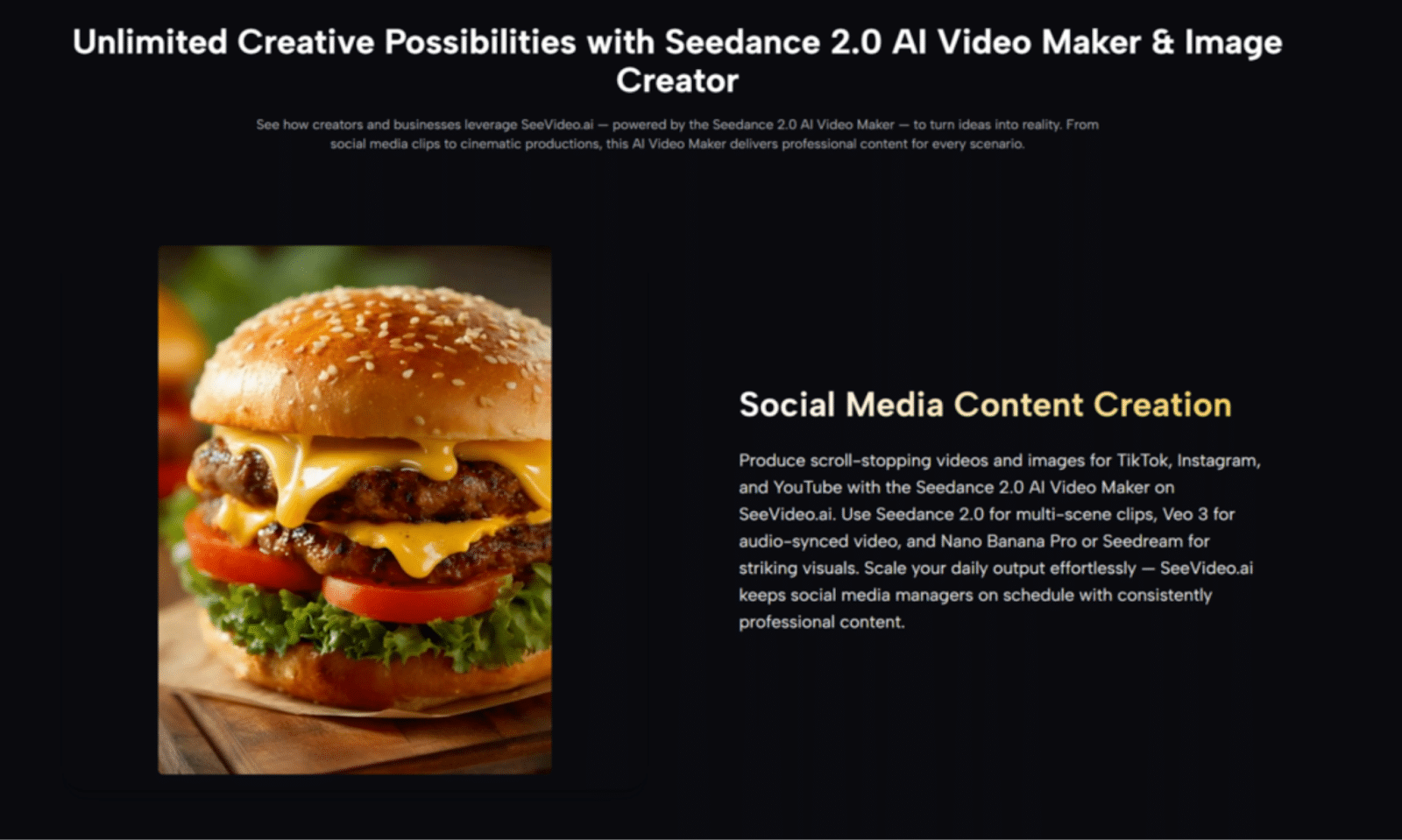
The official use cases include social content, marketing, YouTube, film, and e-commerce. Those categories all make sense for small teams because they usually demand volume, responsiveness, and visual clarity.
Campaign Teams Can Test Faster
A campaign team often needs to see whether an idea feels premium, grounded, dramatic, or playful before it is approved. Fast generation allows that decision to happen on the basis of output rather than speculation.
Commerce Teams Can Visualize Earlier
For product-focused teams, the ability to move from image thinking to motion testing is especially useful. A product may already look strong in a still frame, but motion can reveal whether the presentation feels engaging or flat.
How The Free Path Supports Smarter Work
Instead of treating the platform like a miracle shortcut, it is better to think of it as a way to reduce uncertainty.
| Team Need | Common Small Team Problem | How The Free Path Helps |
| Early concept approval | Too much debate before anything is visible | Generates something reviewable faster |
| Brand continuity | AI outputs can vary too much | Reference support improves consistency |
| Content speed | Teams cannot afford long prep cycles | Quick generation fits fast publishing needs |
| Format flexibility | Different tasks need different looks | Multiple models support different priorities |
| Practical learning | New tools feel risky to adopt | Free use lowers experimentation pressure |
What Small Teams Should Not Overlook
It is worth being honest about the limits. A platform like this helps with speed and direction, but it still depends on clear creative intent. It does not remove the need for review, judgment, or multiple attempts.
Stronger Inputs Lead To Better Outputs
Better prompting still matters. More specific descriptions usually lead to better scene structure and more usable movement. Teams that invest a little effort into clearer inputs will get much more from the platform.
The First Result Should Rarely Be Treated As Final
The platform’s support for regeneration is important because it reflects how serious teams actually work. Most valuable outputs come after one or two rounds of correction, not from the very first pass.
Model Range Requires A Small Learning Period
Because the platform includes several engines, teams will need a bit of practice to know when realism matters more than speed, or when a cinematic model is better than the default workflow. That learning curve is real, but it is manageable.
Why This Free Path Feels Useful Right Now
What makes the platform timely is not simply that it can generate video. It is that it fits the working reality of smaller creative groups. Those teams need to test, compare, revise, and move quickly without pretending every project deserves the same production weight.
Seen from that angle, the best free use of the platform is not about finding a shortcut around craft. It is about helping small teams bring judgment forward in the process. They can see earlier, decide earlier, and refine earlier. In a content environment where timing often matters as much as polish, that is a meaningful advantage.