
After a stretch of Star Wars games spent roaring through canyons, dodging rocks, and pretending basic workplace safety did not exist, Star Wars: Starfighter arrived in 2001 with a very simple message: enough with the sand in your teeth, it is time to get back in the sky.
And honestly, it was the right move.
If Star Wars Episode I: Racer (1999) was the prequel era proving podracing could carry a full game, and Star Wars Racer Arcade (2000) was the quarter-hungry public version of that same idea, Star Wars: Starfighter was where LucasArts started giving the prequels a broader gaming identity. It looked away from the racetrack, looked up at the Naboo skies, and said: what if we built a game around the ships, the war, and the feeling of being right in the middle of the chaos before The Phantom Menace?
That turned out to be a pretty good pitch.
As part of our Complete List of All Star Wars Games Ever Made (1979–Present), Starfighter is one of those games that sometimes gets a little overshadowed by louder names. It is not as mythic as X-Wing or TIE Fighter. It does not have the swagger of Rogue Squadron. It is not one of those titles people bring up first when they start arguing about the best Star Wars game ever made, which Star Wars fans absolutely will do if you give them half a chance and a functioning internet connection.
But it matters. Quite a lot, actually.
Because Starfighter was one of the first games to really show what the prequel era could look like when it was not just tied to one big movie moment. It had its own pilots, its own battlefield story, its own rhythm, and its own personality. It helped turn Naboo-era Star Wars into something you could actually live in for a while, not just visit between cutscenes.
And yes, it also let you fly some very cool ships. That never hurts.
The prequel era needed more than podracing
This is probably the first important thing to understand about Starfighter: it showed up at exactly the right time.
By 2001, the prequels were still new enough that the larger gaming side of that world had not fully settled into place yet. The Phantom Menace had introduced all these shiny new ships, political messes, battle droids, and planetary conflicts, but a lot of the early game attention had gone straight to podracing because, well, of course it did. The podrace was the loud bit. The bit with the engines. The bit where everything looked expensive and dangerous and very easy to sell on a box.
But the prequel era had always been about more than that.
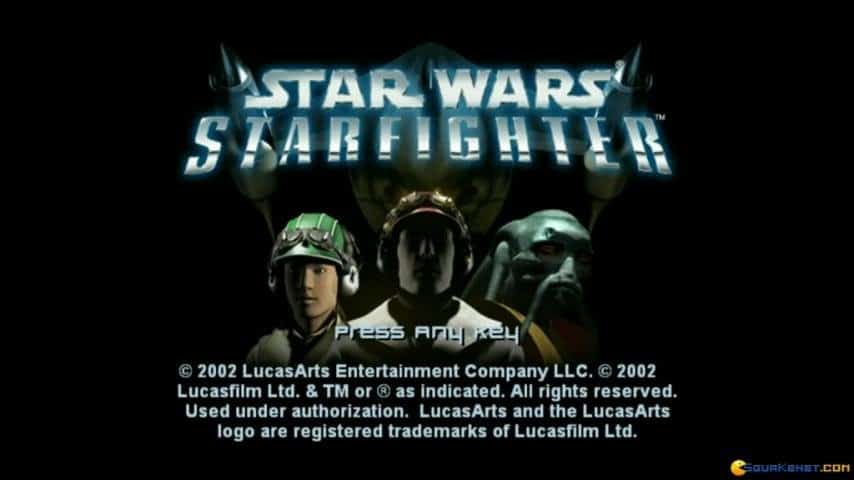
Starfighter understood this. Instead of building everything around one standout movie sequence, it used the broader conflict around Naboo as the foundation. The story takes place around the events leading into The Phantom Menace and follows three playable pilots: Rhys Dallows, a young Naboo pilot; Vana Sage, a mercenary with very little patience for anyone; and Nym, a pirate who is exactly the sort of Star Wars rogue you would expect to smell like engine smoke and bad decisions.
That mix gave the game one of its most appealing qualities: it let the story feel bigger than a straight movie retelling. This was not just a greatest-hits replay machine. It was Star Wars flight combat with its own little war story running through it, and that gave it room to breathe.
The fantasy was simple: fly cool ships and blow things up
One of the reasons Starfighter still works is that it does not overcomplicate its core appeal.
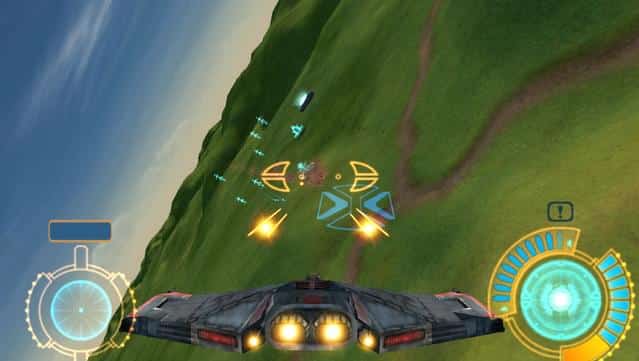
You are here to get into sleek Naboo craft, pirate ships, and Republic hardware, then fly through air and space while shooting enemy fighters, escorting allies, destroying targets, and generally trying to prevent the Trade Federation from making everyone’s day worse.
That is not exactly a bad use of an afternoon.
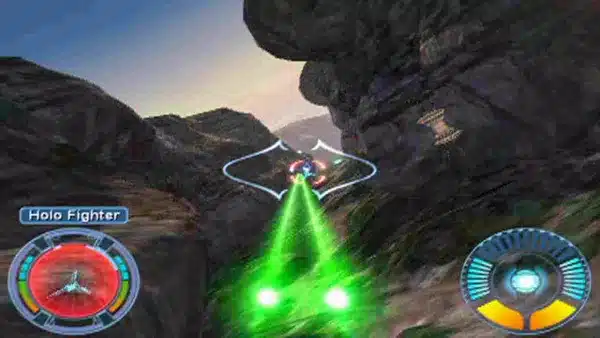
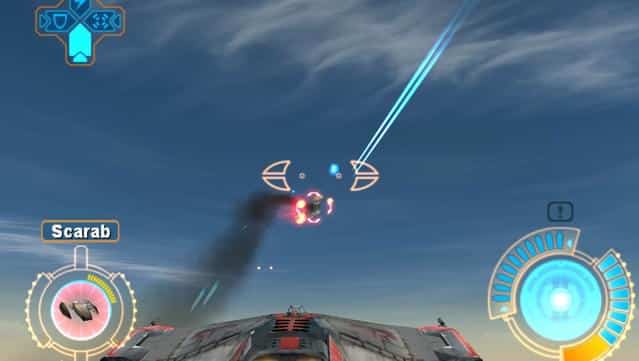
The game blended atmospheric combat and space combat in a way that felt cinematic without becoming totally on-rails. It had the polish of an early-2000s console action game, but it also understood that Star Wars flying should have a little drama to it. You are not just controlling a vehicle. You are weaving through laser fire, diving toward capital ships, chasing droid fighters through cloud cover, and trying to look cooler than you probably deserve while doing it.
That last part is important. Star Wars flight games always live or die on style. The fantasy is not simply “win the mission.” The fantasy is “win the mission while feeling like the soundtrack should be swelling behind you.”
Starfighter got that.
And unlike the older sim-heavy lineage of X-Wing and TIE Fighter, Starfighter was much more approachable. It was not trying to turn you into a systems-management wizard. It was trying to make you feel good in the cockpit quickly. That made it a very natural fit for the PlayStation 2 era, when flashy console action and broad accessibility mattered just as much as mechanical depth.
A Star Wars game made for the PS2 moment
It is impossible to talk about Starfighter without talking about timing.
This was a game made for the early PlayStation 2 period, and it absolutely knew it. The PS2 era was full of games that wanted to show off motion, lighting, scale, and cinematic presentation. Starfighter slid right into that world with a lot of confidence. The ships looked sleek. The explosions looked satisfying. The levels had size. The camera sold speed. And the whole thing had that early-2000s feeling of developers looking at new hardware and going, “Great, now let’s make everything shinier and louder.”
Which, to be fair, is a perfectly respectable artistic philosophy.
That sense of technical ambition helped the game stand out. This was not a dusty old-school cockpit sim. This was Star Wars flight combat reimagined for console players who wanted action first and homework second. You could pick it up, understand the basic flow quickly, and still get that nice illusion that you were participating in something big and cinematic.
That is one reason it fits so naturally into our Star Wars Games (2000–2005) hub. This period was a minor feast for Star Wars fans. The franchise was experimenting across genres, across eras, and across platforms. Some games aimed for prestige. Some aimed for scale. Some, like Starfighter, aimed to give you a good controller-friendly version of a classic fantasy and just do it really well.
There is a lot to be said for that.
The three-pilot setup gave it actual personality
Another reason Starfighter has aged better than people sometimes remember is that it was not content to just throw anonymous missions at you.
Rhys, Vana, and Nym give the game a personality that separates it from more sterile flight-action titles. Rhys is the idealistic military angle. Vana brings the harder, more cynical mercenary energy. Nym is pure Star Wars scoundrel DNA — the kind of guy who feels like he has absolutely been banned from at least one respectable starport and deserves it.
That structure helped the missions feel like more than just “now destroy five of these and escort three of those.” You were bouncing between different perspectives and ship types, which added variety and kept the campaign from becoming one long blur of cockpit glass and laser fire.
It also gave the game a bit of an adventurous TV-serial quality, which suits Star Wars beautifully. Not everything needs to be a sacred myth. Sometimes you just want a handful of pilots with conflicting motivations trying to stop a larger disaster while being sarcastic at each other. Star Wars has always had room for that. In many ways, it is at its best when it remembers that.
Nym especially became memorable enough to help carry the connection into Jedi Starfighter, which tells you LucasArts knew they had something there. He was not just filler. He was the kind of side character Star Wars games occasionally produce where you immediately think, yes, this guy definitely has stories.
Probably several that should not be told in front of children.
It sat in a strange but useful space between Rogue Squadron and the old sims
This is where Starfighter gets especially interesting historically.
If you line up the great Star Wars flight games, you can see Starfighter sitting in a kind of crossroads position. Behind it, you have the classic PC sim tradition: X-Wing, TIE Fighter, and X-Wing Alliance, games that could get more demanding and more system-heavy. Off to one side, you have the more arcade-forward action of Rogue Squadron, which already showed there was a huge appetite for faster, more console-friendly flight combat.
Starfighter did not replace either approach. It borrowed from both.
It had enough cinematic action to appeal to console players who wanted immediacy, but enough mission structure and vehicle variety to feel like a proper Star Wars flying game rather than a throwaway tie-in. It also had the huge advantage of exploring a part of the Star Wars timeline that had not yet been gamed to death. The Original Trilogy skies were already well traveled. Naboo, the Trade Federation conflict, and all that polished prequel hardware still felt relatively fresh.
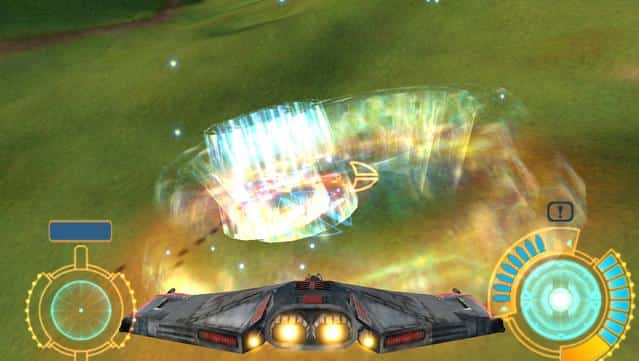
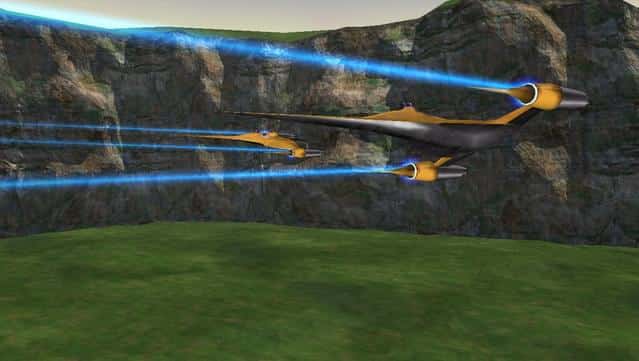
That gave the game a different visual flavor too. Instead of the grungy rebellion-versus-Empire look people already knew, Starfighter brought in the cleaner, brighter, almost elegant side of Star Wars vehicle design. Naboo ships looked gorgeous. Federation hardware looked cold and menacing. Space and sky battles had a different palette and tone from the older games, and that helped the whole thing feel like more than a genre rerun with new logos.
How it was received: not a revolution, but definitely a hit
Starfighter was not one of those games that changed the shape of the medium forever. Let us all stay calm. It was not descending from the heavens with stone tablets.
But it was well received, and for good reason.
Players and critics generally liked the game’s visuals, accessibility, cinematic feel, and straightforward dogfighting. The controls were friendly enough for newcomers, the ship variety helped keep things moving, and the presentation made a strong first impression. The game also benefited from being one of those early-PS2 titles that looked exciting in screenshots, which mattered a lot in that period. If your game looked shiny and fast in a magazine preview, you were already halfway to a decent weekend rental.
The criticism was fairly predictable too. Some players wanted more depth. Some found parts of the mission design repetitive. Some preferred the rawer arcade zip of Rogue Squadron or the deeper cockpit complexity of the older PC sims. All fair enough. Starfighter lived in the middle, and the middle is rarely where fandom builds its loudest shrine.
But there is a difference between not being the single most beloved game in a subgenre and not mattering.
Starfighter mattered. It sold the prequel-era flight combat fantasy to a broad console audience, and it did it well enough to earn a sequel. That alone tells you it landed.
The PC and handheld branches make it even more interesting
Like a lot of Star Wars games from this period, Starfighter did not live on just one platform forever. It eventually spread out, including a PC release and a Game Boy Advance version. And as always, those versions tell their own little story about the era.
The PC release was part of that familiar early-2000s moment where console success often got a second life on desktop, while the Game Boy Advance version reflects the eternal optimism of publishers looking at a handheld and saying, “Yes, surely this can also become a smaller version of our space shooter.” Sometimes that optimism produced miracles. Sometimes it produced very determined compromises.
Either way, it adds to the game’s place in the archive. Starfighter was not just a one-platform curiosity. It was a meaningful part of LucasArts’ broader effort to make the prequel era playable across different audiences and devices.
That ambition is easy to miss when you only remember the biggest hits, but it is part of the reason this era of Star Wars games feels so rich in hindsight.
Why Starfighter still deserves more respect
The easiest way to undersell Starfighter is to call it “pretty good” and move on.
That is not wrong, exactly. But it is incomplete.
What makes Starfighter worth revisiting is not just that it was solid. It is that it helped define a version of Star Wars gaming that felt modern for its time without losing the fantasy at the center of the whole thing. It made prequel-era combat feel cool. It made Naboo and Federation hardware feel usable, not just decorative. It introduced original characters who did not feel like dead weight. And it served as a bridge between older, more demanding flight traditions and a new generation of console action players.
That is not nothing. That is actually quite a lot.
It is also just a very likable game. There is a confidence to it. It knows what players came for, and it mostly delivers: cool ships, laser fire, escalating missions, big skies, and a steady stream of moments where you can briefly believe you are the best pilot in the galaxy.
Then you clip a structure or miss your objective window and are reminded that confidence and competence are not always the same thing.
Which is, in its own way, also very Star Wars.
Where it lands in the larger archive
This is exactly why Starfighter belongs in the archive conversation. It may not dominate nostalgia threads the way some other titles do, but it fills an important role in the timeline.
It is the game that helped the prequel era grow up a little. It stepped beyond the novelty of podracing and into a broader military adventure. It gave LucasArts a fresh corner of the galaxy to play with and gave players a clean, stylish, very early-2000s version of Star Wars flight combat that still holds together better than a lot of licensed games from the same period.
If Episode I: Racer was the prequel era’s loud ignition, and Racer Arcade was the flashy pit stop where somebody tried to charge you for another round, then Starfighter was the moment the era really opened its wings.
And yes, that sentence was a little dramatic.
The game earned it.
The view from the cockpit
There are bigger Star Wars games. More famous ones. More important ones. More argued-over ones.
But Star Wars: Starfighter still has a very real charm because it knew exactly what it wanted to be and did not waste much time apologizing for it. It wanted to put you in sleek prequel-era ships, send you into danger, and make the whole thing feel cinematic enough that you would forgive the occasional repetition.
That is a perfectly respectable mission statement.
More importantly, it worked. Starfighter helped prove that the prequel era could support more than one kind of game fantasy. It could do speed. It could do arcade chaos. And it could do real aerial and space combat with enough style to make you care.
Not every Star Wars game needs to be a legend to deserve remembering.
Sometimes it just needs to take off at the right moment.
FAQ
What is Star Wars: Starfighter?
Star Wars: Starfighter is a 2001 Star Wars flight-combat game set around the events leading into The Phantom Menace, focused on air and space battles involving Naboo, pirates, and the Trade Federation.
What platforms was Star Wars: Starfighter released on?
It is best known as a PlayStation 2 game from 2001, but it also later appeared on PC and Game Boy Advance.
Who are the main characters in Star Wars: Starfighter?
The campaign centers on Rhys Dallows, Vana Sage, and Nym, three pilots with different allegiances and ship styles.
Is Starfighter connected to Episode I: Racer?
Not directly in gameplay, but it belongs to the same broader prequel-era wave of Star Wars games that also includes Episode I: Racer and Racer Arcade.
Did Starfighter get a sequel?
Yes. It was followed by Jedi Starfighter, which continued that corner of Star Wars flight combat.
Why is Star Wars: Starfighter worth revisiting?
Because it is an important early-2000s Star Wars game that helped define prequel-era flight combat for console players, while still being stylish, accessible, and fun to play.