
For a franchise that began with desert monks, family trauma, and a man in black breathing like a broken vacuum cleaner, Star Wars took its sweet time getting openly LGBTQ+ characters onto the page and screen.
For years, the galaxy far, far away was full of subtext, coding, and “well, if you squint at this interview from 1983…” energy. But canon eventually stopped being coy. Comics, novels, games, and live-action series started putting queer characters front and center — not as trivia, not as a wink, but as actual people with actual relationships, desires, identities, and messy lives. Which, honestly, is the most Star Wars thing possible. Nobody in this franchise gets to be uncomplicated.
A quick note before we jump to hyperspace: this article focuses on confirmed canon LGBTQ+ characters, not fan readings, not “maybe implied,” and not every background extra who appeared in one panel of a comic and then vanished into the Force. Where something is clearly official, it’s in. Where it’s fuzzy, it stays out. That keeps this list honest — which is more than we can say for Palpatine.
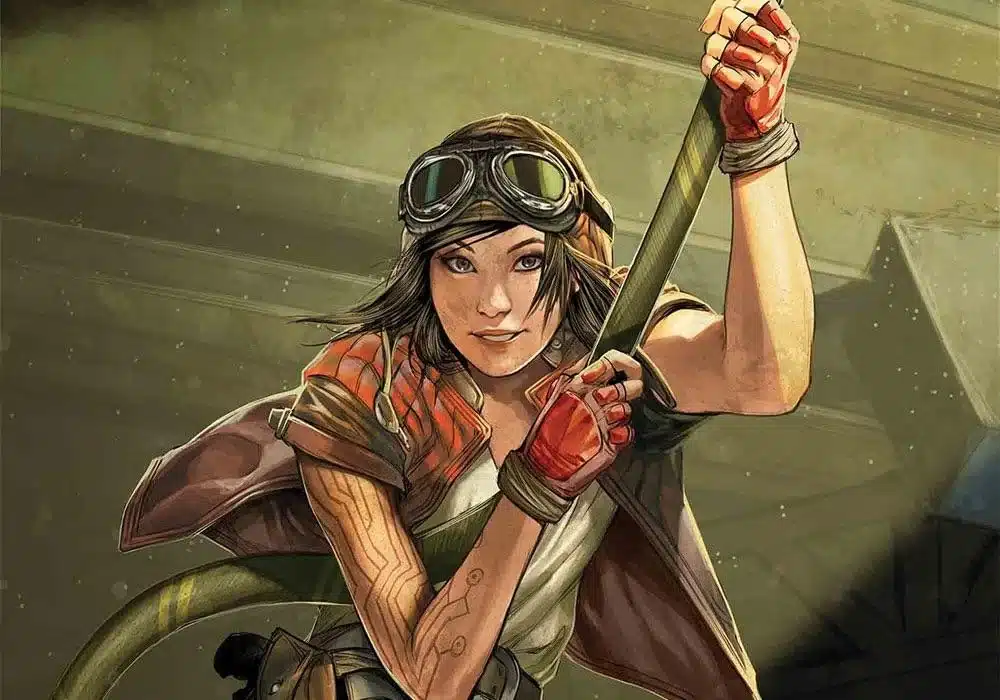
Doctor Aphra
If there is one character who kicked the modern canon door open with a blaster in one hand and bad decisions in the other, it is Doctor Chelli Lona Aphra.
Aphra is not just one of the best queer characters in Star Wars — she is one of the best characters, period. StarWars.com has explicitly discussed Aphra’s queerness and described her as a lesbian character whose identity is baked into who she is, not tacked on like a cheap mission objective. She became a landmark figure because she was allowed to be brilliant, selfish, charming, reckless, funny, and deeply disaster-prone all at once. In other words: a real person, just with more murder droids in her orbit than most of us manage in a lifetime.
Sana Starros
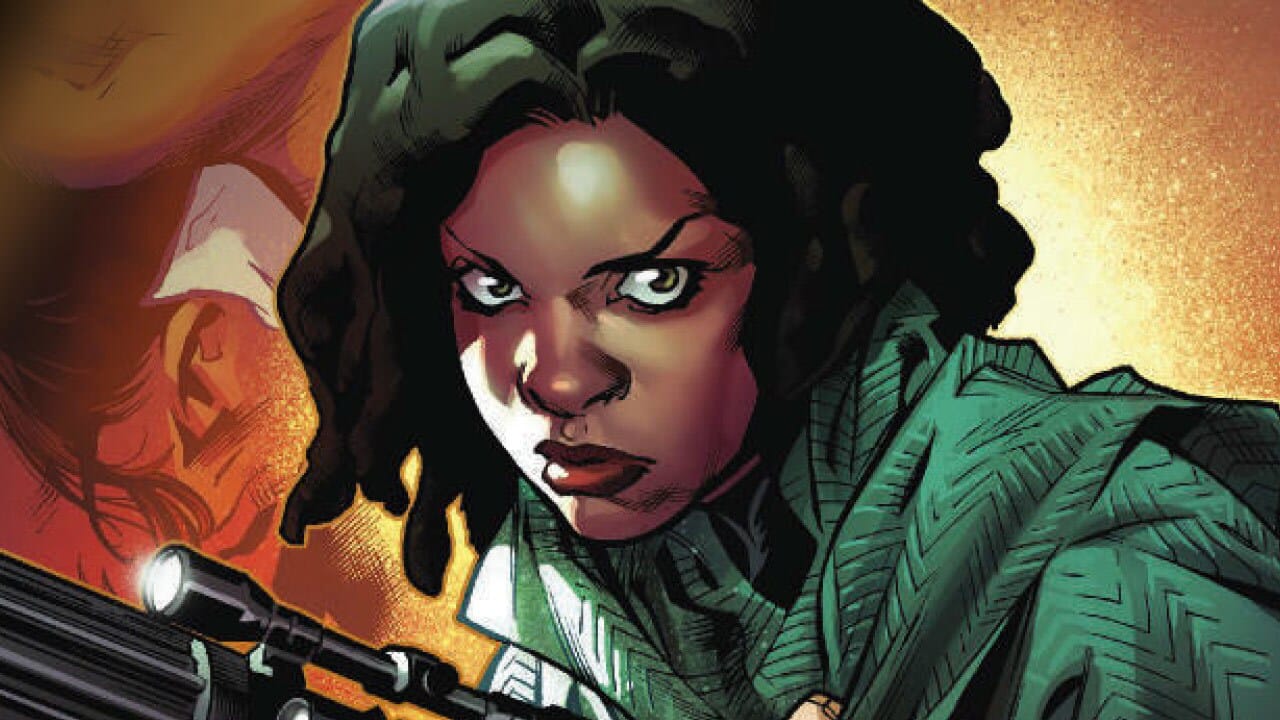
Sana Starros is one of the most important queer characters in modern canon, both in her own right and because of her history with Aphra. StarWars.com’s own character coverage notes that Sana was the former partner of both Han Solo and Doctor Aphra, which makes her one of the clearest bisexual or queer-coded-by-text examples in the canon lineup — and not in a vague “creator said it at a convention” way, but right there in official material.
Sana also matters because she is not written as “representation first, character second.” She is a smuggler, survivor, operator, and professional chaos magnet. The fact that she is queer is part of her life, not the entirety of it. Which is how it should be.
Magna Tolvan
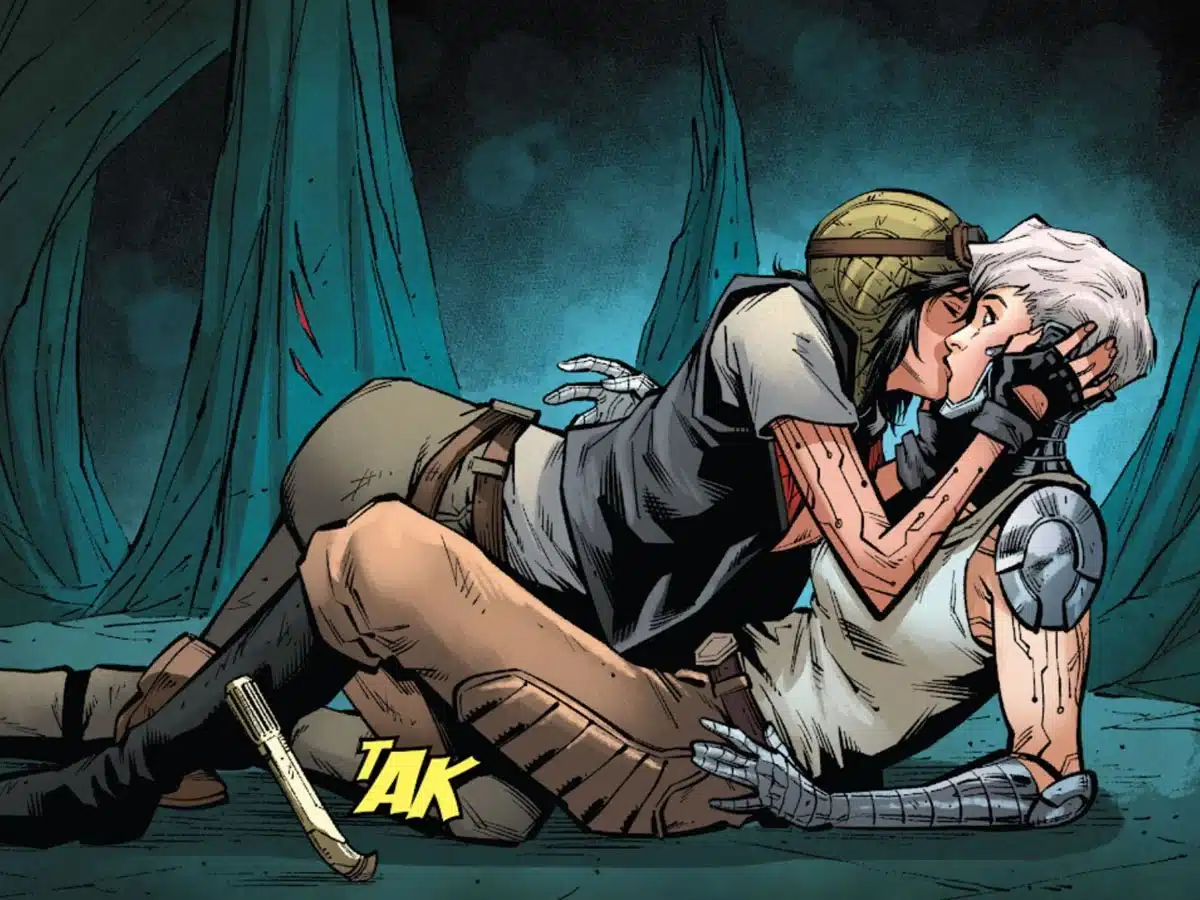
Magna Tolvan often gets overlooked in broader Star Wars conversations, which is unfair because she is tied directly into one of the franchise’s most interesting queer dynamics. StarWars.com’s Pride feature included Tolvan among its highlighted queer characters, specifically in connection with her relationship arc involving Aphra. That makes her part of one of canon’s most visible queer storylines — and, fittingly for an Imperial, part of one of its most emotionally complicated ones too.
Sinjir Rath Velus
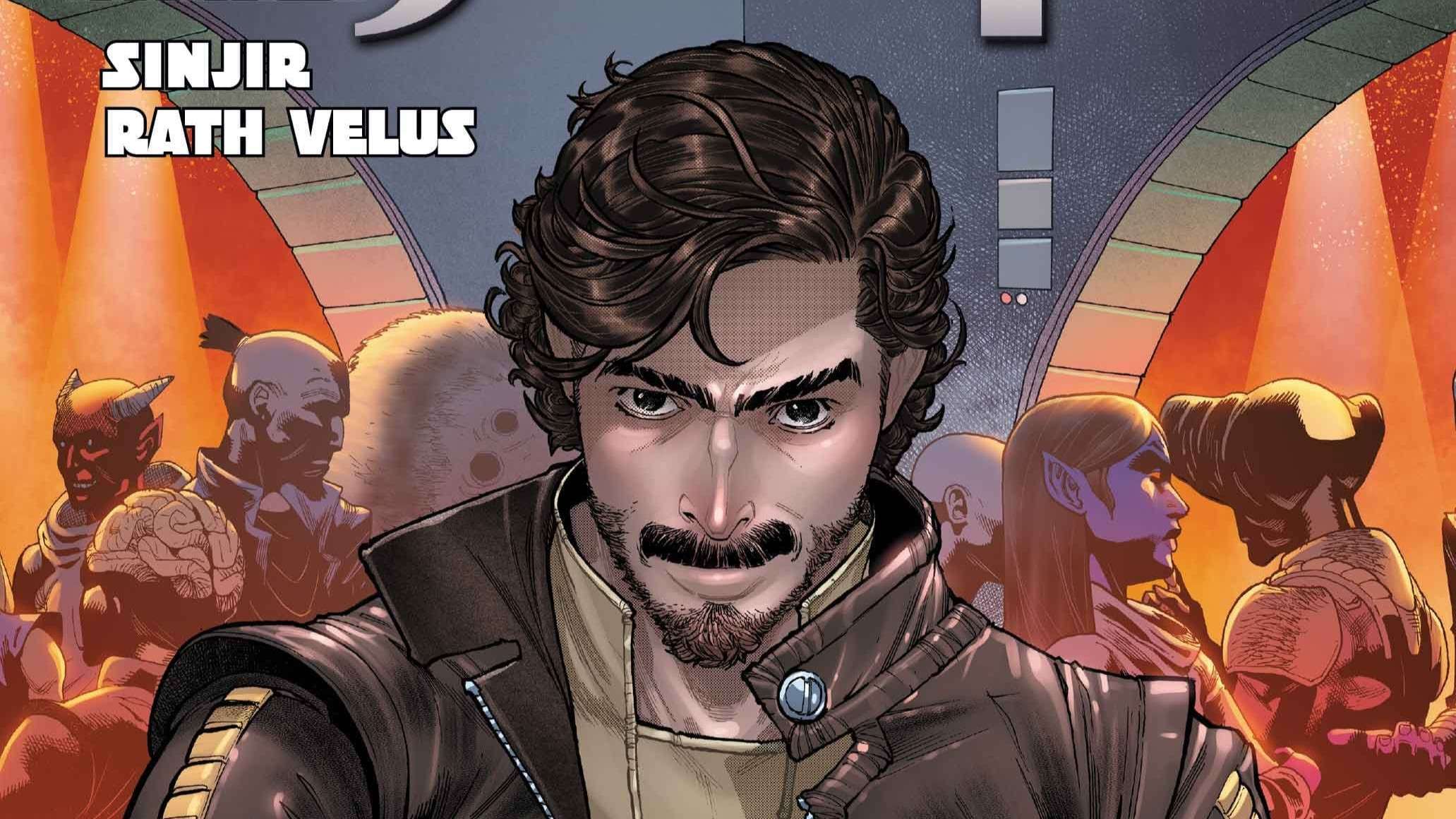
Before some of the more recent Disney+ era representation arrived on screen, Sinjir Rath Velus was one of the earliest openly queer characters to make real noise in the new canon. StarWars.com has explicitly grouped Sinjir among the early queer canon characters who helped set the stage for what came later. He debuted in the Aftermath trilogy and quickly stood out because he was written like an actual person caught in galactic collapse — sardonic, damaged, useful, and not especially interested in pretending the Empire had been a great employer.
Moff Mors
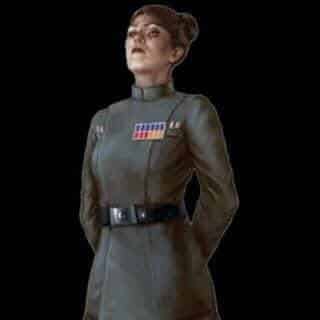
Alongside Sinjir, Moff Mors is one of the early canon trailblazers. StarWars.com has pointed to her as one of the first openly queer characters in the modern continuity. She did not arrive with fireworks or a giant press campaign. She just existed in canon as queer, which in some ways made the point more effectively than any corporate rainbow logo ever could.
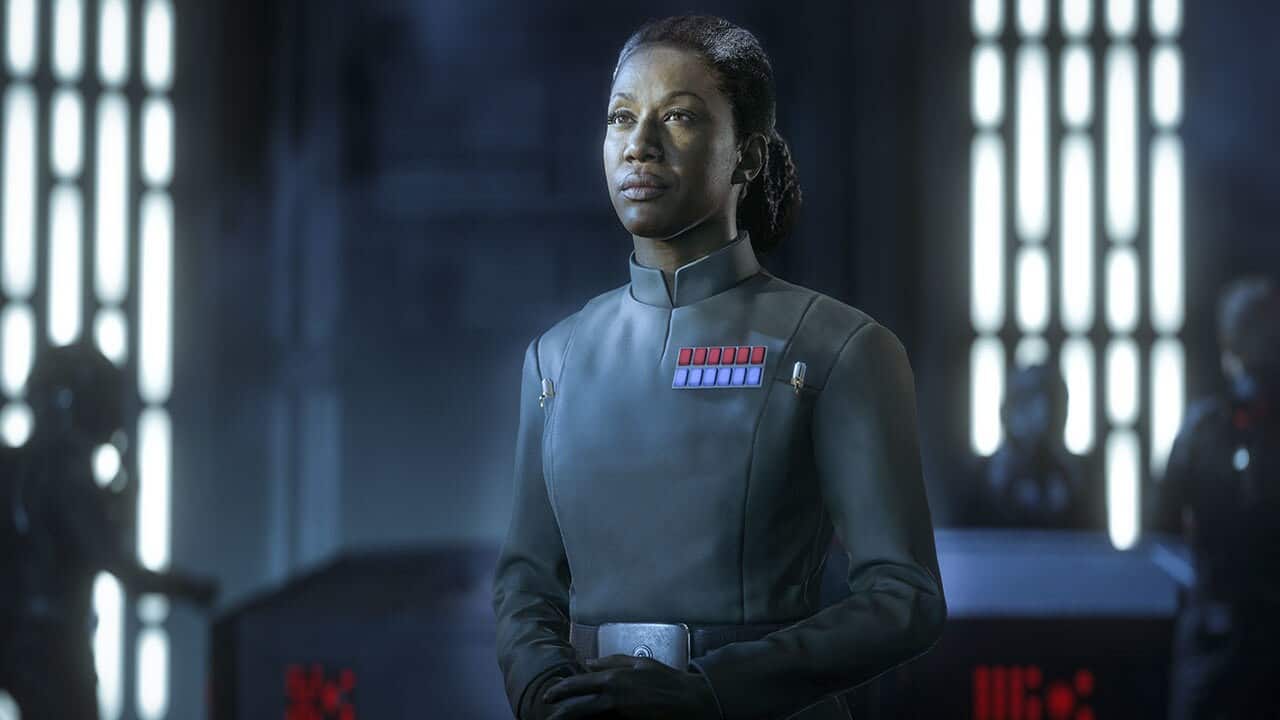
Rae Sloane
Yes, even the Imperials got invited to Pride.
Rae Sloane was included by StarWars.com in its Pride character spotlight, which also notes that her bisexuality was introduced in Empire’s End. That matters because Sloane is not some side-note civilian or one-scene cameo. She is one of the most significant Imperial-era characters in modern canon, with appearances across books, comics, and games. She is competent, ruthless, politically sharp, and proof that queer representation in Star Wars does not have to be limited to the “good guys.” Villainy, too, can be inclusive.
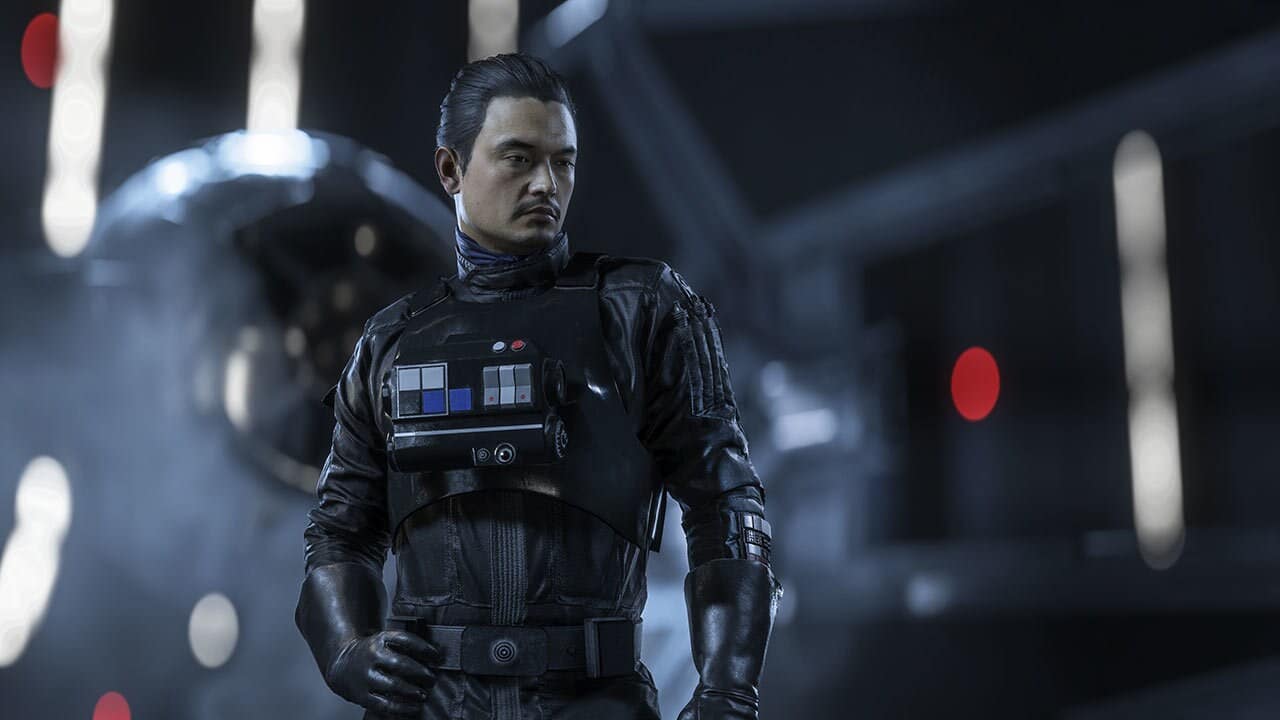
Varko Grey
Another character officially spotlighted by StarWars.com’s Pride feature is Varko Grey, the Imperial pilot from Star Wars: Squadrons. He does not dominate the franchise in the same way Aphra or Sloane do, but he matters because he shows that queer representation in Star Wars is not confined to one corner of canon. It is in comics, in books, and in games too.
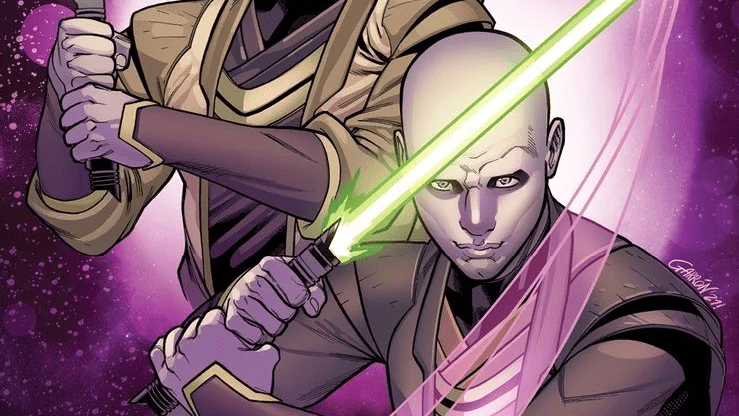
Terec and Ceret
Now we get to one of the more important milestones in recent canon.
Terec and Ceret, the Kotabi bond-twins from The High Republic, were identified by StarWars.com as the first trans non-binary Jedi in modern galactic lore. They use they/them pronouns as individuals, share a linked mind, and instantly became one of the clearest examples of Star Wars moving beyond tokenism and into something more interesting. Not perfect, not complete, but real progress.
And yes, they are Jedi, which means the old “there are no queer Jedi” era can be filed where it belongs: in the trash compactor.
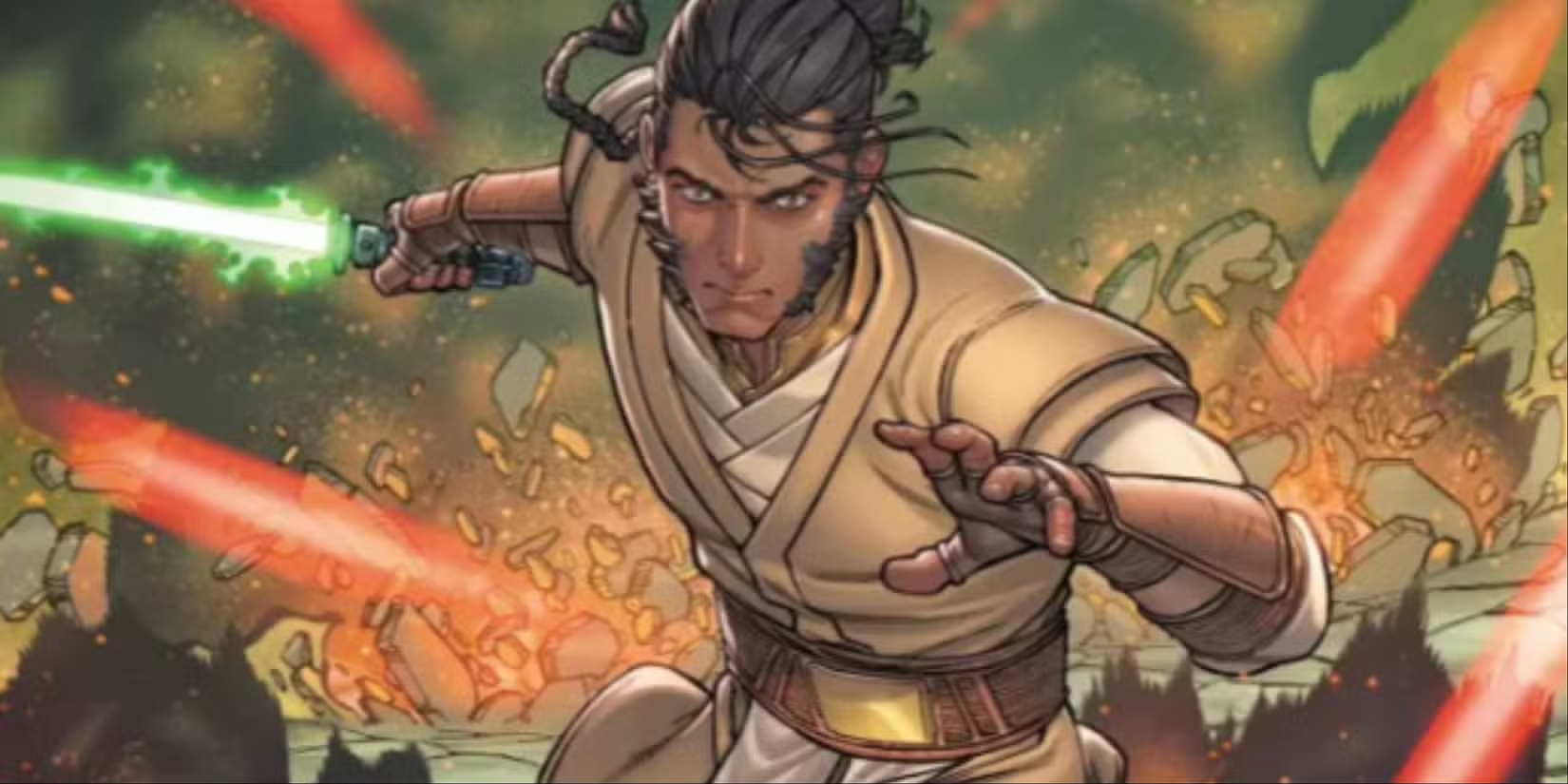
Kantam Sy
Another major High Republic-era figure is Kantam Sy, who is referred to by StarWars.com using they/them pronouns and was also featured in the official 2023 Pride celebrations. That combination matters. It means their identity is not fan-assigned or speculative; it is part of the official fabric of the character. Kantam is especially notable because they sit inside one of the franchise’s most mythic institutions — the Jedi Order — while quietly broadening what that order looks like.
Vel Sartha and Cinta Kaz
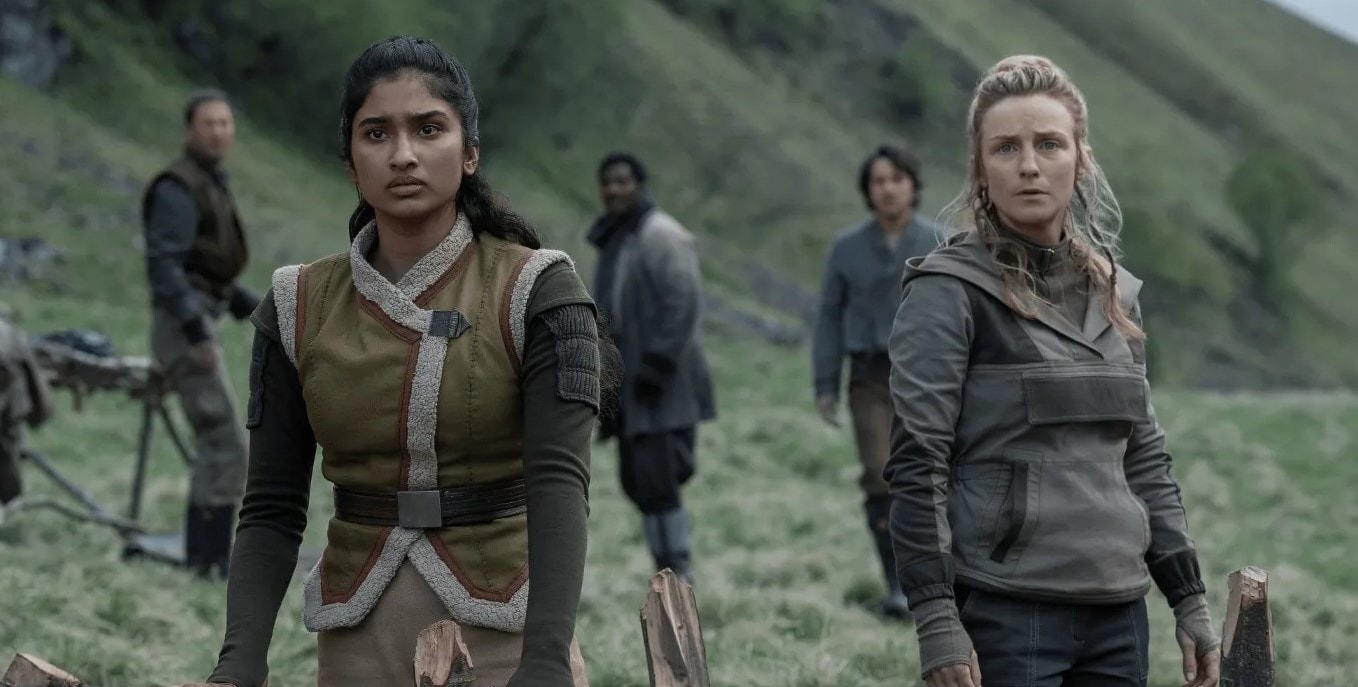
For a long time, people joked that Star Wars would let planets explode before it let women kiss on camera. Then Andor showed up, looked around, and decided subtlety was for weaker shows.
Vel Sartha and Cinta Kaz are one of the clearest live-action queer couples in canon. StarWars.com has featured both characters in Pride material, and its Andor coverage directly refers to Cinta as Vel’s girlfriend. That is not subtext. That is text, printed in plain language, as official as a rebellion briefing and considerably more romantic.
Their relationship also works because it is not tidy. It is shaped by war, sacrifice, distance, conflicting priorities, and the small inconvenience of trying to overthrow fascism on no sleep. Very relatable stuff.
Mother Aniseya and Mother Koril
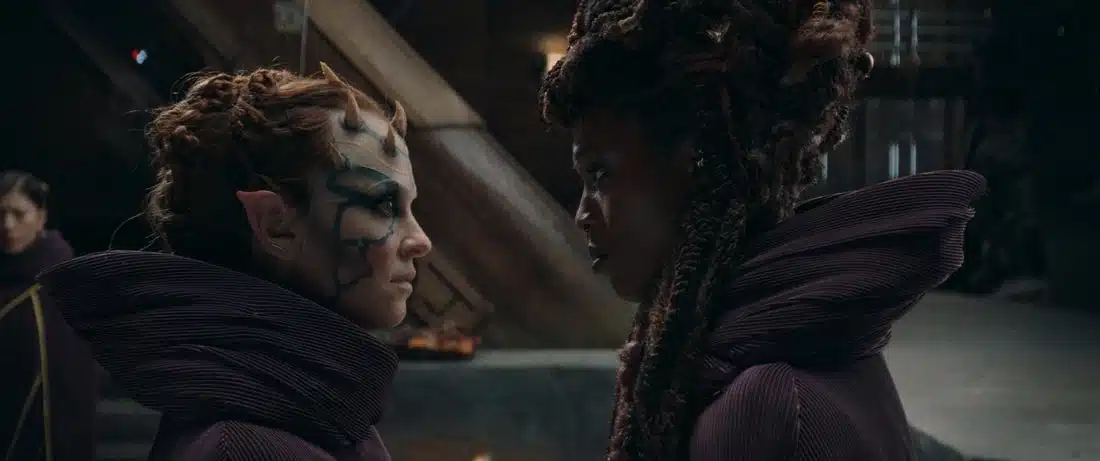
Then came The Acolyte, which walked into canon carrying two of the biggest neon signs yet.
StarWars.com’s coverage of the series describes Mother Aniseya and Mother Koril as partners in parenthood, and the Databank goes even further by stating that Aniseya impregnated Koril with the twins, Osha and Mae, “either by magic or other means.” That is about as canon as canon gets without the franchise pausing to flash “YES, THEY ARE A COUPLE” across the screen in Aurebesh.
Their inclusion was a major step because it moved LGBTQ+ representation deeper into the mythic and mystical core of the universe, rather than keeping it mostly in comics and tie-in fiction.
So… is this really “all” of them?
Here is the honest answer: not literally every single queer character ever printed in a canon panel, because Star Wars canon now stretches across novels, junior books, comics, audio dramas, games, and TV faster than a rumor about a new Revan project. There are additional minor and supporting characters across publishing that could be counted depending on how exhaustive you want to get. Wookieepedia maintains a larger running category of confirmed LGBTQIA+ individuals, but official StarWars.com sources most clearly and reliably anchor the names above.
But if you are asking for the major, clearly confirmed canon LGBTQ+ characters that matter most to the current conversation, this is the list that gets you out of the swamp and onto solid ground.
The bigger picture
What makes this evolution interesting is not just that queer characters now exist in Star Wars. It is where they exist.
They are smugglers, archaeologists, Jedi, Imperials, rebels, witches, pilots, and political survivors. They are in comics, novels, games, prestige television, and official Databank entries. Some are heroic. Some are disastrous. Some are both before breakfast. That variety is the real sign of progress. Representation stops feeling ornamental when a franchise trusts queer characters to be important, messy, funny, frightening, romantic, and occasionally an absolute menace.
And in that sense, Star Wars is finally catching up to what fans knew all along: this galaxy was never straight. It was just badly catalogued.