
There are plenty of Star Wars games that sell you the big fantasy. Be a Jedi. Blow up a Death Star. Command a fleet. Save the galaxy before lunch.
Star Wars Episode I: Racer does none of that.
Instead, it looks at one of the loudest, dustiest, most gloriously unhinged scenes in The Phantom Menace and says: “You know what? Let’s build an entire game around this insane space go-kart death sport.”
And somehow, LucasArts absolutely nailed it.
If you’ve been exploring our Complete List of All Star Wars Games Ever Made (1979–Present), this is one of those entries that reminds you how wonderfully unpredictable Star Wars games could be in the late ’90s. It launched in 1999 and was developed by LucasArts as a racing game built around the podracing sequence from Episode I, later appearing across multiple platforms and eventually getting modern rereleases as well.
One movie scene, one very good bad idea
On paper, this game sounds a little ridiculous.
Take a single action set piece from a movie. Stretch it into a full standalone game. Fill it with alien racers, strange planets, exploding engines, and speed that feels deeply unsafe. Then release it in an era already crowded with racing games.
That could have gone very wrong.
Instead, Episode I: Racer turned the Boonta Eve sequence into something way bigger than a tie-in. The official feature set included 25 playable racers, tracks spread across 8 worlds, upgrade systems with pit droids and parts, and enough shortcuts and hazards to make races feel messy in the best possible way.
And that is really the secret sauce here: it never feels too neat. This is not clean, polite racing. This is “my engines are screaming, Sebulba is cheating, something is on fire, and I may or may not survive the next turn” racing.
Which, honestly, is exactly what podracing should feel like.
It sold speed better than almost anything else
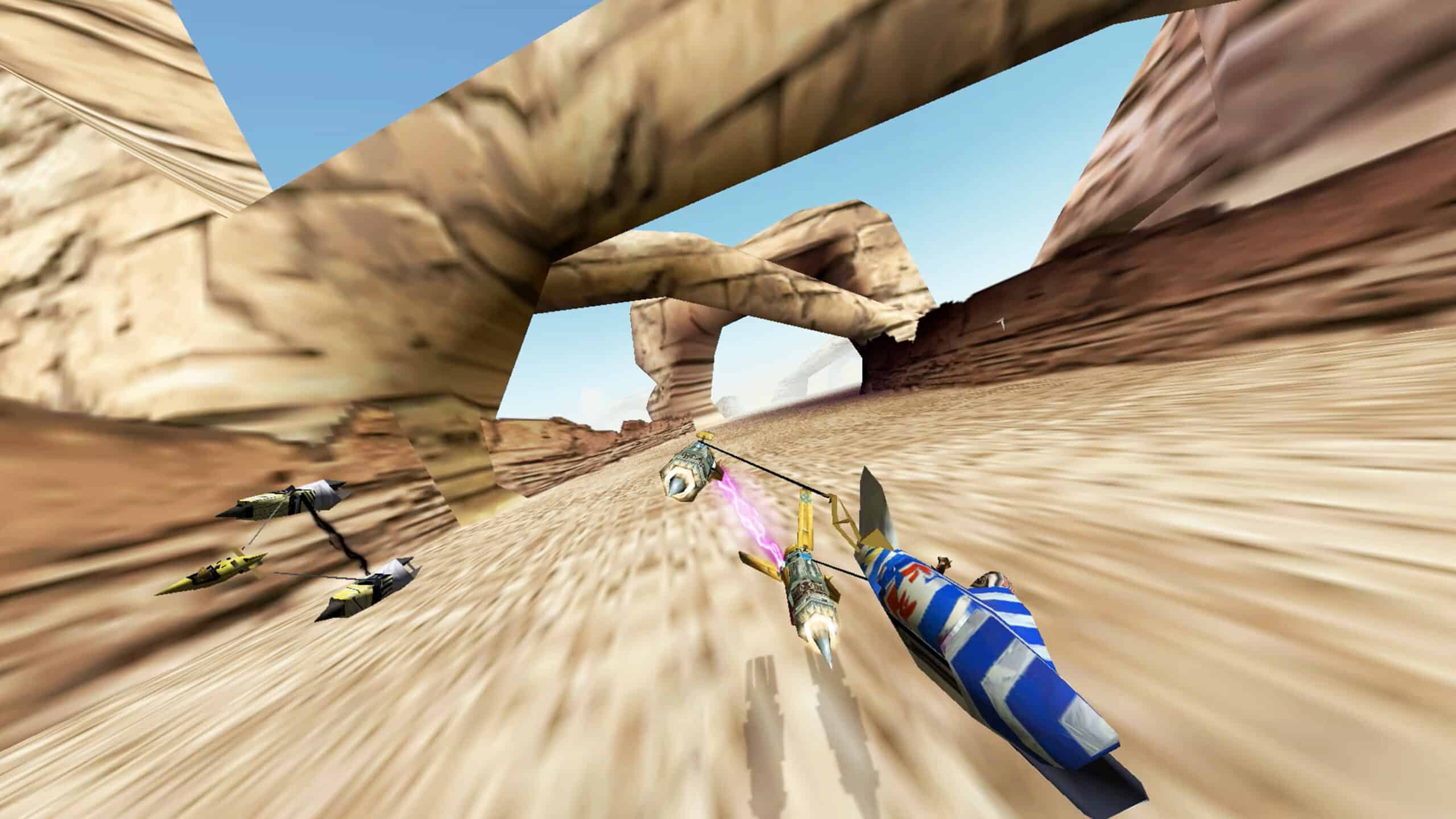
A lot of racing games say they are fast. Episode I: Racer actually feels fast.
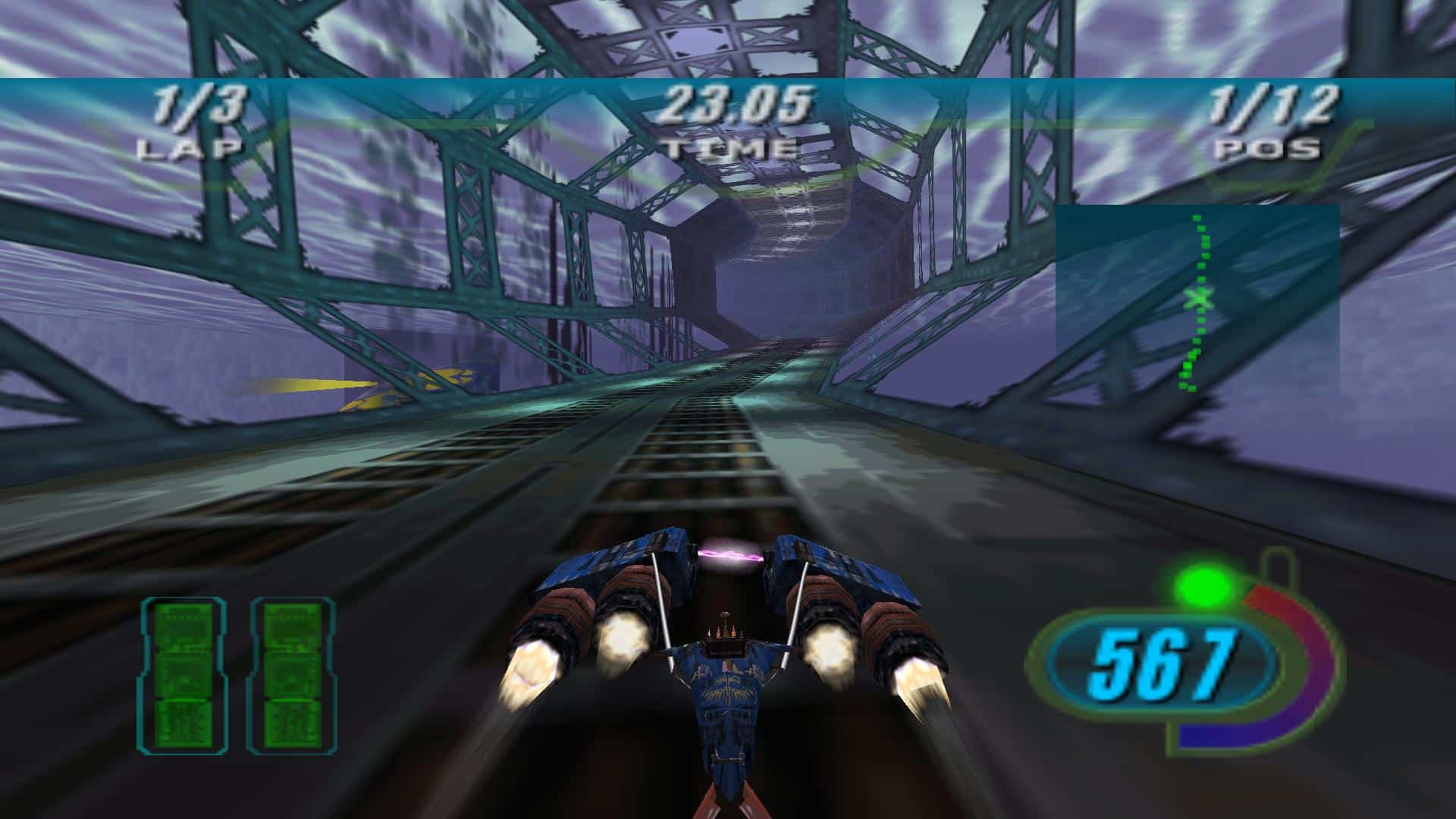
That is still one of the first things people remember about it. The sense of speed is not just cosmetic. It is the whole personality of the game. The podracers lurch, vibrate, overheat, and threaten to fly apart if you push them too hard. Tracks throw hazards at you. Repairs matter. Boosting feels risky instead of free. Even when you are doing well, the game has a way of making it feel like you are one terrible corner away from becoming expensive desert scrap. StarWars.com later praised the game’s “seat-of-the-pants sense of speed,” along with its responsive controls and strong track design, which is a fancy way of saying: yes, this thing still rips.
That is a big reason the game stuck around in people’s memories. Lots of movie tie-ins get remembered because fans were young when they played them. Racer gets remembered because, underneath the Star Wars skin, it was genuinely fun to play.
That helped.
A perfect fit for the weird magic of the late ’90s
One of the reasons this game is such a great fit for our Star Wars Games (1990–1999) hub is because it captures a very specific era of Star Wars gaming. This was a period where LucasArts seemed willing to make just about anything as long as the concept sounded cool enough.
Want a serious starfighter sim? You got X-Wing and TIE Fighter. Want first-person blaster chaos? Dark Forces had you covered. Want pulpy action? Shadows of the Empire was right there. Want to race a pair of giant engines through canyons while Tusken Raiders take potshots at you? Sure. Why not. That is a video game now.
And that variety is part of what makes the larger archive so much fun to build. Episode I: Racer does not feel like the flight sims, and it does not feel like the shooters. It occupies its own weird little lane in Star Wars history — loud, fast, and coated in Tatooine dust.
The platform history is a little chaotic too
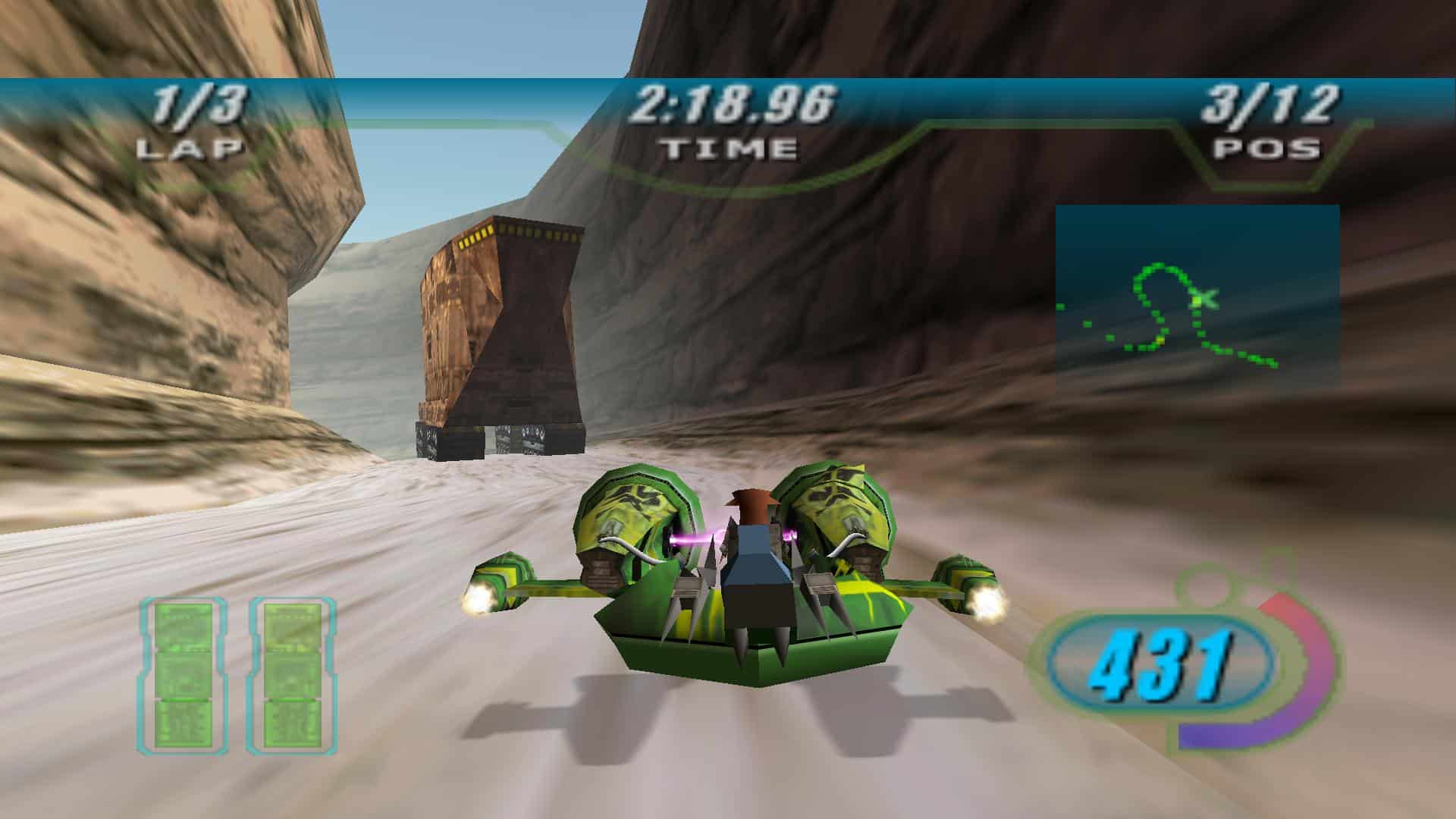
The original release arrived in 1999 for Windows, with versions also reaching Nintendo 64, Mac, Dreamcast, and Game Boy Color. The Game Boy Color version was especially interesting because it had to be reworked into a very different style of game for the hardware, while an announced PlayStation version never made it out the door.
Then, years later, the game got a second life. Aspyr brought it back for Nintendo Switch, PlayStation 4, and later Xbox One, with modernized controls and split-screen multiplayer on the console rereleases. The official announcement also made a point of reminding everyone that this was not just some random dusty deep cut — this was a game people still genuinely loved enough to bring back.
That rerelease was not nostalgia for nostalgia’s sake. It was more like a public service. People deserved another chance to scream through Beggar’s Canyon at unsafe speeds.
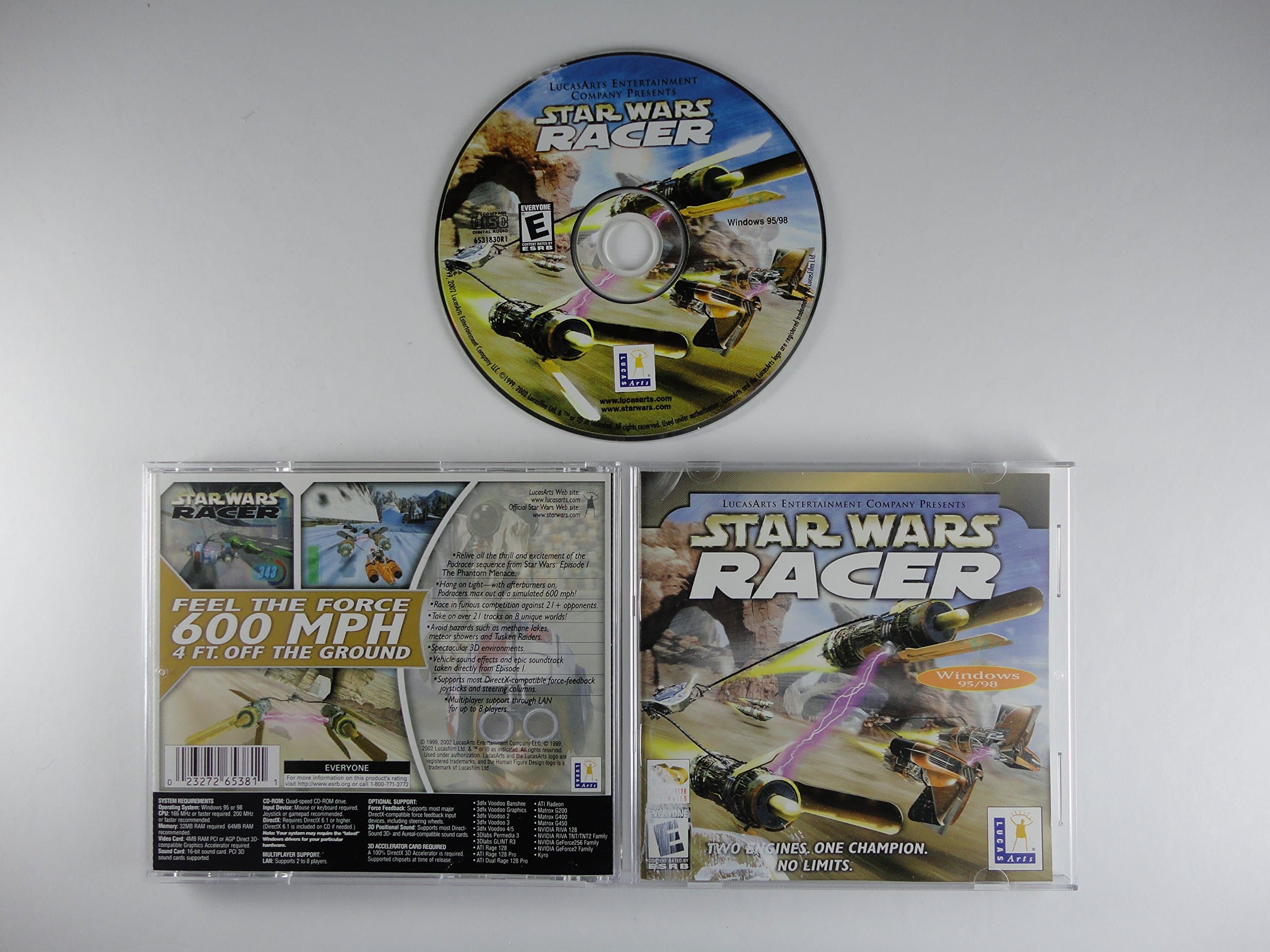
Better than “good for a movie game”
This is where Episode I: Racer quietly earns some respect.
It was not just a game people liked because it had Star Wars branding slapped on the box. It actually picked up serious recognition. At the 3rd Annual Interactive Achievement Awards, it won Console Racing Game of the Year, which is a pretty solid sign that people saw it as more than “that podracing thing from the movie.”
And that reputation has held up surprisingly well. StarWars.com later looked back on the game as one of the saga’s most beloved racing experiences, noting that even without the Star Wars fan-service, the core racing design still stands on its own. That feels right. Strip away the podracers, the announcers, and the John Williams-adjacent adrenaline, and there is still a really sharp arcade racer underneath.
Not every licensed game can say that.
Quite a lot of them definitely cannot say that.
The real reason it still matters
The best thing about Star Wars Episode I: Racer is that it never tries to be more important than it is.
It is not trying to tell the deepest story in the galaxy. It is not trying to redefine Star Wars lore. It is not pretending podracing is the spiritual core of the saga.
It is just trying to be a really fun time.
And it succeeds because it understands exactly what made that movie scene memorable in the first place. Podracing is dangerous, loud, reckless, and just a little bit stupid in the most entertaining possible way. LucasArts took that energy, turned it into a full game, and made something that still feels good decades later.
That is why Episode I: Racer still has a place in the archive. Not because it is the most prestigious Star Wars game ever made. Not because it changed the industry forever.
Because it is pure throttle-happy chaos, and it is still a blast.
Sometimes that is more than enough.
FAQ
What is Star Wars Episode I: Racer based on?
It is based on the podracing sequence from Star Wars: Episode I – The Phantom Menace, expanded into a full racing game.
Who developed Star Wars Episode I: Racer?
LucasArts developed and published the original 1999 release, while Aspyr handled the modern console rereleases.
What platforms was Star Wars Episode I: Racer released on?
Originally, it released on Windows and later came to Nintendo 64, Mac, Dreamcast, and Game Boy Color. Modern versions launched on Nintendo Switch, PlayStation 4, and Xbox One.
How many racers and worlds are in the game?
The official rerelease feature list highlights 25 playable racers and tracks across 8 worlds.
Did the game win any awards?
Yes. It won Console Racing Game of the Year at the 2000 Interactive Achievement Awards.
Was there a canceled PlayStation version?
Yes. A PlayStation version was announced during the original release era but never shipped.
Stay connected with the galaxy’s latest updates!
Follow us on X, Facebook, Instagram, bsky or Pinterest for exclusive content, mod guides, Star Wars gaming news, and more. Your support helps keep the Holonet alive—one click at a time
Author

Related Posts

Want to Hear the Star Wars Outlaws Prequel for Free? Here’s the Easy Way In
Filoni Had the Most Dave Filoni Answer Possible to Sam Witwer’s Starkiller Worry
SWTOR Just Added Maul: Shadow Lord-Inspired Gear to the Cartel Market
Claudia Gray Wants a KOTOR Novel — and Honestly, Lucasfilm Should Let Her Cook


-
SWGOH Kit Reveal: Cobb Vanth Brings Jawas and Tuskens Together -
LEGO Star Wars: Castaways Just Refreshed Its Weekly Missions — Time to Get Moving on “The Way” -
Star Wars Eclipse May Have Finished Chunks — But the Bigger Problem Sounds a Lot Less Glamorous -
Star Wars Battlefront 2 Is Still Pulling in New Players — and That’s Suddenly Hard to Ignore