
Before The Phantom Menace even hit theaters in 1999, the Star Wars discourse machine was already warming up its hyperdrives—and somehow decided that a nine-year-old child was a perfectly acceptable target.
Yes, really.
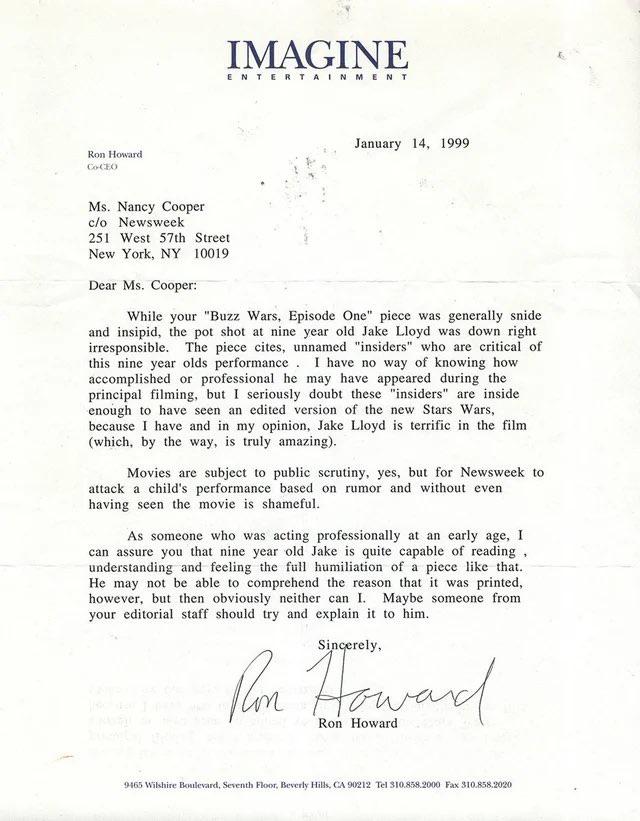
Long before social media outrage cycles, YouTube essayists, and algorithm-fueled pile-ons, Newsweek published a piece criticizing Jake Lloyd’s performance as young Anakin Skywalker… before the film was even released. And that’s when Ron Howard stepped in—with a letter so calm, measured, and devastatingly polite that it still reads like a masterclass in public decency.
A Letter That Aged Better Than Most Hot Takes
Dated January 14, 1999, the letter came directly from Ron Howard, co-CEO of Imagine Entertainment and someone who, conveniently, actually knew what it meant to be a child actor under public scrutiny.
Howard didn’t yell. He didn’t grandstand. He didn’t threaten.
He simply dismantled the article with quiet precision.
He called the critique of Jake Lloyd “downright irresponsible,” questioned how unnamed “insiders” could possibly judge a performance they hadn’t even seen in context, and made it very clear that attacking a child based on rumor wasn’t criticism—it was shameful.
No caps lock. No outrage. Just facts, empathy, and professional standards.
“Movies Are Subject to Public Scrutiny”… But Kids Aren’t Fair Game
One of the most striking parts of the letter is how timeless it feels. Howard acknowledges that films are open to critique—of course they are—but he draws a firm line when it comes to publicly humiliating a child.
He points out something obvious yet often ignored: a nine-year-old actor can read, can understand, and can feel the weight of public ridicule, even if they don’t fully grasp why it’s happening.
That single paragraph hits harder today than it probably did in 1999.
Because we’ve all seen what happened next.
The Phantom Menace Backlash, Before the Backlash Was Cool
History has not been kind to Jake Lloyd’s experience with Star Wars fandom. The ridicule that followed The Phantom Menace is now widely acknowledged as excessive, unfair, and deeply damaging.
What makes Ron Howard’s letter so powerful is that it arrived before any of that—before box office numbers, before audience reactions, before memes, before the internet decided Anakin Skywalker was public property.
Howard wasn’t defending a finished product.
He was defending a kid.
And in doing so, he indirectly predicted one of the ugliest recurring problems in modern fandom: confusing critique with cruelty.
A Reminder the Internet Still Needs
Reading the letter today feels less like nostalgia and more like a warning label.
It reminds us that:
- “Insider” criticism without context is often just rumor in a nice jacket
- Professional media carries real consequences, especially for children
- Being early with a hot take doesn’t make it smart—or ethical
Most of all, it shows what real industry leadership looks like: stepping in when it’s easier to stay quiet.
The Real Force Was Empathy
Ron Howard didn’t need to send that letter.
He wasn’t promoting a film.
He wasn’t protecting a brand.
He was protecting a child who didn’t have the power to protect himself.
In a franchise filled with heroes, lightsabers, and epic sacrifices, this might be one of the most genuinely heroic Star Wars moments—without a single frame of film involved.
And honestly? The Force could use a little more of that energy these days.
Stay connected with the galaxy’s latest updates!
Follow us on X, Facebook, Instagram, or Pinterest for exclusive content, mod guides, Star Wars gaming news, and more. Your support helps keep the Holonet alive—one click at a time