
If you’ve ever tried to watch Star Wars “in order,” you already know the problem: release dates lie, flashbacks complicate things, and Disney-era shows now weave between films like hyperspace lanes.
That’s where a true chronological watching order comes in — one that follows the timeline inside the galaxy, not the year something hit theaters.
Below is a complete, canon-only chronological order of every Star Wars movie and TV series, from the High Republic era to the fall of the First Order, with a short explanation of what each entry adds to the saga.
This guide includes films, live-action series, and animated shows currently considered canon.
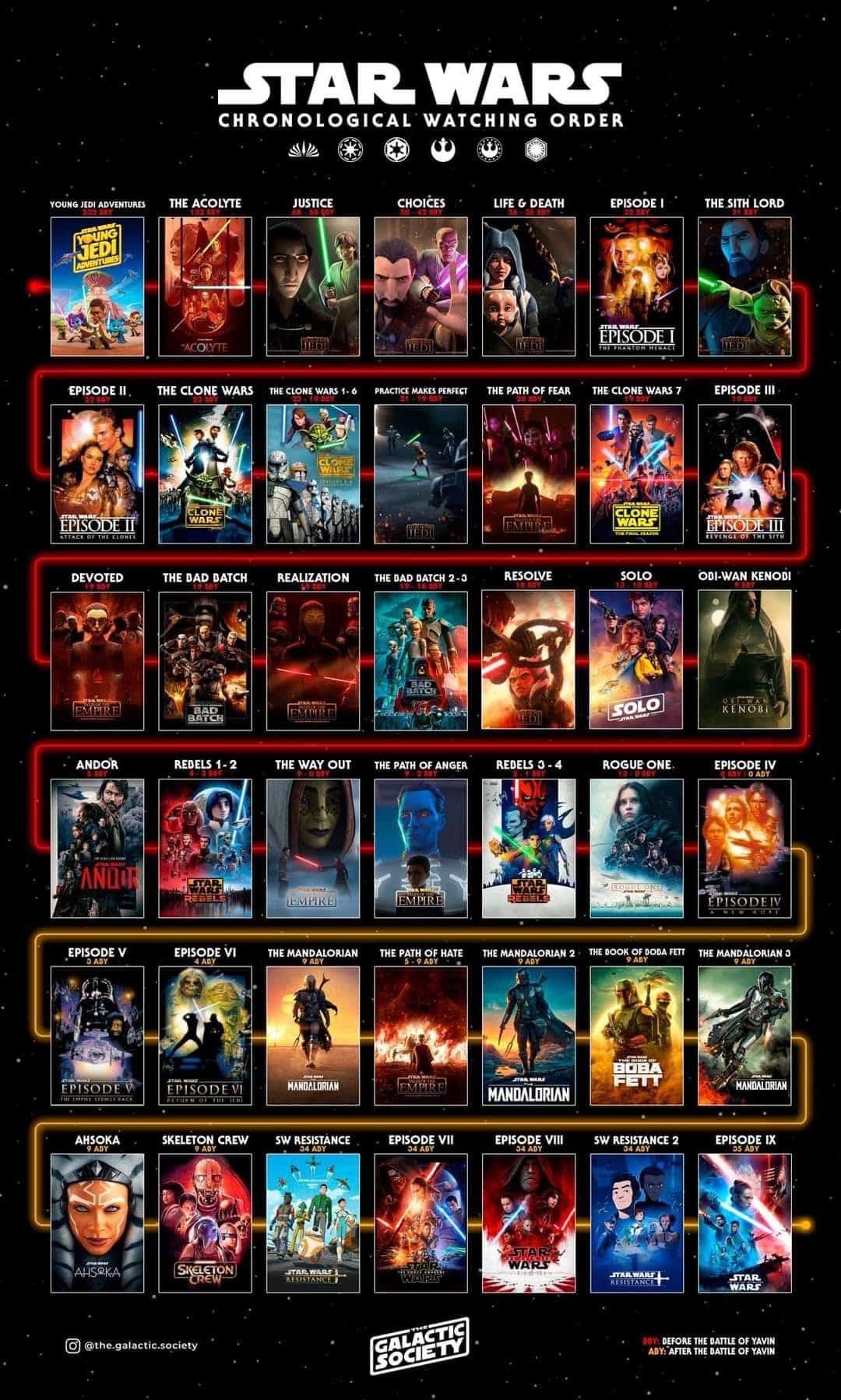
The High Republic Era
Young Jedi Adventures
Set centuries before the Skywalker saga, this animated series introduces the High Republic at its most peaceful. It’s aimed at younger viewers but establishes the Jedi Order at its height — confident, numerous, and unchallenged.
The Acolyte
Taking place at the end of the High Republic era, The Acolyte explores the shadows beneath Jedi dominance. It focuses on dark side influences, political tension, and the early roots of Sith ideology creeping back into the galaxy.
The Fall of the Republic
Star Wars: Episode I – The Phantom Menace
The starting point of the Skywalker saga. Anakin Skywalker is discovered, the Sith return after centuries in hiding, and galactic politics quietly begin to rot from within.
Star Wars: Episode II – Attack of the Clones
The Republic slides toward war. Anakin struggles with attachment, the Clone Army is revealed, and the galaxy takes its first irreversible step toward authoritarian control.
Star Wars: The Clone Wars
This series fills in the emotional and political gaps between Episodes II and III. It deepens Anakin’s fall, introduces Ahsoka Tano, and shows how the Republic loses its soul long before it loses the war.
Star Wars: Episode III – Revenge of the Sith
The Republic dies. The Empire is born. Anakin Skywalker becomes Darth Vader, the Jedi are wiped out, and the galaxy enters its darkest age.
The Rise of the Empire
Star Wars: The Bad Batch
Set immediately after Order 66, The Bad Batch shows the chaos following the Republic’s collapse through the eyes of clone troopers who don’t quite fit the new Imperial mold.
Solo: A Star Wars Story
A standalone origin story for Han Solo, showing the criminal underworld of the early Empire and how rebellion simmers far from the Senate chambers.
Obi-Wan Kenobi
Ten years after Revenge of the Sith, Obi-Wan emerges from hiding to confront his past — and Darth Vader — while protecting the future of the Skywalker twins.
The Birth of the Rebellion
Andor
A grounded, political thriller that shows how ordinary people become revolutionaries. Andor strips away myth and focuses on sacrifice, surveillance, and resistance under Imperial rule.
Star Wars Rebels
This series charts the Rebellion’s early growth, introduces key figures like Ezra Bridger and Grand Admiral Thrawn, and bridges directly into the events of the Original Trilogy.
Rogue One: A Star Wars Story
A direct prelude to A New Hope, showing the brutal cost of hope. The Death Star plans are stolen — but at devastating personal expense.
The Galactic Civil War
Star Wars: Episode IV – A New Hope
Luke Skywalker enters the fight. The Rebel Alliance scores its first real victory. The legend of Star Wars begins.
Star Wars: Episode V – The Empire Strikes Back
The darkest chapter of the original trilogy. The Empire strikes back hard, heroes are scattered, and one of cinema’s most famous revelations reshapes the saga.
Star Wars: Episode VI – Return of the Jedi
The Emperor falls, Darth Vader is redeemed, and the Empire collapses — at least on paper.
The New Republic Era
The Mandalorian
Set after the fall of the Empire, this series explores a fractured galaxy where Imperial remnants, bounty hunters, and emerging powers collide.
The Book of Boba Fett
A crime-focused story centered on Tatooine, showing what power looks like when the Empire is gone — but law hasn’t returned.
Ahsoka
Following Rebels, this series pushes Star Wars into new mythological territory, blending Jedi lore, ancient threats, and galaxy-spanning consequences.
The Sequel Era
Star Wars Resistance
Running alongside the sequel trilogy, this animated series focuses on pilots, spies, and civilians caught between the Resistance and the rising First Order.
Star Wars: Episode VII – The Force Awakens
A new generation steps into the conflict as the First Order rises from the ashes of the Empire.
Star Wars: Episode VIII – The Last Jedi
A divisive but pivotal chapter, questioning legacy, heroism, and the future of the Jedi.
Star Wars: Episode IX – The Rise of Skywalker
The Skywalker saga concludes with one final clash between light and dark, tying together threads from across the entire timeline.
Why Chronological Order Hits Differently
Watching Star Wars chronologically reframes the entire saga. The Jedi’s fall feels more tragic. The Empire’s rise feels more inevitable. And the sequel era becomes less about nostalgia and more about consequence.
It’s not the only way to watch Star Wars — but it’s the one that shows how every era bleeds into the next.
Best Star Wars Watch Order for First-Time Viewers
If this is your first real dive into Star Wars, chronological order isn’t your friend. It makes sense after you understand the saga — but for newcomers, it front-loads complexity and dilutes the emotional reveals that made the series iconic in the first place.
Here’s the best watch order for first-time viewers: one that preserves surprise, builds momentum, and only adds depth when you’re ready.
Start with the Original Trilogy (Always)
- Star Wars: Episode IV – A New Hope
- Star Wars: Episode V – The Empire Strikes Back
- Star Wars: Episode VI – Return of the Jedi
This is non-negotiable. These three films are Star Wars. They establish the universe, the Force, the heroes, the villains, and the emotional core of the saga. Watching anything else first weakens their impact.
Then Go Back to the Prequels
- Star Wars: Episode I – The Phantom Menace
- Star Wars: Episode II – Attack of the Clones
- Star Wars: Episode III – Revenge of the Sith
Once you know where the story ends, the prequels become a tragedy instead of a mystery. That’s how they work best. Revenge of the Sith hits harder when you already understand what’s been lost.
Add One Animated Series (Optional, But Highly Recommended)
- Star Wars: The Clone Wars (select arcs, not every episode)
You don’t need the full seven seasons right away. Focus on major arcs involving Anakin, Obi-Wan, Ahsoka, and the clones. This series deepens the prequels and makes Episode III feel emotionally complete.
Move Forward to the Sequel Trilogy
- Star Wars: Episode VII – The Force Awakens
- Star Wars: Episode VIII – The Last Jedi
- Star Wars: Episode IX – The Rise of Skywalker
These films assume you understand the original trilogy. Watching them earlier strips away their context — especially when it comes to legacy characters and themes.
Only Then Explore the TV Universe
Once the core saga is complete, this is the moment to branch out:
- The Mandalorian – approachable, self-contained, and ideal after Episode VI
- Andor – best appreciated once you understand the Empire
- Ahsoka – works best after Clone Wars and Rebels
These shows assume some familiarity with the universe. They reward knowledge rather than explain basics.
Where Not to Start (Common Mistakes)
- Do not start with chronological order
- Do not start with the prequels
- Do not start with Disney+ shows
They’re richer after you know the core story, not before.
The Short Version (Bookmark This)
First-time watch order:
- Original Trilogy
- Prequel Trilogy
- (Optional) The Clone Wars
- Sequel Trilogy
- Live-action & animated shows
That path preserves mystery, emotional payoff, and momentum — which is exactly why Star Wars worked in the first place.
Stay connected with the galaxy’s latest updates!
Follow us on X, Facebook, Instagram, or Pinterest for exclusive content, mod guides, Star Wars gaming news, and more. Your support helps keep the Holonet alive—one click at a time.