George Lucas’ long-awaited Lucas Museum of Narrative Art finally has its opening lineup, and yes, Star Wars will be there.
But the more interesting twist? This is not being positioned as a giant shrine to lightsabers, stormtrooper helmets, and “look, a podracer!” nostalgia. The museum’s inaugural exhibitions suggest something broader, stranger, and very Lucas: a serious home for popular storytelling as art.
The Lucas Museum Opens in September 2026
The Lucas Museum of Narrative Art is set to open in Los Angeles on September 22, 2026, with the official museum site describing it as “a home for the art that connects us.” The museum is co-founded by George Lucas and Mellody Hobson and is located at One Lucas Plaza in L.A.’s Exposition Park.
According to coverage of the opening program, the museum’s first exhibitions will span more than 1,200 objects across more than 30 galleries, covering everything from comics and children’s illustration to photography, murals, fantasy art, Western stories, and cinema. In other words: the kind of art traditional institutions have often treated like it was standing outside the velvet rope, holding a lunch tray.
Star Wars Gets Its Place — But Not the Whole Building
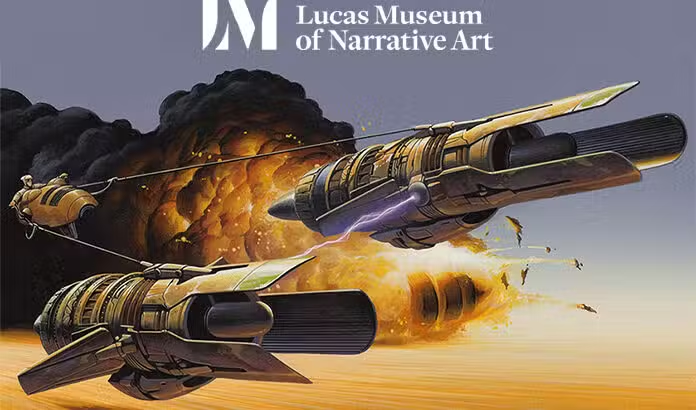
For Star Wars readers, the big draw is the Cinema exhibition, which will include production designs, props, and costumes from the Lucas Archives. Jedi News notes that Star Wars material will be part of that opening-day program, with Doug Chiang’s “Podrace Crash” production art from The Phantom Menace highlighted as one example.
That is exactly the kind of artifact that makes this museum fascinating. Not just because it is Star Wars, but because it shows how a movie image becomes a story object before it ever reaches the screen.
The official Lucas Museum page for the Lucas Archives describes the collection as a major group of materials from George Lucas’ cinematic worlds, including Star Wars and Indiana Jones. The archives were first established at Skywalker Ranch in 1983 as Return of the Jedi wrapped production, and were donated in 2013 to become part of the museum’s foundation.
The People’s Art Gets the Museum Treatment
The wider opening lineup is where this gets very Lucas. The inaugural galleries include comics, manga, anime, Frank Frazetta, Norman Rockwell, N.C. Wyeth, Maxfield Parrish, murals, photography, children’s stories, fantasy, history, and everyday life. That mix sounds chaotic on paper, but it is also the point: narrative art is not one genre. It is the visual language of memory, myth, politics, childhood, advertising, cinema, and Saturday-morning obsession.
For Star Wars, that context matters. Lucas has always pulled from old serials, Westerns, samurai films, pulp illustration, mythology, war movies, and comic-book clarity. Seeing Star Wars production art displayed alongside Frazetta, Kirby, Rockwell, manga, and children’s illustration does not shrink the galaxy far, far away. It explains the soil it grew from.
A Museum That Makes Star Wars Look Bigger
The safest, dullest version of this story would be: “Star Wars props are going on display.” True, but not enough.
The better version is that George Lucas appears to be building a museum around the idea that popular images shape culture just as powerfully as marble statues and oil paintings. Star Wars belongs in that conversation not because it is expensive memorabilia, but because it is one of modern storytelling’s most influential visual engines.
And if the opening exhibitions deliver on that promise, the Lucas Museum may become something rare: a place where a Ralph McQuarrie sketch, a comic-book page, a fantasy painting, and a film costume can all sit in the same conversation without anyone pretending one of them is “lesser” art.
That feels very George Lucas. Also, yes, we still want to see the props.