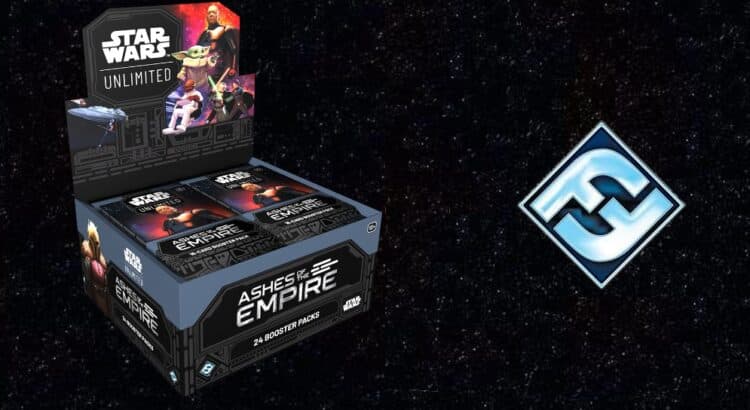
Star Wars: Unlimited is heading back to Endor, which means the Empire is falling, the galaxy is unstable, and everyone is about to pretend this is a clean transition of power.
Cute.
Ashes of the Empire, the eighth set for Star Wars: Unlimited, launches today, bringing the trading card game into one of the most interesting periods in the timeline: the Battle of Endor and the messy years after it. The Death Star is gone. The Emperor is dead. Darth Vader is gone too. The Rebels have won the big symbolic victory.
And somehow, that makes everything more complicated.
According to the official product page, Ashes of the Empire includes more than 260 new cards and introduces new mechanics built around the chaos left behind by the fall of the Galactic Empire, including Support, Advantage tokens, and Mandalorian token units.
Endor Was Not the End
That is the clever part of this set.
For casual Star Wars memory, Endor is the happy ending. Fireworks. Ewoks. Force ghosts. Han and Leia smiling. Luke quietly processing the most emotionally exhausting family reunion imaginable.
But the wider Star Wars timeline has spent years reminding us that Endor was not a clean ending. It was a rupture.
The Empire did not simply vanish because one space station exploded. Imperial remnants scattered, local power structures broke, warlords grabbed territory, Mandalorians remained complicated, and the New Republic had to start building something out of the wreckage while everyone else was still armed, angry, and suspicious.
That is very good material for a card game.
It gives Ashes of the Empire a stronger identity than “here are more famous faces.” The set is built around instability: alliances forming, forces supporting each other, temporary advantages appearing at the right moment, and Mandalorian units entering the fight with their usual blend of discipline, armor, and terrible timing.
We already dug into the set’s mechanics and theme in our Ashes of the Empire preview guide, but launch day is where theory finally meets the table.
Support Sounds Like the Right Mechanic for This Era
The new Support keyword is probably the cleanest mechanical fit for the post-Endor setting.
Fantasy Flight’s official product page describes Support as a way to have units work together to achieve victory, which fits a galaxy where nobody is really winning alone anymore.
That matters because this era is not just about one hero cutting through a battlefield.
It is about fragile coalitions. Rebel cells becoming government forces. Former Imperial assets becoming liabilities. Mandalorians choosing sides, switching sides, or making everyone regret asking what side they were on in the first place.
In gameplay terms, Support should make units feel more connected. In Star Wars terms, it fits the moment when survival depends less on destiny and more on whether the person next to you can actually hold the line.
Advantage Tokens Bring the Scrappy Energy
Then there are Advantage tokens, which the official site frames as a way to “strike hard and fast” with fleeting momentum.
That is exactly the kind of mechanic this period needs.
Post-Endor Star Wars is full of short windows of opportunity. The Empire is wounded but still dangerous. The Rebels have momentum but not complete control. Smaller factions can suddenly punch above their weight because the big machine is cracking.
Advantage tokens sound built for that feeling: temporary power, fast pressure, and the sense that one sharp move can swing the table before the galaxy re-stabilizes.
Very Star Wars.
Very card game.
Very likely to make someone at your local store sigh deeply after getting blown out by a play they absolutely should have seen coming.
Mandalorian Tokens Are Here Because Of Course They Are
The set also introduces Mandalorian token units, and honestly, it would almost be stranger if they were not here.
The years after Endor are perfect Mandalorian territory. The galaxy is fractured, authority is weak, and armored problem-solvers tend to thrive when everyone else is busy pretending politics will fix things.
Asmodee’s set overview describes Ashes of the Empire as focused on the Battle of Endor and the uncertain period that followed the fall of the Galactic Empire, featuring characters, ships, and events from that era.
That gives the set room to pull from a wide slice of post-Imperial Star Wars rather than feeling trapped inside one movie moment. Endor is the spark. The aftermath is the real playground.
A Strong Launch-Day Set for Unlimited
What makes Ashes of the Empire interesting is that it feels like a set with a clear reason to exist.
It is not just “more cards.” It is built around a period where the galaxy is rearranging itself in real time. That gives the mechanics more flavor, the card pool more identity, and the release a stronger hook than another simple nostalgia drop.
That is also why Star Wars: Unlimited continues to be worth watching. The game works best when it treats Star Wars as a system of eras, factions, conflicts, and weird little tactical problems, not just a collection of famous characters waiting to be shuffled into decks.
Endor was the victory party.
Ashes of the Empire is what happens when everyone wakes up the next morning and realizes the galaxy still needs cleaning up.
And this time, the Ewoks are probably not doing it for free.
Author

Related Posts

PowerWash Simulator 2 Devs Talk Star Wars, Because Apparently the Galaxy Needed a Cleaning Droid Hero
The Mandalorian and Grogu Is Coming Home, and Star Wars’ Streaming-Cinema Loop Is Still Strange
Star Wars: Masters of Teräs Käsi (1997): The Fighting Game Everyone Remembers for the Wrong Reasons
KOTOR Launched on Xbox 23 Years Ago, and Star Wars RPGs Were Never the Same


Spaceballs 2 Is Already Mocking The Mandalorian and The Rise of Skywalker, Which Is Exactly What It Should Be Doing
George Lucas Says Star Wars Was Always for Kids, and He’s Still Not Letting Fans Make the Movie
George Lucas Says AI Is the Future of Filmmaking, and Honestly, That’s Very George Lucas
Star Wars: Yoda Stories (1997): The Tiny Desktop Adventure That Made the Galaxy Feel Like a Lunch Break