Some Star Wars games want to recreate the Battle of Hoth.
Others want to simulate the pressure of commanding an Imperial fleet, surviving a lightsaber duel, or deciding whether your Jedi should remain noble or start firing Force lightning at everyone who mildly irritates them.
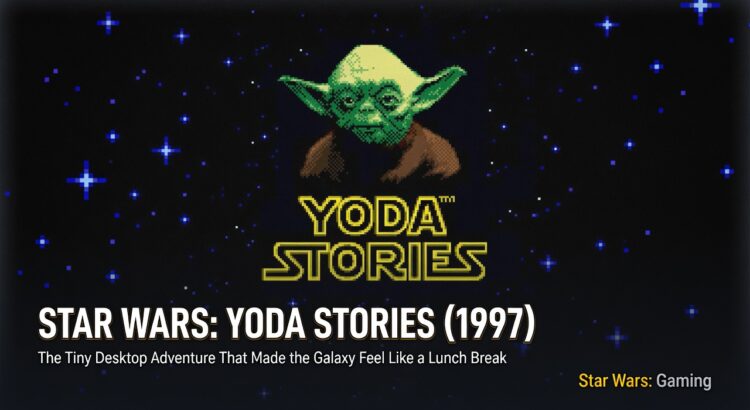
Star Wars: Yoda Stories wanted to sit quietly in a small Windows box while you avoided doing actual work.
Released for Windows in 1997, Yoda Stories was LucasArts’ second and final Desktop Adventures game after Indiana Jones and His Desktop Adventures. Rather than delivering one large campaign, it generated compact missions intended to be completed in short sessions, usually within about an hour. A Game Boy Color version followed in 1999, although that adaptation made some substantial compromises.
It sounds modest because it was modest.
That was the entire point.
As part of our complete archive of every Star Wars game ever released, Yoda Stories deserves more than being dismissed as the funny little Windows game where Luke had a massive head. It belongs firmly in our Star Wars games of 1990–1999 archive, because it represents a completely different side of LucasArts during one of the studio’s most creative periods.
In the same decade that gave us X-Wing, TIE Fighter, Dark Forces, Jedi Knight and the gloriously cinematic excess of Rebel Assault II, LucasArts also decided Star Wars needed an answer to Solitaire.
Somehow, that answer involved Yoda repeatedly sending Luke across the galaxy to locate random household objects.
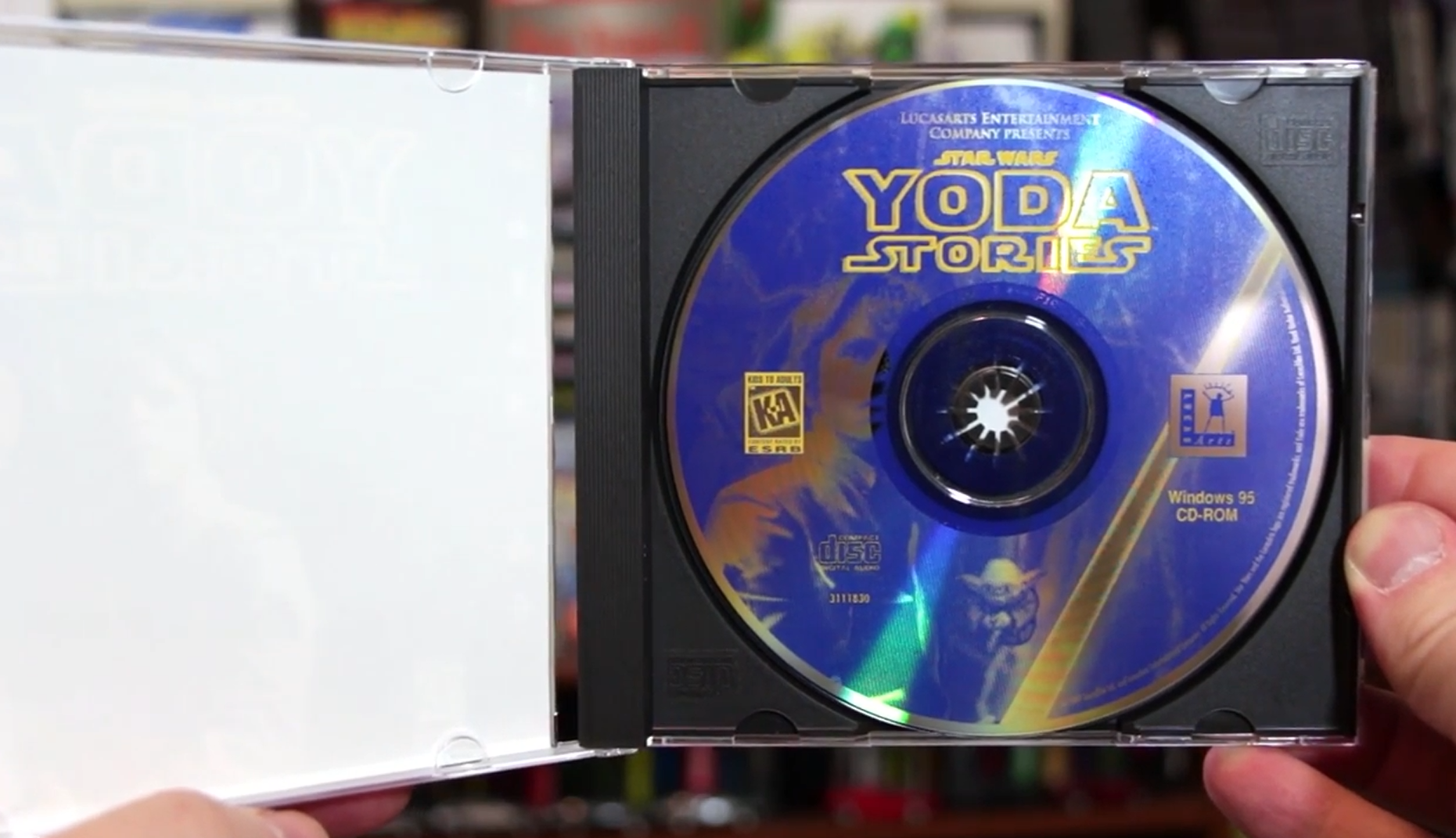
Star Wars Designed for the Office Desktop
The phrase Desktop Adventure was not just marketing decoration.
Yoda Stories was designed to run in a window alongside the ordinary clutter of a Windows computer. It was not asking you to clear an evening, study a manual the size of a small moon, or convince your family that the telephone line had to remain occupied because you were using the internet.
You could open it, play for a while, save, close the window and return to whatever spreadsheet you had been pretending to understand.
LucasArts described the Desktop Adventures as replayable action-puzzle games built for short bursts. Each new session gave Luke a different assignment, a newly assembled world and a chain of small problems to solve.
This made Yoda Stories feel unusually casual years before “casual gaming” became a giant, clearly defined corner of the industry.
Designer Hal Barwood later described it as a “desktop diversion” and a casual game before the term had properly entered the gaming vocabulary. He also recalled that Yoda Stories was developed relatively quickly, in roughly eight months, while improving the puzzle structure created for the earlier Indiana Jones Desktop Adventure.
That context is essential because Yoda Stories was never supposed to compete with LucasArts’ larger productions.
It was not Jedi Knight for people with shorter attention spans.
It was Star Wars Minesweeper.
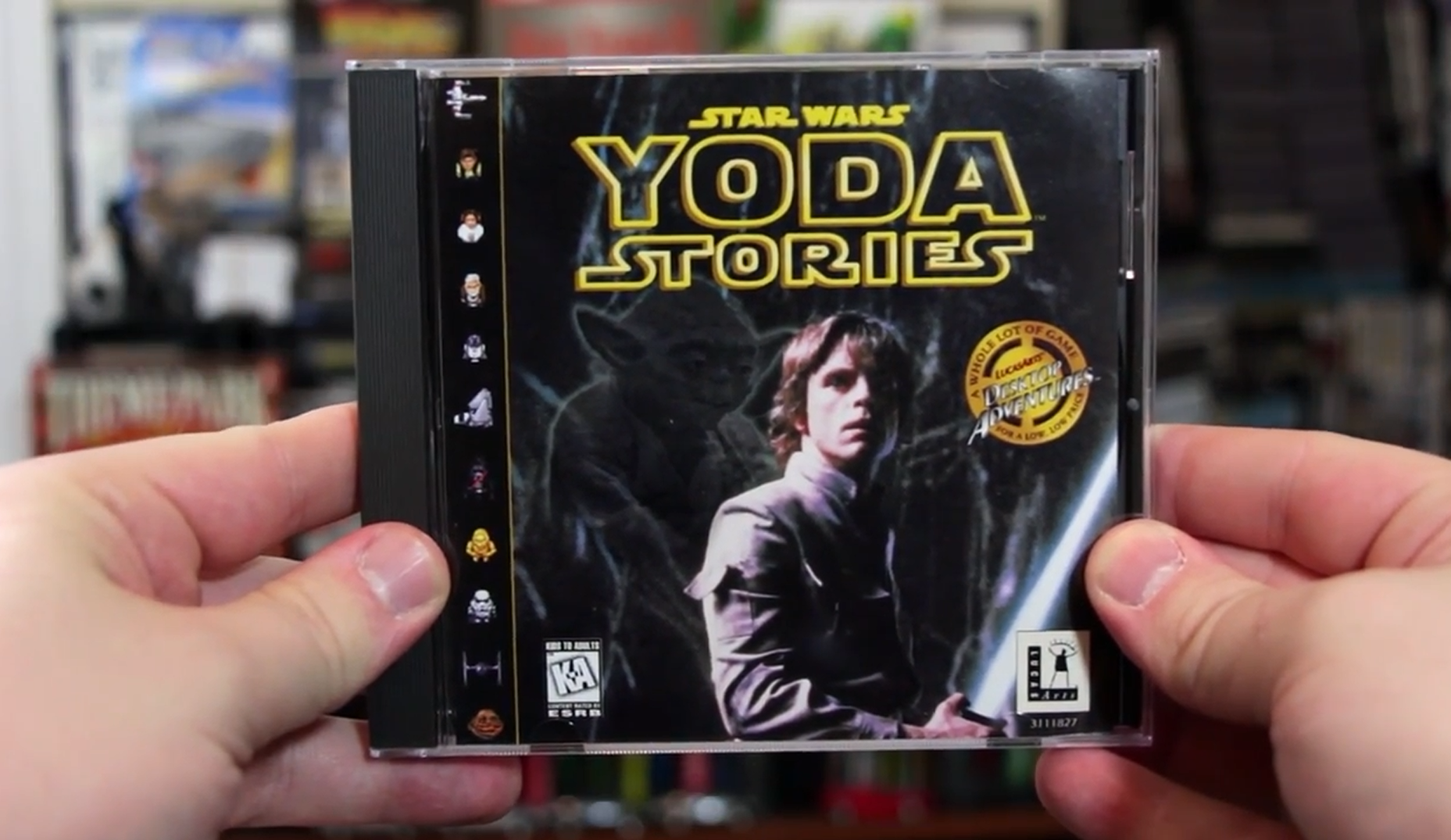
Yoda Has Another Small Errand for You
Every adventure begins on Dagobah.
Luke Skywalker arrives looking for Yoda, who is usually hiding somewhere nearby because apparently being a Jedi Master includes making your student search several swamp tiles before you explain what is happening.
Once found, Yoda assigns Luke a randomly selected mission. Someone may have been kidnapped. The Empire may be building something unpleasant. A Rebel installation may need warning. An important artefact may have disappeared. Occasionally, the galaxy is placed in mortal danger because someone needs a particular object that is currently held by someone who wants a completely different object.
Yoda gives Luke one starting item, and from there the great intergalactic chain of errands begins.
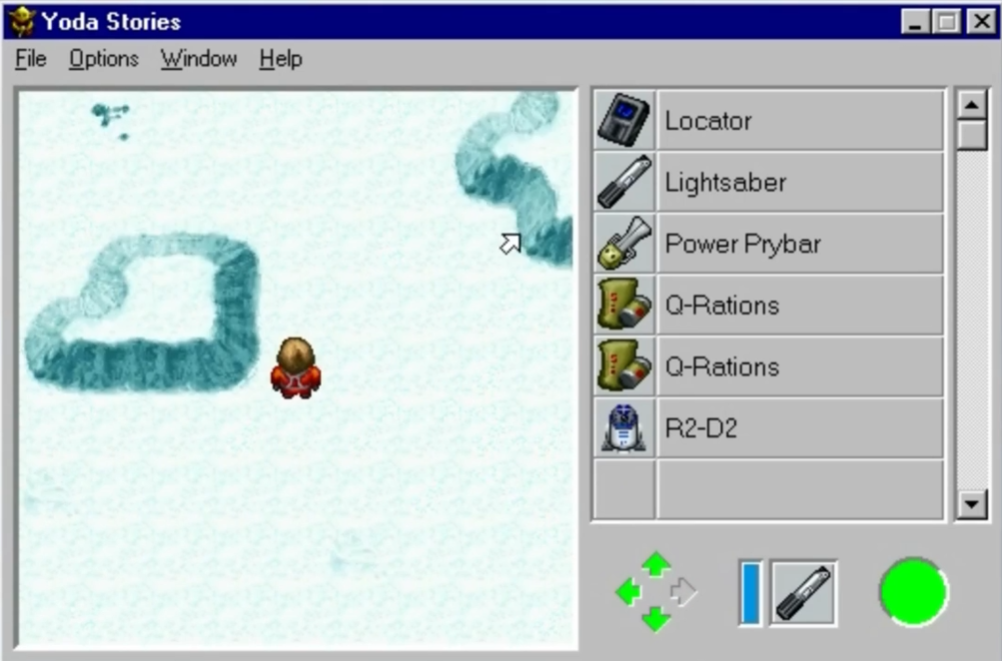
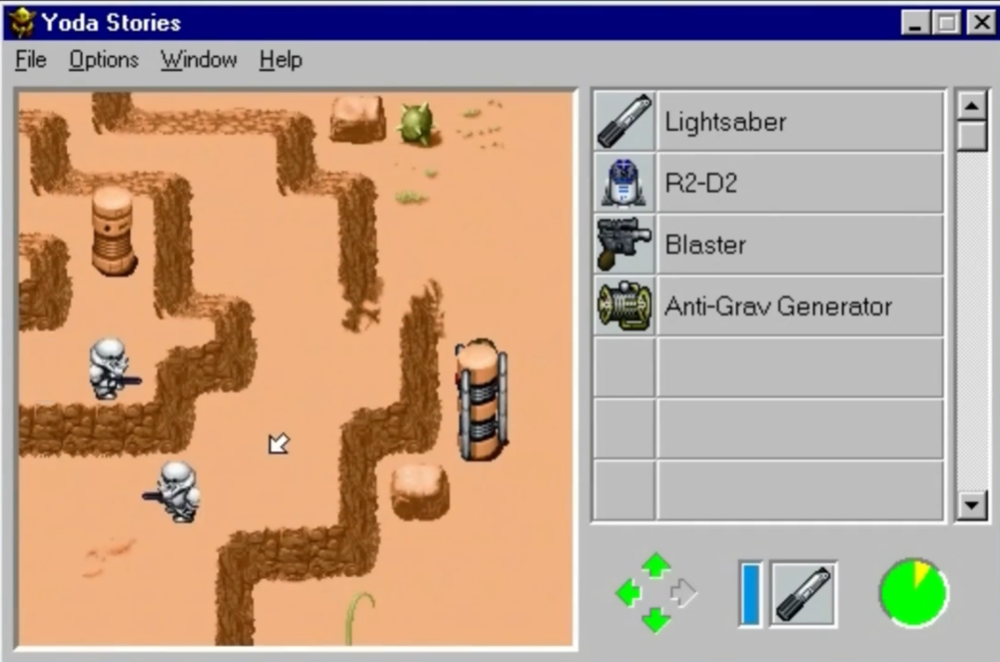
Luke flies to a desert, snow or forest world and explores a top-down grid filled with enemies, buildings, locked passages, movable blocks, friendly characters and suspiciously convenient objects. Completing the mission usually means collecting one item, trading it for another, using that item to solve a puzzle, receiving something else and continuing until the final objective becomes accessible.
It is basically the Star Wars Expanded Universe rewritten as a series of increasingly elaborate favours.
A Rebel wants a hydrospanner.
The person with the hydrospanner needs mushrooms.
The mushrooms are behind a boulder.
The boulder can only be moved after Luke locates a Force-enhancing object.
That object is being guarded by six stormtroopers and something that appears to have escaped from a rejected Kenner playset.
Adventure awaits.
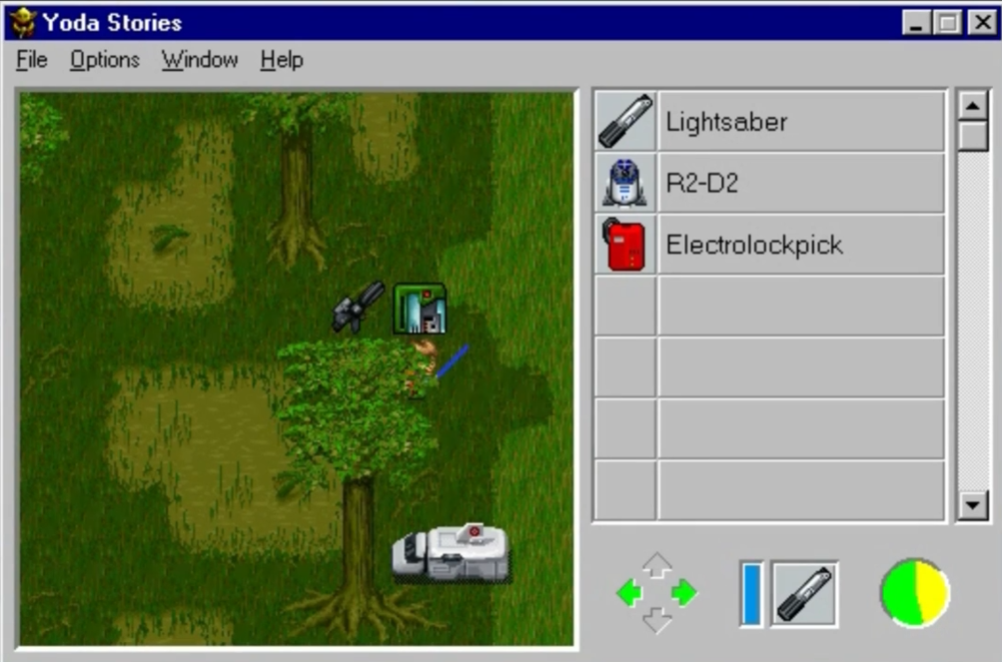
A Galaxy Made from Tiles, Keys and Mild Confusion
The basic presentation is simple.
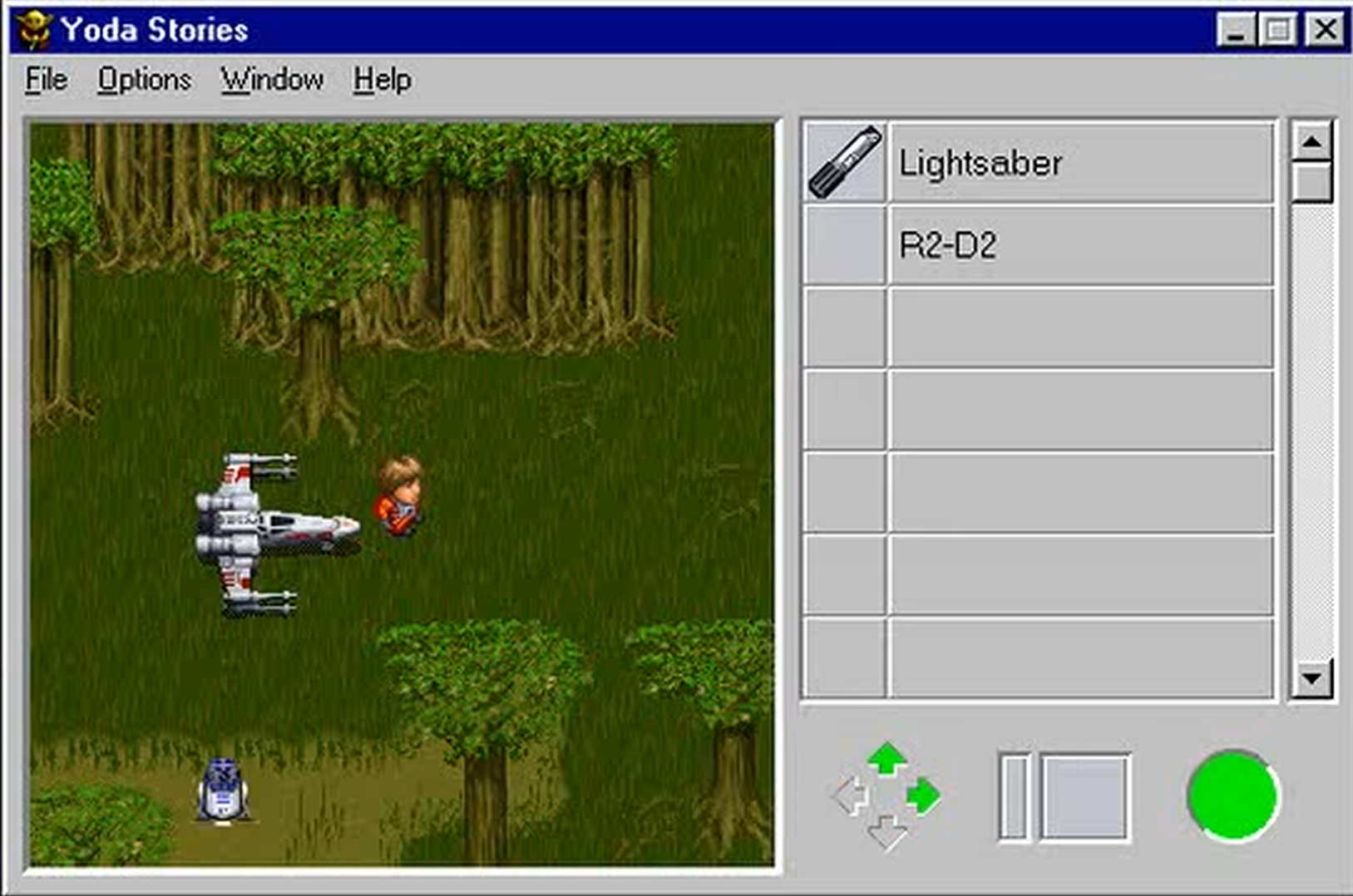
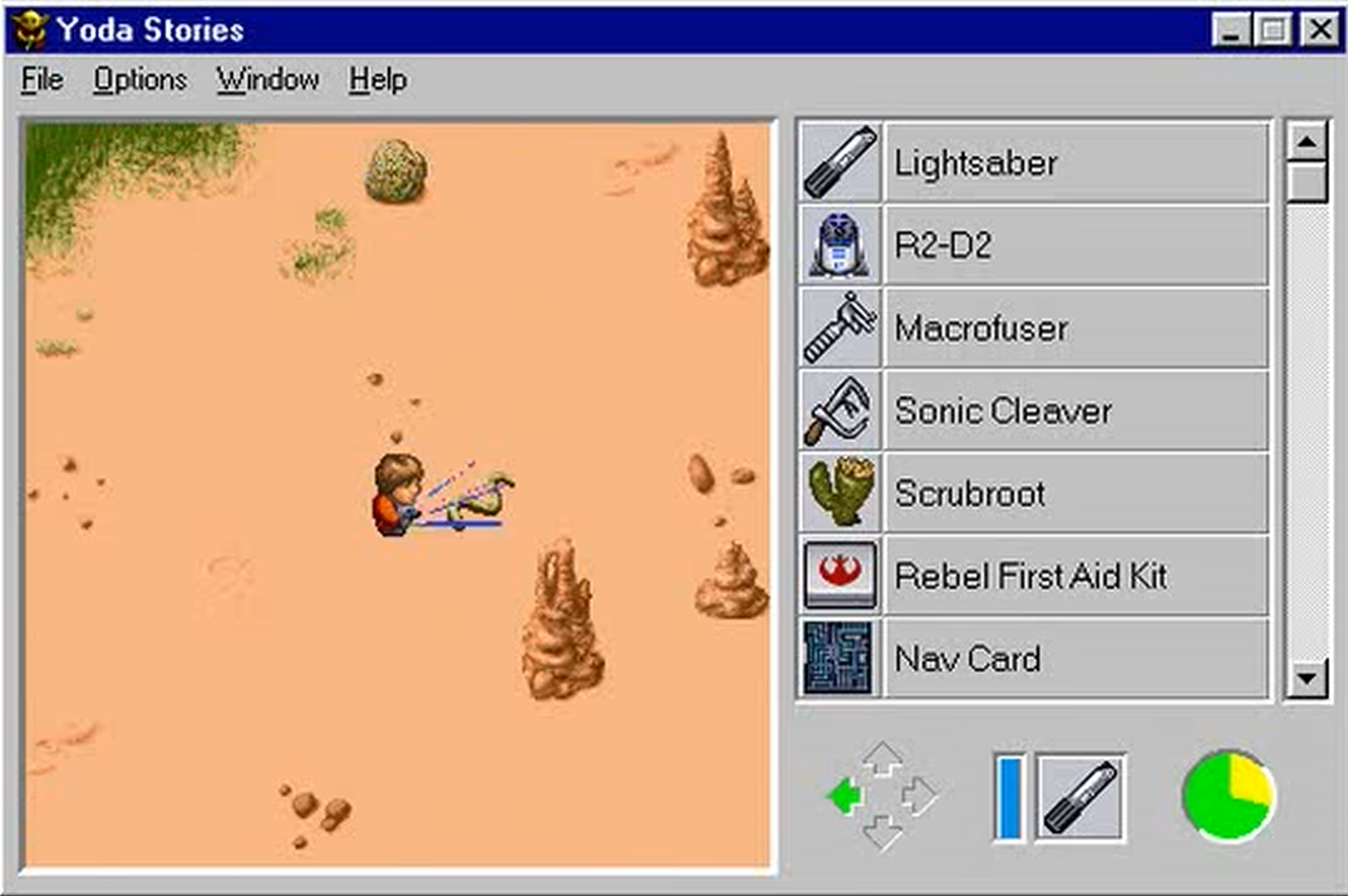
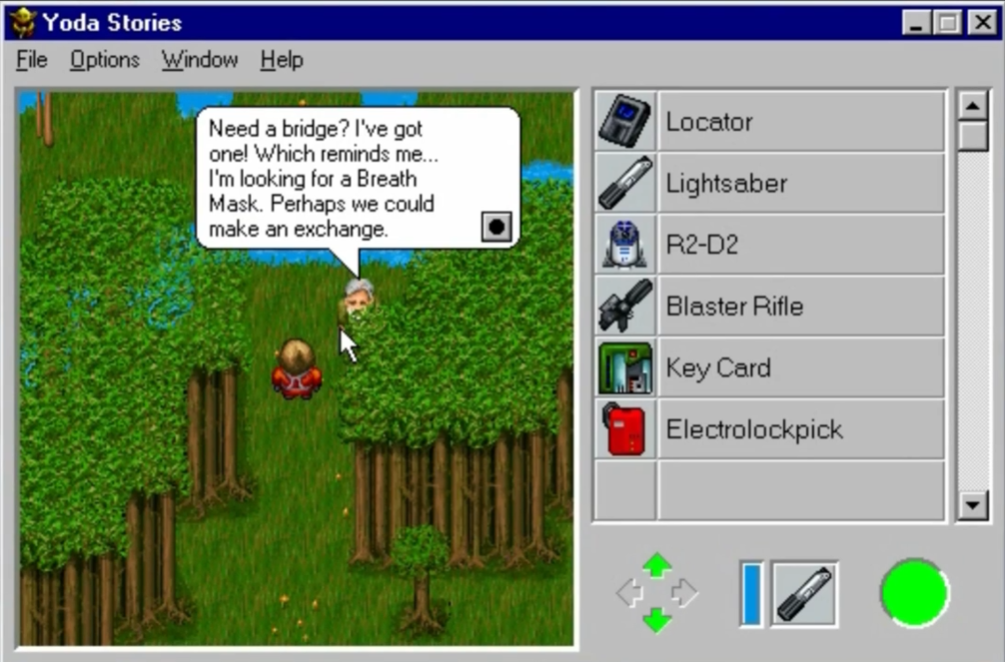
Luke moves one square at a time across compact, top-down environments. The mouse handles movement and interaction, although keyboard controls are also available. Items sit in an inventory at the side of the screen, and whatever Luke currently has equipped can be used against enemies, obstacles or puzzle elements.
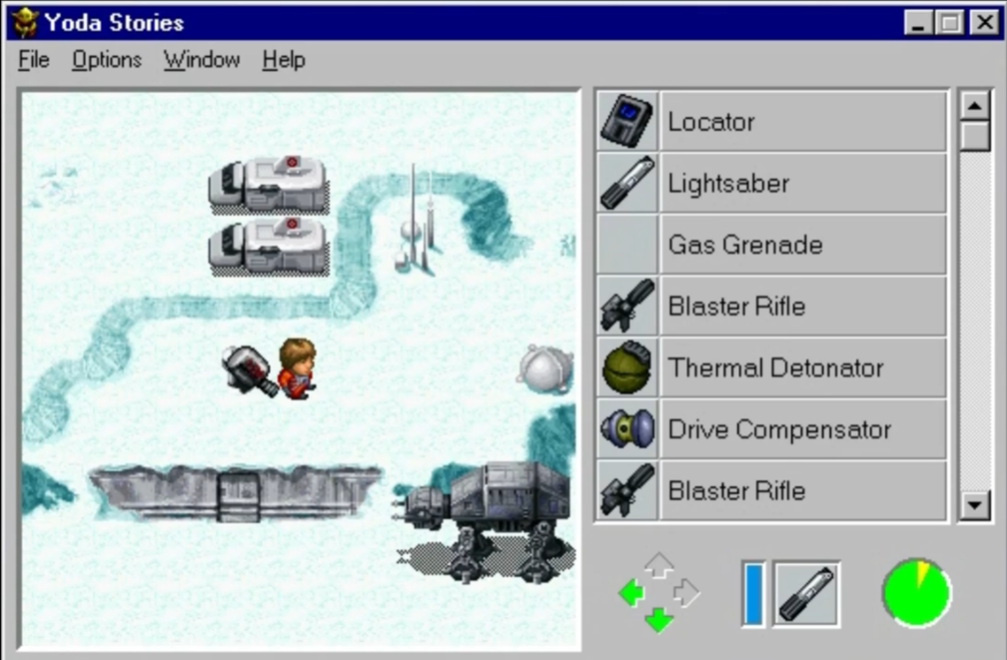
He begins with his lightsaber, but defeated enemies may drop blasters, Imperial rifles, thermal detonators, rations and medical supplies. Certain blocks can be pushed or pulled, barriers can be destroyed and some objects can be manipulated using the Force.
There are also small quality-of-life touches that make the scavenger hunt more manageable.
R2-D2 can be collected on Dagobah and used to identify objects or provide hints. A locator device reveals the generated map and marks areas that remain unsolved. Teleporters reduce the amount of walking once discovered, while medical droids can patch Luke up at designated locations.
Players could choose between small, medium and large generated worlds, adjust the combat difficulty and save whenever necessary. The original CD-ROM required only eight megabytes of hard-drive space if installed, which feels less like a technical specification now and more like a message from an ancient civilisation.
The tiny character sprites also gave the game a distinctive toy-box quality.
Luke, Yoda, stormtroopers, Jawas and assorted creatures all look slightly compressed and oversized, as though the entire Galactic Civil War has been reconstructed using desk toys during a particularly slow Friday afternoon.
It is not visually impressive in the traditional 1997 sense.
It is, however, strangely lovable.
Random Generation Did Not Mean Infinite Variety
Yoda Stories was promoted around replayability, but the random generation needs a little qualification.
The game could rearrange maps, puzzles, locations and item chains, creating many possible combinations. It could not create genuinely new stories, characters or mechanics from nothing. Underneath the shuffled layouts sat a pool of roughly 15 mission plots spread across three main environmental themes.
Eventually, repetition became impossible to ignore.
The same enemies returned. The same tiles reappeared. The same basic sequence of finding, exchanging and using objects resurfaced under slightly different circumstances. PC Gamer’s later retrospective argued that the promising structure was undermined by limited content and assets, meaning the supposed endless variety became familiar surprisingly quickly.
But random generation was not common in licensed Star Wars games at the time.
Yoda Stories was attempting to create something replayable without building a massive campaign or requiring competitive multiplayer. In modern terms, it resembles a tiny procedural adventure game built around repeated runs, only without upgrade trees, seasonal currencies or a battle pass asking Luke to purchase a premium Dagobah outfit.
The execution was limited.
The idea was not foolish.
Combat Was the Price You Paid for the Puzzles
The weakest part of Yoda Stories is combat.
Luke’s movement is rigid, enemies frequently circle awkwardly around him and lightsaber fights often resemble two action figures being pushed together by an impatient child. Positioning matters, but not always in a satisfying or predictable way.
GameSpot was particularly brutal when reviewing the Game Boy Color version, attacking its movement, combat, repetitive graphics, limited enemy variety and audio. The publication ultimately awarded it 1.8 out of 10 and called it one of the worst Star Wars games made.
The original Windows game is easier to defend because the mouse interface better suits its puzzle-driven structure.
Even there, though, nobody is confusing these fights with the duels of Jedi Knight. Swinging Luke’s lightsaber is less an elegant expression of Jedi training and more a practical method of clearing hostile creatures away from the next important key.
The puzzles are the real game.
Combat is what happens while you walk toward them.
The LucasArts Game That Critics Did Not Want
The reception to Yoda Stories was generally poor.
Reviewers criticised the simple graphics, awkward fighting, repeated assets and lack of depth. At a time when PC games were becoming bigger, more cinematic and increasingly three-dimensional, LucasArts had released a tiny windowed game featuring chunky tiles and deliberately lightweight mechanics.
It looked old almost immediately.
The problem was partly expectation.
This was a LucasArts Star Wars game arriving in 1997, the same year as Jedi Knight: Dark Forces II and X-Wing vs. TIE Fighter. Players had seen how ambitious Star Wars gaming could become. Many did not approach Yoda Stories as a disposable desktop distraction. They approached it as the next official Star Wars game and judged it accordingly.
Hal Barwood remained proud of the project and argued that its casual purpose had been misunderstood. He later said the team had improved the engine and puzzle structure over the Indiana Jones predecessor, and recalled that Yoda Stories sold well enough that he regretted LucasArts did not create more games in the series.
Both sides have a point.
Yoda Stories is repetitive, clumsy and visually limited.
It is also doing almost exactly what it was designed to do.
The Game Boy Color Port Made Everything Harder
In 1999, Yoda Stories arrived on Game Boy Color through developer Torus Games, with THQ handling publication.
On paper, the move made sense. A game created for short, lightweight sessions should have been perfectly suited to a handheld console.
The problem was that the Windows version’s flexibility did not survive the journey intact.
The Game Boy Color port replaced the procedurally assembled adventures with 15 predetermined levels. The restricted screen space, directional controls and simplified presentation also made navigation and object interaction more frustrating.
The result preserved the outline of Yoda Stories while losing much of the reason the original existed.
The Windows game was appealing because it could sit quietly on a desktop and generate another small adventure whenever you needed one. The handheld version turned that concept into a more conventional sequence of fixed stages, then wrapped them in movement and combat that reviewers found actively unpleasant.
This remains a useful distinction whenever Yoda Stories appears on lists of terrible Star Wars games.
The PC original was a flawed but purposeful experiment.
The Game Boy Color version was where things started falling into the swamp.
It Also Came with a Piece of Star Wars Special Edition History
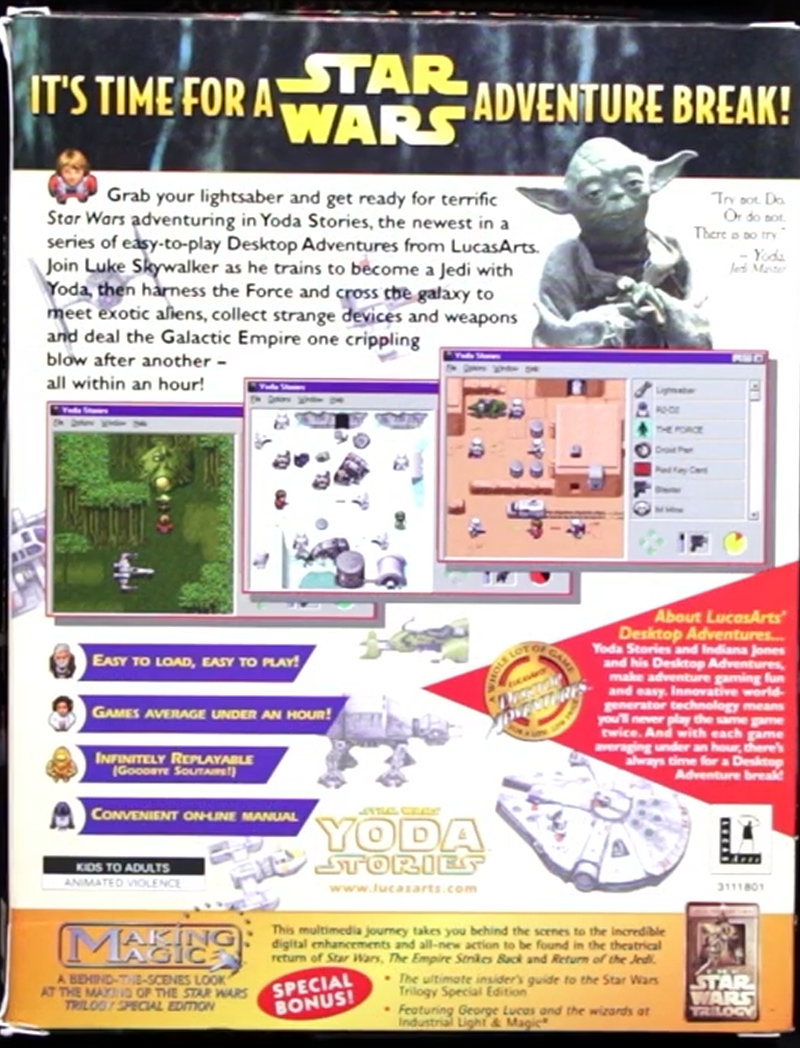
The original Windows CD included Star Wars: Making Magic, an interactive behind-the-scenes feature about the production of the Star Wars Special Editions.
That placed Yoda Stories directly inside the strange excitement of 1997, when the original trilogy was returning to cinemas with updated visual effects and Lucasfilm was enthusiastically promoting what digital filmmaking could do.
The game itself may have looked modest, but the disc arrived during a major Star Wars revival. New toys were everywhere. The Special Editions were filling cinemas. The Expanded Universe was growing, and LucasArts was releasing Star Wars games across radically different genres.
Yoda Stories belongs to that moment.
It is one of the smaller products from a period when Star Wars suddenly felt enormous again.
A Casual Star Wars Game Before Mobile Gaming Took Over
Looking back, Yoda Stories feels less absurd than it did in 1997.
Today, nobody finds it strange that a major franchise might produce a small game intended for brief daily sessions. Star Wars has appeared in puzzle games, collection games, mobile RPGs, strategy titles, pinball tables and enough free-to-play systems to make even Watto question the economy.
Short repeatable adventures are completely normal now.
Yoda Stories simply arrived before the industry had built a comfortable label for them.
It did not have daily challenges, cloud saves or a storefront. It did not need constant internet access. Yoda did not offer Luke 800 crystals in exchange for completing seven snow-planet objectives.
You opened the game.
Yoda gave you a strange task.
You wandered around until you found the correct combination of objects.
Then you went back to work.
There is something refreshingly honest about that.
The Game Has Survived Through Nostalgia and Fan Preservation
Yoda Stories has never received the kind of commercial remaster given to several larger LucasArts titles.
Running the original Windows release on modern systems can be awkward, although preservation communities have kept the game visible. Fan projects such as Yoda Stories NG have even worked to recreate the Desktop Adventures engine while reading data from the original game files.
The game also continues to appear in retrospectives, videos and nostalgic discussions from players who remember discovering it on family computers.
We even covered it briefly in an older Yoda Stories retro feature from 2014, long before this larger archive project began.
That endurance is not based on Yoda Stories secretly being one of LucasArts’ greatest games.
It survives because there is nothing else quite like it.
Why Yoda Stories Belongs in the Archive
Yoda Stories is easy to mock.
The sprites are tiny. The music repeats. The fighting is awkward. Luke spends much of his Jedi training carrying random objects between people who refuse to solve their own problems.
But the game captures something that most licensed games never attempt.
It makes the Star Wars galaxy feel small, casual and oddly domestic.
Not every Rebel mission concerns the Death Star. Sometimes Luke lands on a quiet world, talks to a few locals, removes some stormtroopers and spends 20 minutes looking for an item that was sitting behind a rock.
That scale gives Yoda Stories its charm.
It feels like a box of untold Expanded Universe side quests. None of them matter very much, but any of them could have happened during some undocumented afternoon between larger adventures.
LucasArts was willing to treat Star Wars as more than one type of game. The company could release a serious flight simulator, a first-person shooter, an interactive movie and a tiny desktop puzzler without insisting that every project compete for the same audience.
Yoda Stories may be one of the clearest examples of that freedom.
It was not trying to become the future of Star Wars gaming.
It was trying to make your lunch break slightly less boring.
Mission accomplished, more or less.
Frequently Asked Questions
What is Star Wars: Yoda Stories?
Star Wars: Yoda Stories is a small action-puzzle adventure released by LucasArts for Windows in 1997. It generates short missions featuring Luke Skywalker and was designed to be played in brief desktop sessions.
Was Yoda Stories randomly generated?
The Windows game rearranges maps, puzzles, objectives and item chains to create different adventures. However, it draws from a limited collection of mission plots, environments and assets rather than generating completely new stories.
Who developed Yoda Stories?
LucasArts developed the original Windows version. Hal Barwood served as project leader and co-designed the game with Mark Crowley. Torus Games later developed the Game Boy Color version.
When was the Game Boy Color version released?
The Game Boy Color port was released in 1999, two years after the Windows original.
Is the Game Boy Color version the same as the PC game?
No. The handheld version uses 15 predetermined levels instead of the Windows version’s randomly assembled adventures and is generally considered the weaker version.
Is Yoda Stories canon?
Yoda Stories belongs to the older Star Wars Expanded Universe material now generally classified as Legends. Its individual generated adventures were always loose, playful side stories rather than an important part of the main chronology.
Is Yoda Stories worth playing today?
The Windows original is worth exploring as an unusual piece of LucasArts history. Its combat and repetition have aged poorly, but the short-session structure, generated missions and toy-like presentation still give it a distinctive charm.
Author

Related Posts

Battlefront’s Offline Skirmish Mode Was the Update Solo Players Had Been Begging For
Rotta the Hutt Kit Guide: Why the Light Side Hutt Cartel Thing Actually Makes Sense
Star Wars Zero Company PC Launch Guide: Release Date, Platforms, Price, and Pre-Order Bonuses-
SWTOR Galactic Seasons Objectives for July 7–27: What’s Worth Doing First


Star Wars: Unlimited Rules Update 2.0 Explained Before Ashes of the Empire-
Respawn Is Hiring a Narrative Designer for Star Wars Jedi, So Cal Kestis’ Story Is Still Moving -
7 Years Ago, Battlefront II Made Players Earn Voice Lines Through Community Quests -
Rotta the Hutt Has Arrived in Galaxy of Heroes, and Somehow He’s a Gladiator Now