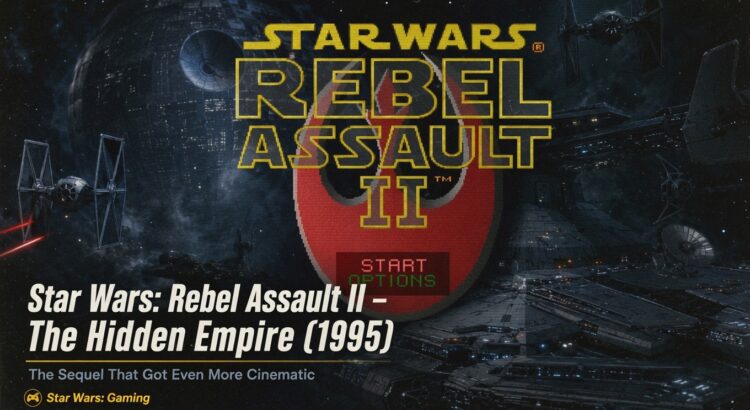
If Star Wars: Rebel Assault (1993) was the moment LucasArts looked at the CD-ROM era and said, “what if Star Wars tried to feel like a movie now?”, then Rebel Assault II – The Hidden Empire is the sequel where that idea got bigger, shinier, stranger, and much more convinced it could pull the whole thing off.
And to be fair, sometimes it really did.
The first Rebel Assault was already built around spectacle. It wanted movement, drama, music, explosions, and that early-90s “look what this machine can do now” energy. But Rebel Assault II pushed that vision further. It did not just want to feel cinematic. It wanted to feel like Star Wars had stepped directly into the era of live-action CD-ROM ambition and decided subtlety was for weaker franchises.
That makes it one of the most fascinating Star Wars games of the 1990s.
As part of our Complete List of All Star Wars Games Ever Made (1979–Present), this is exactly the kind of title that deserves a real archive look. It also fits naturally into the Star Wars Games (1990–1999) hub, especially right after Star Wars: Rebel Assault (1993), because the two games together tell a very specific story about Star Wars in the multimedia 90s. The first one tested the idea. The second one committed to it.
This Was the Sequel That Doubled Down on CD-ROM Star Wars
That is the key to understanding Rebel Assault II.
This was not a game trying to become more open, deeper, or more systemic than its predecessor. It was not trying to turn into X-Wing, and it was not chasing the same kind of mechanical depth that later LucasArts games would explore. What it wanted was something else entirely: to make Star Wars feel even more like an interactive film event.
And in the mid-90s, that was a very serious ambition.
This was the period when CD-ROM games still carried that sense of possibility. Extra storage meant more audio, more story, more visual experimentation, and a lot more room for developers to ask dangerous questions like, “what if we put real actors in this?” Some studios answered that question badly. LucasArts answered it with Rebel Assault II, a game that pushed hard into full-motion-video territory and tried to turn Star Wars into a guided cinematic ride with actual live-action faces staring back at you.
Which, let us be honest, is already enough to make it historically irresistible.
Rookie One Returns, and So Does the Roller Coaster Structure
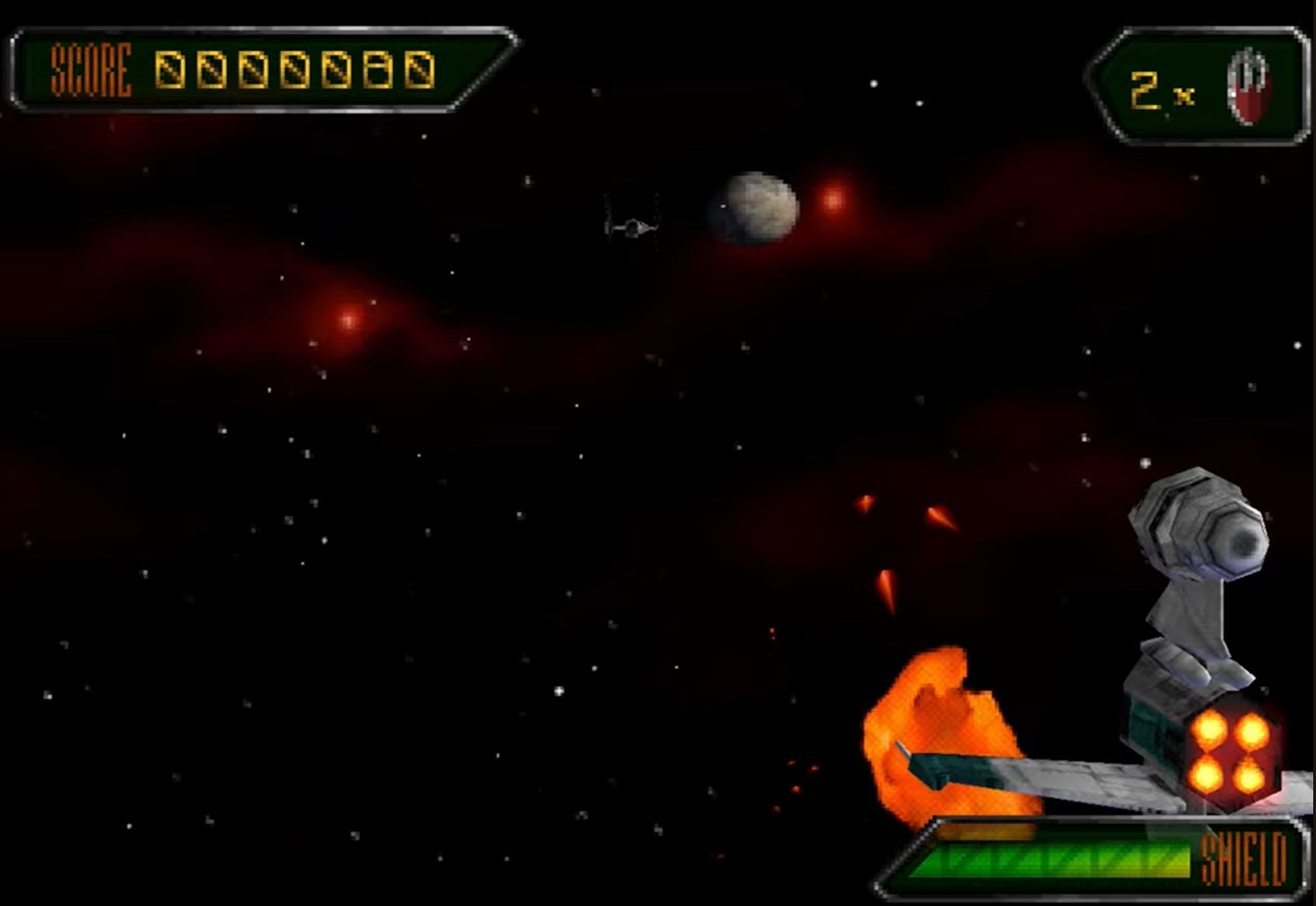
Like the first game, Rebel Assault II centers on Rookie One, which remains a beautifully simple name for a Star Wars hero in a game this determined to throw him into constant danger.
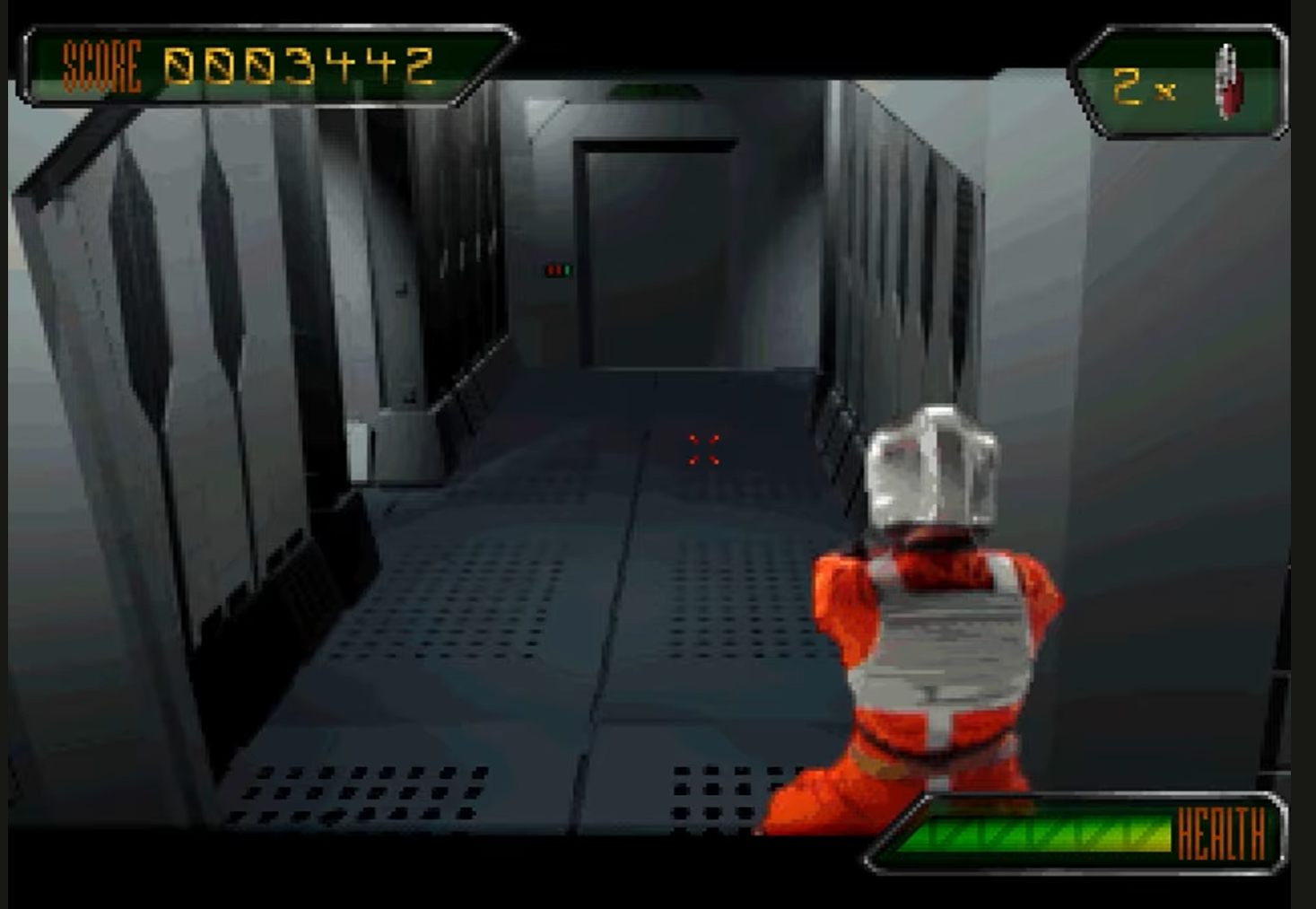
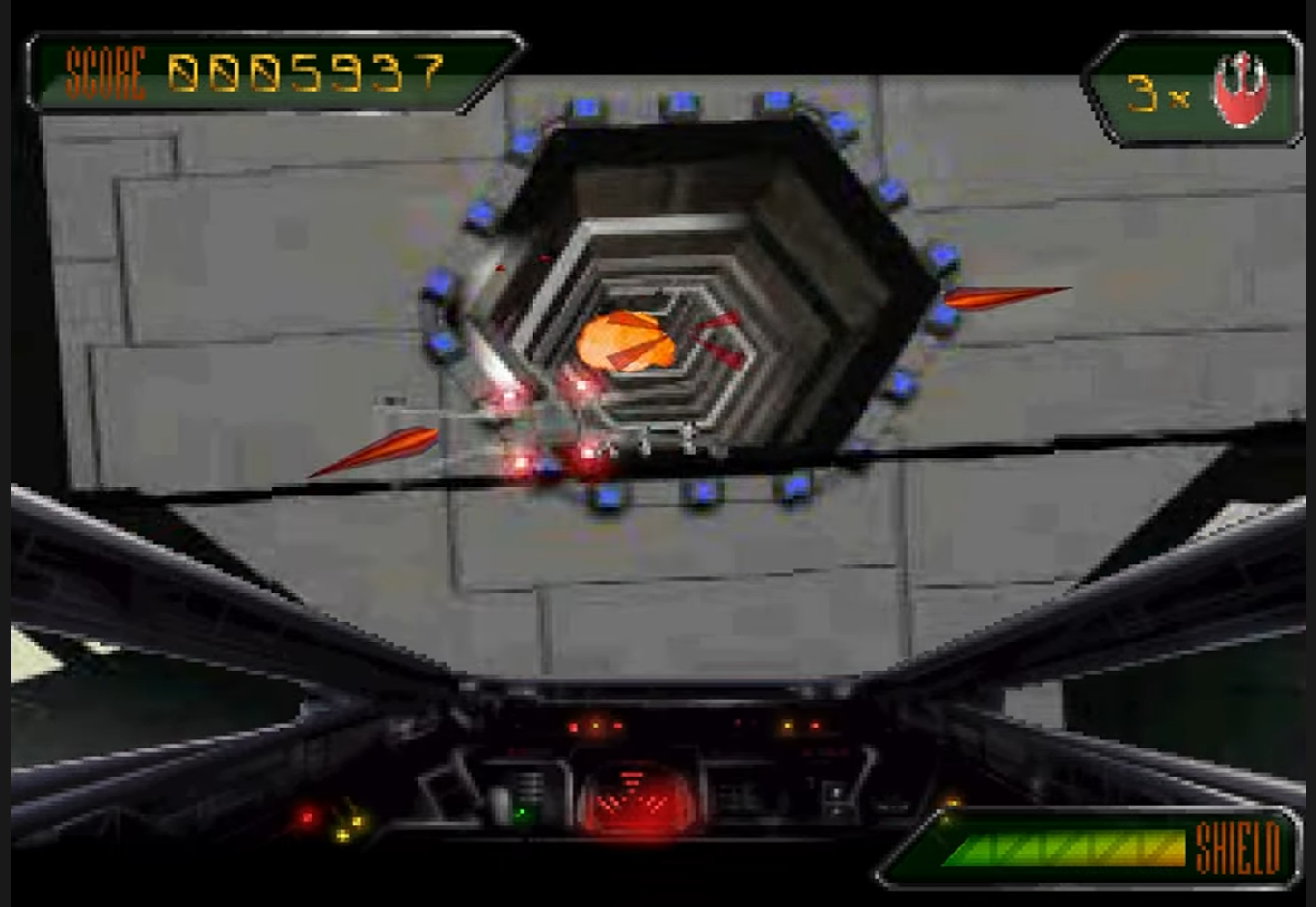
The structure is familiar if you know the original. This is still a heavily guided action game, still part rail shooter, still built around scripted set pieces, split-second reactions, and the basic understanding that you are here to survive a Star Wars spectacle rather than slowly master a complex simulation. The game pushes you through missions, vehicle segments, corridor shooting, and cinematic battle sequences with very little interest in letting you wander off and think about things.
That is not a flaw so much as the whole design religion.
Rebel Assault II knows exactly what kind of game it wants to be. It is not trying to give you complete freedom. It is trying to give you intensity. The player is there to react, to stay alive, and to enjoy the show while LucasArts hurls TIE fighters, Imperial installations, and very urgent briefing-room drama at the screen.
That means if you hated the guided structure of the first game, this sequel was probably not going to convert you into a different person.
But if you liked the first game’s commitment to spectacle, this one had much more to offer.
The Live-Action FMV Angle Is the Whole Story
This is the big thing. The real hook. The part people still remember.
Rebel Assault II is the game where Star Wars tried to go properly live-action inside a CD-ROM game.
That immediately made it feel different from the first Rebel Assault, which had already leaned hard into cinematic presentation but still lived more heavily inside digitized imagery and animated sequences. The sequel wanted to close the gap. It wanted briefings, performances, and story moments that looked more like a Star Wars production than a traditional game cutscene pipeline from the early 90s.
And yes, there is something gloriously of-its-time about that.
This was the era when game developers looked at FMV and saw the future. Sometimes that future aged like milk. Sometimes it aged like a fascinating museum exhibit. Rebel Assault II lands somewhere in the sweet spot where even its awkwardness becomes part of the charm. It is ambitious enough that you cannot ignore it, and specific enough that it could only really have happened in 1995.
That is exactly why it matters.
The TIE Phantom Gave It a New Hook Beyond “More Empire Again”
One of the smartest things the sequel does is give itself a fresh central threat.
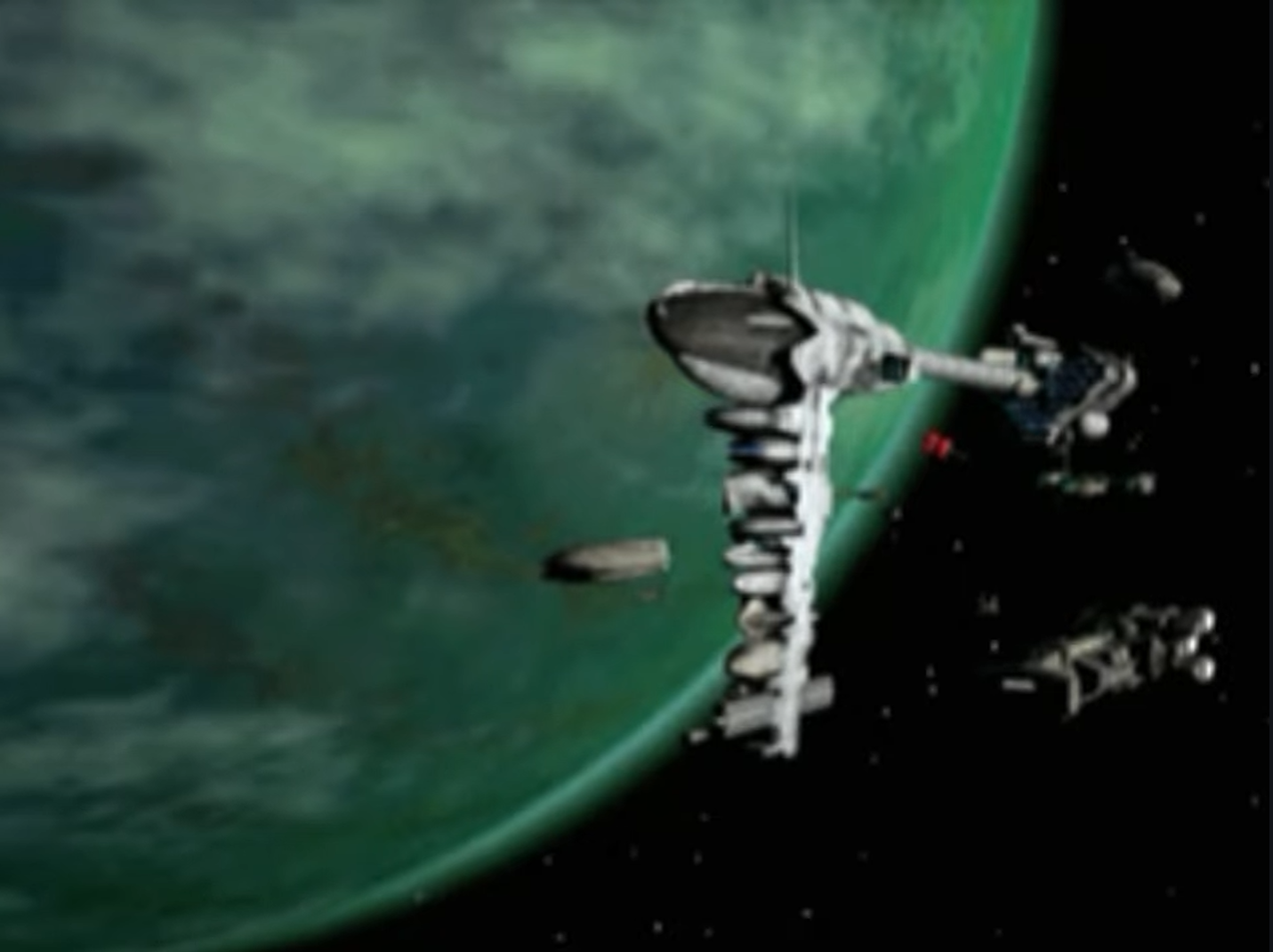
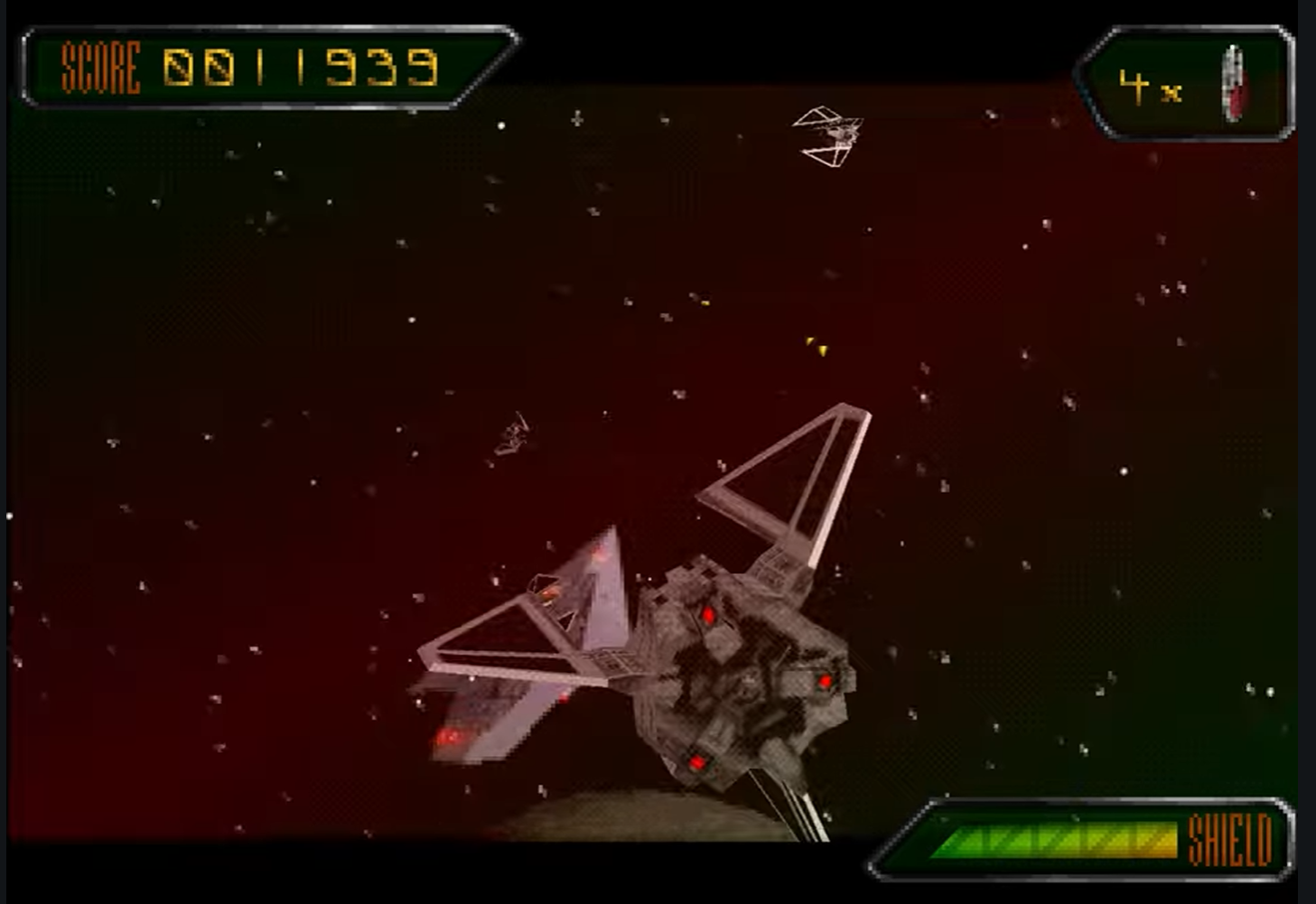
Instead of simply repeating the first game’s broad Rebel-versus-Empire structure with new wallpaper, Rebel Assault II builds its story around the mystery and danger of the TIE Phantom, an Imperial starfighter project with cloaking capability. That was a strong idea then, and it is still a strong idea now. It gave the game its own identity inside the larger Star Wars game history instead of just making it “the second CD-ROM one.”
And it helped the sequel feel a bit more like an Expanded Universe story rather than just a leftover film-side side quest.
That matters because Rebel Assault II sits in a really interesting spot in Star Wars history. It arrives in a decade where the franchise was getting much more comfortable letting games tell their own stories, invent their own threats, and build around original characters and concepts. The TIE Phantom fits that beautifully. It is exactly the kind of “new Imperial problem” the 90s loved: cool-looking, dangerous, and just specific enough to stick in memory.
It also helps that the Phantom is simply a very good piece of Star Wars game nonsense. Cloaked TIE threat? Yes, that will do.
This Was Still More Theme Park Ride Than Deep Simulation
That is worth being clear about.
Even with the bigger production values, the live-action storytelling, and the more distinctive central hook, Rebel Assault II still belongs to the same broad family as its predecessor. It is guided. It is choreographed. It is often more about surviving the sequence than expressing mastery over a deep system. You are not rewriting the mission your own way. You are living through the mission the game has prepared for you.
And depending on what you want from Star Wars, that is either the whole appeal or the whole problem.
Personally, I think it works best when you treat the game less like a failed sim and more like a very expensive mid-90s Star Wars ride. Once you do that, the design clicks much more cleanly. Of course it is pushing you down a narrow track. Of course it wants you looking in specific directions. Of course it is more about momentum and panic than freedom. That is how the whole thing is built.
The game is not asking, “what kind of pilot do you want to be?”
It is asking, “can you survive the next two minutes of this madness?”
That is a different question. But it is not a bad one.
The Presentation Was a Huge Leap Over the First Game
Even people who are lukewarm on the gameplay usually admit this much: Rebel Assault II looked and felt like a bigger event.
That is one of the reasons it has held onto a more distinct identity than some of the other transitional Star Wars games of the era. It pushed harder on atmosphere, on staging, on the sense that this was LucasArts trying to build a premium Star Wars product for the multimedia age. The full-motion-video work, the broader cinematic framing, the stronger story identity, the audio-visual push — all of that made it feel more substantial.
And in 1995, that mattered a lot.
This was not just a sequel in the ordinary sense. It was a sequel saying, “we can do more now.” More hardware confidence. More visual ambition. More storytelling. More cinematic nonsense, if you want to be slightly rude about it.
And honestly, a little cinematic nonsense was exactly what the CD-ROM era often needed.
It Landed in a Very Crowded, Very Interesting LucasArts Period
This is another reason the game is worth covering now.
The mid-90s were an absurdly rich period for Star Wars gaming. LucasArts was not operating in just one lane. It had cinematic experiments, flight sims, shooters, action games, and increasingly larger ambitions about how much of Star Wars could be transformed into distinct game identities. Rebel Assault II belongs right in the middle of that.
That makes it a really useful archive entry, because it tells the truth about the era. Star Wars gaming in the 90s was not one clean evolutionary path. It was multiple paths running at once. Some led toward deeper mechanics. Some led toward stronger 3D action. Some, like Rebel Assault II, led toward “what if the game itself was trying very hard to be part movie.”
That branch matters, even if it is not the branch that ultimately won.
How Well It Holds Up Depends on What You Want
If what you want is freedom, flexibility, and elegant mechanics, then no, Rebel Assault II is probably not going to dethrone the deeper LucasArts classics.
But that is not really the right test.
The better question is whether it still works as a piece of Star Wars game history and whether its big swing at cinematic CD-ROM spectacle still has value now.
I think the answer is yes.
Not because every gameplay section is perfect. Not because FMV has aged gracefully in every frame. Not because the guided structure suddenly becomes more sophisticated with time. But because the game still has presence. It still has personality. It still feels like a very specific, very sincere attempt to make Star Wars look and feel bigger in interactive form.
That gives it a kind of historical gravity.
And honestly, it also gives it charm.
Why It Belongs in the Archive
This is really what matters most.
Star Wars: Rebel Assault II – The Hidden Empire belongs in the archive because it shows LucasArts pushing one of its most aggressive mid-90s ideas as far as it could go. It took the template from Rebel Assault, added live-action ambition, gave the sequel its own memorable hook with the TIE Phantom, and turned the whole thing into one of the clearest snapshots of what “cinematic Star Wars gaming” meant in the CD-ROM era.
That is not a side note. That is a whole chapter.
It also makes for a very natural continuation of the path you have been building in the archive. The Super Star Wars trilogy showed one version of 90s Star Wars spectacle on consoles. Rebel Assault and now Rebel Assault II show another version on CD-ROM: more filmic, more guided, more experimental, and very willing to lean into presentation as the main event.
That is exactly the kind of branching history that makes the archive feel alive instead of mechanical.
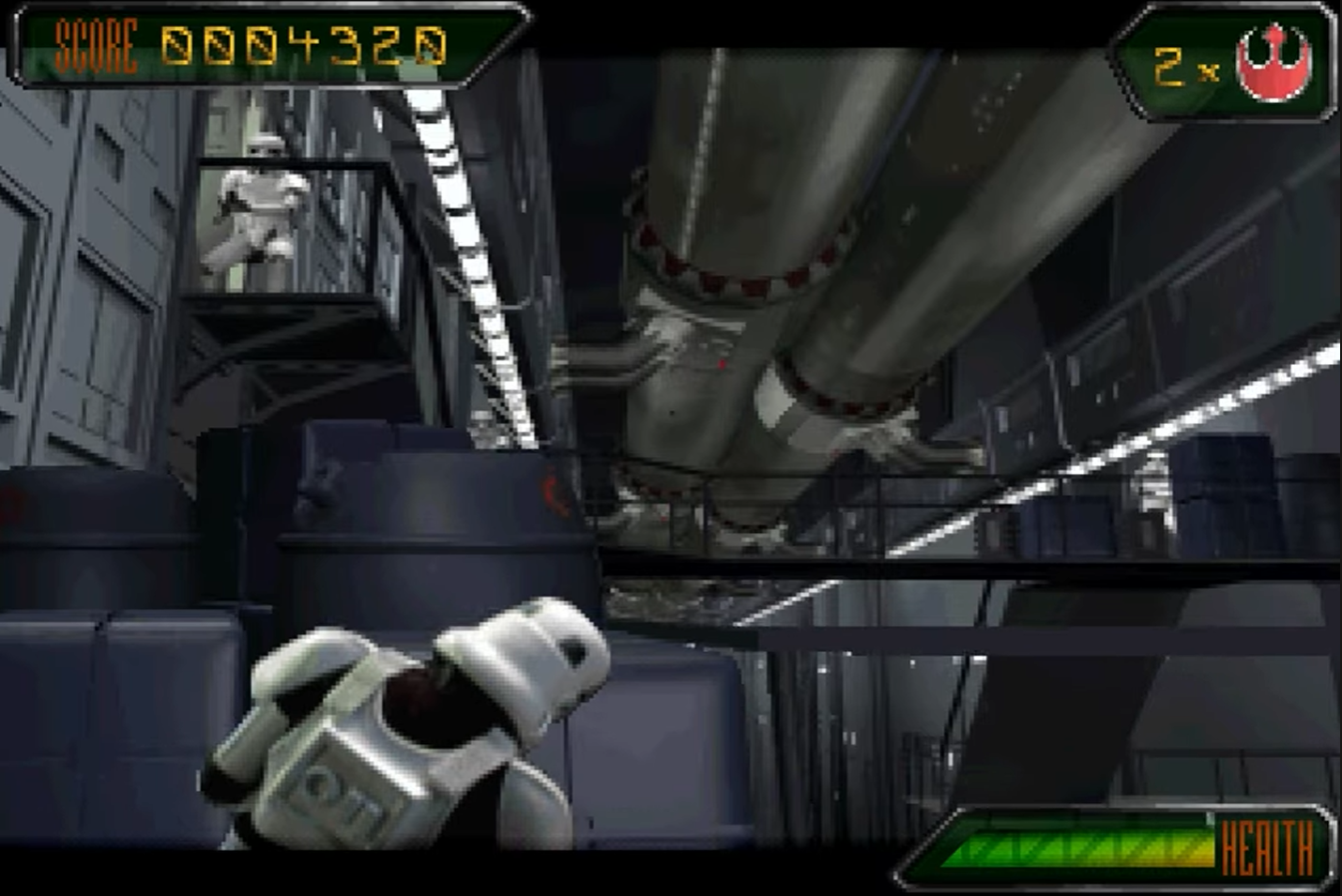
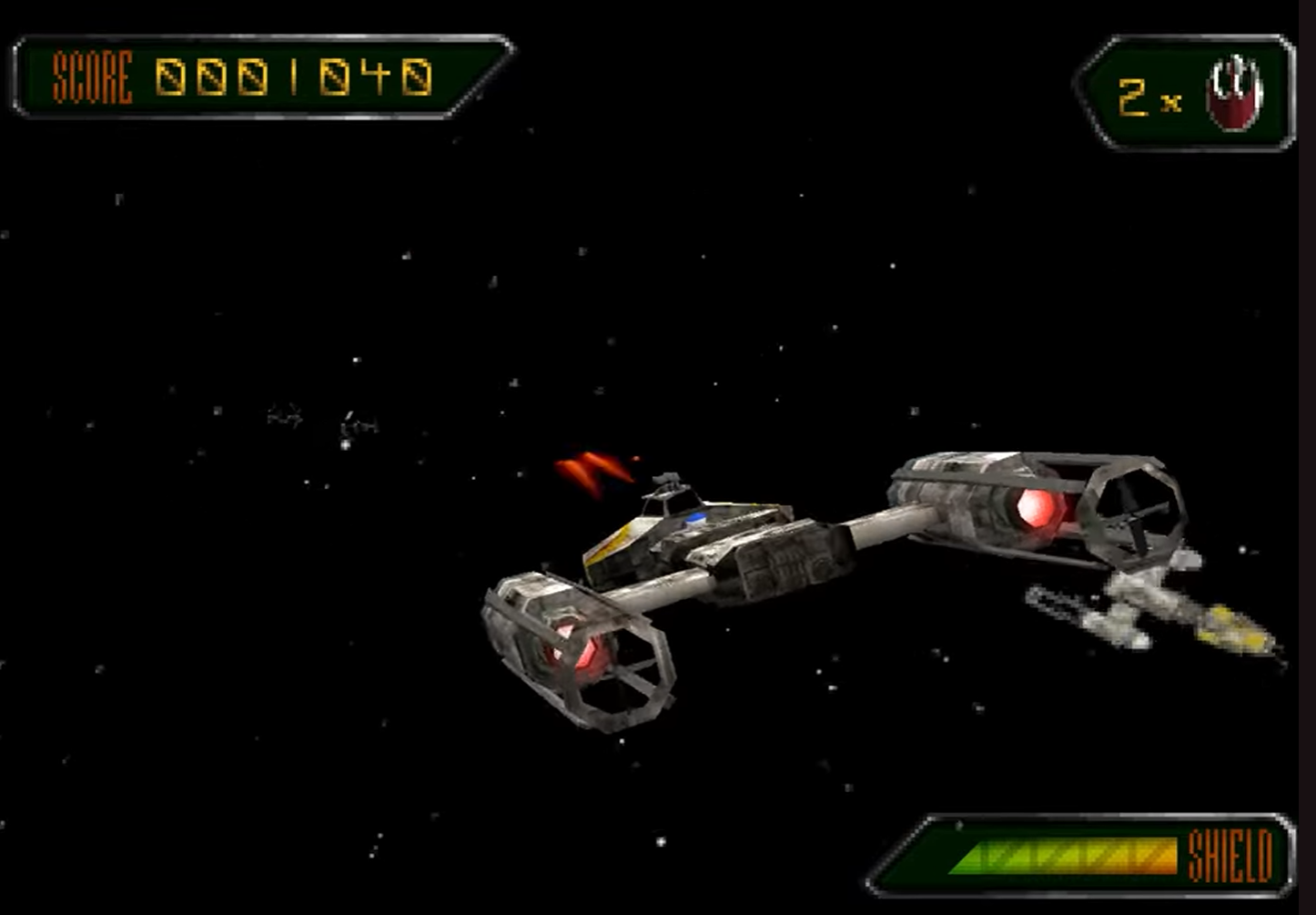
The View from the Cockpit, With FMV Behind It
There are deeper Star Wars games than Rebel Assault II.
There are cleaner ones. Better-controlled ones. More flexible ones.
But this one still matters because it committed so hard to a particular vision of what Star Wars games could be in 1995. Not just interactive. Not just cinematic. Not just spectacular. All three, all at once, with live-action faces, cloaked TIE nightmares, and enough CD-ROM confidence to fill a hangar bay.
That is not subtle.
But it is absolutely history.
FAQ
What is Star Wars: Rebel Assault II – The Hidden Empire?
It is a 1995 Star Wars rail shooter / guided action game from LucasArts and the direct sequel to Rebel Assault.
What platforms was Rebel Assault II released on?
It first launched on DOS, Windows, and Mac in 1995, with a PlayStation version following in 1996.
Who is Rookie One?
Rookie One is the main playable Rebel pilot and returning protagonist from the first Rebel Assault.
What is the TIE Phantom?
The TIE Phantom is the game’s main new Imperial threat, a cloaking-capable TIE project that gives the sequel its own distinctive story hook.
How is Rebel Assault II different from the first game?
It pushes much harder into full-motion-video/live-action presentation, has a stronger original story identity, and feels much more ambitious as a cinematic CD-ROM sequel.
Is Rebel Assault II worth revisiting today?
Yes — especially as a piece of Star Wars game history. It is one of the clearest examples of LucasArts chasing the interactive movie dream in the mid-90s.
Author

Related Posts

Star Wars Battlefront II’s New Kyber Update Sounds Like the Biggest One Yet
Star Wars Battlefront II Is Back in the PS4 Charts, Because This Game Refuses to Die
Star Wars Battlefront II’s Hero Starfighters Update Still Deserves a Small Victory Lap
SWTOR’s 8.0 Era Is Starting to Take Shape After Legacy Reborn
Star Wars: Galactic Racer Is Getting Post-Launch Content, But Still No Season Pass
SWTOR July 2026 Events Bring Back Gree Weirdness and Dantooine Pirates
Star Wars: Unlimited Galactic Championship Collector Guide: Exclusive Cards, Prize Wall, and What to Chase
Star Wars Eclipse Is Apparently Still Alive, and Quantic Dream Says the Team Is “Fully Committed”