There are Star Wars games that want you to learn systems.
There are Star Wars games that want you to master mechanics.
And then there is Star Wars: Rebel Assault, a game that mostly wanted you to slam a CD into your computer, stare at the screen, and say, “Wait, games can do that now?”
That was the magic of it in 1993.
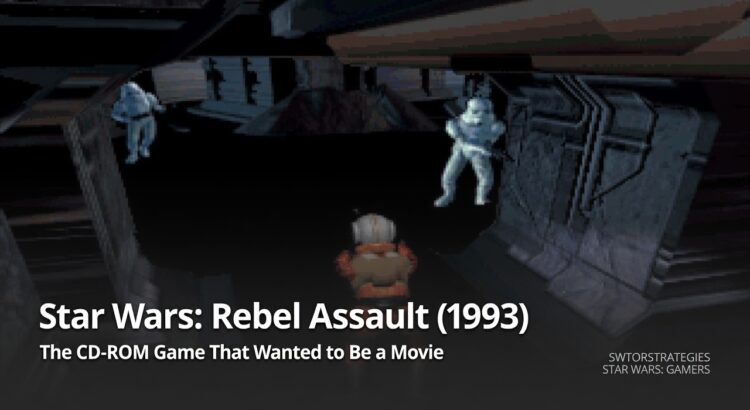
Star Wars: Rebel Assault arrived at exactly the right moment: the early CD-ROM era, when developers were suddenly drunk on storage space, cinematic ambition, and the exciting possibility of making players feel like they were inside a movie instead of just standing near one. It was developed and published by LucasArts, and more than almost any Star Wars game before it, it sold itself on spectacle. Not depth. Not freedom. Spectacle.
And honestly, that was enough.
As part of our Complete List of All Star Wars Games Ever Made (1979–Present), this is one of those games that matters because it marks a very specific shift. It also fits cleanly into the Star Wars Games (1990–1999) era, because this is where Star Wars gaming starts chasing the full “interactive cinema” dream much more aggressively. If X-Wing (1993) was the game that let players really fly in Star Wars, Rebel Assault was the game that wanted players to feel like they had been thrown directly into the films with very little concern for their long-term stress levels.
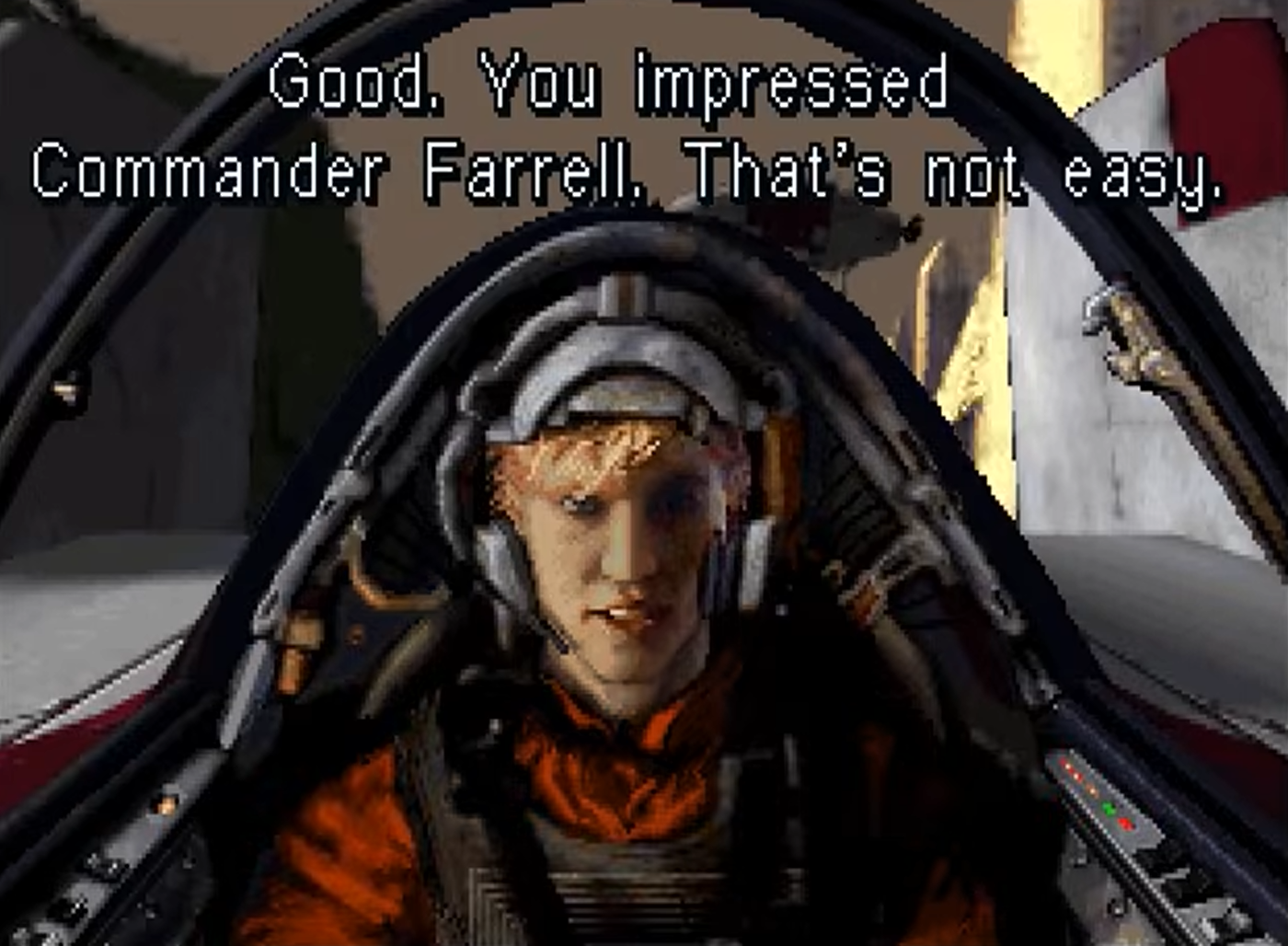
This Was LucasArts Chasing the CD-ROM Future
That is really the first thing to understand about Rebel Assault.
This was not built as a traditional open-ended sim, or a deep action game, or a sprawling adventure. It was built as a showpiece. A statement. A “look what our machines can do now” kind of release.
In the early 1990s, CD-ROM still had that slightly magical quality to it. Suddenly games had more room for voice, music, larger visuals, and more elaborate presentation. Developers all over the industry were trying to figure out what that extra space meant. Some of them decided it meant more content. Some decided it meant more video. LucasArts looked at Star Wars and, very sensibly, decided it meant more cinematic drama.
So Rebel Assault became a game built around big moments, guided action, and relentless audiovisual energy. It did not really want you to get lost. It wanted you to buckle in and survive the ride.
And yes, that meant it was often less a “sandbox” and more a roller coaster with lasers.
Rookie One, Rail Shooting, and the Fine Art of Controlled Panic
The game centers on Rookie One, which is one of those gloriously blunt old-school game names that sounds like it was created in about seven seconds and somehow works perfectly anyway.
You are a new Rebel pilot, and the game marches you through a series of missions against the Empire. Sometimes you are in the air. Sometimes you are on the ground. Sometimes you are blasting TIE fighters, dodging obstacles, or shooting your way through enemy defenses while the game aggressively insists that everything is extremely urgent.
That structure is a huge part of why Rebel Assault feels so distinct.
This is not a free-flight Star Wars experience in the style of X-Wing. It is not really interested in letting you figure things out at your own pace. It is a rail shooter / guided action game, and that means it is heavily choreographed. The camera pushes you forward. The game decides the shape of the scene. Your job is to react, survive, and hopefully look a little competent while everything explodes around you.
That design choice is also why opinions on the game have always been a little split.
If you came in expecting freedom, the game could feel restrictive. If you came in wanting to be thrown through a fast-moving Star Wars set piece like a ragdoll with a blaster, it could feel fantastic.
Both reactions are fair.
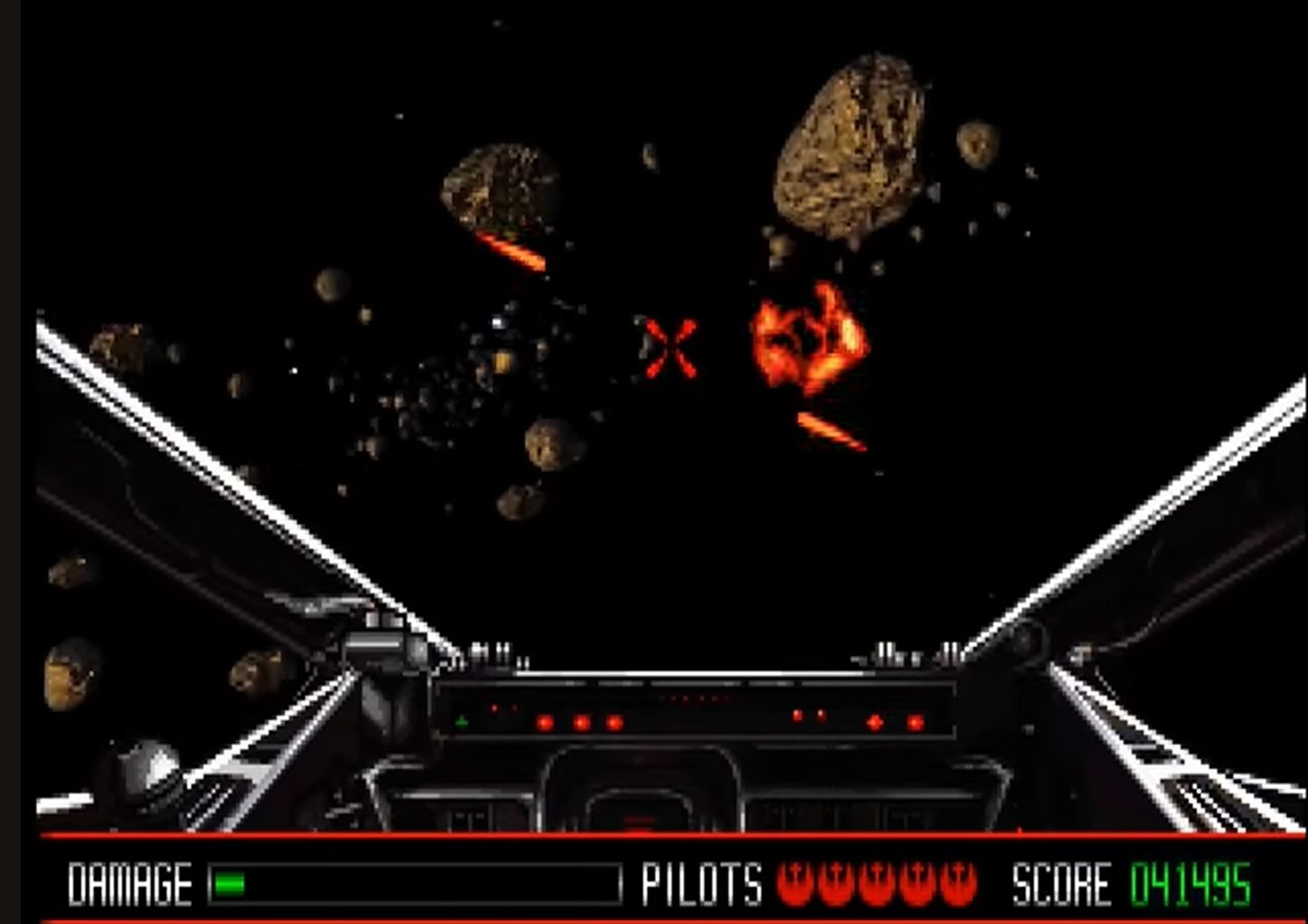
It Was Less “Simulation” and More “Playable Theme Park Ride”
And I mean that as praise.
There is a very specific thrill to Rebel Assault because it understands that Star Wars, as a fantasy, is sometimes just about being dropped into a giant moving action sequence and told to hang on.
The game does not really pretend otherwise. It is not trying to be subtle or especially realistic. It is trying to make you feel like you are in a Star Wars movie montage directed by a machine that has just discovered it can push CD-quality audio and giant background visuals at you without needing to apologize.
That is why the game made such a strong impression at the time.
You were flying through canyons, battling TIEs, weaving through Imperial defenses, and getting barked at by the Rebellion in a way that felt much more “cinematic” than a lot of earlier Star Wars games had managed. The illusion was strong. Even when the mechanics underneath were fairly simple, the presentation sold the fantasy hard.
LucasArts knew exactly what it was doing there.
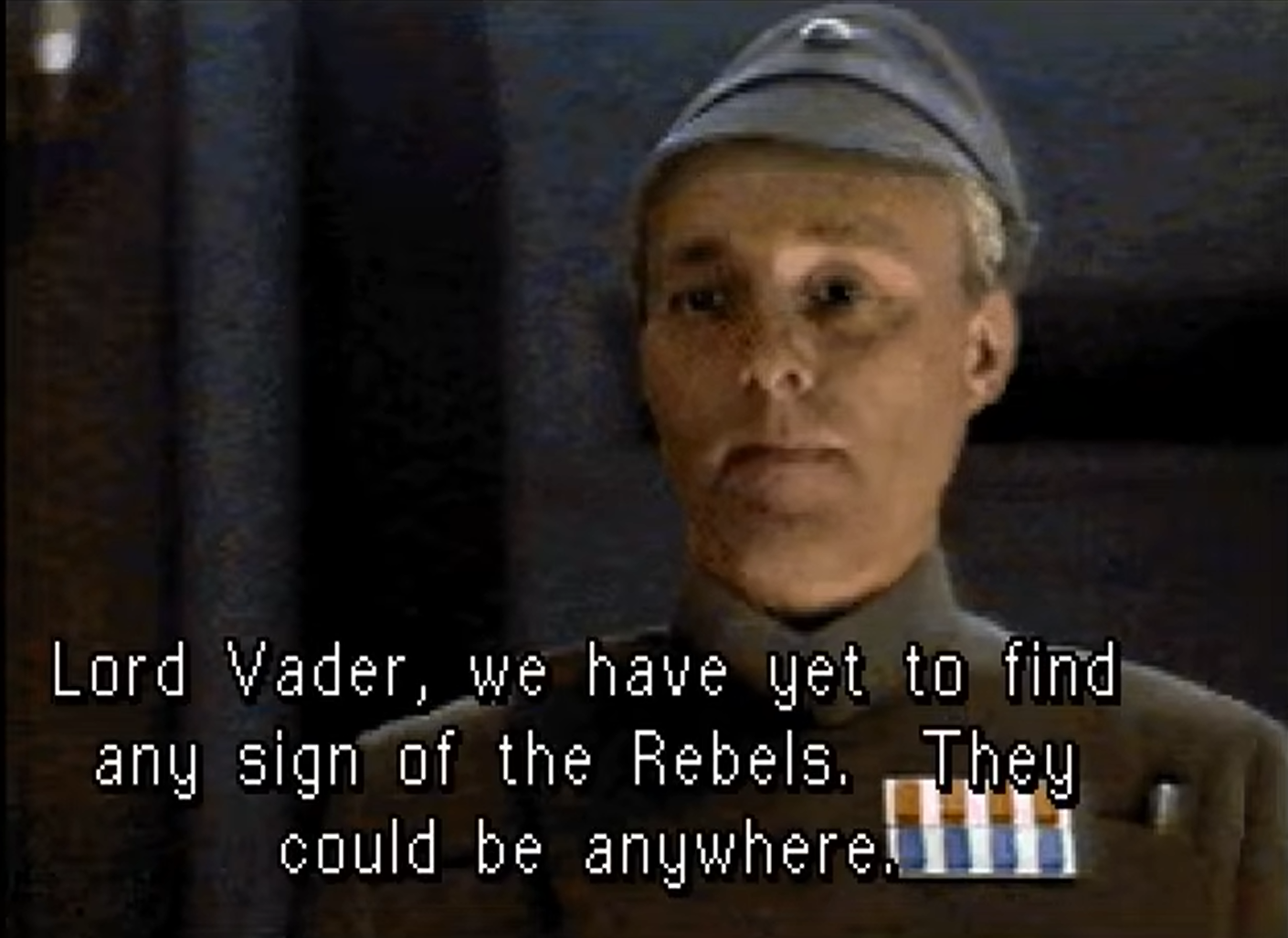
This Was Star Wars for People Who Wanted Immediate Movie Energy
That is another reason the game deserves a real place in the archive.
A lot of Star Wars games before Rebel Assault either leaned into arcade logic or deeper mechanical structure. This one went after something slightly different: instant movie feeling.
You did not need to study a manual for half an hour to understand what the game wanted. You did not need to become a space-combat accountant. You just needed to react quickly and buy into the drama.
That made the game much more accessible than something like X-Wing, even if it also made it much shallower. And that shallowness is part of the trade. Rebel Assault is not the Star Wars game you spend months mastering. It is the Star Wars game that grabs you by the collar and says, “Look at this, look at this, now shoot that.”
There is a real audience for that, especially in 1993.
And frankly, there still is.
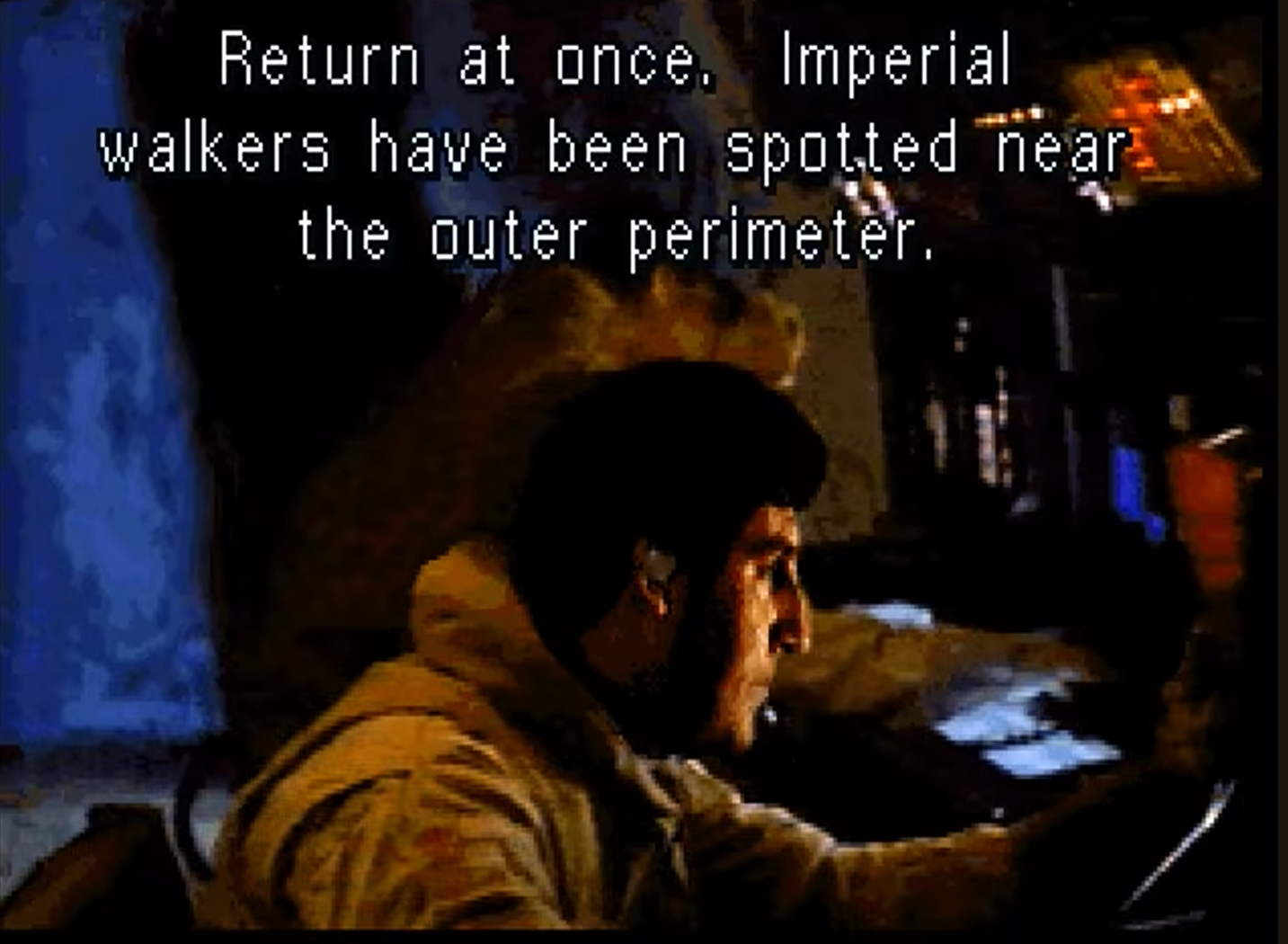
The Audio and Visual Presentation Were Doing a Lot of Heavy Lifting
A lot of why people remember Rebel Assault at all comes down to presentation.
The game looked and sounded ambitious for its time. It pushed big, dramatic backgrounds, digitized imagery, voice, music, and all the little touches that made CD-ROM gaming feel like the future for a while. It did not necessarily age into timeless beauty, but that is not really the point. The point is that in 1993, it looked like a Star Wars game trying to break out of the old box.
And that was exciting.
This is the kind of game that makes much more sense if you remember the era it came from. Today, it is easy to shrug at early multimedia spectacle because we live in a world where nearly everything is overproduced by default. Back then, though, Rebel Assault felt like a genuine “wow” game. You could show it to somebody and immediately understand why it existed.
It was a Star Wars game made to impress people in the first ten minutes.
Mission accomplished.
The Gameplay Was Never the Whole Story
This is where the game gets really interesting historically.
Because if you judge Rebel Assault purely as a systems-driven action game, it is not going to win every argument. The gameplay can feel rigid. The rail-guided structure limits freedom. Some sections are more about memorization and reaction than skill expression in the deeper sense. It is not the kind of game that encourages improvisation very much.
But if you judge it as a moment in Star Wars gaming history, its importance becomes much clearer.
This was one of the major games that helped prove Star Wars could work in a more overtly cinematic, narrative-adjacent form on home computers and consoles. It helped open the door for later games that would chase bigger presentation, stronger audio-visual storytelling, and a more movie-like rhythm.
It is not the cleanest version of that dream.
It is one of the earliest loud ones.
And that counts for a lot.
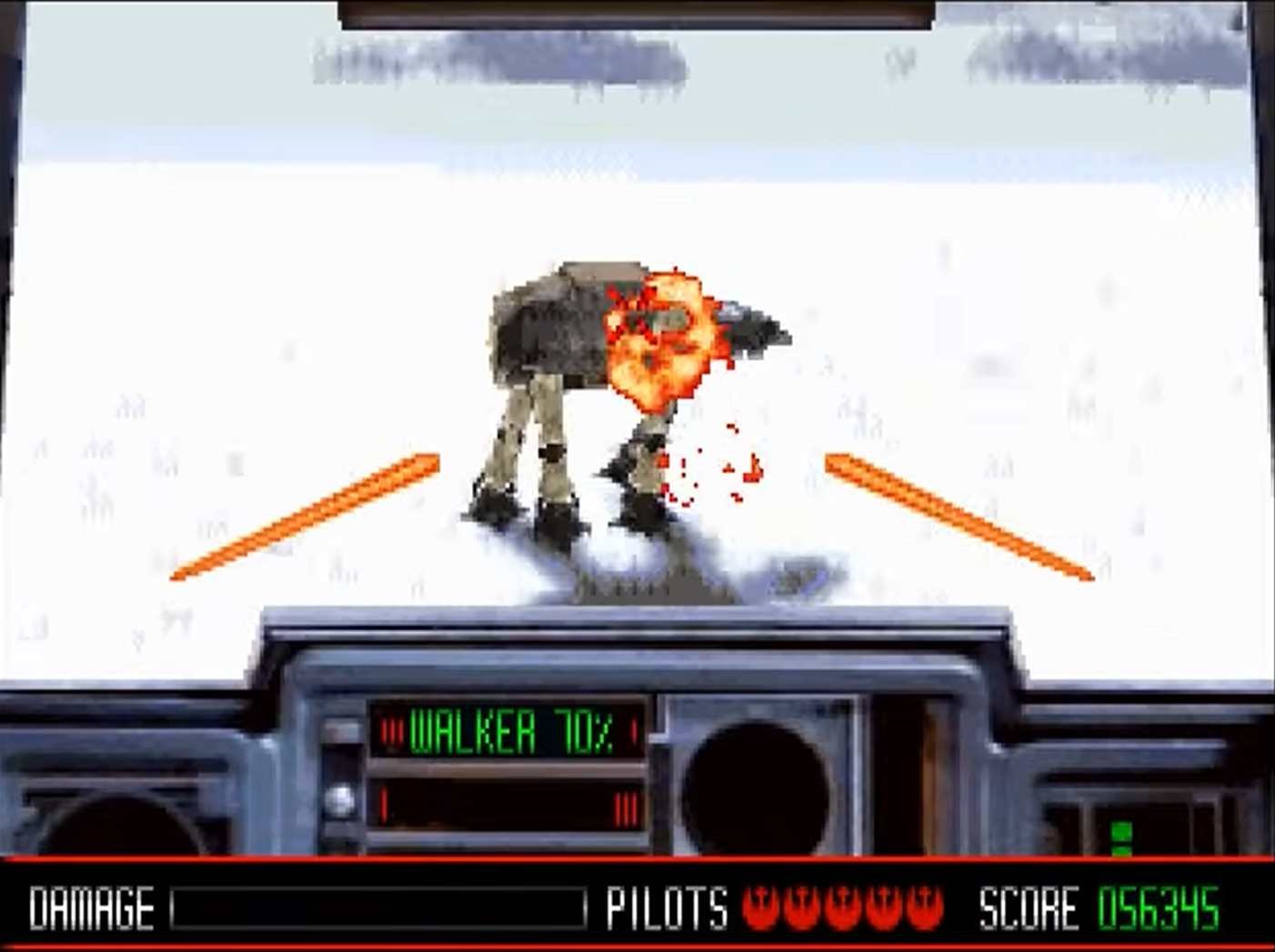
It Sat in a Fascinating Spot Between the Old Era and the New One
That is probably my favorite thing about Rebel Assault.
It feels like a game standing between worlds.
On one side, you still have the older Star Wars traditions: arcade shooting, film-scene adaptation, cartridge-era logic, and simpler action structures. On the other side, you have the bigger LucasArts future coming into view: Dark Forces, Rebel Assault II, Jedi Knight, richer 3D spaces, deeper mechanics, and more ambitious narrative presentation.
Rebel Assault sits right there in the middle.
It is not old-fashioned in the Atari or NES sense. It is not fully modern in the later-90s LucasArts sense either. It is transitional in a really interesting way — a game that can only really exist in that early multimedia moment when the industry was still figuring out how “interactive movie” and “action game” were supposed to fit together.
That makes it historically juicy in a way that a lot of cleaner games are not.
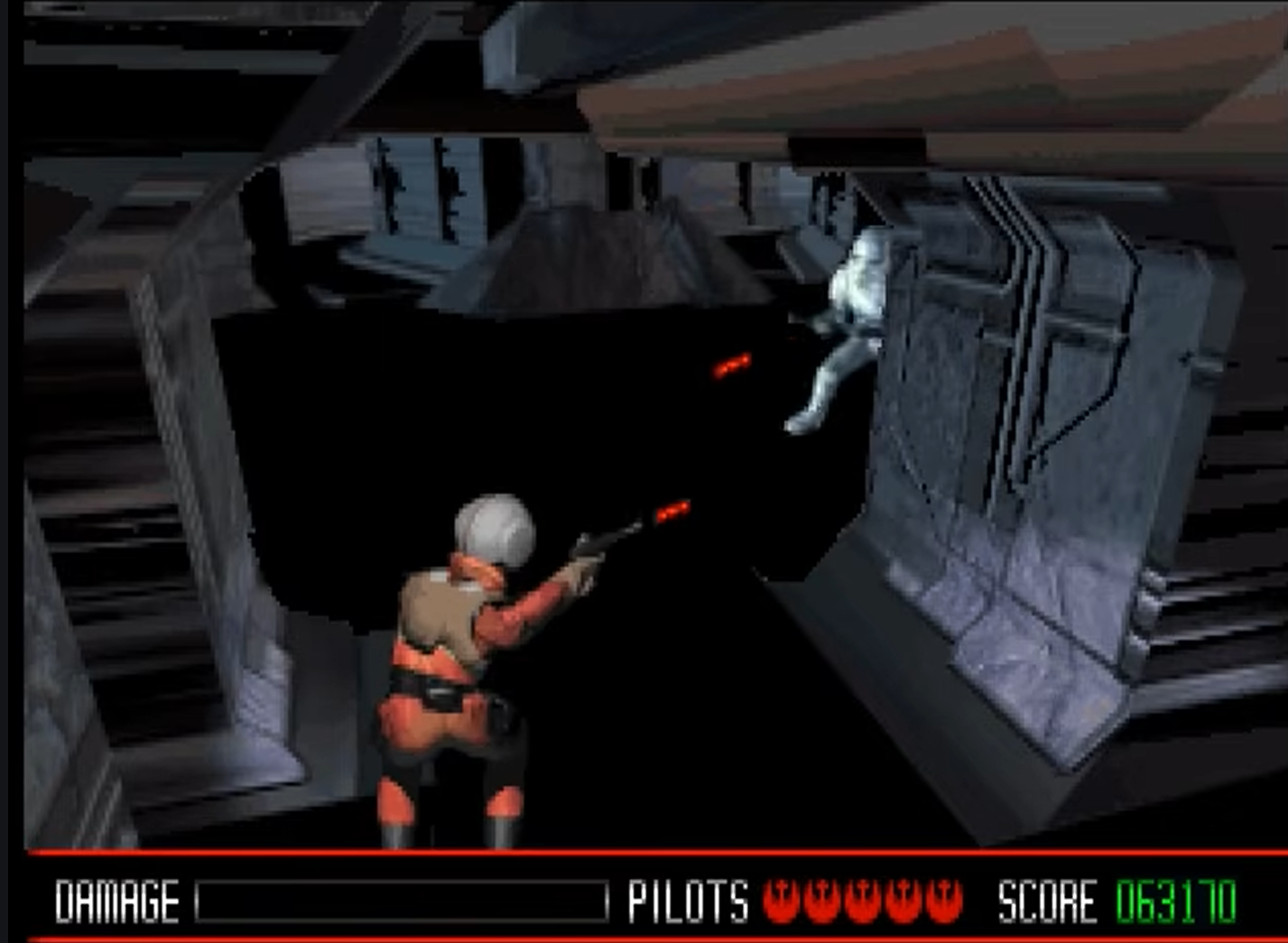
It Also Led Somewhere
That matters too.
Even if you are not personally in love with Rebel Assault, it clearly led to more. Most obviously, it led to Star Wars: Rebel Assault II – The Hidden Empire (1995), which doubled down on the cinematic approach and became one of the most recognizable CD-ROM-era Star Wars sequels. But even beyond that, Rebel Assault is part of the reason Star Wars gaming in the 1990s feels so varied.
The franchise was not locked into one model. It could be a sim. It could be a platformer. It could be an FMV-adjacent CD spectacle. It could be a first-person shooter. LucasArts was experimenting, and Rebel Assault is one of the clearest examples of that experimentation being very visible, very expensive-looking, and just a little bit wild.
That is good archive material.
That is the kind of thing that makes a series history worth reading.
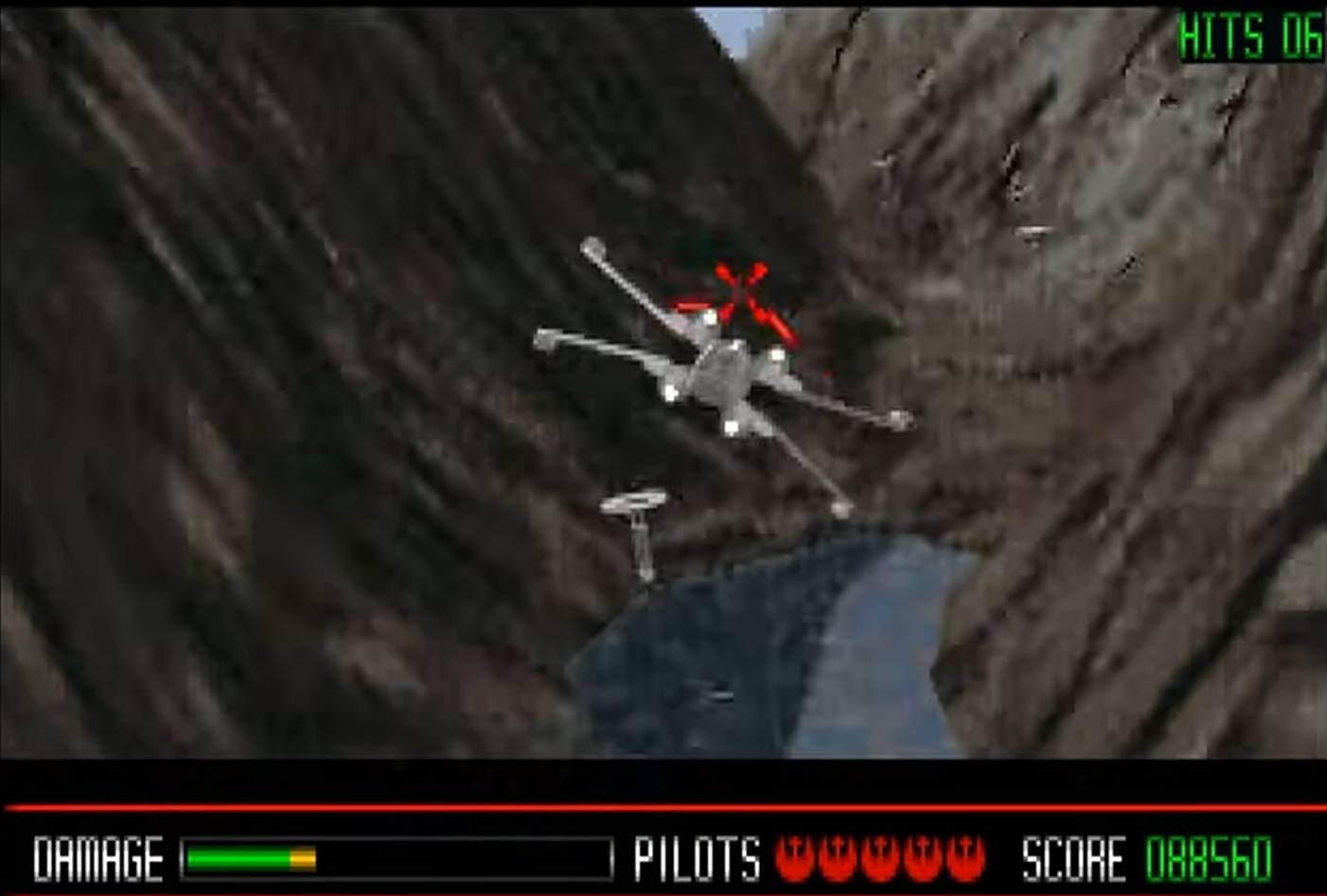
So How Well Does It Hold Up?
That depends on what you want from it.
If you want a deeply flexible, mechanically rich Star Wars action game, there are better options — many of them from LucasArts itself, not long after this. If you want a fascinating snapshot of 1993 CD-ROM ambition, wrapped in loud Rebel-versus-Empire energy and sold with all the subtlety of a TIE fighter crashing through your living room wall, then Rebel Assault still has real charm.
You can absolutely feel the seams now. You can see where the illusion is doing more work than the mechanics. But you can also feel why people responded to it. It is a game with momentum, with style, and with a very strong sense of what kind of Star Wars fantasy it wanted to sell.
Sometimes that is enough.
Why It Belongs in the Archive
This is really the core of it.
Star Wars: Rebel Assault belongs in the archive because it shows Star Wars gaming trying on a new identity at exactly the right moment. It was not the deepest game of its era, and it was never going to be the final word on Star Wars action. But it was one of the most visible signals that the franchise was moving into the multimedia 1990s with confidence.
That makes it more than a curiosity.
It makes it one of the important stepping stones.
If the earlier console games taught Star Wars how to survive as action, and the sims taught it how to breathe as a more serious flight experience, then Rebel Assault taught it how to perform. Loudly. Dramatically. With CD-ROM swagger and just enough chaos to feel exciting.
And honestly, that is a very respectable job description.
FAQ
What is Star Wars: Rebel Assault?
It is a 1993 Star Wars action game from LucasArts built around guided shooting and cinematic presentation, following the story of Rebel pilot Rookie One.
What platforms was Rebel Assault released on?
It first appeared on PC and Mac CD-ROM, with later versions reaching additional platforms in the mid-1990s.
Who is Rookie One?
Rookie One is the player character and Rebel pilot protagonist in Star Wars: Rebel Assault.
How is Rebel Assault different from X-Wing?
Unlike X-Wing, Rebel Assault is much more guided and cinematic. It focuses on scripted action and immediate spectacle rather than deeper flight simulation.
Why was Rebel Assault important?
Because it was one of the key early CD-ROM Star Wars games and helped push the franchise toward a more cinematic, multimedia-driven style of presentation.
Is Rebel Assault still worth revisiting?
Yes — especially as a piece of Star Wars game history. It is a fascinating snapshot of the moment when CD-ROM spectacle and Star Wars finally collided head-on.
Author

Related Posts

Star Wars: Zero Company’s $50 Price Tag Might Be Its Smartest Move
Galaxy of Heroes Update 6-29-2026 Fixes Krayt Dragon Textures, Rotta Materials, and Some Confused Clone Troopers
SWTOR’s Nar Shaddaa Nightlife Returns June 30 With New Casino Rewards
Star Wars: Zero Company Might Be the Clone Wars Game We Didn’t Know We Needed