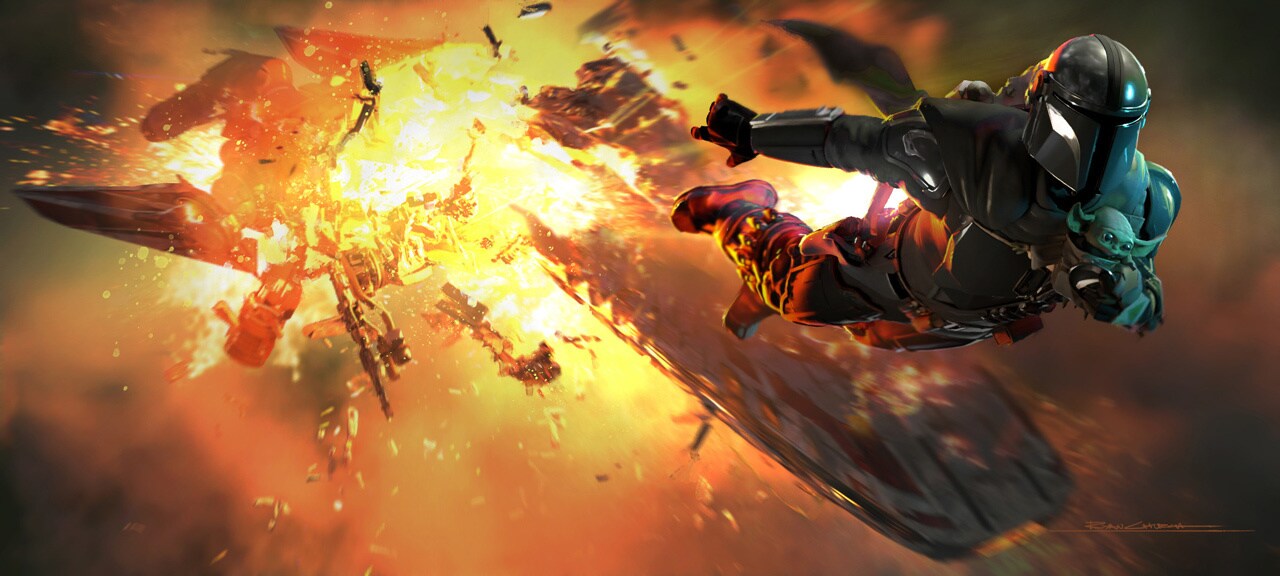

One of the reasons The Mandalorian worked so well from the start is that it never sounded like safe, familiar Star Wars wallpaper. Ludwig Göransson gave Din Djarin a score that felt lonely, strange, dusty, metallic, and just a little mythic. It was not trying to be John Williams cosplay. It was doing its own thing. And now, heading into The Mandalorian and Grogu, Göransson is making it very clear that the movie is not just reusing the TV formula on a larger screen. Musically, at least, this thing is going much bigger.
The big headline from Empire’s new coverage is the scale. In the Readly preview of Empire’s “Settling the score” feature, Göransson says the film uses a 105-piece orchestra, up from the 70-piece orchestra used for the series, and adds a 64-piece choir on top of that. He also says he had more time to work on the movie than he did on the show, which is the kind of detail Star Wars fans should not shrug off. More time and more musical firepower usually means the score is not just supporting the action. It is helping define how big the whole experience feels.
And honestly, that feels right.
Because if there is one thing Mando fans already know, it is that Göransson’s music has always been doing a lot of heavy lifting. Din spends half his life behind a helmet, saying very little, and trying to act like emotions are for other people. The score is a huge part of what makes that character work anyway. Göransson talked about that years ago when he explained that the music had to function like the facial expression under the helmet. That basic idea has clearly carried forward into the movie era too. If the series score was the emotional engine under the beskar, the film score sounds like it is trying to become the full hyperspace jump.
That is why this is more than just soundtrack-nerd trivia.
The Mandalorian and Grogu is the first Star Wars movie to hit theaters since 2019, and Lucasfilm’s official film page is still positioning it as a New Republic-era adventure with Din and Grogu pulled into the fight against scattered Imperial warlords ahead of its May 22, 2026 release. If Lucasfilm wants the movie to feel like a real theatrical event instead of just “a Disney+ season with nicer lighting,” then the music has to help sell that leap. A bigger orchestra and choir is not a magic fix by itself, but it is exactly the kind of signal you want to hear if you are hoping this movie really embraces the cinematic side of Mando’s world.
It also helps that Göransson is not some random late-stage add-on to this corner of Star Wars. Lucasfilm already confirmed last year, in the official teaser rollout, that he is returning to score the film. That matters because the Mando sound is one of the strongest musical identities Star Wars has introduced in the Disney era. The recorder-led main theme, the metallic textures, the Western edge, the sense of isolation and motion — that whole sonic world belongs to this character. You do not really want somebody else suddenly showing up and repainting the walls.
And that is probably the real reason this Empire detail lands so well. It is not just “Ludwig is back,” which we already knew. It is that he sounds like he is treating the movie as a real escalation. More time. Bigger ensemble. Bigger canvas. Bigger emotional swing. That is exactly what fans should want from The Mandalorian and Grogu. Not a total reinvention. Not some desperate attempt to make it feel unlike the show. Just the same musical voice, fully let off the leash.
If the series was Mando riding into town with a blaster and a theme song, the movie sounds like Göransson is bringing the whole damn cavalry.
Stay connected with the galaxy’s latest updates!
Follow us on X, Facebook, Instagram, bsky or Pinterest for exclusive content, mod guides, Star Wars gaming news, and more. Your support helps keep the Holonet alive—one click at a time
Author
Related Posts

Empire’s Mandalorian and Grogu Coverage Just Made the Movie Feel a Lot More Real
Star Wars: Unlimited – A Lawless Time Is Here, and It Looks Like the Set That Wants the Game to Get a Little Messier
Walmart Collector Con Is Bringing Clone Wars Obi-Wan, an Airborne Trooper, and Two Mini Helmets Star Wars Fans Will Absolutely Pretend They Don’t Need
The Vintage Collection Finally Gets Baze Malbus, and Rogue One Fans Have Every Right to Be Happy About It





New Mandalorian and Grogu TV Spot Keeps the Plot Murky — But the Movie’s Vibe Is Getting Much Clearer
Recommended Star Wars Sites: Our Community Link Hub-
Star Wars: Battlefront II (2005) – The Sequel That Turned a Great Shooter Into a Star Wars Institution -
StarWars.com Just Reminded Everyone That Maul’s Leg Lore Is Completely Absurd — and That’s Exactly Why It Works