Seven years ago, Star Wars Battlefront II got one of those updates that quietly says a lot about where the game was heading.
The Siege of Kamino Update did not add a giant new era, a headline-grabbing hero, or a cinematic trailer that made everyone lose their minds for three days. Instead, it did something more important for the actual people still playing: it made the game feel more complete, more social, and more tuned to what the community had been asking for.
Released in May 2019, the update brought Kamino – Cloning Facility to Capital Supremacy, added the in-game Voice Lines Wheel for heroes, raised the level cap for all units to 1000, and adjusted Heroes vs. Villains after removing the old target system.
That may sound like patch-note soup.
It was not.
It was one of the updates that helped turn Battlefront II from a game people argued about into a game people refused to let die.
Kamino Finally Joined the Supremacy War
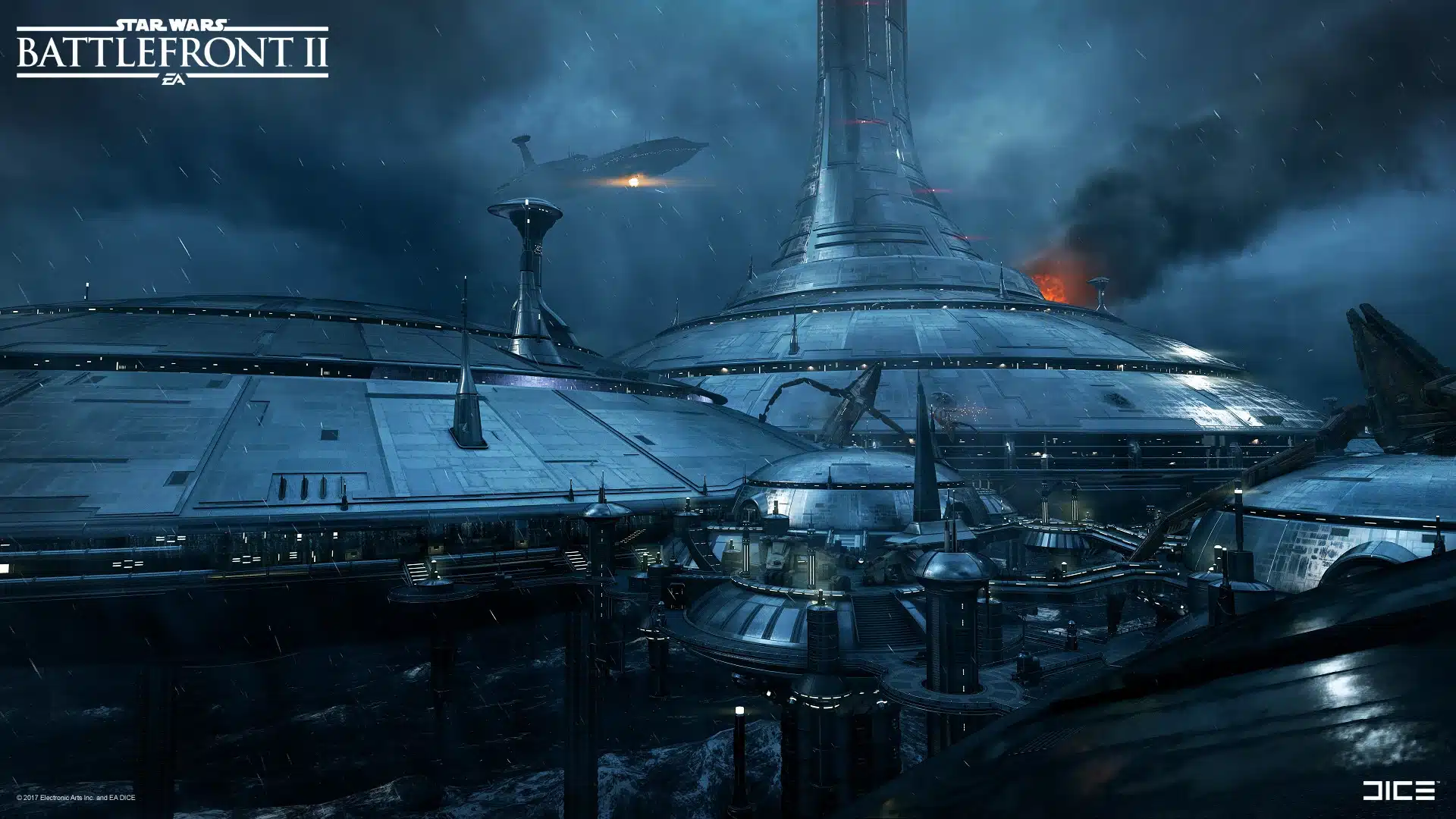
The big map addition was Kamino for Capital Supremacy, and it made perfect sense.
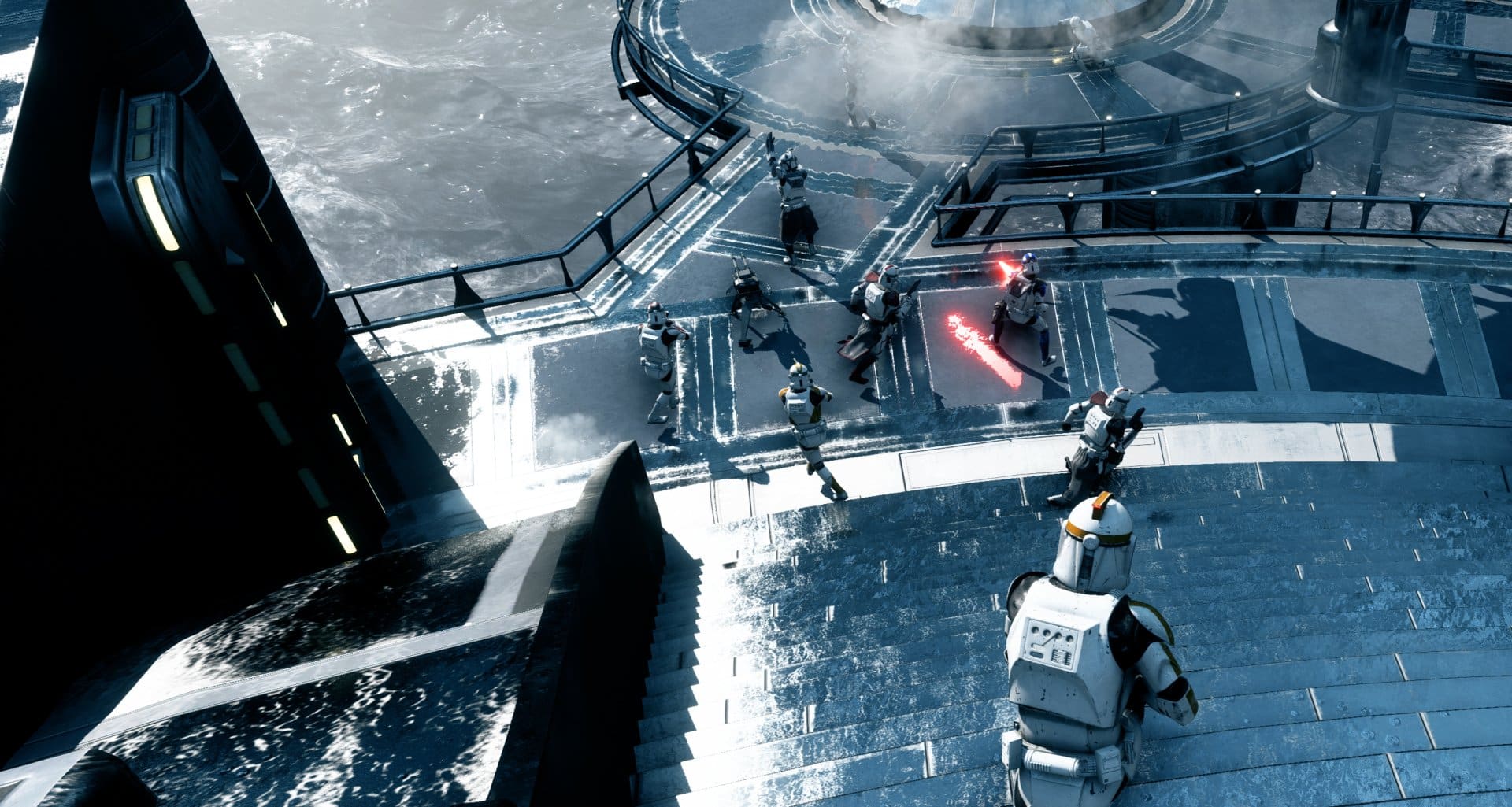
Kamino has always been one of the best Clone Wars locations for a battlefield: clean white platforms, stormy skies, endless cloning facilities, and the feeling that every fight is happening in a very expensive medical hallway during terrible weather.
Adding it to Capital Supremacy gave the mode another prequel-era anchor. By that point, Battlefront II had found much of its second life in Clone Wars content, and Kamino fit that revival perfectly.
It was not just another map. It was another sign that DICE had figured out where the game’s community energy really lived.
The Voice Line Wheel Was Pure Battlefront Culture
Then there was the Voice Lines Wheel.
On paper, it was a small feature. Heroes could trigger voice lines in-game. That is it.
In practice, it gave Battlefront II more personality.
Suddenly, hero encounters could be ridiculous, dramatic, annoying, funny, or all four at once. Players could taunt, meme, roleplay, irritate their friends, and turn ordinary duels into tiny Star Wars theater. It was not essential balance work. It was something better: flavor.
And Battlefront II desperately benefited from flavor.
A live multiplayer Star Wars game is not just about damage numbers and spawn timers. It is about moments. A perfectly timed line before a duel can make a fight feel more memorable than the scoreboard ever will.
Heroes vs. Villains Needed the Target System Gone
The update also continued one of the biggest changes to Heroes vs. Villains: adjusting the mode after removing the target system.
For anyone who lived through that version of HvV, the old target setup could be… let’s say “emotionally educational.” Matches often devolved into chase scenes, hiding, pile-ons, and one unlucky player becoming the galaxy’s most stressed objective marker.
Removing the target system pushed HvV closer to the brawl people actually wanted: heroes and villains clashing directly, without the mode constantly turning one player into a fluorescent panic button.
Was it suddenly perfect? No.
Was it better? Absolutely.
Level 1000 Was a Love Letter to the Dedicated
Raising the level cap for all units to 1000 was another smart move because it gave long-term players something absurd to chase.
No, level 1000 did not make you better at dodging Anakin’s nonsense or surviving a corridor full of explosives. But it gave the most committed players a visible mountain to climb.
That mattered because by 2019, Battlefront II had become a comeback story powered largely by its community. People were not just logging in to try the latest thing. They were staying. Grinding. Maining. Flexing. Suffering. Posting clips. Arguing about balance with the passion of a galactic senate hearing gone wrong.
Level 1000 fit that energy perfectly.
The Patch That Felt Like the Game Listening
Looking back, the Siege of Kamino Update stands out because it was not just content.
It was responsiveness.
Kamino for Supremacy gave Clone Wars fans another reason to queue. The Voice Line Wheel gave personality to hero play. The HvV changes addressed a long-running frustration. The level cap increase rewarded the players who had decided this was their Star Wars battlefield, flaws and all.
That is why the update still feels important seven years later.
It belongs to the period when Battlefront II was no longer just recovering from its launch reputation. It was becoming the game people now talk about with genuine affection — the one they want revived, preserved, expanded, and sometimes spiritually replaced by the mythical Battlefront III prayer circle.
Seven years later, the Siege of Kamino Update still feels like a snapshot of Battlefront II at its best:
messy, loud, community-driven, Clone Wars-heavy, and somehow still alive in the memory of everyone who once got emotionally destroyed on a rainy platform full of clones.