Not every Star Wars game begins with a trench run, a lightsaber, or an exploding space station.
Some begin with R2-D2 and C-3PO wandering into another problem, which is more or less the permanent condition of their lives anyway.
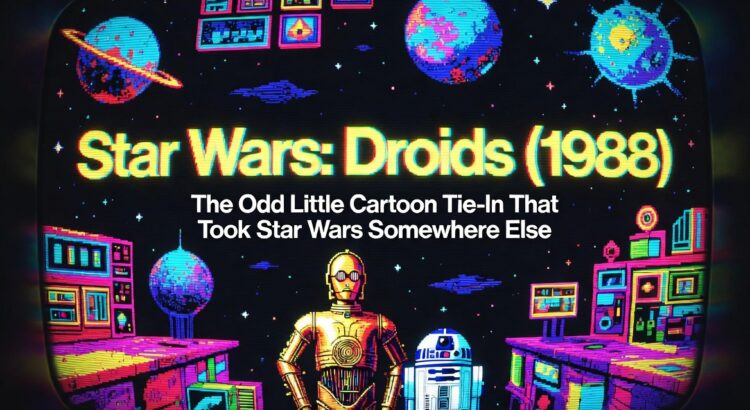
That is what makes Star Wars: Droids such an interesting little side road in the archive. Released in 1988 for the ZX Spectrum, Amstrad CPC, and Commodore 64, the game was published by Mastertronic Added Dimension and developed by Binary Design as a tie-in to the animated Droids series, also known as Star Wars: Droids – The Adventures of R2-D2 and C-3PO.
As part of our Complete List of All Star Wars Games Ever Made (1979–Present), this is exactly the kind of title that deserves more attention than it usually gets. It also sits comfortably in the Star Wars Games (1979–1989) era, because it shows how strange and flexible Star Wars gaming could be in the late 1980s. This was not the era’s biggest game, and it definitely was not its most glamorous one. But it is one of those titles that tells you a lot about what the license was doing away from the big headline fantasies.
And honestly, that is part of the appeal.
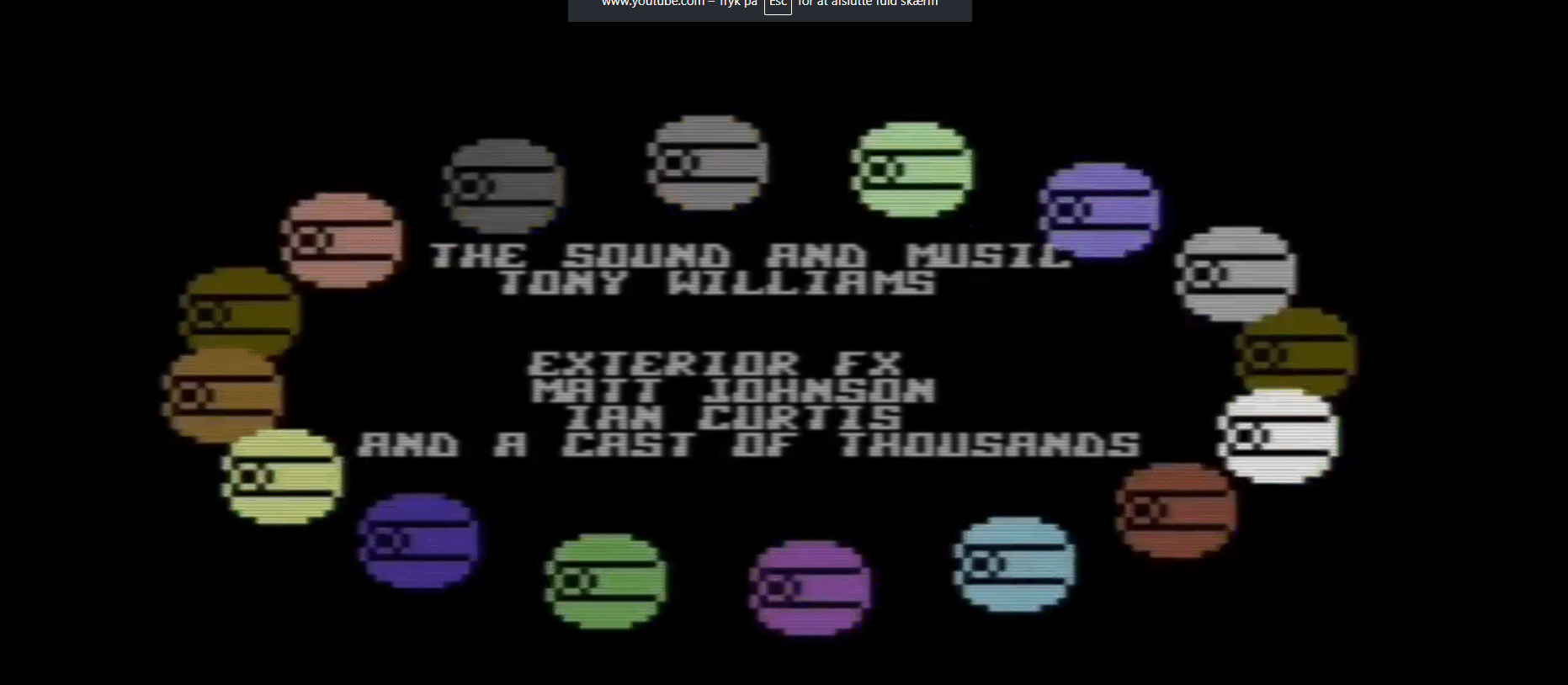
By 1988, Star Wars games were no longer just “play the movie bit”
A lot of early Star Wars gaming had a very direct formula. Pick the biggest scene from the film, strip it down to its most playable shape, and build a cartridge around it. That is basically how games like The Empire Strikes Back (1982) and Return of the Jedi: Death Star Battle (1983) operated.
Droids is different.
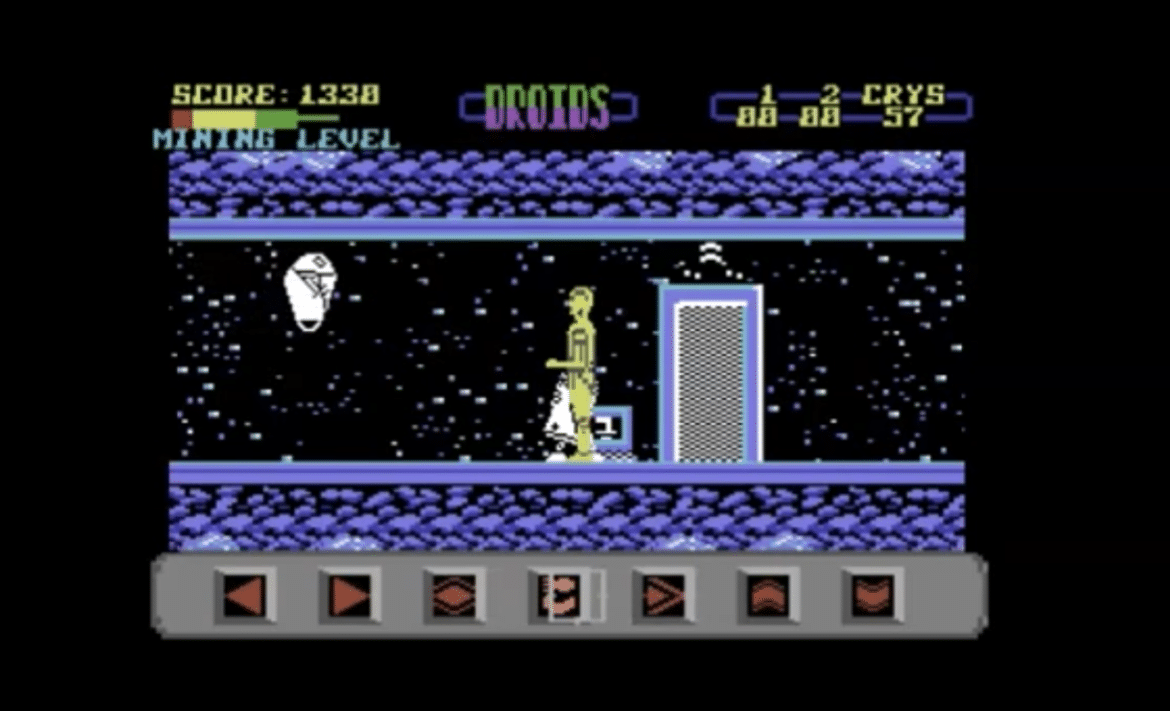
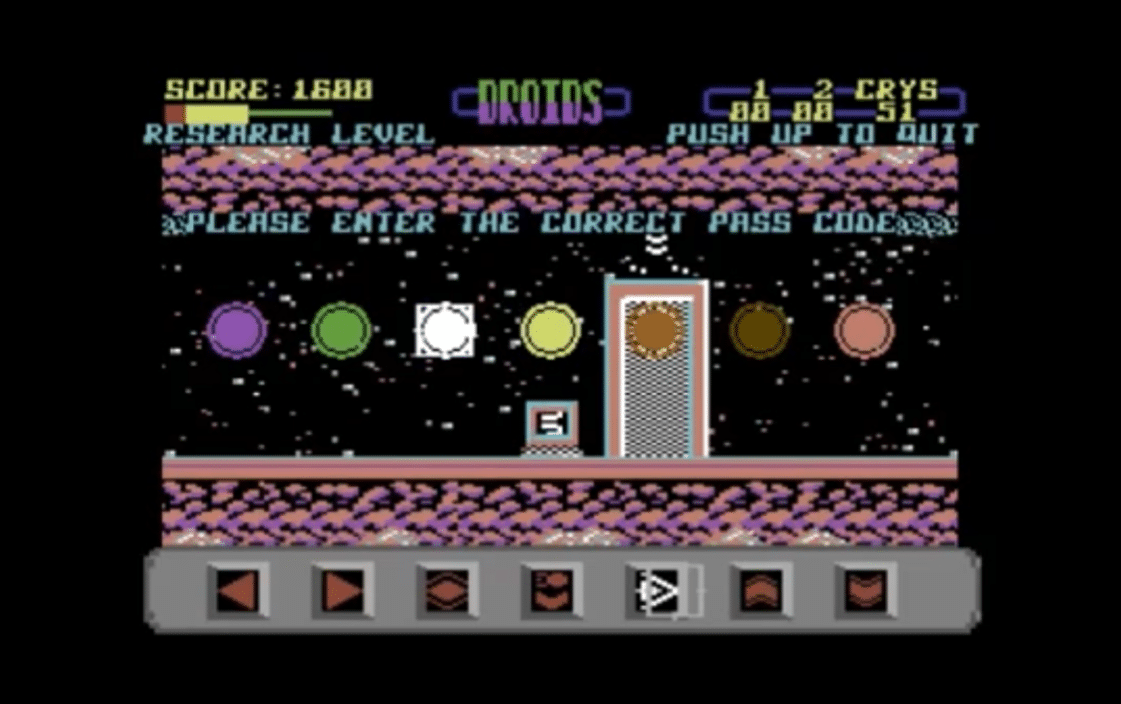
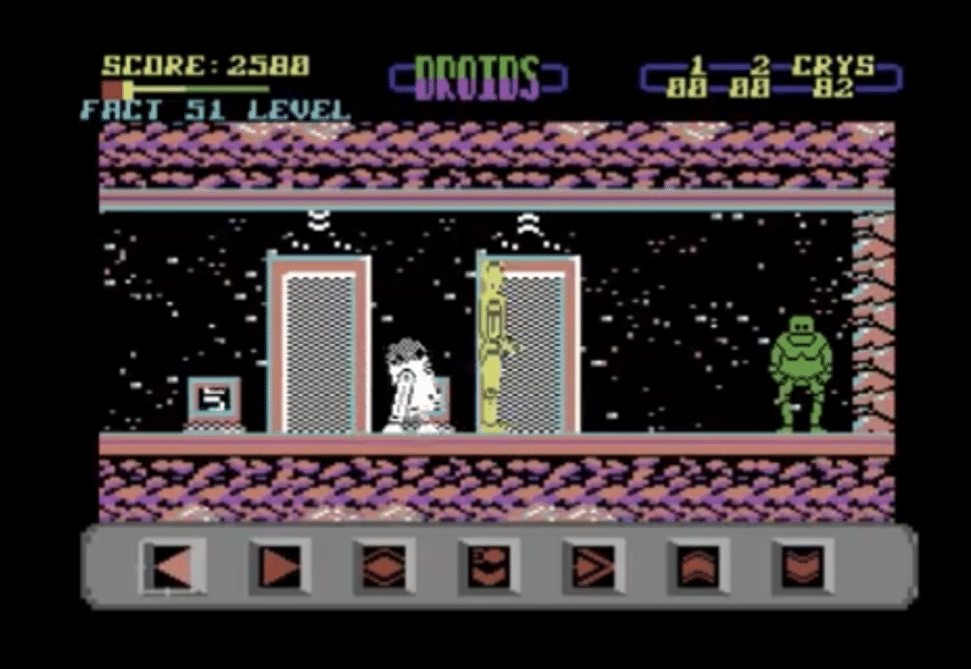
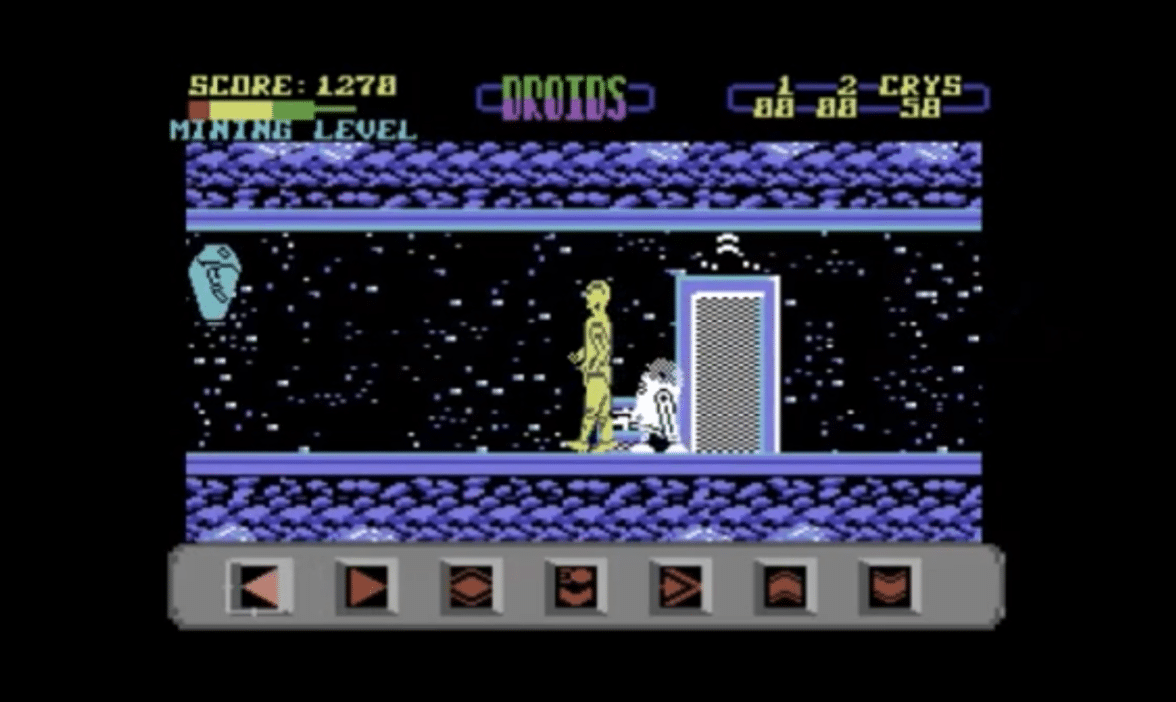
Instead of borrowing one giant heroic set piece from the films, it leans into the side of Star Wars that the 1985 animated series opened up: a more self-contained, smaller-scale, slightly more chaotic world built around R2-D2 and C-3PO stumbling through adventures on the edges of the galaxy. The game is generally described as an action title with platform and puzzle elements, which already tells you it is operating on a different wavelength from trench runs and Hoth battles.
That makes it historically useful.
It shows Star Wars gaming getting a little less obsessed with simply replaying the films and a little more willing to follow side material, secondary characters, and TV spin-off energy. In other words, it is part of the point where the license starts looking broader, even if the results were not always exactly elegant.
The cartoon connection is the whole point
One reason Star Wars: Droids stands out is that it belongs to a slightly awkward but fascinating branch of Star Wars history.
The Droids cartoon was never the most famous part of the franchise, but it is exactly the sort of thing that makes the late-1980s license interesting. It was a way of expanding the universe sideways rather than upward. No huge mythic stakes. No Skywalker destiny overload. Just droids, side adventures, odd corners of the galaxy, and a tone that could be lighter and more playful than the films usually allowed. The game follows that same spirit by centering on R2-D2 and C-3PO, rather than trying to turn everything back into Luke, Vader, and the Death Star again.
That alone gives the game a different personality from most of the Star Wars titles we have covered around it.
This is not a “save the galaxy” game. It is a “how are these two droids in trouble again?” game. And that feels right for the source material.
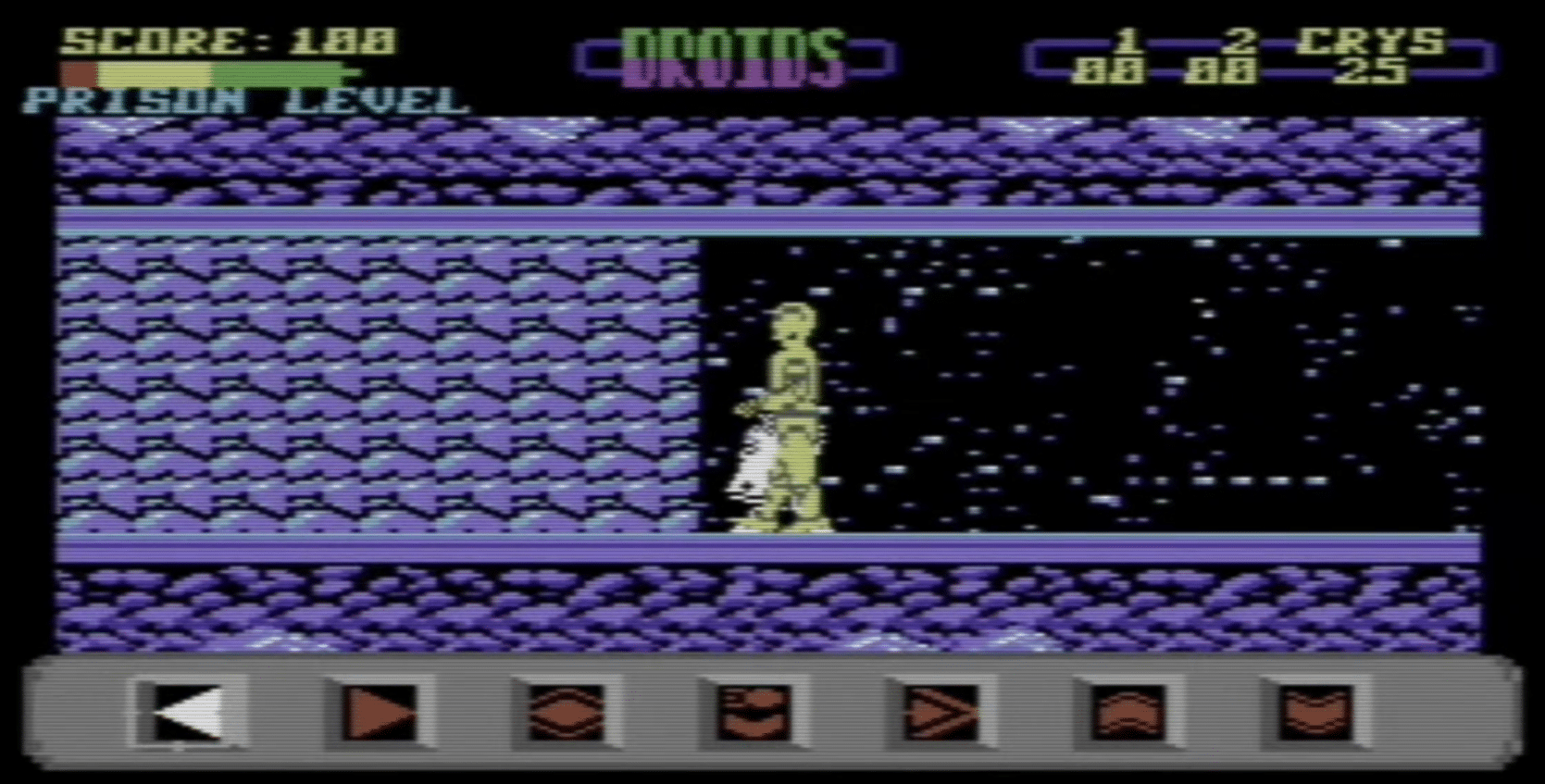
So what kind of game is it, exactly?
The honest answer is: a bit of a strange one.
Listings and retrospective summaries generally describe Star Wars: Droids as an action game with side-view presentation, platform elements, and puzzle elements. That sounds fairly straightforward until you actually look at it, at which point it becomes clear that this is one of those old home-computer games where genre labels are doing some heavy lifting. It is not a pure platformer in the clean console sense, and it is not really a traditional adventure game either. It sits in that very 1980s European home-computer pocket where games could be a little awkward, a little abstract, and a little more interested in systems and screens than in immediately making your life easy.
That is not necessarily a flaw. It is just part of the period.
A lot of British and European computer games from this era had a certain homemade complexity to them. They were often built for players who were willing to tolerate a bit of opacity and a bit of odd control logic if the atmosphere or the license was doing enough of the work. Droids fits squarely into that tradition. It looks like a Star Wars game filtered through the peculiar instincts of late-1980s home-computer design, which is honestly a sentence I mean as a compliment.
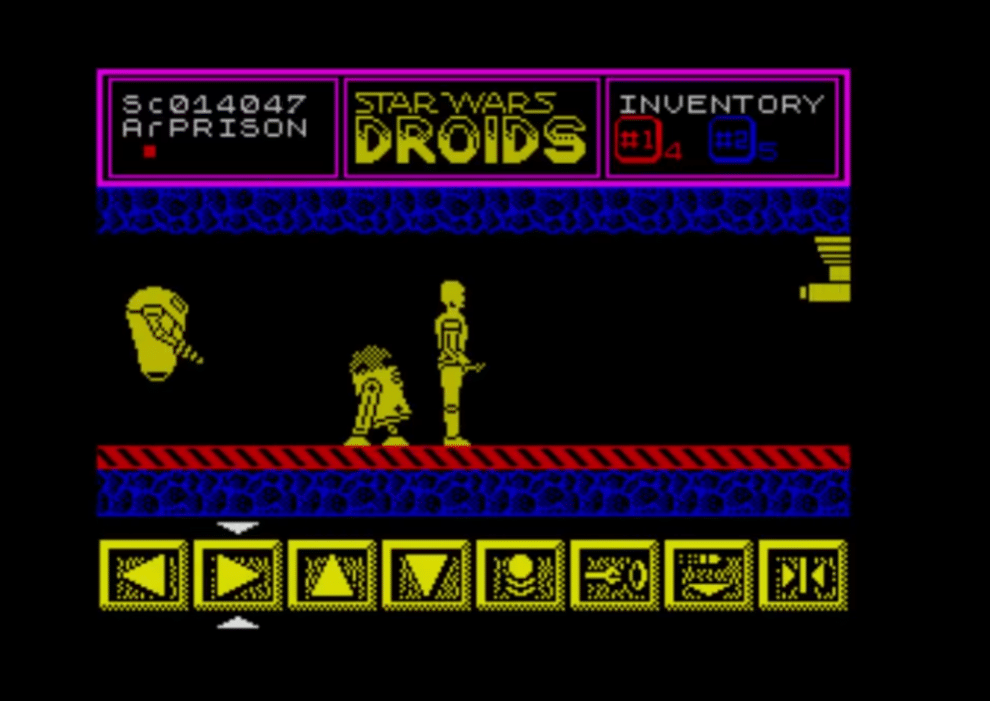
Home-computer Star Wars always felt a little different
This is probably the most important lens for understanding the game.
By 1988, Star Wars gaming was no longer just an arcade and cartridge story. It was also a home-computer story, and those machines shaped design in their own image. Games on the ZX Spectrum, Amstrad CPC, and Commodore 64 often had a different rhythm from console titles. They could be cheaper, weirder, more brittle, and often more willing to assume the player would muddle through a slightly unfriendly interface because that was just how things were done. Star Wars: Droids launched right in that environment.
That is one reason it does not feel like a direct descendant of Atari’s Star Wars: The Arcade Game (1983), even though they share the same license. The arcade machine was all immediate spectacle. Droids is much more domestic and much more eccentric. It belongs to the school of games that expected you to sit with them a bit, learn their habits, and maybe be mildly annoyed before the real affection set in.
Or before you gave up and decided R2 and 3PO were on their own.
Both outcomes were probably historically accurate.
Binary Design and Mastertronic were not aiming for prestige
That also helps explain the game’s place in history.
The surviving database records consistently point to Binary Design Ltd. as developer and Mastertronic / Mastertronic Added Dimension as publisher. That already tells you a lot about where the game sits in the market. This was not Lucasfilm Games building a major flagship release with a huge push behind it. It was a licensed home-computer game from companies operating in the much scrappier end of the late-1980s software world.
And honestly, that makes it more interesting, not less.
Because once you get away from the polished legends, you start seeing the real texture of old licensed gaming. Not everything was an event. A lot of it was smaller, cheaper, more opportunistic, and more region-specific. Droids is part of that ecosystem. It is Star Wars as budget-label home-computer software, which may not sound glamorous, but it is absolutely part of the franchise’s gaming history.
If anything, it is the kind of title that helps the archive feel honest.
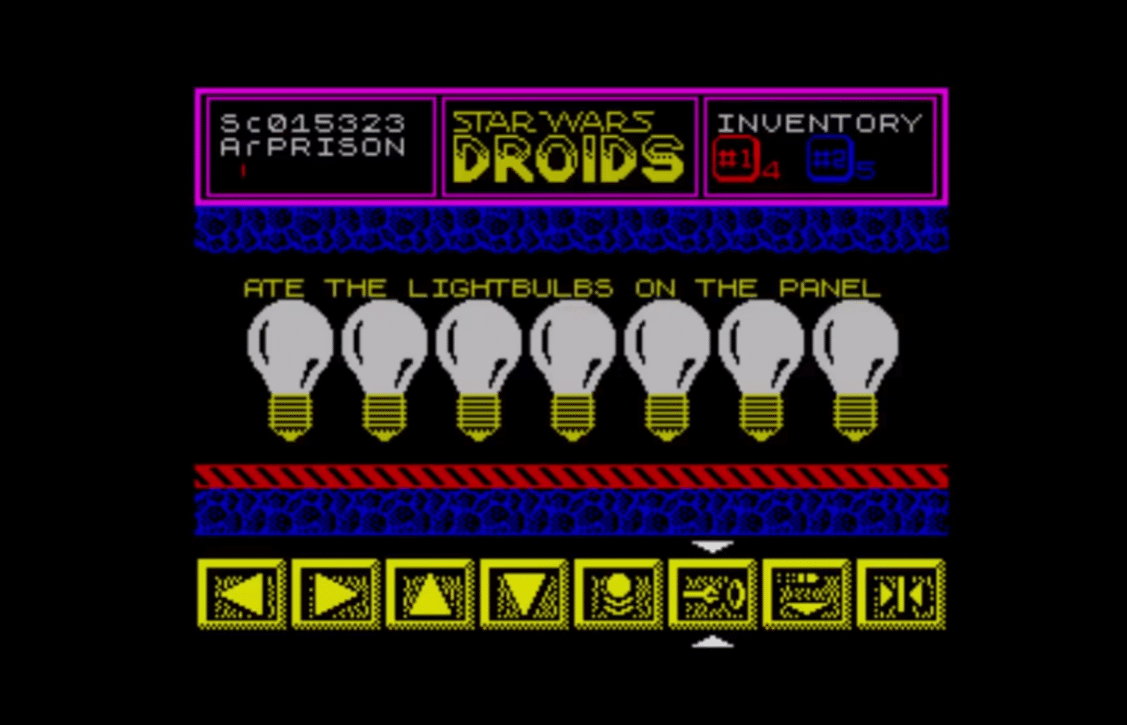
The reception was… not exactly glowing
This is where we should be fair and not pretend we have unearthed some secret masterpiece from under a pile of old cassette cases.
The game does not have a strong legacy for quality. MobyGames shows a low critical average, and modern retrospectives from retro-gaming outlets tend to treat it as a missed opportunity rather than a hidden gem. One recent Mastertronic-focused review called it a game with potential that was badly let down by weak controls and frustrating execution. Another retro retrospective was even harsher, essentially arguing that the Star Wars and Droids branding promised much more fun than the game actually delivered.
That is useful context, because it stops the article from becoming fake nostalgia.
Star Wars: Droids is interesting first and great second, if at all. Its value comes less from being an all-time classic and more from what it represents: a late-1980s Star Wars tie-in built for home-computer audiences, drawing on an animated series instead of the films’ biggest moments, and showing how broad the license had become by that point.
Sometimes game history is about quality. Sometimes it is about shape. This one is more about shape.
That still makes it worth talking about
Because if you only write about the obvious hits, the archive gets flatter than it should.
A game like Droids helps show the messy middle of Star Wars gaming history. It reminds us that the franchise did not go cleanly from Atari to greatness in one smooth heroic arc. It wandered. It experimented. It got licensed out in odd ways. It produced titles that were tied to cartoons, budget labels, and machines that younger readers may mostly know from emulators and YouTube footage. That is valuable.
It also quietly proves something about Star Wars as a license: it was already big enough, by 1988, to support games built around R2-D2 and C-3PO side adventures rather than just film spectacle. That might not sound like a huge revelation now, but in historical terms it matters. It means the gaming branch of Star Wars was already learning how to live in the wider franchise, not just in the cinema’s shadow.
And frankly, that is the kind of thing retro sites usually appreciate when you notice it.
Where it sits in the bigger timeline
That is really the main reason to write about Star Wars: Droids now.
Coming after our recent run through The Empire Strikes Back (1982), Return of the Jedi: Death Star Battle (1983), and the cancelled Return of the Jedi: Ewok Adventure, Droids shows where the early years started bending outward. The older games were mostly built around one major movie sequence. Droids belongs to a later phase where Star Wars could also be a cartoon tie-in, a budget home-computer oddity, and a reminder that the galaxy was already sprawling in weird directions long before modern expanded-universe branding got tidy about it.
That makes it less iconic than the big names, but maybe more revealing.
It tells the truth about the era.
The verdict from the junk pile
There are more important Star Wars games. More polished ones. More fun ones.
Star Wars: Droids is probably not here to win a beauty contest.
But it is still worth covering because it captures something the bigger classics do not. It captures the point where Star Wars gaming had become broad enough to get weird, small, and sideways. It was no longer just about reliving the most obvious movie action. It could also be about droids, cartoons, side stories, and home-computer experimentation that landed somewhere between charm and mild suffering.
That may not be glamorous.
It is, however, very real history.
And in an archive, that counts for a lot.
FAQ
What is Star Wars: Droids?
It is a 1988 Star Wars video game based on the animated Droids series, focused on R2-D2 and C-3PO and released for several home-computer platforms.
When was Star Wars: Droids released?
It released in 1988.
What platforms was Star Wars: Droids on?
The game released for ZX Spectrum, Amstrad CPC, and Commodore 64.
Who developed Star Wars: Droids?
Database and archive sources credit Binary Design Ltd. as developer, with Mastertronic / Mastertronic Added Dimension as publisher.
What kind of game was it?
It is generally described as an action game with side-view, platform, and puzzle elements.
Why is Star Wars: Droids worth revisiting?
Because it shows a different side of late-1980s Star Wars gaming: a cartoon tie-in, a home-computer release, and a reminder that the license was already getting broader and stranger than just movie-scene adaptations.