
There are cancelled games that sound boring the second you describe them, and then there are cancelled games that make you stop, blink, and say: hang on, they were going to let us play as an Ewok in a hang glider?
That is Star Wars: Return of the Jedi: Ewok Adventure.
Planned in 1983 for the Atari 2600, developed by Atari Games for publication by Parker Brothers, Ewok Adventure never made it to store shelves, even though the game was reportedly completed. It later became one of those fascinating lost corners of Star Wars gaming history — the kind of title that sounds half ridiculous, half brilliant, and somehow ends up being both.
As part of our Complete List of All Star Wars Games Ever Made (1979–Present), this is exactly the kind of side road worth stopping for. It also fits naturally beside our recent looks at The Empire Strikes Back (1982) and Return of the Jedi: Death Star Battle (1983), because it shows something important about the very earliest Star Wars games: before the franchise settled into familiar formulas, it was still experimenting, still weird, and still willing to build a whole game around one specific movie-side fantasy.
And honestly, “Ewok glider assault on Endor” is a very specific movie-side fantasy.
Before Ewoks became a punchline, someone made them the stars
This is probably the first thing worth saying in the game’s defense: the idea is not as silly as it sounds.
Or rather, it is silly, but in a very Star Wars way.
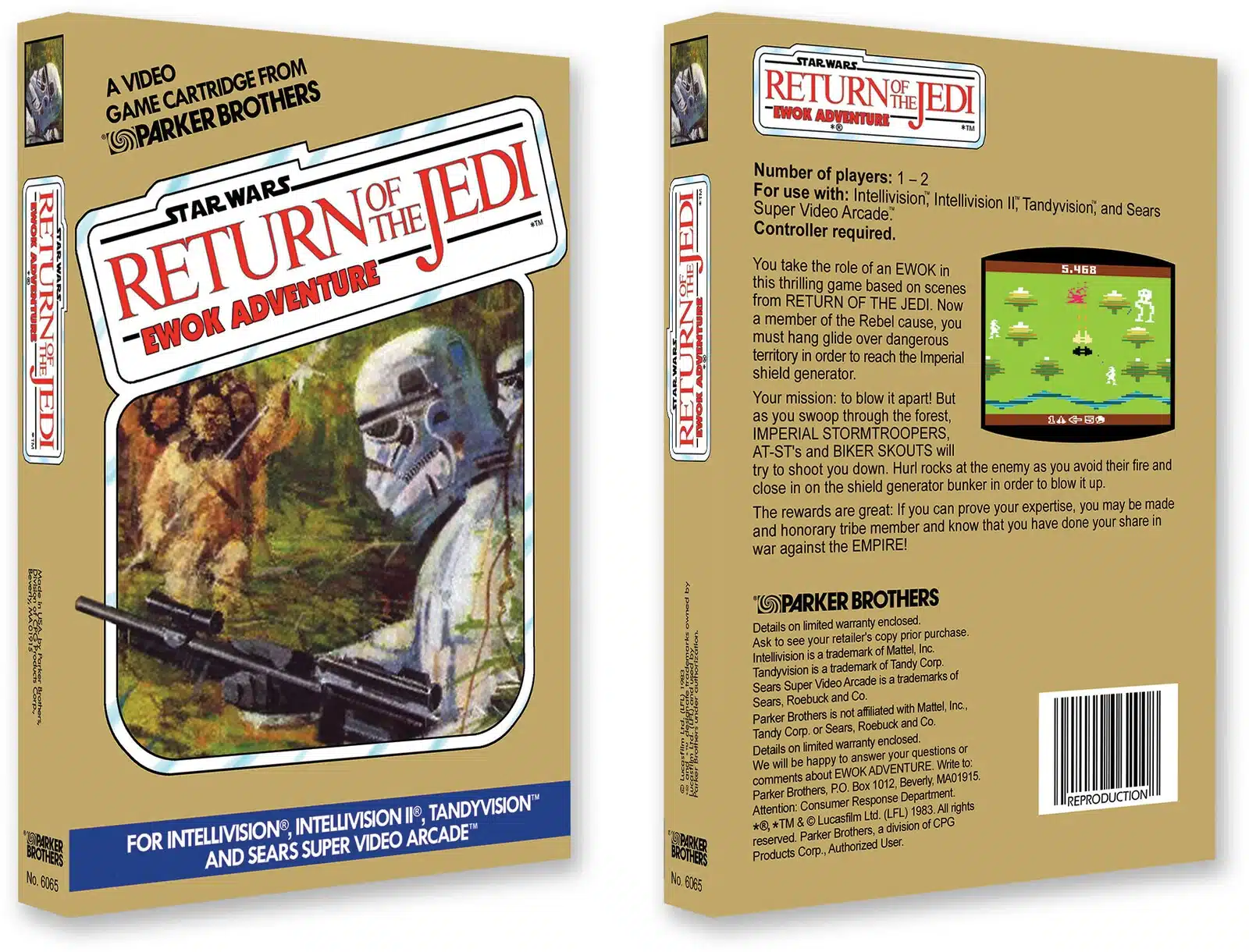
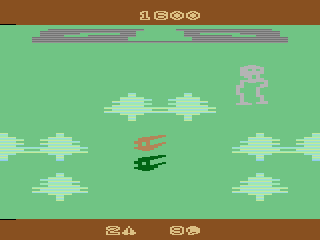
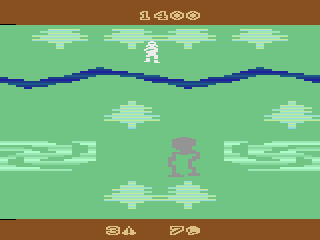
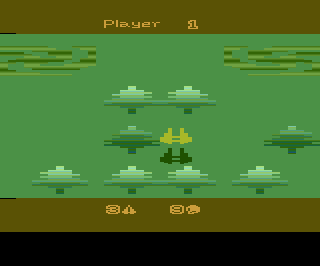
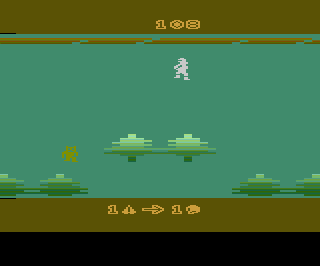
The game puts the player in control of an Ewok hang glider on Endor, with the mission of attacking Imperial forces and taking down the shield generator operation. Surviving materials describe dodging enemies such as speeder bikes, AT-ST walkers, Imperial troops, and terrain hazards, while using rocks as weapons dropped from above. The glider’s altitude is indicated by its shadow, and crashing into the ground means game over.
That sounds absurd now mostly because people have spent decades making jokes about Ewoks. But if you go back to 1983 and look at it with fresh eyes, it actually makes a lot of sense. Endor was new. Return of the Jedi was the current movie. The Ewoks were a huge part of the finale. And early licensed games were usually built around one strong visual idea, not an attempt to retell the entire film. A glider-based strike behind enemy lines is exactly the kind of clean, direct concept Atari-era hardware could handle.
Also, let us be fair: flying a fragile little glider over Imperial walkers while dropping rocks on stormtroopers is a very funny video game idea. That is not a weakness. That is branding.
It started life as Revenge of the Jedi: Game I
One of the best old-school details here is the original title.
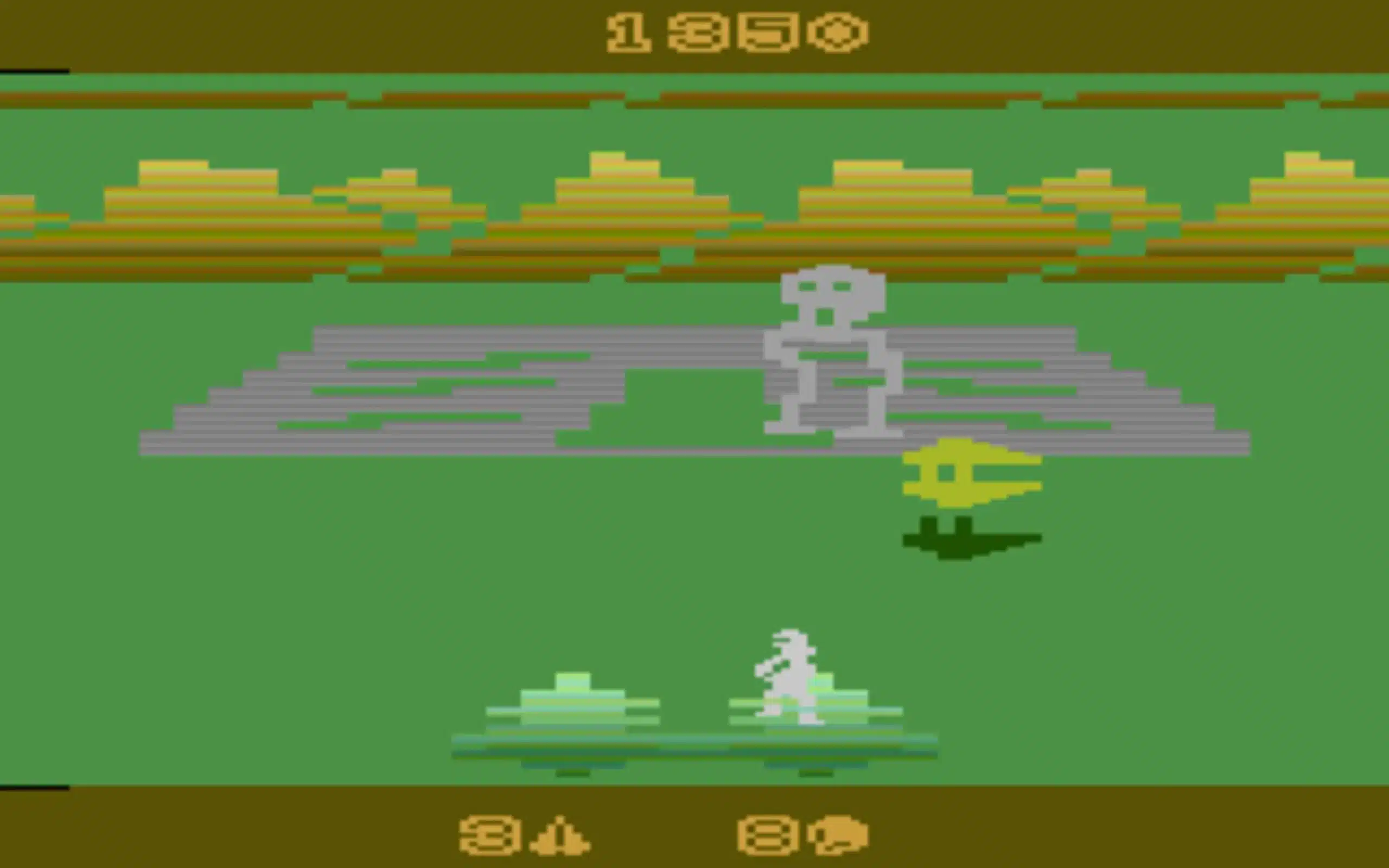
Prototype materials and later documentation show that the game was first known as Revenge of the Jedi: Game I, before the film title changed to Return of the Jedi. That makes it a lovely artifact of a very specific production moment, when the movie itself was still shifting shape and the tie-in machine was racing to keep up. A prototype box with the earlier title reportedly exists, which only adds to the game’s mystique.
And yes, “Game I” is also delightfully blunt. Early tie-in culture was not especially interested in pretending these things were elegant. This was a Star Wars cartridge. It was tied to the new movie. It was one of the planned games. Done.
There is something charming about that level of directness. No subtitle workshop. No marketing consultant trying to make it sound like prestige fiction. Just “Revenge of the Jedi: Game I.” Sometimes old game history really was built by people too busy shipping cartridges to bother being subtle.
Who made it, and why it never came out
The basic production story is fairly clear. Ewok Adventure was developed by Atari Games, with Larry Gelberg credited as programmer in prototype documentation, and was intended for release by Parker Brothers on the Atari 2600 in 1983. Despite being completed, it was cancelled before release.
The reported reason is one of those wonderfully old-school problems that feels almost quaint now: the controls were considered too difficult.
According to later summaries, Parker Brothers’ marketing department felt the control scheme was too hard for players to master. Larry Gelberg was reportedly asked to simplify the controls into a more standard eight-direction setup, but he believed players could handle the more ambitious design. Parker Brothers disagreed, and the project was shut down.
That is such a perfect early-video-game conflict.
Not “the monetization strategy was unclear.” Not “the franchise roadmap shifted.” Not “the studio was restructured into a cloud initiative.” Just: one side thought players could cope with a slightly trickier glider game, the other side panicked, and the Ewoks lost.
There is something almost noble about it. A tiny design battle, fought over whether the audience could handle a bit of extra finesse while piloting a teddy-bear aircraft into war.
The gameplay sounds primitive, but also oddly ambitious
This is where Ewok Adventure gets more interesting than a simple “cancelled curiosity” label suggests.
From the surviving descriptions, it was not just a flat little shooter. The glider had altitude-based movement, the player had to manage shadow-based positioning, and the game included environmental dangers around the edges of the map as well as multiple enemy types. Depending on the game mode, the player could apparently alter how climbing and descending worked, including reversing the vertical directions.
For an Atari 2600 game in 1983, that is not nothing.
It sounds like the game was trying to create a stronger sense of aerial motion and vulnerability than you might expect from a simple licensed cartridge. The fact that the player could fly high enough to move over some enemies, pick up or deploy rocks, and use altitude as part of survival suggests a design that wanted to be a little more tactile than the usual “move left, move right, shoot thing” rhythm.
Which, ironically, makes the cancellation story even more believable. This may genuinely have been a bit more complicated than Parker Brothers wanted from a broad-market Atari game. That does not make the publisher evil. It just makes this one of those moments where a slightly stranger, slightly bolder design ran into the commercial reality of the early console market.
And again, the Ewoks lost.
Why retro people love this kind of thing
If you are wondering why a cancelled Atari 2600 Star Wars game about gliding Ewoks is worth a full article, this is why.
Lost games like Ewok Adventure tell you what the industry almost became.
Released games tell you what companies successfully sold. Cancelled games tell you what they were willing to try before fear, budgets, timing, or marketing departments got involved. In this case, the answer is: early Star Wars gaming could have been a lot weirder, and maybe a little more playful, than the surviving catalogue alone suggests.
That matters, especially now that we are working our way deeper into the late-1970s and 1980s branches of the archive. It is easy to flatten this era into a few headline titles: The Empire Strikes Back, The Arcade Game, Death Star Battle. But once you start looking at prototypes and cancellations, the picture gets more interesting. Suddenly the early Star Wars game line is not just a series of safe cartridge translations. It is a strange little laboratory full of near-misses, abandoned ideas, and developers trying to figure out what parts of Star Wars could survive inside brutally limited hardware.
That is exactly the kind of thing retro sites notice, too. Not just the game itself, but the design instinct behind it.
The prototype’s afterlife helped turn it into legend
Part of the reason people still talk about Ewok Adventure at all is that it did not vanish completely.
A prototype cartridge surfaced in 1997, and later reporting says only one physical copy is known to exist. The prototype was reportedly given by Larry Gelberg to a colleague’s son in 1997, and later sold for $1,680. Whether you care about rarity markets or not, that rediscovery is a big reason the game shifted from “cancelled footnote” to “real thing people can actually discuss.”
That kind of survival story matters in retro history. So many cancelled early games simply evaporated. Code was lost. materials disappeared. companies moved on. Ewok Adventure is lucky enough to have left behind just enough physical evidence to keep the conversation alive.
And once people saw it, the reaction was almost inevitable: wait, they really made an Ewok hang-glider game?
Yes. They really did.
It also says a lot about Star Wars before the franchise became too self-aware
There is another reason I like this game as an archive entry: it comes from a period when Star Wars was still willing to be a little shamelessly literal.
Movie has Ewoks in gliders? Great, make a game about Ewoks in gliders.
Movie has a trench run? Great, make a game about the trench run.
Movie has AT-ATs on Hoth? Great, make a game about Hoth.
This was not a franchise worrying too much about tonal hierarchy yet. It had not spent decades categorizing itself into “serious” and “jokey” sub-brands. If a scene looked playable, that was often enough. Ewok Adventure belongs squarely in that spirit. It feels like a game made before anybody decided that only certain kinds of Star Wars heroism counted as respectable.
And that, honestly, is refreshing.
Because Star Wars has always had room for the strange side roads. Sometimes it is a Jedi epic. Sometimes it is a cockpit shooter. Sometimes it is a bounty hunter with too many weapons. And sometimes it is an Ewok in a glider trying to ruin the Empire’s afternoon.
All of those things are real Star Wars. This one just never got the chance to prove it on shelves.
So should it count in the history?
Absolutely.
Not in the same way as a released commercial game, obviously. But yes, it belongs in the history.
Ewok Adventure matters because it fills in the shape of the era. It shows what Parker Brothers and Atari thought was worth attempting in 1983. It shows that early Star Wars licensing was already branching beyond the most obvious hero fantasies. And it shows that even very early on, Star Wars games were not just about recreating the biggest central action scenes. They were also about exploring side fantasies that the movies only hinted at.
That makes it more than trivia.
It makes it a missing piece.
The view from Endor, with rocks
There are cancelled games that sound more prestigious than Return of the Jedi: Ewok Adventure.
There are probably cancelled games that sound cooler too.
But I am not sure there are many that capture the weird, experimental, charming uncertainty of early Star Wars gaming quite this well.
A completed but unreleased Atari 2600 game about an Ewok hang glider attacking Imperial forces on Endor should, by all logic, be a throwaway curiosity. Instead, it ends up saying something surprisingly useful about the whole era. It tells us that early Star Wars games were still searching. Still improvising. Still weird enough to think this was worth making in the first place.
And honestly?
They were right.
FAQ
What was Star Wars: Return of the Jedi: Ewok Adventure?
It was a cancelled 1983 Atari 2600 Star Wars game based on Return of the Jedi, centered on an Ewok hang glider attacking Imperial forces on Endor.
Who developed Ewok Adventure?
It was developed by Atari Games, with Larry Gelberg credited in prototype documentation, and was intended to be published by Parker Brothers.
Why was Ewok Adventure cancelled?
Later reports say Parker Brothers’ marketing department felt the game’s controls were too difficult for players, and the project was cancelled despite reportedly being completed.
Was the game ever released?
No. It was never commercially released, though a prototype later surfaced.
What was the game originally called?
It was originally known as Revenge of the Jedi: Game I before the movie title changed to Return of the Jedi.
Why is Ewok Adventure worth talking about today?
Because it is a rare surviving example of an early cancelled Star Wars game, and it reveals just how experimental and strange the franchise’s first gaming years could be.