
Before Star Wars games got big enough to swallow entire weekends, before they started chasing cinematic storytelling, RPG choices, or multiplayer wars with patch notes and balance drama, there was a much simpler fantasy: sit down, grab the controls, and blow up the Death Star yourself. That is the magic of Star Wars: The Arcade Game. Released by Atari in 1983, it turned the final act of A New Hope into a first-person vector-graphics shooter and, in the process, gave Star Wars one of its earliest true gaming classics.
And this is exactly why it feels like the right next stop after Star Wars: Battle for Naboo (2000). That game showed how polished and expansive Star Wars vehicle combat had become by the N64 era. The Arcade Game shows the raw original spark: the point where Star Wars game design realized that “you are in the cockpit now” was already enough to sell the whole dream. It also makes it a perfect fit for both the Complete List of All Star Wars Games Ever Made (1979–Present) and the Star Wars Games (1979–1989) hub, because this is not just an early licensed game. It is one of the foundation stones.
This is where Star Wars games first felt like Star Wars games
That sounds obvious now, but in 1983 it really mattered.
There had already been Star Wars games, of course, but Atari’s Star Wars arcade machine hit on something much more direct and much more powerful. Instead of vaguely borrowing the atmosphere of the films, it grabbed the single most game-ready moment in A New Hope and built the entire experience around it: dogfight the TIE fighters, skim the surface of the Death Star, dive into the trench, fire the proton torpedoes, and hope you do not embarrass yourself in front of the cabinet. Mike Hally, the project leader, later said the pitch felt obvious to him almost immediately because the movie’s climax was already “perfect for a videogame.” He was right.
That clarity is part of why the game still feels so elegant. It does not waste time pretending to be broader than it is. It is not trying to retell all of Star Wars. It is not trying to be lore-heavy. It is not trying to squeeze every toy from the license into one machine. It just asks a clean, irresistible question: what if you could play the Death Star attack run? In 1983, that was more than enough.
Vector graphics, a yoke, and pure 1983 wizardry
A huge part of the game’s impact came down to presentation.
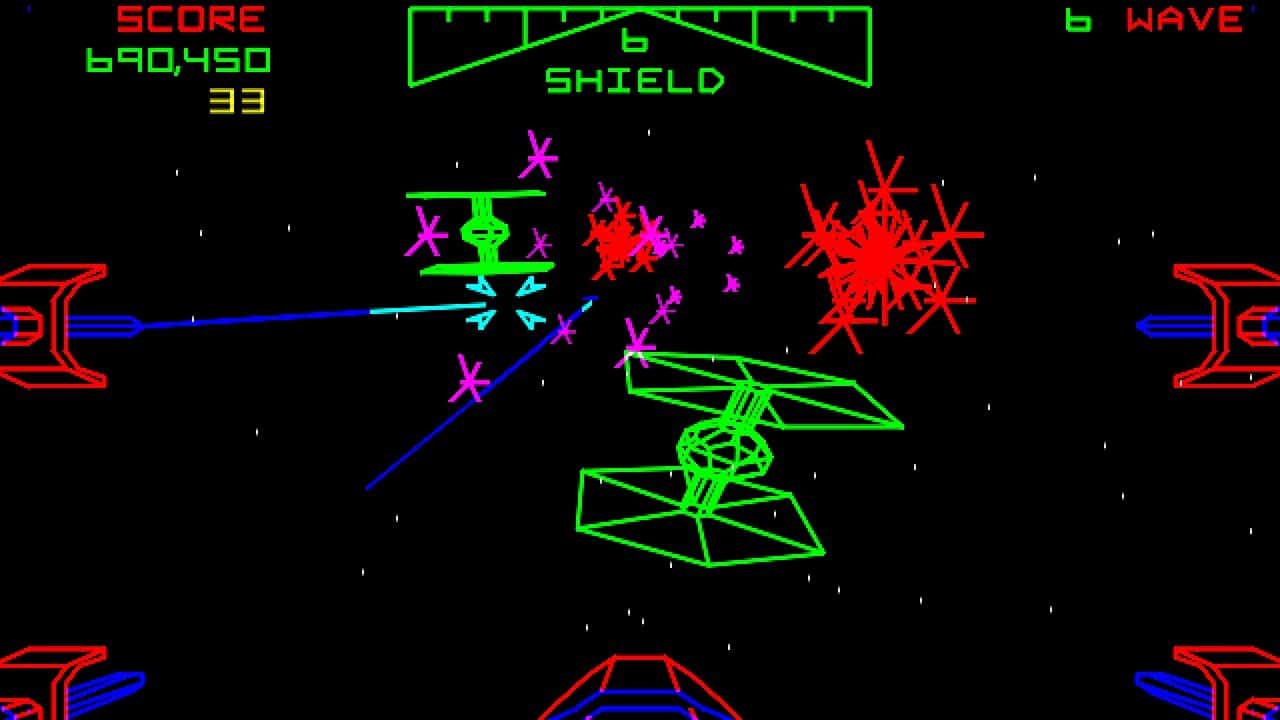
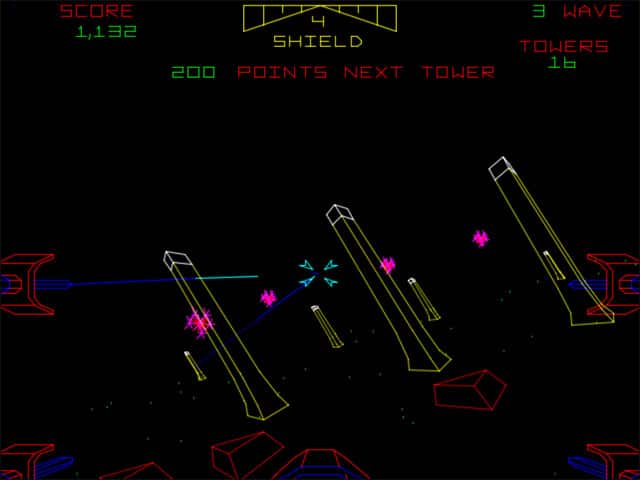
Atari used 3D color vector graphics, which gave the game a look that still stands apart today. It was not detailed in the way later polygonal games would become detailed, but that almost helps it now. The glowing wireframe shapes, bright enemy fire, and stark geometry give it a kind of beautiful abstraction. It looks mechanical and cinematic at the same time, like somebody turned the Death Star battle into neon architecture.
Then there was the controller. The player pilots Luke Skywalker’s X-wing with a yoke fitted with four fire buttons, which made the whole thing feel more physical than a lot of arcade shooters of the era. This was not just a joystick and a screen. It was a machine asking you to perform the movie. Pull up, line up the shot, fire, panic, recover, repeat. It is not subtle, but subtlety was not the point. Immersion was.
And yes, the cabinets helped enormously. The game came in upright and cockpit forms, and later retrospective praise specifically called out the deluxe cabinet, the speakers, the vector graphics, the triggers, and the digitized voices as part of what made the machine so memorable. That is exactly the sort of retro craft people still love talking about, because the cabinet itself was part of the fantasy. It did not just contain the game. It sold the whole illusion.
The whole game is basically one giant “Use the Force, Luke” button
In design terms, The Arcade Game is wonderfully blunt.
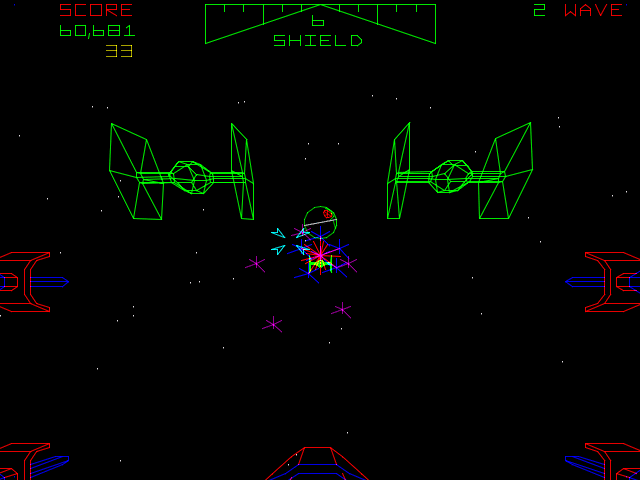
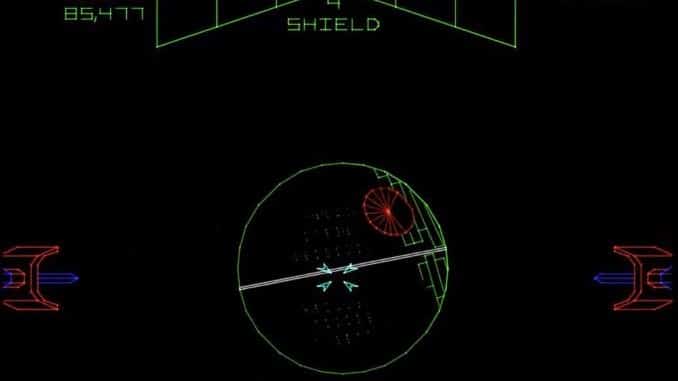
There are three main phases. First, you fight Darth Vader and waves of TIE fighters in space. Then you skim over the Death Star surface while dodging and destroying gun emplacements. Then comes the trench run itself, ending with the shot at the exhaust port. If you succeed, the Death Star explodes, the difficulty goes up, and the whole sequence loops again with added complications. The game even awards a bonus if you destroy the Death Star without firing at anything except the exhaust port, which is a lovely little “yes, yes, you used the Force, well done” touch.
That structure is probably the single smartest thing about the game. It captures the emotional rhythm of the film climax without drowning in complexity. You are always under pressure, always moving forward, always close enough to disaster that success feels exciting instead of routine. The shield system helps too: you can survive several hits, but not enough to get lazy. The result is a game that feels demanding without becoming unreadable, which is a very hard balance to strike in early arcade design and one Atari managed surprisingly well here.
Also, and this deserves to be said, the game understands one of Star Wars’ great enduring truths: the trench run is still cool. Forty-plus years later, it remains almost embarrassingly difficult to ruin that concept. Put somebody in a tiny fighter, tell them the odds are bad, let a voice from the film shout in their ear, and they are probably in. Atari figured that out early and cashed in beautifully.
It started life as something else entirely
The development story is one of the best parts.
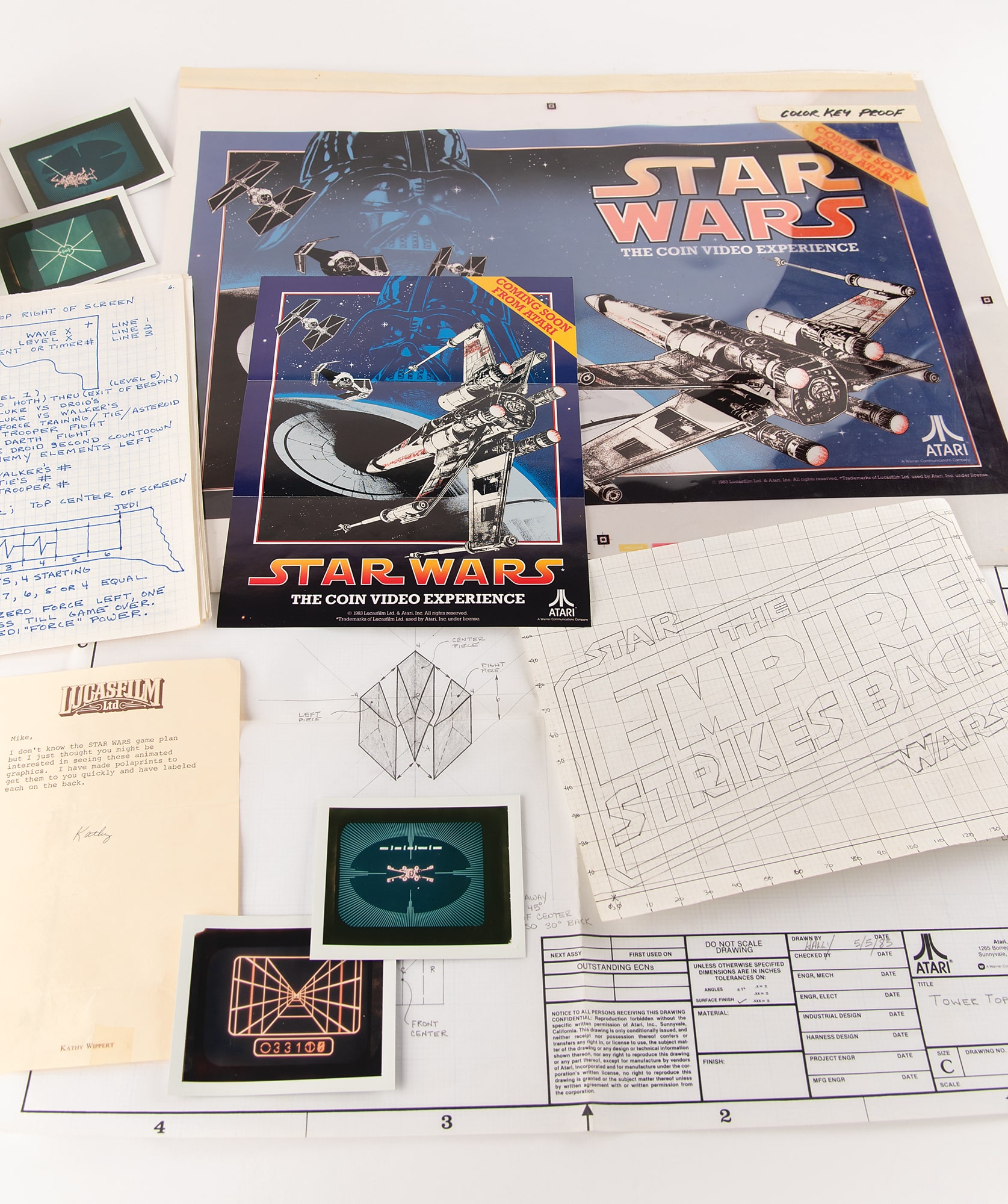
According to The Strong National Museum of Play’s documentation work on Atari archives, the game began life as Warp Speed, a 3D space project that had been in production since 1980 and was struggling. In 1982, Atari secured the Star Wars arcade license from Lucasfilm and decided to convert the prototype into a Star Wars game. Over the following year, the team reshaped that troubled tech into what became the finished machine. In other words, one of the most beloved Star Wars arcade games ever made partly grew out of a project that needed saving. There is something very game-development about that.
The hardware story is just as good. Mike Hally said he saw experimental “warp speed” 3D vector hardware inside Atari and immediately thought it would be perfect for Star Wars. He pushed for the project, got approved to lead it, and zeroed in on the Death Star battle because it was such a natural fit for arcade play. That explains a lot about why the final game feels so focused: it was not built by people randomly slapping a movie skin on generic shooting. It was built by people who knew exactly which piece of Star Wars they wanted to bottle.
There is another lovely detail here too: the controller had roots in Atari’s Army Battlezone training hardware, originally designed for a Bradley Fighting Vehicle simulator. Which means that somewhere in the genealogy of this cabinet, there is a straight line from military sim hardware to a generation of kids pretending they were Luke Skywalker. Gaming history is never normal for very long.
The sound mattered more than people give it credit for
A lot of older arcade history gets told visually, but Star Wars sold itself with sound too.
The Strong’s archive write-up notes that the game used authentic sound clips from the movie, including lines like “Use the Force, Luke!” and framed that as a meaningful development for arcade games at the time. StarWars.com’s 40th-anniversary feature likewise emphasizes how directly the machine was trying to recreate the film’s climax. That combination of recognizable speech, familiar musical cues, and aggressive arcade speakers helped the game feel like more than a technical trick. It felt licensed in the right way. It felt close to the movie.
That might sound like a basic expectation now, but in 1983 it was a genuine advantage. The game was not just borrowing the Star Wars logo. It was borrowing your memory of what Star Wars felt like. The voices, the score fragments, the structure of the battle itself — all of it was there to make the player feel like they had stepped into the sequence instead of merely watching a cheap imitation from the sidelines.
It was a hit, and not just in the nostalgic sense
It is easy to talk about The Arcade Game like a beloved relic and forget that it was a serious commercial success too.
Wikipedia’s reception summary, reflecting period trade sources, notes that Star Wars was Atari’s top-selling arcade release of 1983, with 12,695 cabinets produced. It also topped Play Meter’s U.S. street-location chart in October 1983, while Game Machine listed it as the most successful upright/cockpit arcade unit of the month in Japan on November 1, 1983. That is not niche affection. That is the machine hitting hard in its own moment.
And the critical reputation held up too. Later retrospective rankings were kind to it. In 1996, Next Generation praised its vector graphics, controls, speakers, and voices, and even suggested it might be “probably the best licensed game ever.” In 1999, the same magazine put it at number 24 in its “Top 50 Games of All Time,” arguing that the control and vector graphics still made it fun. That is a strong legacy for a machine built around a single movie sequence and an arcade economy that expected you to fail often and pay cheerfully.
That kind of long tail matters, especially if we are trying to show retro sites that SWTOR Strategies can do more than modern Star Wars nostalgia. This is not just “old game, neat cabinet.” This is one of the early examples of a licensed game becoming genuinely canonical in the wider conversation about arcade greatness.
Why it still lands now
A lot of old licensed games feel historically interesting and actually playing them is the punishment.
The Arcade Game avoids that trap better than most.
Part of that is the clean structure. Part of it is the vector look, which has aged into style instead of decaying into awkward realism. Part of it is the controls, which still communicate the fantasy immediately. But a big part of it is simply that the game understands pace. It knows when to let you breathe and when to make you panic. It knows how to move from open dogfight to surface attack to trench tension. It knows when to cash out with the explosion. That rhythm is still satisfying.
It also helps that the game has almost no dead weight on it. There is no filler campaign, no inventory management, no side quest where somebody sends you to fetch coolant while the Empire politely waits. It is all killer, no clutter. Arcade design had to be brutal that way. Every second had to justify itself. On a good day, that kind of discipline ages beautifully. Here, it mostly does.
The real legacy is bigger than one machine
The game’s long shadow is easy to miss if you only think in direct sequels.
Yes, there was an Empire Strikes Back arcade conversion kit in 1985, and yes, Rogue Squadron III: Rebel Strike later included emulated versions of Atari’s Star Wars arcade titles as unlockables. But the more important legacy is conceptual. Atari’s cabinet helped define one of the most durable Star Wars game fantasies there is: put the player directly into the famous vehicle sequence and let the fantasy do the rest. You can feel that instinct years later in everything from Rogue Squadron to Battle for Naboo and beyond.
That is why this article also works as a bridge back from Battle for Naboo. Factor 5’s game is technically far more advanced, obviously, but the basic pleasure is not that different. Get in the craft. Shoot the bad things. Live the scene. Feel like the movie is happening to you instead of in front of you. Atari got there first, and it got there with glowing lines and a lot of confidence.
The cabinet that taught Star Wars games how to dream
There are more ambitious Star Wars games than The Arcade Game. More expansive ones. More prestigious ones. More complicated ones.
But there are not many more important.
This is one of the games that proved Star Wars could work in arcades not just as branding, but as experience. It took the final act of A New Hope, stripped it down to its most exciting moving parts, and turned it into a cabinet people still talk about four decades later. It was a hit in 1983. It remained respected in retrospectives. And it still feels like a clean, elegant piece of design now.
Before Star Wars games sprawled, they had to learn how to grip you.
This one did it with a yoke, a trench run, and just enough panic to make you believe.
FAQ
What is Star Wars: The Arcade Game?
It is Atari’s 1983 Star Wars arcade game, a first-person rail shooter built around the Death Star battle from A New Hope.
Who made Star Wars: The Arcade Game?
The arcade game was developed and published by Atari, with Mike Hally serving as designer/project leader.
What makes the game special?
Its 3D color vector graphics, yoke controller, film audio, and three-part Death Star assault structure made it one of the most immersive licensed arcade games of its era.
Was Star Wars: The Arcade Game successful?
Yes. It was Atari’s top-selling arcade release of 1983, with 12,695 cabinets produced, and it performed strongly in both the U.S. and Japan.
How was the game developed?
It grew out of an earlier Atari project called Warp Speed, which was reworked into a Star Wars game after Atari licensed the property from Lucasfilm in 1982.
Why is it still worth revisiting?
Because it remains one of the clearest, smartest examples of how to turn a famous movie moment into great arcade design without overcomplicating the fantasy.
Author

Related Posts

Monopoly: Star Wars Heroes vs. Villains PC Specs Revealed — And Your Rig Can Probably Handle It-
Star Wars Battlefront II Just Got New Content in 2026, Because the Community Refuses to Let It Die 
George Lucas’ Museum Reveals Its First Exhibitions — And Star Wars Is Only Part of the Story
Hasbro’s Star Wars Fanstream Went Heavy on Gaming, Clones, and Deep-Cut Chaos