
When people talk about Star Wars Galaxies, they usually start with the obvious landmarks: the sandbox systems, the player cities, the housing, the professions, the social chaos, and the long shadow the game still casts over Star Wars MMO history. All of that matters. But one of the more interesting angles is how closely Galaxies seems to line up with the way George Lucas thought about technology, online interaction, and participatory storytelling. This was not just a Star Wars game where players ran missions. It was one of the earliest serious attempts to let people actually live inside the galaxy, which is a big reason it still deserves a prominent place in our complete Star Wars games hub.
Lucas was already thinking beyond passive entertainment
One reason Galaxies feels so relevant in hindsight is that George Lucas had been talking for years about technology, media, and the future of storytelling. Collections like George Lucas: Interviews make it clear he did not think of games as some disposable side business. More broadly, books like Rogue Leaders: The Story of LucasArts also reinforce how central games had become to LucasArts and the wider Lucas ecosystem by the 2000s. That matters because it places Galaxies inside a bigger Lucas worldview rather than treating it like a random licensed detour.
That is also why it makes sense to include the archived Roger Ebert interview via the Wayback Machine. Even if readers mostly know Lucas as a filmmaker, the broader record around him points to someone who consistently cared about the future of digital tools and interactive media. In that light, Galaxies does not feel like a weird side project at all. It feels like a natural extension of the same instinct that pushed Lucasfilm toward effects innovation, digital workflows, and game development in the first place. That last point is an inference, but it is a grounded one based on the broader source trail around Lucas and LucasArts.
Galaxies was built around living in Star Wars, not just shooting through it
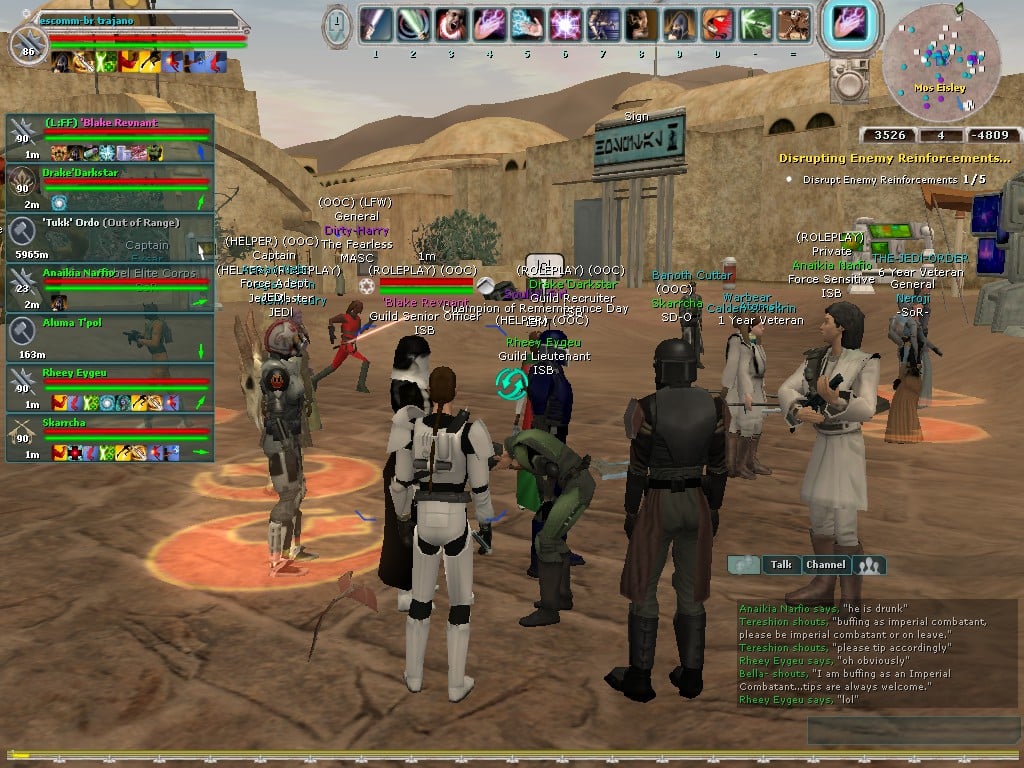
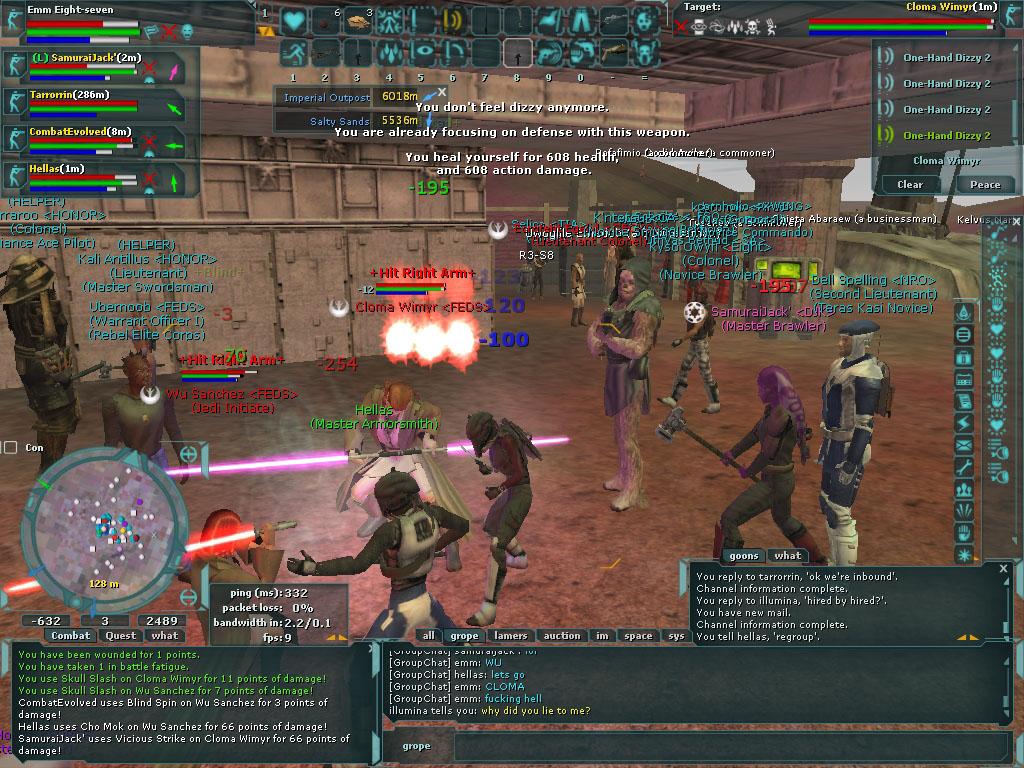
When Star Wars Galaxies launched in June 2003, Wired described it as one of the year’s biggest games and noted its three-year development cycle and reported $20 million budget. More importantly, the game was structured as an actual online world. Players could choose from multiple races and professions, including roles like marksman, brawler, entertainer, and medic, which immediately separated it from a much narrower action-game fantasy. This was not “be the hero from the movie.” It was “decide what kind of life you want in Star Wars.”
That design philosophy had been visible earlier as well. In coverage before and around launch, the game was already being framed as something that allowed social activities, alternate personas, and much more than combat. That is the real reason Galaxies still sticks in memory. Plenty of Star Wars games let people fight in the galaxy. Far fewer let them build an identity inside it.
Even the console plan shows how ambitious LucasArts thought this could be
At E3 2002, LucasArts announced plans to bring Galaxies to PlayStation 2 and Xbox, before ultimately focusing the project on PC instead. That abandoned branch is worth remembering because it shows how seriously LucasArts viewed the game. Galaxies was not being treated like a niche experiment for MMO obsessives. It was being positioned as a major Star Wars platform with very large ambitions.
In the end, staying on PC probably helped preserve what made the game special. A sandbox this messy, social, and systems-heavy was always going to fit better on a platform built for long sessions and complex interfaces. But the console announcement still says something useful about the scale of the original vision: LucasArts saw Galaxies as a pillar project, not a curiosity.
George Lucas was not designing every system, but he was not absent either
This is the part that tends to get flattened into myth. The lazy version says George Lucas had nothing to do with Galaxies. The opposite lazy version says he was deeply hands-on with every detail. The more interesting truth seems to sit somewhere in between.
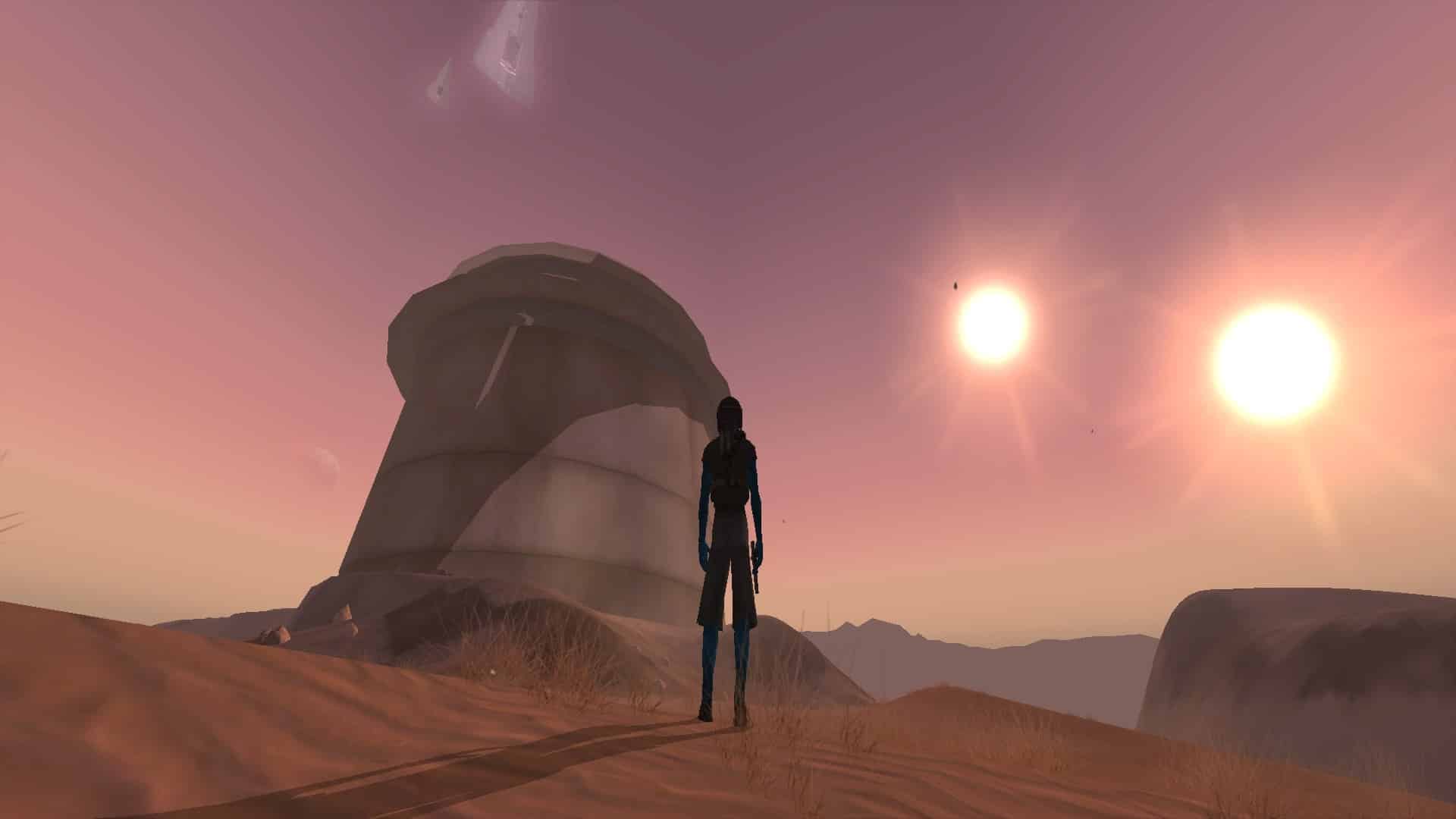
The strongest modern source here is Kotaku’s Rich Vogel interview, where Vogel says Lucas reviewed places in Galaxies when the game showed players areas they had never seen in Star Wars before, partly to make sure those locations did not conflict with the prequels then in production. Vogel also describes the game as unusually ambitious for its time and unusually free in gameplay terms. That paints a picture of real oversight where it mattered, without turning Lucas into the day-to-day designer of an MMO.
That is exactly where your archive links make sense in the article. For development-era background, readers can naturally be pointed toward the archived RPGPlanet developer chat with Haden Blackman and the old WarCry piece on Galaxies. I would not lean on either of those as the main modern proof point, but they are excellent companion links because they help show how closely the team had to think about lore-sensitive choices and Lucasfilm approval structures.
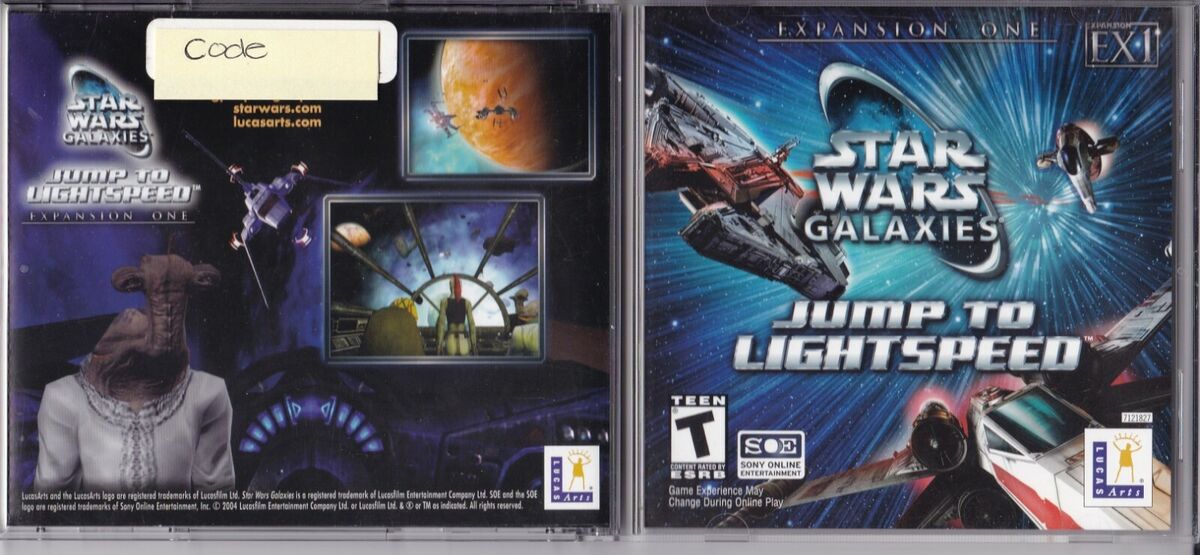
Jump to Lightspeed is where the fantasy got even more Lucas-y
If the base game let players build a life on the ground, Jump to Lightspeed pushed the fantasy much further. GameSpot’s 2004 coverage notes that the expansion let players own and operate starships, while later hands-on reporting emphasized how much broader the game became once spaceflight, pilot progression, and more ship-based systems were layered in. This was no longer just about existing in a Star Wars town. It was about owning a piece of the galaxy and moving through it on your own terms.
That is one reason Galaxies still feels oddly modern. Plenty of contemporary games are still chasing that fantasy of not just piloting a ship, but inhabiting one, customizing one, and treating it as a personal space rather than a menu. Galaxies was already swinging at that in the mid-2000s.
Jett Lucas may be one of the most quietly revealing details
One of the more surprising details in Vogel’s Kotaku interview is that George Lucas’ son Jett would come in, play the game, and give the team feedback, and that they listened to it. That might sound like a throwaway anecdote, but it is actually pretty revealing. It suggests Galaxies was not just being filtered through executives and lore approvals. It was also being filtered through someone much closer to the kind of player the game wanted to reach: a younger Star Wars fan who actually cared about games.
That detail helps explain why Galaxies never felt like a totally sterile corporate MMO, even when it had to respect franchise limits. There was room in the project for actual enthusiasm and for the idea that Star Wars players might want more than missions and combat loops. They might want homes, rituals, ships, communities, and identities. In that sense, Galaxies was not just technically ambitious. It was emotionally ambitious too.
Why the game still matters
What makes Star Wars Galaxies important is not just that it was innovative in 2003. It is that it sat at a rare intersection: LucasArts ambition, George Lucas’ long-standing interest in technology, a Lucasfilm approval structure that still let developers push outward, and an MMO design philosophy built around identity, community, and inhabiting a world rather than simply consuming a plot. That combination is why the game’s legacy survived shutdown, redesigns, and the usual erosion of MMO memory.
For all its flaws, Galaxies still feels like one of the purest attempts to answer a very George Lucas question: what happens when Star Wars stops being something you watch and starts being somewhere you live? That is why people still talk about it, why fan servers still matter, and why it remains one of the franchise’s most important gaming experiments.
Stay connected with the galaxy’s latest updates!
Follow us on X, Facebook, Instagram, bsky or Pinterest for exclusive content, mod guides, Star Wars gaming news, and more. Your support helps keep the Holonet alive—one click at a time
Author

Related Posts

The Mandalorian Event Has Returned to LEGO Star Wars: Castaways
LEGO Star Wars: The Skywalker Saga Released 4 Years Ago Today
The Habit You Don’t Notice During Live Matches
What Carrie Fisher Revealed About Her Affair With Harrison Ford in The Princess Diarist


Star Wars Jedi: Fallen Order Manga Vol. 2 Drops Next Month
Disneyland’s Galaxy’s Edge Is Finally Letting More of Star Wars In-
Star Wars: X-Wing vs. TIE Fighter (1997): The Multiplayer Space Sim That Changed the Series -
13 Years Later, the Shutdown of LucasArts Still Feels Like a Brutal Turning Point for Star Wars Games