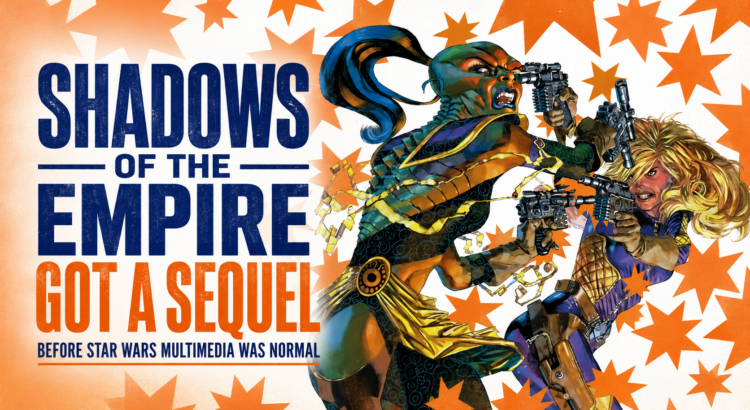
On June 17, 1998, Star Wars: Shadows of the Empire – Evolution #5 arrived, bringing Guri’s follow-up story to a close.
That sounds like a small comic-book anniversary.
It is not.
Because Shadows of the Empire was never just one Star Wars story. It was a full multimedia experiment before every franchise on Earth decided it needed a roadmap, a tie-in novel, three streaming shows, six limited series, and a collectible popcorn bucket shaped like emotional damage.
In the mid-1990s, Shadows of the Empire did something wild: it tried to create the feeling of a major Star Wars movie event without actually making a movie.
And somehow, it worked.
The Star Wars Movie That Wasn’t a Movie
Shadows of the Empire lived between The Empire Strikes Back and Return of the Jedi, filling the gap while Han Solo was frozen, Luke was recovering, Leia was planning, and the galaxy was still very much on fire.
But the format was the real trick.
There was a novel. There were comics. There were toys. There was a soundtrack. There was the famous Nintendo 64 game. There was Dash Rendar, Prince Xizor, Black Sun, the Outrider, and a whole chunk of Star Wars mythology that felt strangely official, even without a theatrical release.
For a generation of fans, this was not side content.
This was the event.
You did not just read Shadows of the Empire. You played it, collected it, listened to it, and argued about whether Dash Rendar was cool or just Han Solo with the serial numbers filed off.
Both things can be true.
Evolution Gave Guri the Aftermath
That is what makes Evolution interesting.
Instead of simply repeating the original Shadows formula, the 1998 follow-up focused on Guri, Xizor’s deadly Human Replica Droid, as she tried to escape the shadow of Black Sun and the programming that made her dangerous.
That is a very Star Wars idea.
A weapon trying to become a person. A villain’s tool trying to choose her own path. A leftover piece of a massive multimedia event getting a second act.
In a franchise obsessed with destiny, redemption, and identity, Guri quietly fit right in.
Star Wars Was Doing Transmedia Before It Became a Buzzword
Today, “transmedia storytelling” sounds like something a marketing department says while pointing at a PowerPoint slide.
Shadows of the Empire did it when the internet was barely ready for fan sites and most players were still trying to beat Hoth on the N64 without throwing a controller into orbit.
That is why the project still matters.
It showed that Star Wars could be more than films. It could be a playable story, a comic story, a novel story, a toy shelf, a soundtrack, and a shared fan memory all at once.
That idea sits at the heart of Star Wars gaming history, which we continue tracking in our Complete List of All Star Wars Games Ever Made.
The Shadow Still Matters
Shadows of the Empire – Evolution closing in 1998 was not the end of Star Wars multimedia storytelling.
It was proof that the experiment had legs.
Long before modern Star Wars treated shows, books, comics, animation, and games as pieces of one giant conversation, Shadows of the Empire had already tested the model.
No movie.
Still an event.
That is why this strange Legends corner still feels important.
Because before Star Wars had a modern multimedia machine, it had Dash Rendar on the N64, Guri in the comics, Prince Xizor being creepy, and a whole generation learning that the galaxy did not need a cinema screen to feel huge.
Author

Related Posts

Captain Carson Teva Has Joined Galaxy of Heroes, and the New Republic Finally Has Its Space Cop
Super Star Wars: The Empire Strikes Back (1993): The Sequel That Made the SNES Trilogy Even Meaner
Before YouTube Guides, Star Wars: Episode I Racer Needed a Book
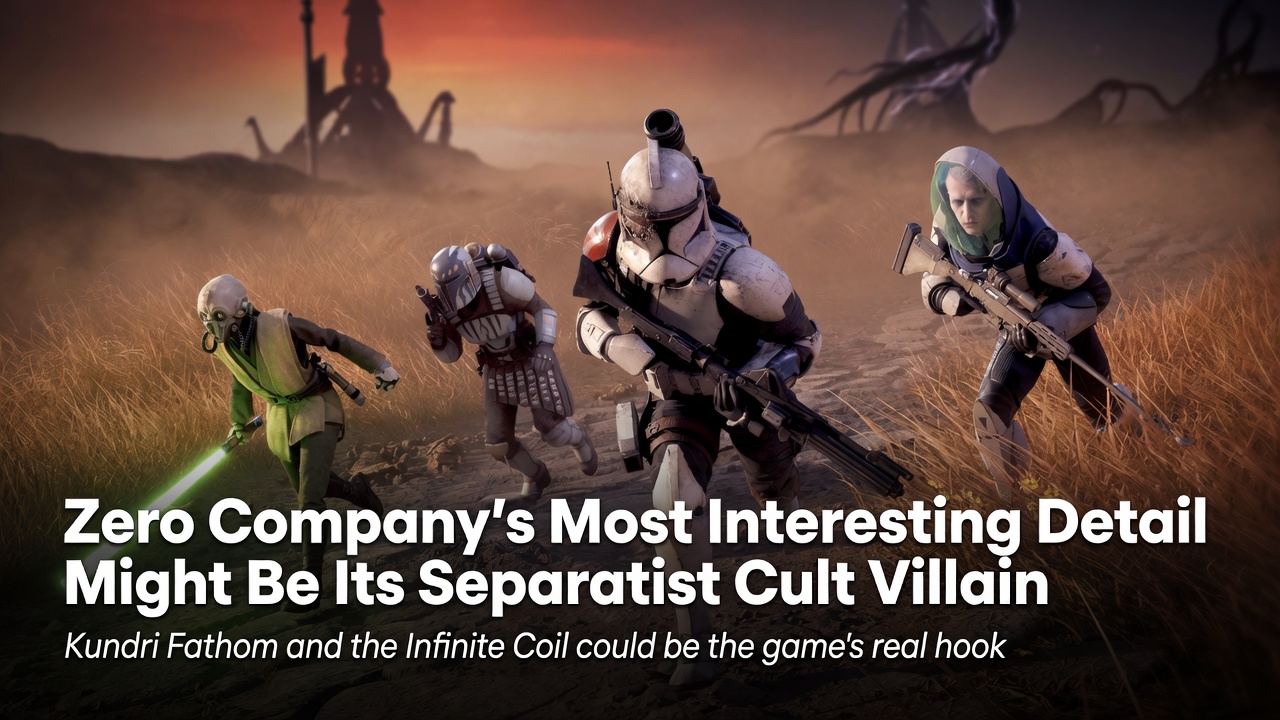
Star Wars Zero Company’s Most Interesting Detail Might Be Its Separatist Cult Villain
The Day The Clone Wars Stopped Being “Just a Cartoon”
Star Wars: Galaxy of Heroes Was Announced 11 Years Ago, and Somehow It Became the Mobile Game That Wouldn’t Die
The Mandalorian and Grogu Just Crossed $315 Million, and Star Wars Finally Escaped Solo’s Shadow
Ahsoka Season 2 Might Finally Give Ezra Bridger the Spotlight He Deserves