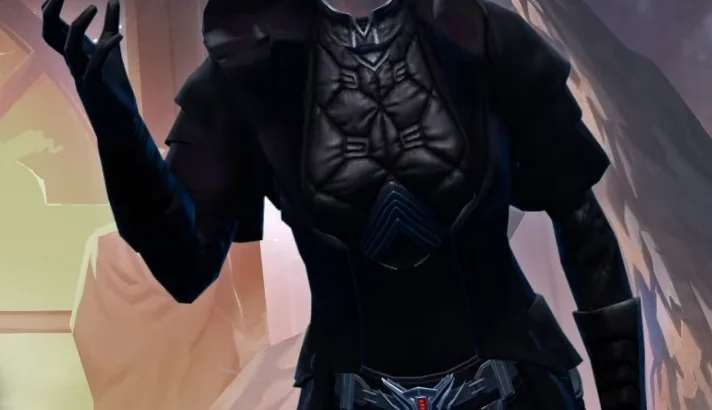
For years, Star Wars: The Old Republic has been at its best when it remembers that Sith lore should feel dangerous, ancient, and slightly like something nobody sane should have opened.
Enter Darth Nul.
Not just another red-lightsaber problem. Not just another name carved into some old ruin because the Sith apparently never met a wall they did not want to monologue on.
Darth Nul has become one of SWTOR’s most interesting mysteries because she sits at the center of several things the game does unusually well: forgotten Sith history, dangerous relics, personal obsession, and the uncomfortable idea that some secrets should probably stay dead.
Darth Nul Is More Than a Holocron
The recent Legacy Reborn storyline puts Darth Nul’s holocron right at the heart of the chaos.
Darth Jadus has stolen it. Heta Kol and the Hidden Chain have reconstructed Darth Nul’s ultimate machine on Khar Shian. Darth Malgus and Shae Vizla are also heading there, each with their own goals.
That is not background lore anymore.
That is the galaxy’s worst group project.
The holocron matters because it is not just a Sith memory stick with dramatic lighting. It represents Nul’s masterworks involving the Force, and that immediately makes her feel bigger than a standard Old Republic villain. She is not present in the usual way, but her shadow is everywhere.
That is often the best kind of Sith.
The Enigma Made Her Feel Real
Before Legacy Reborn, Master’s Enigma sent players toward Darth Nul’s research vessel, The Enigma, while the conflict around her holocron and Malgus’ escape kept escalating.
That was an important shift.
A mysterious Sith can stay abstract for only so long before becoming background noise. A ship, a machine, a holocron, old experiments, and powerful enemies all chasing the same truth? That turns mystery into momentum.
SWTOR has always understood the appeal of Sith archaeology. The idea that the past is not gone, it is armed, angry, and waiting for someone foolish enough to press the glowing button.
Darth Nul fits that perfectly.
Jadus, Malgus, and the Problem With Sith Truth
What makes the Nul storyline work is the company she keeps.
Darth Jadus is not a blunt instrument. Malgus is never just chasing power for the sake of noise. Sa’har, Shae Vizla, Heta Kol, and the Hidden Chain all bring different emotional and political stakes into the conflict.
That makes Nul feel less like a boss fight and more like a dangerous inheritance.
Everyone wants something from her legacy. Power. Freedom. Control. Answers. Revenge. Maybe even truth.
And in Star Wars, “truth” in the hands of Sith rarely means healing.
It usually means someone is about to build a machine that makes the galaxy significantly worse.
SWTOR Still Owns This Kind of Star Wars
This is exactly why SWTOR still matters in the wider Star Wars gaming landscape.
Modern Star Wars games often chase clean cinematic hero stories, which can be great. But SWTOR has room for messy Sith philosophy, ancient experiments, Mandalorian politics, Force machines, haunted legacies, and characters who make terrible decisions with full confidence.
That long playable history is part of what we track in our Complete List of All Star Wars Games Ever Made, and SWTOR still stands out because it has the time and space to dig into lore that would never fit inside a two-hour movie.
Darth Nul is the perfect example.
She is not just a mystery anymore.
She is becoming a myth, and SWTOR is exactly the kind of strange, Sith-haunted corner of Star Wars where that can still happen.
Author

Related Posts

Star Wars Galactic Racer Might Be Weirder Than Simple Podracing Nostalgia-
SWTOR PvP Season 10 Is Asking Players to Grind for Honor Again -
SWTOR’s Next Galactic Seasons Week Is a Pretty Good Excuse to Log In -
Star Wars Zero Company’s Scariest Feature Is Not Combat. It’s Who Can Die

Battlefront II’s Shattered Galaxy Delay Might Be Good News for Classic Battlefront Fans
Brendan Wayne Has the Perfect Answer to Toxic Star Wars Fandom
Star Wars Zero Company’s Pre-Order Page Shows What EA Is Really Selling
Battlefront II’s Han Solo Update Made Kessel Playable, and It Still Feels Like a Missed Blueprint