There was a time when playing a Star Wars game did not begin with a tutorial popup, a glowing objective marker, and a cheerful reminder that your spacebar can make things happen.
Sometimes it began with a manual.
A real one.
The kind you actually had to read.
Star Wars: TIE Fighter launched in 1994, and it was not built for players who wanted to casually drift through the galaxy while the game quietly solved itself in the background. It was a space combat sim from LucasArts, and it expected you to learn how to fly, manage shields, cycle targets, redirect power, understand mission briefings, and survive long enough to make the Empire proud.
Or at least slightly less disappointed.
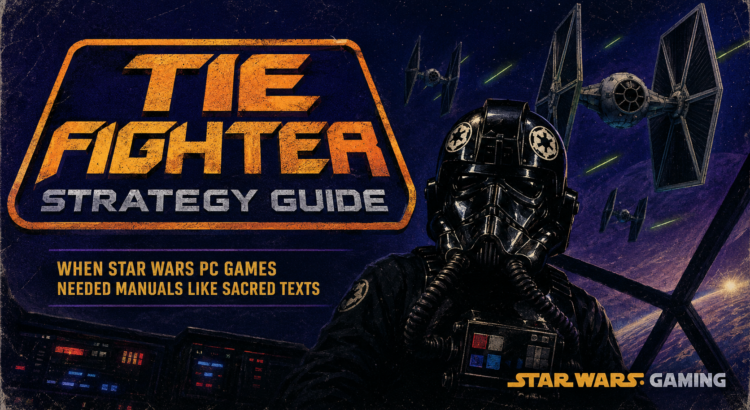
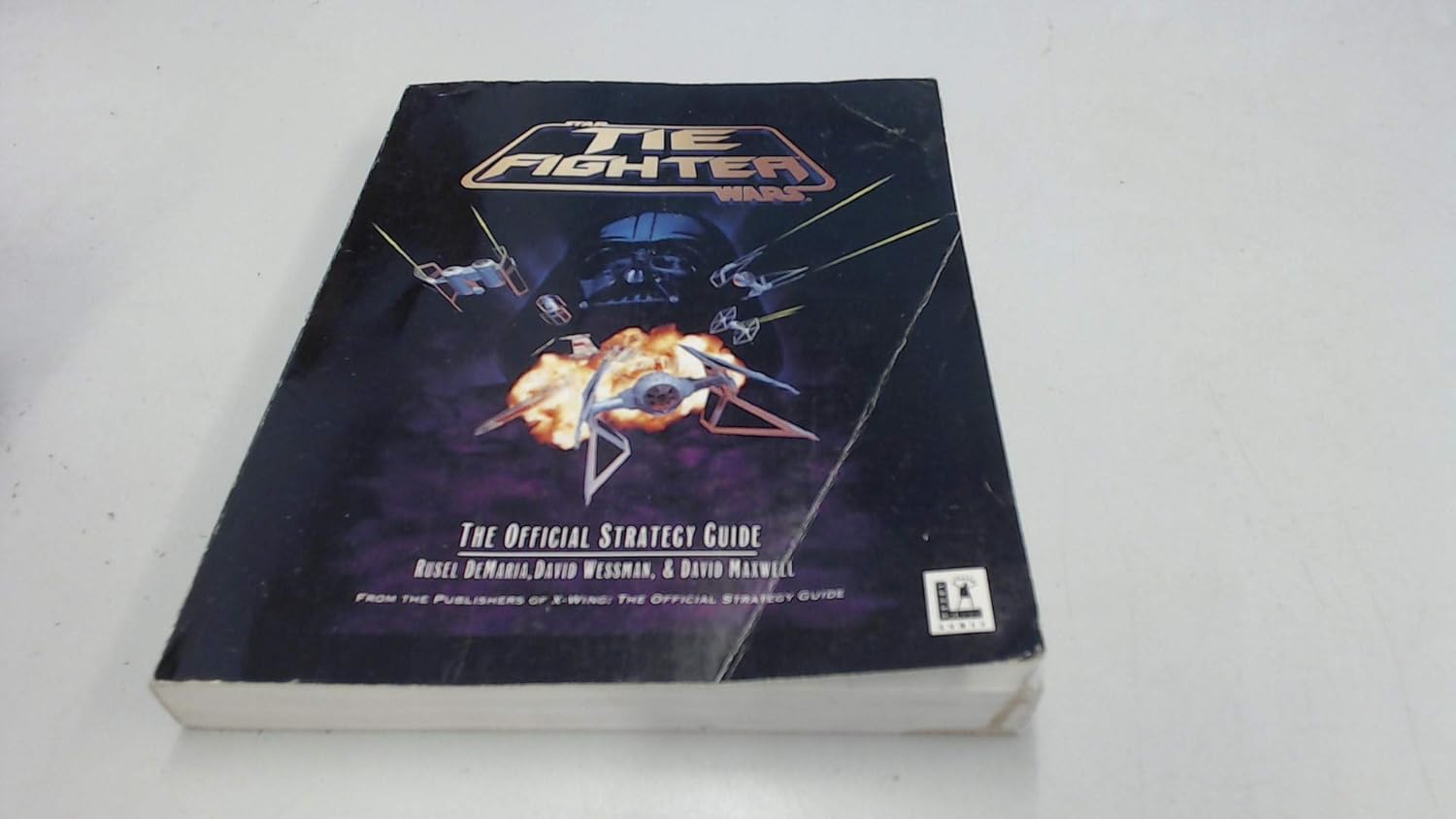
That is why TIE Fighter: The Official Strategy Guide still feels like a perfect artifact from the golden age of Star Wars PC gaming. Published by Prima in July 1994 and written by Rusel DeMaria, David Wessman, and David Maxwell, the guide existed because games like this had teeth.
And yes, collectors can still hunt it down today. If you want that old-school Imperial homework on your shelf, TIE Fighter: The Official Strategy Guide can still be found on Amazon. Some collectors can also still find the original TIE Fighter CD-ROM releases here, if you want the full “please insert disc and respect your elders” experience.
This Was Not Background Reading
Modern guides often feel like optimization tools.
Best build. Fastest route. Ten things you missed. How to farm something without losing your will to live.
The TIE Fighter strategy guide came from a different world.
This was the era when a game manual was part instruction booklet, part lore document, part technical reference, and part psychological warning. Ignore it if you wanted. The Rebel Alliance would be happy to explain the consequences at high speed.
TIE Fighter was a game about flying Imperial missions with actual systems to manage. You were not just pointing at red shapes and pressing fire. You had to understand your craft, your wingmen, your objectives, your bonus goals, and the difference between heroic confidence and being vaporized because you forgot what a missile boat can do.
For a full breakdown of the game itself, our Star Wars: TIE Fighter 1994 archive entry covers why LucasArts’ Imperial space sim still sits so high in Star Wars gaming history.
The official Star Wars support page still lists TIE Fighter as a 1994 release and describes the premise simply: “Serve the Emperor, join the Imperial Navy, and save the galaxy.”
Which is a very Imperial way of saying: please ignore all civilian casualties and focus on mission success.
LucasArts Made You Pay Attention
That is what made this period of Star Wars PC gaming so special.
LucasArts trusted players to work a little.
Games like X-Wing and TIE Fighter were not trying to be impossible, but they respected the fantasy enough to make you earn it. Flying a starfighter was not treated like driving a shopping cart with lasers. You had instruments, mission goals, energy systems, target priorities, and enough keyboard commands to make your desk look like a Rebel spy cell.
The strategy guide fit naturally into that design.
It was not just there to spoil missions. It was there to help players understand the language of the game. How to approach a battle. What threats mattered first. When to protect a transport. When to disable a ship. When to stop chasing kills because the actual objective was quietly failing somewhere off-screen.
Cruel? Maybe.
Memorable? Absolutely.
The Empire Got the Best Campaign
The other reason TIE Fighter still stands out is that it did something Star Wars games rarely did at the time.
It made the Empire playable without turning the whole thing into a joke.
You were not just “the bad guy” for novelty value. You were an Imperial pilot inside a campaign that framed order, duty, loyalty, and ambition as the center of the story. It was propaganda, hierarchy, medals, secret orders, and mission success wrapped in one of the best space combat games LucasArts ever made.
That perspective gave the game an identity that still feels sharp decades later.
Our complete list of every Star Wars game ever made is full of experiments across shooters, RPGs, strategy games, racers, arcade titles, and MMOs, but TIE Fighter remains one of the clearest examples of Star Wars games taking a specific fantasy seriously.
Not the Jedi fantasy.
Not the smuggler fantasy.
The Imperial cockpit fantasy.
And it worked.
Guides Were Part of the Magic
There is something almost romantic now about a big PC game needing manuals, guides, reference cards, and patience.
Not because old games were automatically better. Plenty of them were confusing little goblins. But because the best ones made the material around the game feel like part of the world.
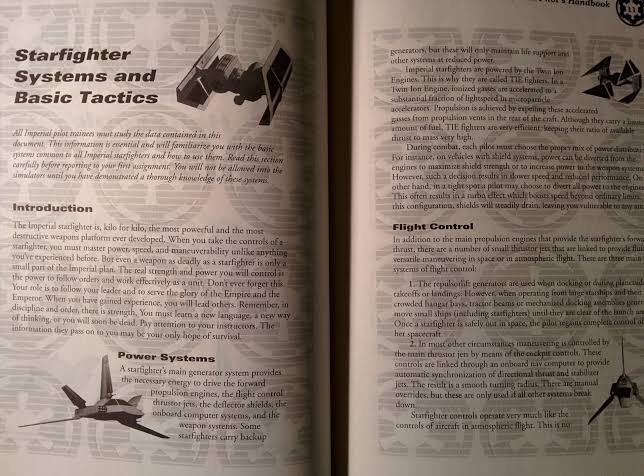
A strategy guide for TIE Fighter was not just a cheat sheet. It was an extension of the cockpit. A field manual. A way to study the galaxy before throwing yourself into another mission where three things went wrong before the briefing had even finished echoing in your head.
That kind of design is rare now.
Today, most games want to smooth the edges down. Remove friction. Reduce confusion. Guide the player. Reward constantly. Keep the pace moving.
TIE Fighter belonged to an era where Star Wars PC games could still say: no, read the briefing again.
And honestly, it was right.
Why TIE Fighter Still Matters
Thirty years later, TIE Fighter is still discussed as one of the great Star Wars games because it understood that fantasy is not just about iconography.
It is about systems.
The sound of lasers matters. The cockpit matters. The target display matters. The mission briefing matters. The feeling of being one pilot inside a larger military machine matters. So does the guide sitting next to the keyboard, quietly judging you for not checking the secondary objectives.
That is why the old strategy guide still feels like more than a relic.
It is a reminder of a time when Star Wars PC games asked players to meet them halfway.
And if you did, they gave you something modern tutorials still struggle to recreate:
The feeling that you had actually learned how to fly for the Empire.
Author

Related Posts

When The Clone Wars Returned From the Dead and Star Wars Fans Lost Their Minds
Star Wars: Starfighter Writer Says There Are “No Barriers to Entry,” and That Might Be Exactly What the Franchise Needs
Darth Revan Gets a New Sideshow Figure, and the Unmasked Portrait Has Fans Talking
PowerWash Simulator 2’s Star Wars Pack Is Out Now, So the Galaxy Can Finally Be Clean Again
Star Wars: Galactic Contention Relaunches This Month With Unreal Engine 5
Why Independent Media is Changing How We Track Gaming and Pop Culture Trends
D23 2026 Schedule Revealed, and Star Wars Fans Should Probably Watch the Gaps
KOTOR Remake May Finally Be Targeting 2028, Which Somehow Feels Both Close and Ridiculous