
Monopoly has always been less of a board game and more of a slow social experiment.
How long can a group of people pretend to be friendly while rent, bad dice, and suspicious trade offers gradually turn the room into the Galactic Senate?
That is why Monopoly: Star Wars Heroes vs. Villains makes more sense than it probably should. Star Wars is full of betrayals, power grabs, doomed alliances, and people dramatically overcommitting to terrible plans. Monopoly just adds property values.
Ubisoft and Behaviour Interactive have not simply reskinned the old board with Darth Vader and called it a day. This is a much bigger remix of the format: team-based play, hero and villain squads, character abilities, dice battles, Dynamic GO Events, unlockable cosmetics, and 2v2 or 3v3 competitive modes through online play or couch co-op. The official pitch is very clear that this is Monopoly with a bolder Star Wars twist, not a faithful digital recreation of the classic board game.
That is both the best thing about it and the thing most likely to annoy traditional Monopoly people.
Poor traditional Monopoly people. They were already going through enough.
This Is Not Classic Monopoly, and That Is Mostly Good
The smartest decision Heroes vs. Villains makes is refusing to treat Monopoly like sacred scripture.
The basic outline is still there. You move around a board. You claim locations. You build your influence. You make other players miserable through a mixture of planning and dice-based nonsense. So far, so Monopoly.
But the win condition and rhythm feel more aggressive than the old “bankrupt everyone until the table hates you” setup.
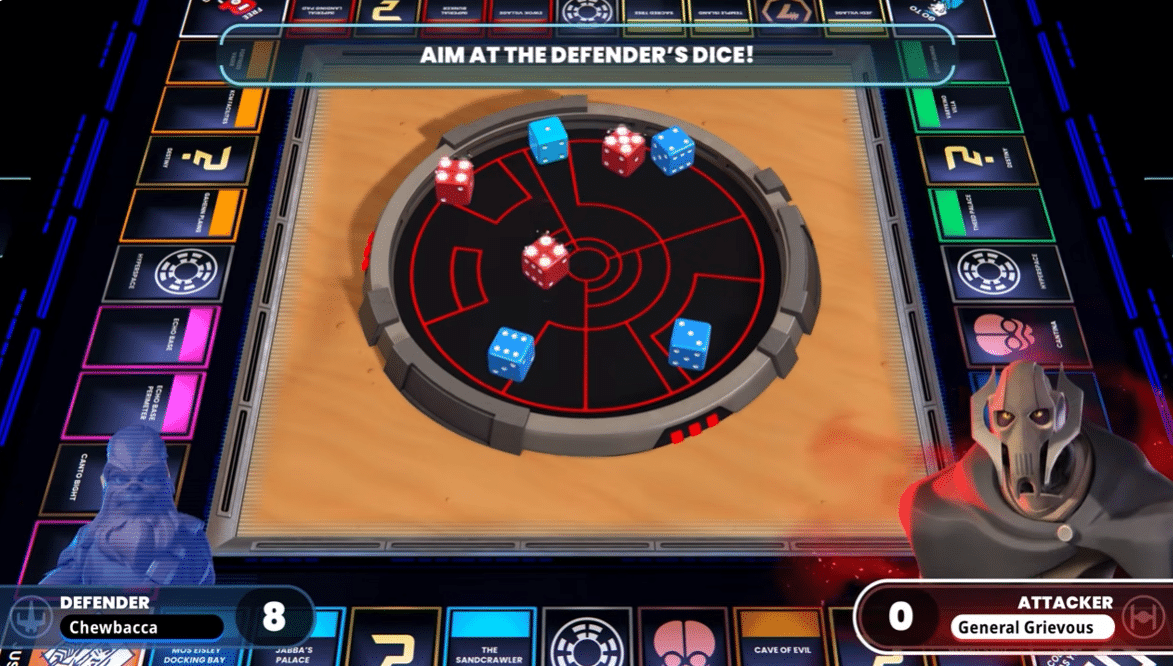
Locations matter, but the game is really about influence and momentum. Passing GO can trigger Star Wars-flavored events. Landing on occupied spaces can start dice battles. Character abilities can tilt control, movement, money, combat, and board pressure in ways that make teams feel meaningfully different.
Nintendo Everything’s review notes that this version drops traditional bankruptcy in favor of players going into debt, while the bigger mechanical shift is toward Influence Points, team challenges, combat encounters, and character synergy. It also describes team-building as one of the most rewarding parts of the game.
That is the right direction.
Classic Monopoly can become a death march. Everyone knows who is going to win an hour before the game actually ends, but social tradition demands that the losing players keep rolling dice like condemned prisoners with hotel debt.
Heroes vs. Villains moves faster and gives players more to do. It is still luck-heavy. Obviously. It is still Monopoly. But it has more buttons to press before fate steps on your throat.
The Team System Is the Actual Game
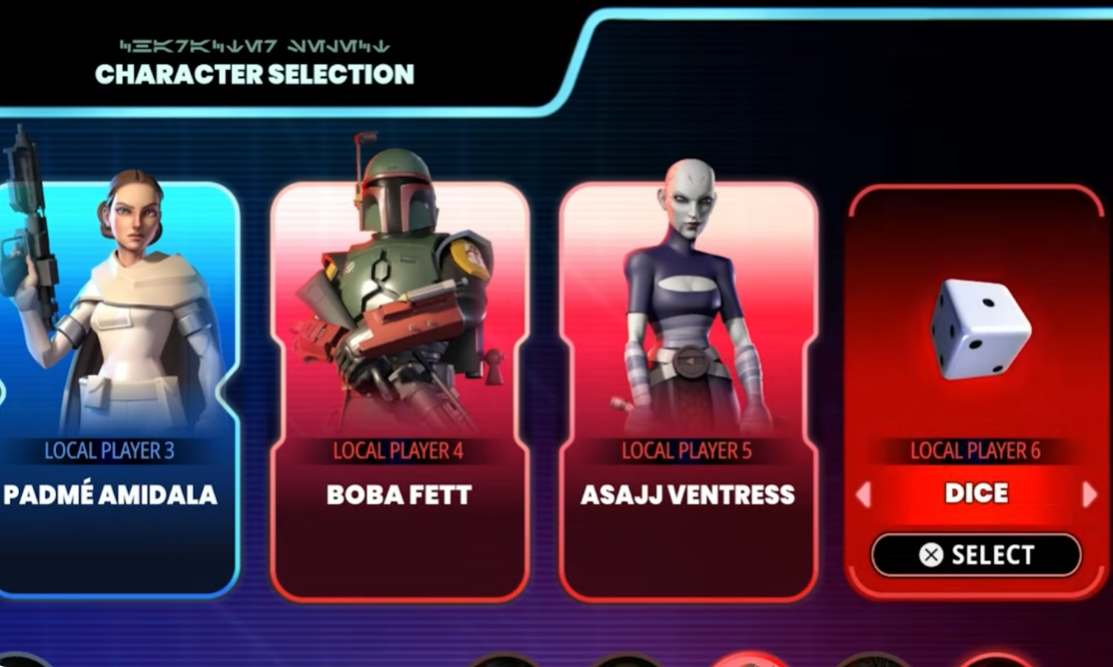
The character roster is the hook.
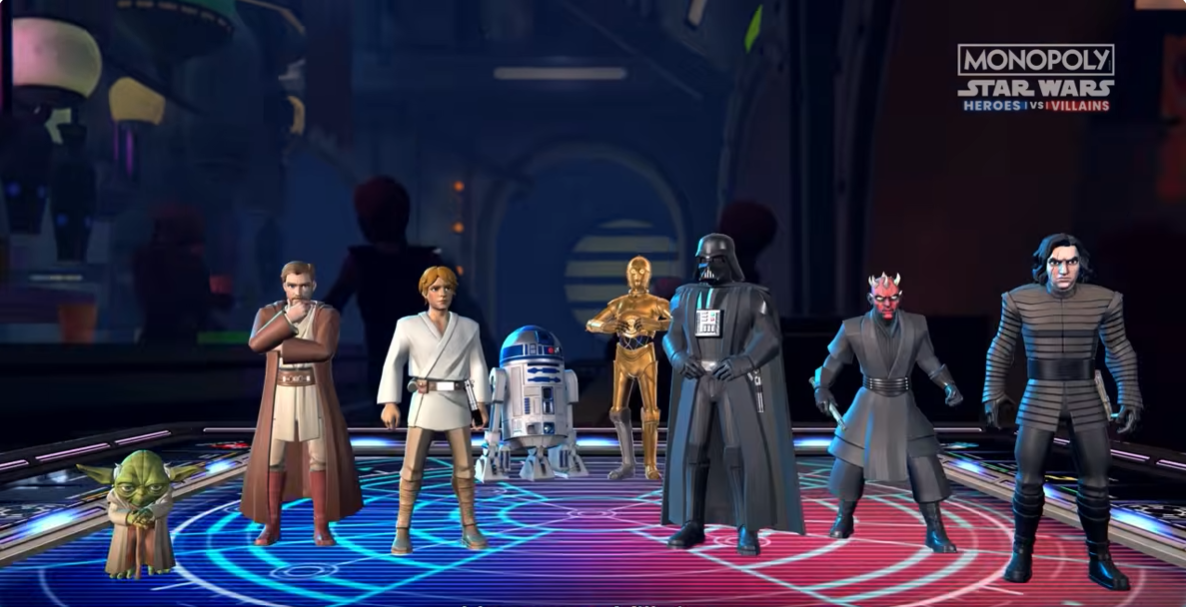
There are 28 playable Star Wars characters, split between 14 heroes and 14 villains, and each character has a special ability. The clever part is that each hero shares an ability type with a villain counterpart, which gives both sides equal tools while still letting the roster feel thematic.
That is good design for a game like this. It keeps the heroes-versus-villains framing without making one side feel like the “correct” competitive choice.
Leia and Cad Bane can steal credits when passing opponents. Yoda and Palpatine can upgrade locations twice in a turn. Mace Windu and Asajj Ventress improve combat dice for allies. Padmé and Dedra Meero reduce location costs. Han Solo and Aurra Sing can access the Cantina. Ahsoka and Darth Maul can buy extra combat dice.
That sounds like a lot because it is.
But in practice, this is where the game starts to justify itself. You are not just picking Luke because Luke is on the box. You are asking what your team actually does.
Do you want movement control? Credit generation? Battle pressure? Cheap location acquisition? Jail harassment? Pure board cruelty? The answer changes your lineup, and that gives the game a little tactical skeleton underneath all the dice chaos.
We already broke down the roster in our full Monopoly: Star Wars Heroes vs. Villains abilities guide, and that guide becomes more useful the more you play. This is not a game where every character is equally brainless. Some combinations are simply better at pushing a win condition.
Which means yes, you can absolutely lose at Star Wars Monopoly before the match even starts.
Beautiful. Horrible. Very on brand.
Battles Make Monopoly Meaner, Which Is Saying Something
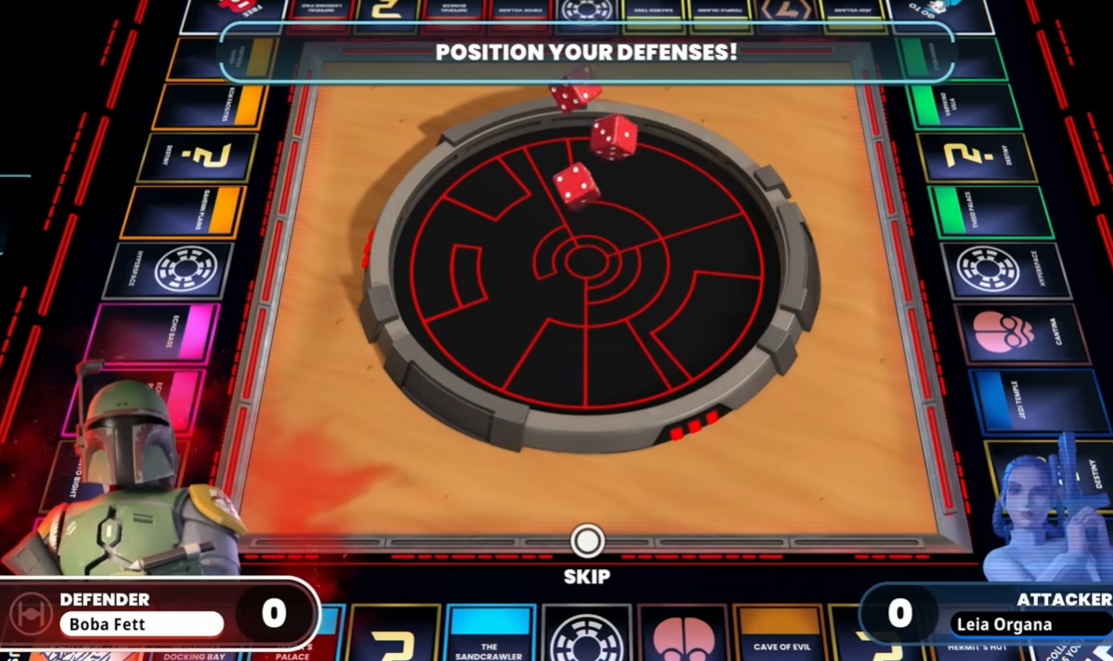
Dice battles are one of the better additions.
When hero and villain characters clash on the same space, the game can turn control of a location into a direct confrontation. It is not deep strategy in the hardcore tactics sense, but it gives Monopoly something it has always secretly wanted: a way to make personal grudges mechanical.
The battle system also gives combat-focused characters a reason to exist. If you build around extra dice, forced encounters, and battle rewards, you can play a more aggressive board. If you ignore combat completely, you may spend a lot of time watching your carefully claimed locations get mugged by someone dressed like a Sith.
Good.
Monopoly should be slightly nasty.
The problem is that the game sometimes piles randomness on top of randomness. Dice rolls decide movement. Dice decide battles. Dynamic GO Events can swing momentum. Some powers lean hard into chance. That makes the game lively, but it can also make it feel like strategy is occasionally being shoved into a locker by probability.
DayOne’s review makes a similar point, praising the Star Wars presentation, team/class systems, and local/online options, while warning that the focus on GO Events can make matches feel more lopsided when someone gets lucky with big dice movement.
That is exactly the risk here.
When Heroes vs. Villains works, it feels like chaotic tactical Monopoly.
When it doesn’t, it feels like the dice are holding a press conference about why your plans no longer matter.
The Star Wars Presentation Does a Lot of Heavy Lifting
The game looks better than it needed to.
That is not the highest bar in the galaxy, but still.
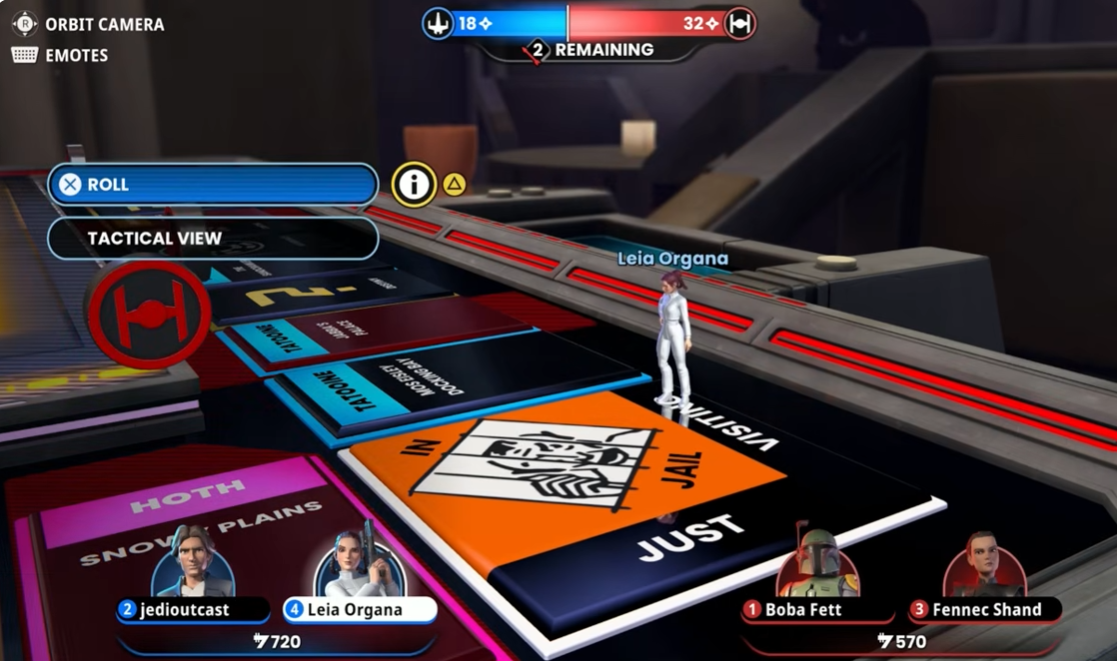
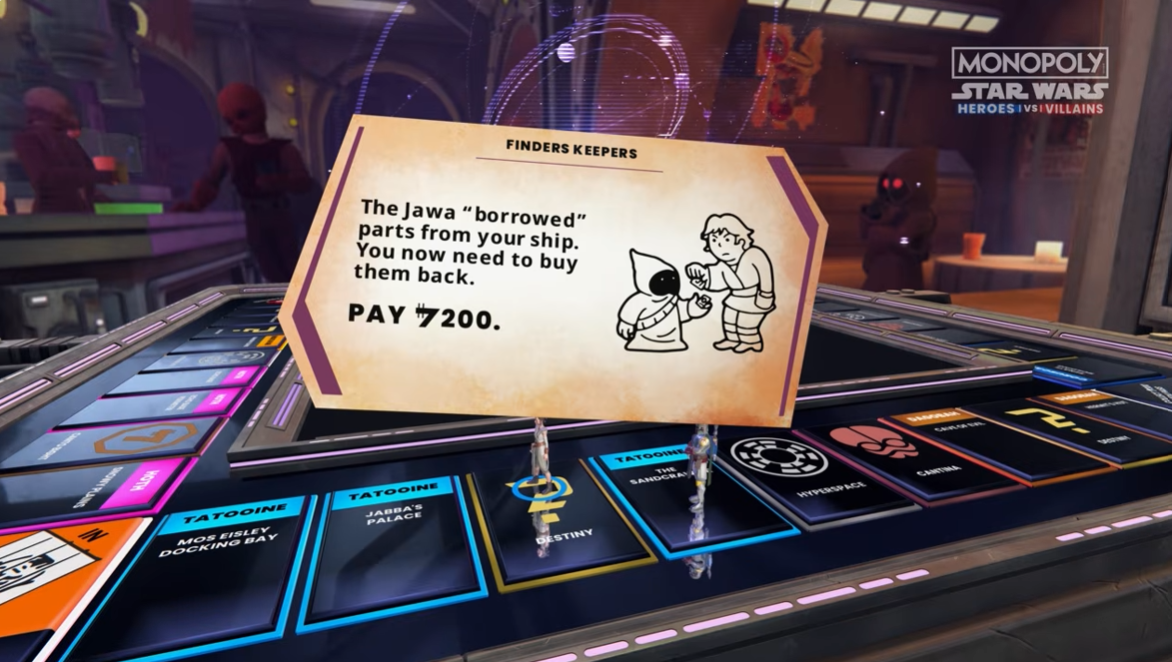
The board is dressed with Star Wars locations, holographic visuals, character moments, cinematic effects, and enough franchise texture to make it feel more like a digital Star Wars product than a themed board slapped into Unity and sent out the airlock.
Ubisoft’s gameplay trailer pushed the idea of iconic locations, cinematic moments, themed spaces, character powers, dice battles, and Dynamic GO Events, and the final game’s structure reflects that pitch.
The characters also help. Not every animation or scene lands with full blockbuster weight, and nobody should expect this to feel like a giant Star Wars adventure game. It is still a digital board game.
But it understands the assignment.
Luke, Vader, Leia, Maul, Rey, Palpatine, Ahsoka, Han, and the rest of the roster bring enough personality to make team selection fun even before the abilities kick in. The unlockable costumes help too. Cosmetic chasing is not the deepest progression system ever made, but in a game built around Star Wars icons, alternate looks matter more than they probably should.
We put together a separate Monopoly: Star Wars Heroes vs. Villains costumes guide covering the hero and villain skins, and honestly, that side of the game is a nice little collector hook. It gives players something to unlock beyond simply winning matches and becoming unbearable about it.
Best With Other Humans, As Monopoly Usually Is
This is not the kind of game that shines alone.
Yes, you can play solo. Yes, the systems still function. But the real appeal is human pettiness.
The 2v2 and 3v3 modes are where the team structure makes the most sense. Local play and online multiplayer both fit the design, and Steam lists support for single-player, online PvP, shared/split-screen PvP, online co-op, shared/split-screen co-op, cross-platform multiplayer, and Remote Play Together.
That is a strong feature list for a digital board game.
But the core truth remains: Monopoly is funnier when someone you know is making the bad decision.
A random online player sending you to jail is mildly irritating. A friend doing it while pretending it was “just optimal play” is the actual game.
This is why couch co-op feels important. Heroes vs. Villains is at its best when the room reacts. The gasp when a GO Event flips the board. The suspicious silence before someone steals credits. The dead-eyed stare after a battle ruins a location chain.
That is the good stuff.
The danger online is downtime. Waiting for several players to complete turns can get slow, and digital Monopoly still has the old problem of asking people to care during other players’ business. The Star Wars dressing helps, but it cannot fully defeat the ancient enemy known as “someone else’s turn.”
The Rough Edges Are Real
The game is not landing perfectly with everyone.
On Steam, user reviews are currently listed as Mixed, with 43% of 81 reviews positive at the time of checking. Steam also notes Denuvo DRM and a required Ubisoft account, which is exactly the kind of PC-side friction that makes people sigh before they even roll the dice.
External reviews have also been fairly mixed-positive rather than glowing. Game Critix scored it 3.5/5, calling it a faster and more unpredictable reinterpretation of Monopoly while noting that randomness and the lack of a classic mode may divide players.
That feels fair.
The game’s biggest strength is also its biggest weakness. It is not afraid to change Monopoly. Good. But if you wanted a clean digital version of traditional Monopoly with Star Wars decoration, this is not really that. It is more of a team-based party skirmish built on Monopoly bones.
The randomness will annoy some players. The GO Events can swing hard. The character abilities can create nasty loops if one team gets rolling early. The online experience depends heavily on player patience, and some players will bounce off the Ubisoft account requirement before the board has time to charm them.
Also, let’s be honest: it is still Monopoly.
There is only so much a lightsaber can do for a game about claiming property.
Verdict: A Surprisingly Good Star Wars Remix, Not a Must-Buy for Everyone
Monopoly: Star Wars Heroes vs. Villains is much better when it stops trying to be Monopoly and starts being a weird little Star Wars board battle.
The team system works. The abilities matter. The roster is fun. The Star Wars presentation is strong enough to give the whole thing personality. Dice battles and Dynamic GO Events make matches feel livelier than standard Monopoly, even if they sometimes shove balance into a trash compactor.
This is not a game for everyone.
If you hate Monopoly, this probably will not convert you completely. It may soften you. It may trick you for a few rounds. But deep down, you will still know the property goblin is hiding underneath.
If you like digital board games, local multiplayer chaos, Star Wars cosmetics, and character-based team building, there is a fun party game here. Not a galaxy-shaking release. Not a hidden masterpiece. Just a surprisingly committed remix of a very old game that had the sense to become less normal.
And honestly, that is the only reason this works.
Score: 7/10
The Force is with it.
The dice are not always so kind.
Author

Related Posts

Automating Content With Seedance 2.0
How to choose a digital product partner for web, mobile, and product design in 2026
Why Pro-Style Controllers Are Becoming the New Competitive Edge for Console and PC Players
Star Wars: Galactic Racer Editions Guide: Standard, Deluxe, or Collector’s Edition?




Star Wars Zero Company Sounds Less Like XCOM With Blasters and More Like a Squad Drama
Star Wars Zero Company Pre-Order Bonuses Guide: Is the Crystalline Astromech Pack Worth It?
The Untold History of Spider Solitaire, the Game That Quietly Outlasted Every AAA Launch of Its Era-
Star Wars: Starfighter Leak Points to Jedi Refuge, Lightsaber Duel, and a Very Different Post-Skywalker Story