
On July 10, 2012, Star Wars: The Old Republic did something every young MMO eventually has to do.
It asked people to come back.
Not dramatically. Not desperately. Not with a funeral violin playing over the character select screen. But clearly enough.
BioWare and LucasArts launched the “Come Back and Play at No Charge” campaign, giving eligible former players up to seven days of free access from July 10 to July 17 so they could check out Game Update 1.3: Allies. The official promotion pointed returning players toward the update’s biggest new systems: Group Finder, Ranked Warzones, Legacy Perks, and Adaptive Gear.
That may sound like a standard MMO promotion now.
In 2012, it said a lot.
SWTOR Was Still Young, But the MMO Pressure Was Already Real
SWTOR had only launched in late 2011, but the honeymoon period for big-budget MMOs is brutally short.
One month, everyone is calling your game the next giant thing. A few months later, players are asking where the group tools are, why server populations feel uneven, and whether the endgame has enough to keep them paying.
Classic MMO behavior, really. Hope, hype, queues, complaints, patches, and then someone on a forum writes “dead game” before breakfast.
That is why this July 2012 campaign is interesting. It was not just a free week. It was BioWare trying to show lapsed players that SWTOR was already changing in practical ways.
Game Update 1.3: Allies had gone live on June 26, 2012, bringing Group Finder, Legacy Perks, Adaptive Gear, Augment Unlocks, and Pre-Season One Team Ranked Warzones.
In other words, the pitch was not “come back because Star Wars.”
It was “come back because the game works better now.”
That distinction matters.
Group Finder Was the Real Headliner
The biggest feature was obviously Group Finder.
Today, it is easy to take automatic group tools for granted. In 2012, for SWTOR, this was a major quality-of-life moment. The tool helped players find groups for Flashpoints and Operations, choose roles, queue for specific content, and even teleport directly to the activity once the group was formed.
That was not just convenience. It was survival.
MMOs live on activity density. If players cannot find groups, they do not just skip Flashpoints. They log out. Then maybe they forget to come back. Then suddenly your shiny cinematic MMO is less of a galaxy and more of a very expensive waiting room.
Allies was trying to fix that.
It also arrived alongside server transfer efforts, which were another sign that BioWare knew the social layer needed help. For a game built around story, companions, and class campaigns, SWTOR still needed the basic MMO bloodstream to flow.
People had to be able to find each other.
Wild concept.
Ranked Warzones and Legacy Perks Were Part of the Same Message
The comeback campaign also highlighted Ranked Warzones, giving level 50 PvP teams a more competitive structure and ratings chase.
That mattered because SWTOR needed more than leveling content. The class stories were the obvious hook, but once players hit cap, the game had to prove it could support regular MMO habits: group play, PvP, gear, alts, and long-term progression.
Legacy Perks were part of that too. They expanded the Legacy system with character bonuses, XP perks, travel improvements, companion advantages, and other account-style progression options.
This was BioWare nudging players toward alts, replaying class stories, and building a broader relationship with their account instead of treating one finished storyline as the end.
For SWTOR, that was essential.
The game’s best trick was always its class structure. Jedi Knight did not feel like Imperial Agent. Sith Warrior did not feel like Smuggler. The Legacy system made that variety feel more connected.
A Free Week With a Reward Hook
The promotion also tied into free character transfers and rewards. Former players could use the free play period to take advantage of the Free Character Transfer Service, while active subscribers were offered rewards including the Gannifari pet and 25 Black Hole Commendations.
Again, very MMO.
A little free time. A little convenience. A little pet. A little endgame currency. Just enough to make someone say, “Fine, I’ll log in and see what changed.”
That is how live service games work. Not with one giant magic fix, but with dozens of small nudges trying to rebuild habit.
Why This Moment Still Matters
Looking back, the July 10 campaign is not the most glamorous date in SWTOR history.
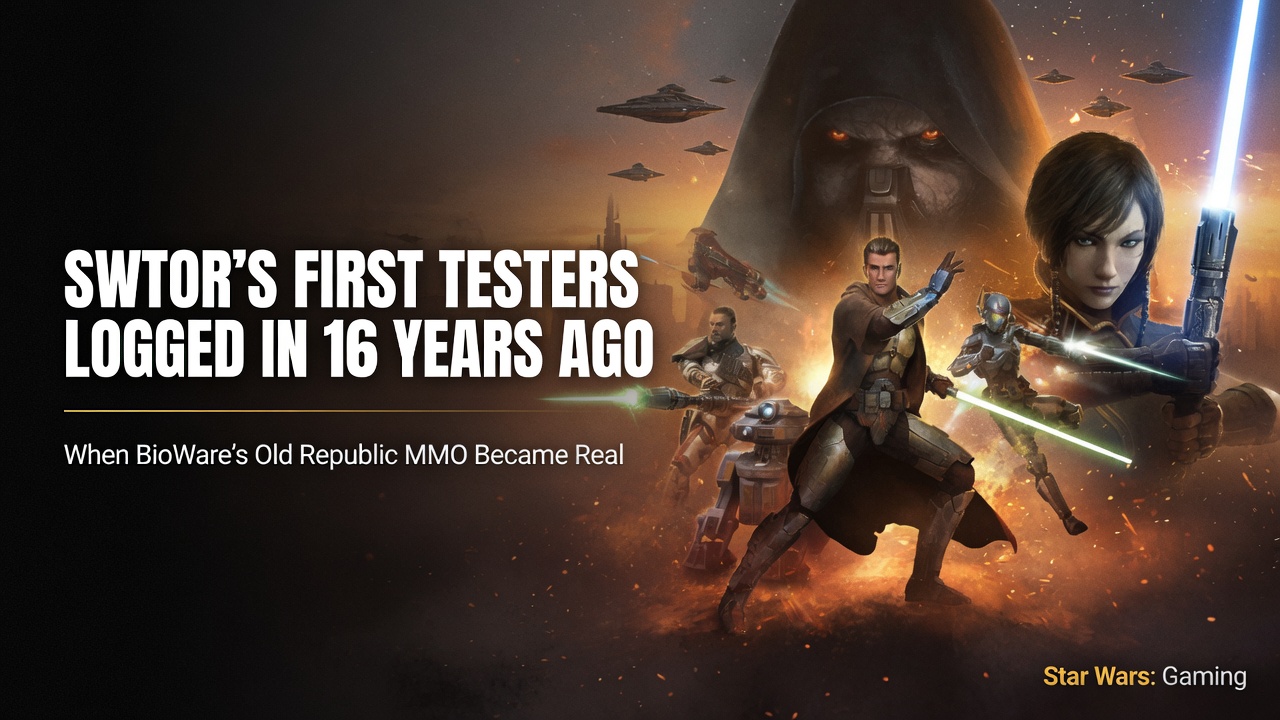
It is not the first testing wave, which we covered in our look at how SWTOR’s first testers logged in 16 years ago. It is not the launch. It is not an expansion reveal. It is not one of the big cinematic trailer moments everyone still replays because apparently we enjoy emotional damage.
But it is important because it shows SWTOR becoming what it would need to be: a game that adapts.
That adaptability is why the game is still here. You can see the same long survival arc in newer updates, including how SWTOR’s 8.0 era is starting to take shape. The modern game is very different from the 2012 version, but the pattern is familiar: adjust, improve, bring players back, give them a reason to stay.
For a broader look at where SWTOR fits into the full galaxy of releases, our complete Star Wars games archive makes the bigger point pretty clearly: most Star Wars games do not get this kind of long second, third, and fourth life.
SWTOR did.
The Comeback Started Early
The July 2012 “Come Back and Play” campaign is a reminder that SWTOR was never a simple success story.
It was ambitious. Expensive. Loved. Criticized. Overhyped. Underestimated. Constantly patched. Very MMO, in other words.
But on July 10, 2012, BioWare was already doing the thing every long-running online game has to learn:
Give players a reason to return.
Not just because it says Star Wars on the launcher.
Because the game underneath is still trying to become better.
Author

Related Posts

Star Wars: Unlimited Ashes of the Empire Preview Guide: Endor, Support, Advantage Tokens, and Mandalorian Units
Star Wars: Unlimited’s Ashes of the Empire Prerelease Starts Today, and Endor Is Back on the Table-
SWTOR’s First Testers Logged In 16 Years Ago, and the Old Republic MMO Dream Became Real -
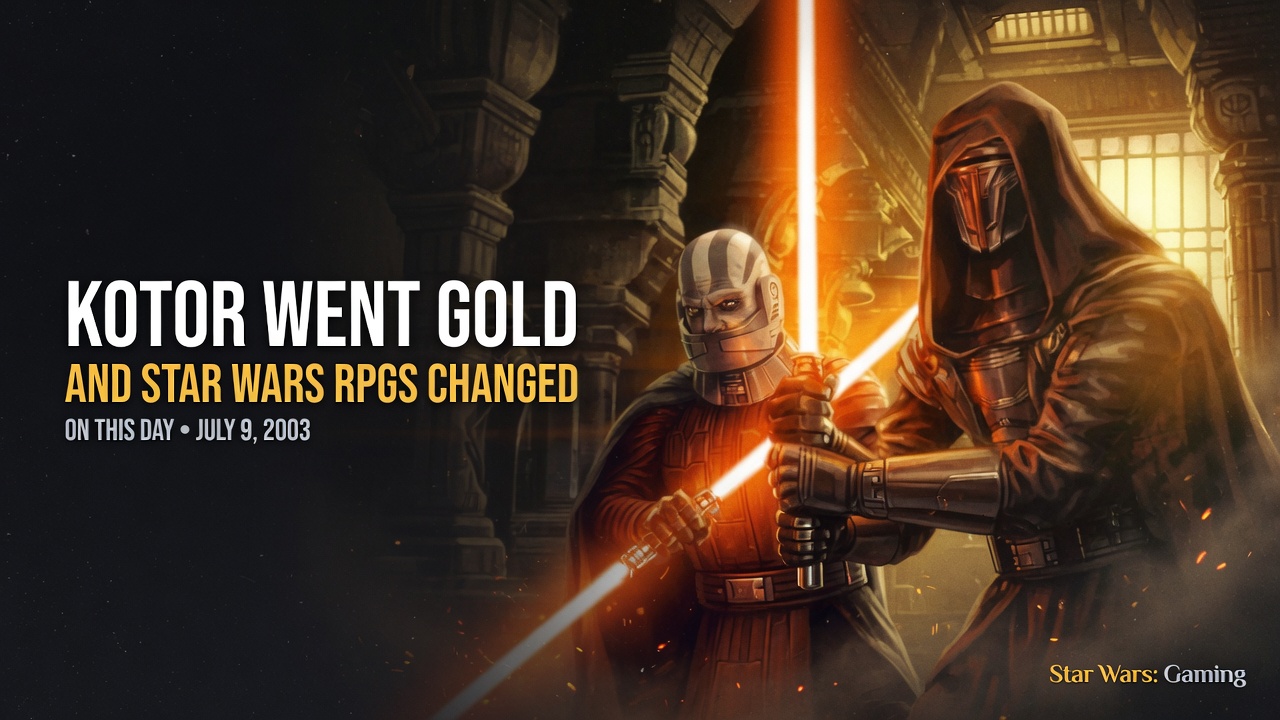
On This Day: Knights of the Old Republic Went Gold, and Star Wars RPGs Were Never the Same
-
Star Wars: Galaxy of Heroes Update 7-8-2026: GAC Moves, Partagaz Farms, and Grogu Gets a Fix 
Monopoly: Star Wars Heroes vs. Villains Review: Monopoly Finally Gets a Lightsaber, and a Few New Problems
Automating Content With Seedance 2.0
How to choose a digital product partner for web, mobile, and product design in 2026