
For years, Star Wars in Fortnite mostly meant one thing:
Someone in a very famous outfit doing something deeply unserious.
Darth Vader with a gun. Ahsoka in a squad wipe. Stormtroopers building walls. Kylo Ren emoting in ways the dark side probably did not approve.
It was funny. It was weird. It was marketing.
But now the Star Wars and Fortnite relationship has moved into a much bigger phase.
Epic has opened official Star Wars tools for creators in Fortnite Creative and Unreal Editor for Fortnite, allowing approved developers to build and publish Star Wars-themed islands using licensed characters, weapons, vehicles, templates, and branded assets.
In other words, Star Wars in Fortnite is no longer just skins.
It is becoming a platform.
This Is Bigger Than Another Crossover
The usual Star Wars crossover model is simple.
Add characters. Sell cosmetics. Drop a few themed weapons. Let social media do the rest.
That still exists, obviously. Fortnite is not suddenly a charity for lightsaber enthusiasts.
But the creator tools change the scale of the idea.
Instead of Epic only building official Star Wars events, creators can now use Star Wars assets inside Fortnite’s ecosystem to make their own experiences. Epic’s official materials point to templates for large-scale battles, narrative and roleplaying setups, lightsabers, Force powers, vehicles, characters, and Star Wars island publishing rules.
That is a very different beast from “here is another outfit in the shop.”
It means Star Wars is becoming usable inside one of the biggest user-generated game platforms in the world.
That should make anyone interested in Star Wars gaming sit up a little.
Preferably without knocking over their blue milk.
Fortnite Is Quietly Becoming a Star Wars Creation Engine
The really interesting part is not that someone can make a Star Wars island.
It is what that represents.
Fortnite has spent years evolving from battle royale into platform, launcher, social space, brand machine, creator economy, concert venue, LEGO playground, and general-purpose chaos engine.
Star Wars entering that system at the creator level means the galaxy is no longer limited to a single mode, single event, or single official playlist.
Creators can build combat arenas. Roleplay locations. Tatooine cantinas. Lightsaber training spaces. Vehicle-focused experiences. Team battles. Weird little experiments that would never survive a normal publisher pitch meeting.
That last part matters.
Some of the best Star Wars ideas are too strange, small, or specific to become full standalone games.
Inside Fortnite, they might actually exist.
The Disney and Epic Deal Is Starting to Show Its Shape
Disney announced in 2024 that it would invest $1.5 billion in Epic Games as part of a wider plan to create a new games and entertainment universe connected to Fortnite.
At the time, that sounded massive but also a little abstract.
Now it looks more concrete.
Star Wars Islands are not just a fun side feature. They are part of Disney’s larger move toward making its worlds more playable, shareable, and persistent inside Epic’s ecosystem.
That is important because Disney has often had a complicated relationship with games.
Sometimes it goes all in.
Sometimes it licenses the galaxy out and waits.
Sometimes it watches from the balcony like a senator pretending not to be involved.
The Epic partnership feels different because it gives Disney a direct path into a living game platform where players already spend time with friends, creators, brands, and pop culture events.
Star Wars fits that model almost too well.
Is This Good for Star Wars Games?
That depends on what you want from Star Wars gaming.
If you want handcrafted single-player adventures, Fortnite creator tools are not replacing that. Nobody should look at a UEFN island and say, “Well, cancel KOTOR dreams forever.”
Please do not do that.
But if you care about Star Wars as a playable space, this is fascinating.
The old dream was always bigger than one genre. Star Wars has worked as shooters, racers, RPGs, MMOs, flight sims, strategy games, LEGO chaos, mobile collecting, and the occasional deeply cursed experiment.
That long history is exactly why we keep tracking the full playable galaxy in our Complete List of All Star Wars Games Ever Made.
Fortnite now adds another category:
Star Wars as a creator platform.
That is new enough to matter.
The Social Side Could Be the Real Hook
Star Wars has always worked better when people can share the fantasy.
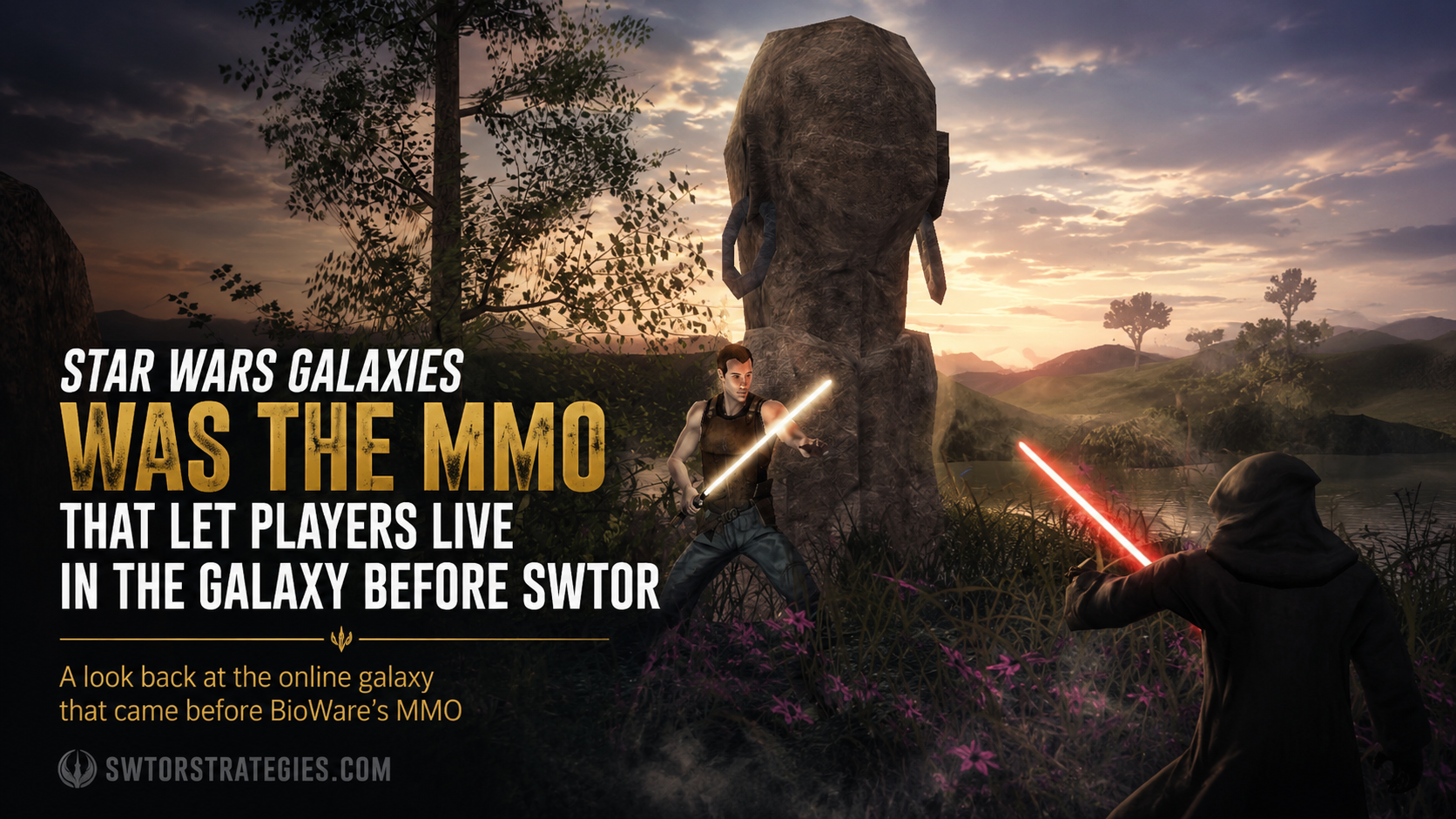
That was true in Star Wars Galaxies, where player cities, cantinas, and professions made the galaxy feel alive.
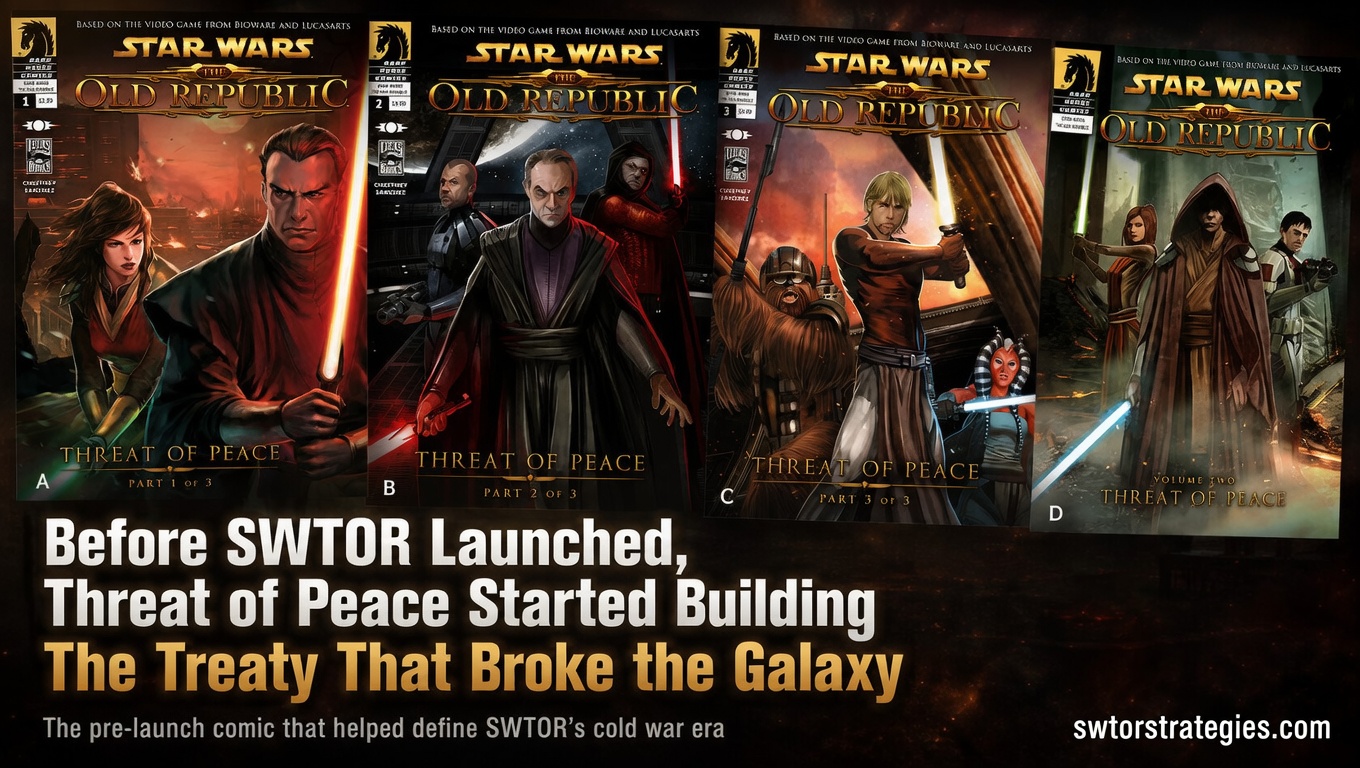
It is true in SWTOR, where Flashpoints, guilds, Operations, and social hubs keep the MMO heartbeat going.
It is true in Battlefront II, Squadrons, and even LEGO couch co-op, where the best moments often happen because someone else is there to laugh, panic, or fly directly into a wall.
That is why our guide to the best Star Wars games to play with friends now feels even more relevant. Star Wars in Fortnite is not just another solo nostalgia machine. It is built around groups, islands, sharing, remixing, and playing together.
That might be where it finds its real strength.
Not in replacing traditional Star Wars games.
In becoming a place where small Star Wars experiences can live beside them.
The Risk Is Obvious
Of course, there is a danger here.
A creator platform can produce wonderful things.
It can also produce an ocean of forgettable maps, awkward brand compliance, shallow XP farms, and experiences that feel more like licensed wallpaper than actual game design.
Star Wars also has brand rules, publishing restrictions, monetization terms, and asset limitations. This is not a lawless Outer Rim playground where creators can do absolutely anything.
Nor should it be.
But the balance will matter.
If the tools are too restrictive, the islands may feel sterile.
If the quality control is too loose, the Star Wars label gets buried under low-effort noise.
The sweet spot is somewhere in the middle: enough rules to protect the universe, enough freedom to let creators make something weird, playable, and worth sharing.
A New Kind of Star Wars Gaming Frontier
The biggest mistake would be to dismiss this as “just Fortnite.”
That phrase stopped being useful years ago.
Fortnite is no longer just a battle royale game. It is one of the largest playable media platforms on the planet, and Star Wars now has official creator tools inside it.
That does not make it the future of all Star Wars gaming.
But it does make it one future.
A place where Star Wars can become battles, roleplay spaces, experiments, social games, training arenas, and whatever strange thing a creator figures out at 2 a.m. with too much caffeine and access to a lightsaber template.
Some of it will be bad.
Some of it will be silly.
Some of it might be more interesting than expected.
And that is why this matters.
Star Wars in Fortnite is no longer just Darth Vader doing emotes.
It is becoming a toolbox.
A platform.
A strange little galaxy inside another game.
And honestly, for Star Wars gaming, that is worth watching.
Author

Related Posts

Star Wars Eclipse Is Still the Galaxy’s Most Beautiful Question Mark
Fate of the Old Republic Proves the KOTOR Fantasy Still Has a Pulse
Battlefront’s Bespin DLC Gave Star Wars Fans the Cloud City Fantasy EA Later Walked Away From
Star Wars Galaxies and SWTOR Solved the Same Fantasy in Completely Different Ways