
On June 26, 2003, Star Wars Galaxies: An Empire Divided launched in the United States.
It did not arrive like a Death Star blast.
It arrived carefully.
Quietly, even.
For a massive Star Wars MMO from LucasArts and Sony Online Entertainment, that was almost strange. This was not just another licensed game. This was the dream: a living online Star Wars galaxy where players could become smugglers, scouts, entertainers, medics, artisans, bounty hunters, rebels, Imperials, merchants, citizens, weirdos, and eventually, if the galaxy felt especially cruel, Jedi.
Before Star Wars: The Old Republic gave players cinematic class stories and fully voiced BioWare drama, Star Wars Galaxies offered something different.
A place.
Not just a story to follow.
A galaxy to live in.
Galaxies Was Built on a Different Fantasy
Most Star Wars games put the player near the center of history.
You are the Jedi. The commando. The pilot. The secret apprentice. The chosen disaster in robes. The one person who can save, break, or accidentally destabilize everything.
Star Wars Galaxies was stranger than that.
It asked a much more interesting question:
What if you were just someone in Star Wars?
That “just” did a lot of work.
You could be a fighter, yes. But you could also be a crafter, dancer, doctor, musician, merchant, explorer, animal handler, mayor, or social fixture in a player city. The fantasy was not only heroism. It was occupation. Routine. Community. Identity.
That made the game feel wildly different from nearly every other Star Wars release.
It was less “watch me defeat Darth Something” and more “I know a guy on Tatooine who can make better armor if we bring him the right materials.”
That is extremely MMO.
And somehow, extremely Star Wars.
The Launch Was Cautious for a Reason
Wired’s launch coverage noted that LucasArts and Sony took a conservative approach with Galaxies, aiming first at core gamers and trying to avoid the kind of server overloads and technical disasters that had hurt other online worlds.
That caution made sense.
An MMO launch is not like shipping a normal game. You do not just put it on shelves and walk away. You open the doors and immediately discover what thousands of players can break, ignore, exploit, misunderstand, or turn into a business.
Star Wars fans are not exactly famous for being gentle when expectations are involved.
So Galaxies launched with ambition, uncertainty, and the strange pressure of being both a game and a social world.
That was always the risky part.
A Star Wars MMO had to be more than playable.
It had to feel lived-in.
Player Cities, Professions, and the Sandbox Dream
The reason people still talk about Star Wars Galaxies is not because it was smooth, polished, or universally beloved at launch.
It wasn’t.
People remember it because it tried things Star Wars games rarely attempt.
Player cities. Deep crafting. Social professions. Entertainers. Creature handling. Bounty hunting. Resource economies. Housing. Communities that existed because players made them matter.
You did not just consume Star Wars content.
You participated in a galaxy that other players helped shape.
That is why Galaxies still haunts Star Wars gaming discussions. The game had jank, confusion, balance problems, and later changes that remain controversial enough to make old players stare into the middle distance like war veterans.
But it also had a fantasy nobody has fully replaced.
The fantasy of ordinary life inside an extraordinary universe.
Star Wars Galaxies Was Better Because Other Players Were There
The thing that made Star Wars Galaxies stick was not only the systems.
It was the people inside them.
A player city meant nothing without actual players turning it into a home. A cantina was just a room until entertainers, travelers, bounty hunters, and bored Imperials started filling it with stories. Even crafting only really worked because other players needed what someone else could make.
That is where Galaxies still feels special. It understood that Star Wars is not only about heroes saving the galaxy. Sometimes it is about having a reason to meet other people in it.
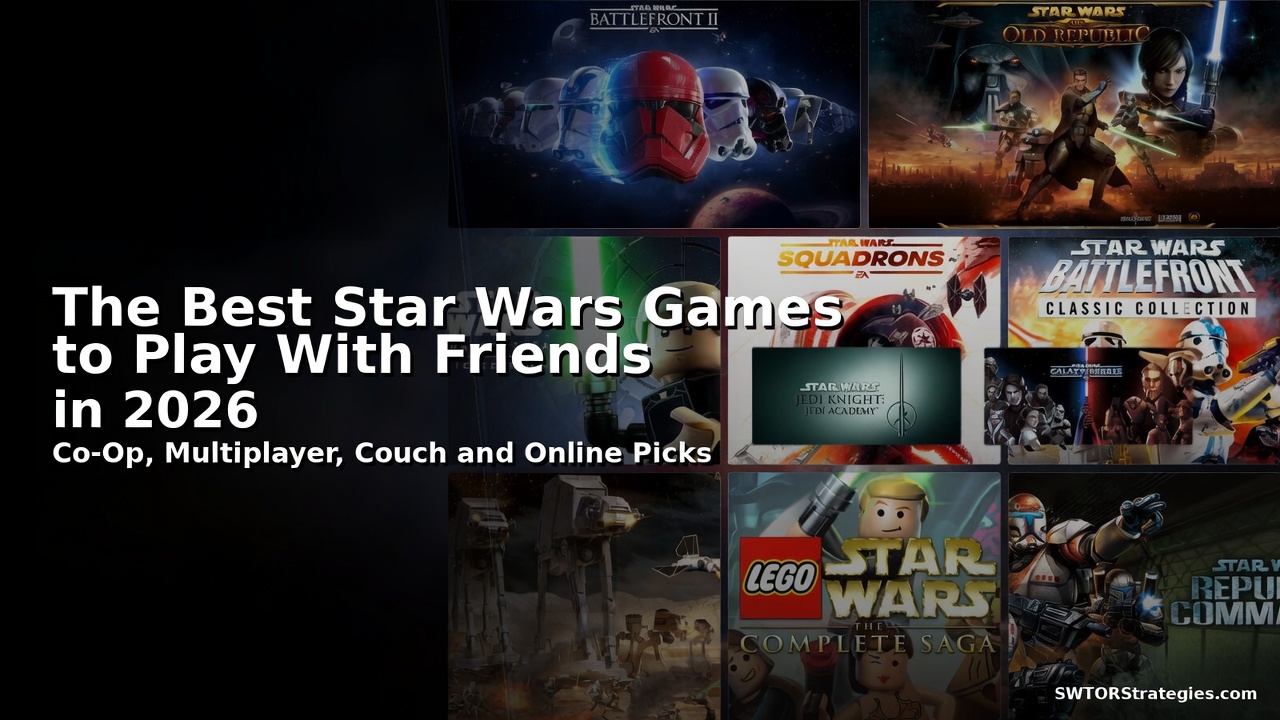
That same social pull is why multiplayer Star Wars games still matter today, whether players are grouping up in SWTOR, jumping into Battlefront II, flying together in Squadrons, or arguing over the best couch co-op pick. We have a full guide to the best Star Wars games to play with friends, but Galaxies deserves a special place in that conversation because it made friendship, trade, cities, and community part of the actual game.
You were not just playing Star Wars near other people.
You were living in a version of Star Wars that needed them.
Before SWTOR, There Was Another Online Star Wars Dream
It is impossible to talk about Star Wars Galaxies now without thinking about Star Wars: The Old Republic.
SWTOR solved the MMO problem in a completely different way.
Instead of a sandbox galaxy where players built identities through systems, SWTOR leaned into story, companions, class fantasy, voice acting, cinematic choices, Flashpoints, Operations, and BioWare-style drama.
Both games were trying to answer the same impossible question:
How do you let people live in Star Wars?
Galaxies answered: give them tools, professions, cities, economies, and freedom.
SWTOR answered: give them roles, stories, companions, choices, and a galaxy full of narrative hooks.
Neither answer is wrong.
They are just different dreams.
That is why both games matter in the wider history of playable Star Wars, which we continue tracking in our Complete List of All Star Wars Games Ever Made.
Why Star Wars Galaxies Still Matters
Star Wars Galaxies eventually closed, but its ghost never really left.
Ask old players what they miss, and they usually do not just talk about combat.
They talk about places. People. Cities. Professions. Player events. Social spaces. The feeling that the galaxy was not only there to serve a main quest.
That is rare.
Most Star Wars games are built around famous fantasies: becoming a Jedi, flying an X-wing, fighting the Empire, hunting Sith, swinging a lightsaber, or shooting stormtroopers until the hallway has learned a lesson.
Galaxies cared about the quieter fantasy too.
Being there.
Existing in the galaxy.
Making a name that did not need to appear in a movie crawl.
The MMO That Refused to Be Just Another Star Wars Game
Looking back, Star Wars Galaxies feels bold in a way that is easy to underestimate.
It launched before modern MMO design settled into familiar patterns. It came before World of Warcraft reshaped everyone’s expectations. It tried to make Star Wars feel like a society, not only a battlefield.
That made it messy.
It also made it special.
Twenty-three years later, the conversation around Galaxies is still alive because the game represented a kind of Star Wars experience fans still want: a world where you do not have to be the chosen one to matter.
You can be a crafter.
A hunter.
A dancer.
A mayor.
A pilot.
A nobody.
A legend.
Or just one more person trying to make a life somewhere under twin suns.
That was the magic of Star Wars Galaxies.
Before SWTOR let players become the hero of their own fully voiced saga, Galaxies let them do something equally powerful:
Live in the galaxy, and make the story up together.