
Before Star Wars games gave us open worlds, branching dialogue, skill trees, crafting systems, and 14 different versions of the same lightsaber handle, there was a simpler promise.
Put money in machine.
Grab joystick.
Destroy Death Star.
Star Wars Trilogy Arcade understood exactly what an arcade game needed to do. It did not want to retell every conversation from the original trilogy or make you manage Rebel Alliance supply routes. It wanted to grab the films’ biggest action scenes, weld them together with Sega hardware, and launch the player through them before anyone had time to ask how many coins were left.
Released in 1998, Star Wars Trilogy Arcade was developed by Sega’s AM Annex, also associated with Sega AM3’s R&D operation, and published exclusively for arcades. It ran on Sega’s powerful Model 3 hardware and arrived shortly after the theatrical release of the original trilogy’s Special Editions had pushed Luke, Leia, Han, and Vader back into the center of popular culture.
It never received an official home conversion.
That has only made the machine more legendary.
As part of the complete archive of every Star Wars game ever released, it fills an important gap between the home-console experiments of the late 1990s and Sega’s later Star Wars Racer Arcade. It also belongs firmly in our Star Wars games of 1990–1999 archive, because few games capture the spectacle-first confidence of that decade quite as well.
This was the original trilogy reduced to its most important components.
TIE fighters.
AT-ATs.
Speeder bikes.
Stormtroopers.
Death Stars.
And a large glowing button that told you when something especially expensive was about to happen.
You Did Not Walk Past This Machine by Accident
Arcade cabinets had to fight for attention.
They competed with flashing lights, attract-mode explosions, roaring engines, synthetic gunfire, and teenagers attempting to settle personal disputes through Tekken 3. A quiet machine was a dead machine.
Star Wars Trilogy Arcade was not quiet.
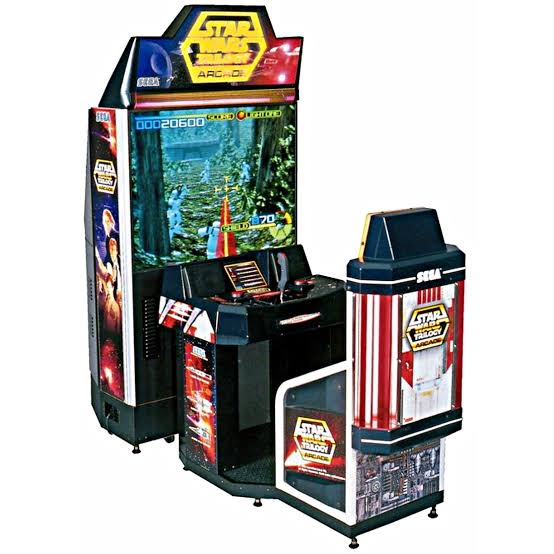
Sega produced both upright and deluxe configurations, but the deluxe version was the one that looked like it had been delivered directly from an Imperial procurement office. Its official manual lists a 50-inch projection display, a footprint nearly eight feet deep, and a weight of approximately 855 pounds. This was not something you casually moved to the other side of the arcade because the carpet needed cleaning.
The large screen, enclosed controls, stereo sound, and subwoofer gave it the presence of a miniature attraction rather than a normal coin-operated game. The analog flight-style joystick featured a trigger for firing and a separate thumb-operated event button.
Then the attract sequence started.
John Williams’ music filled the room. TIE fighters screamed past the screen. AT-ATs marched across Hoth. Lightsabers clashed. The cabinet showed the player exactly what it was selling before the first coin went in.
Not a simulation.
Not a complicated campaign.
A few minutes inside Star Wars.
That was a very difficult offer to refuse.
Sega Built the Original Trilogy’s Greatest-Hits Album
The structure is beautifully direct.
Players choose between three main missions based on A New Hope, The Empire Strikes Back, and Return of the Jedi. Each mission contains three connected sections, moving between vehicle combat and first-person shooting. Completing all three unlocks the final assault on the second Death Star. Two additional bonus encounters bring Luke face-to-face with Boba Fett and Darth Vader.
There are no long introductions.
There is no moisture-farming tutorial.
Nobody asks whether you would like to adjust Luke’s eyebrow shape before launching.
The machine assumes you already know why the Death Star is bad and begins throwing TIE fighters at you.
It is Star Wars edited by someone who considers dialogue a temporary obstruction between explosions.
The Battle of Yavin Was an Arcade Tradition Reborn
The A New Hope mission begins above the first Death Star.
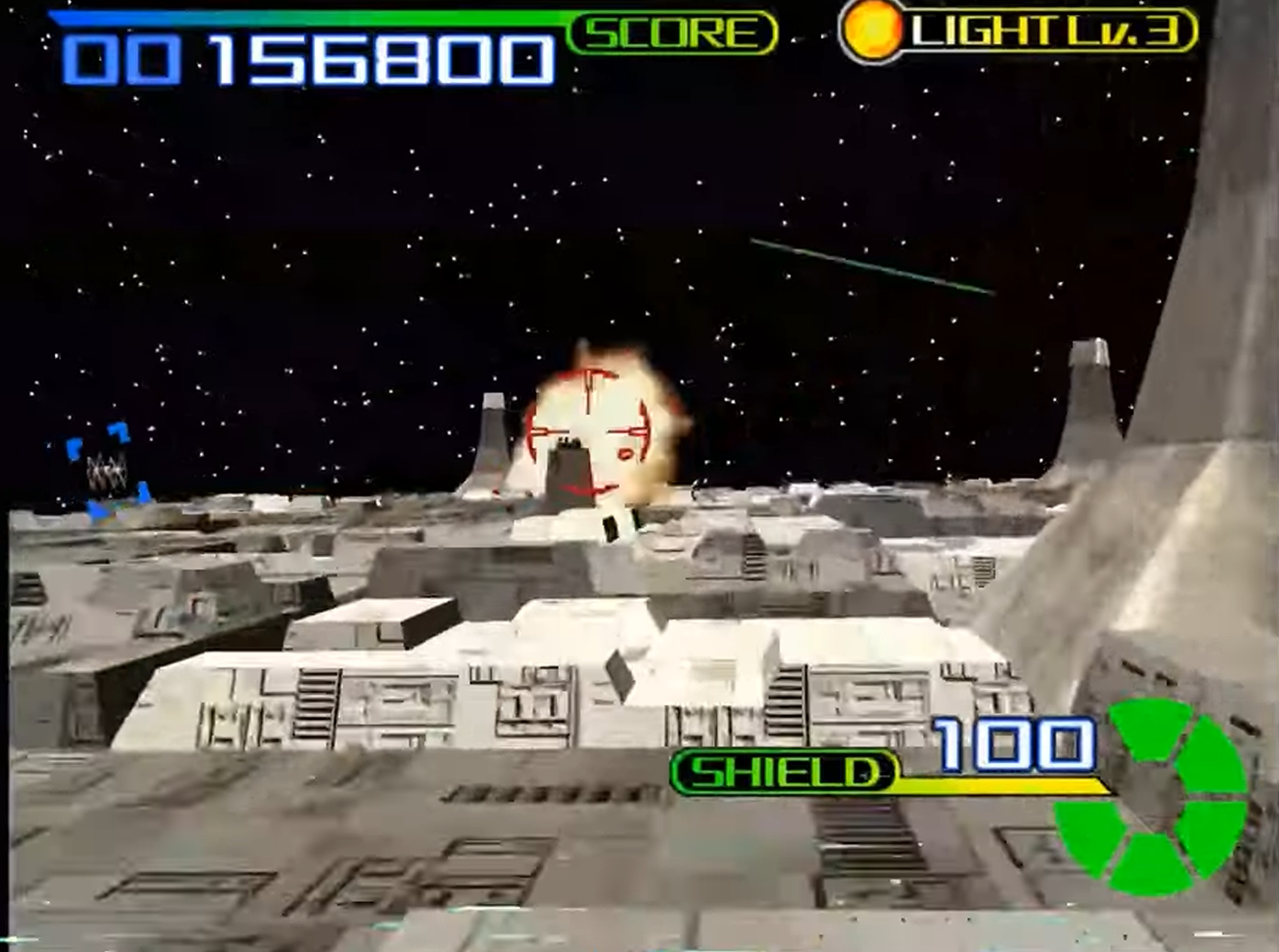
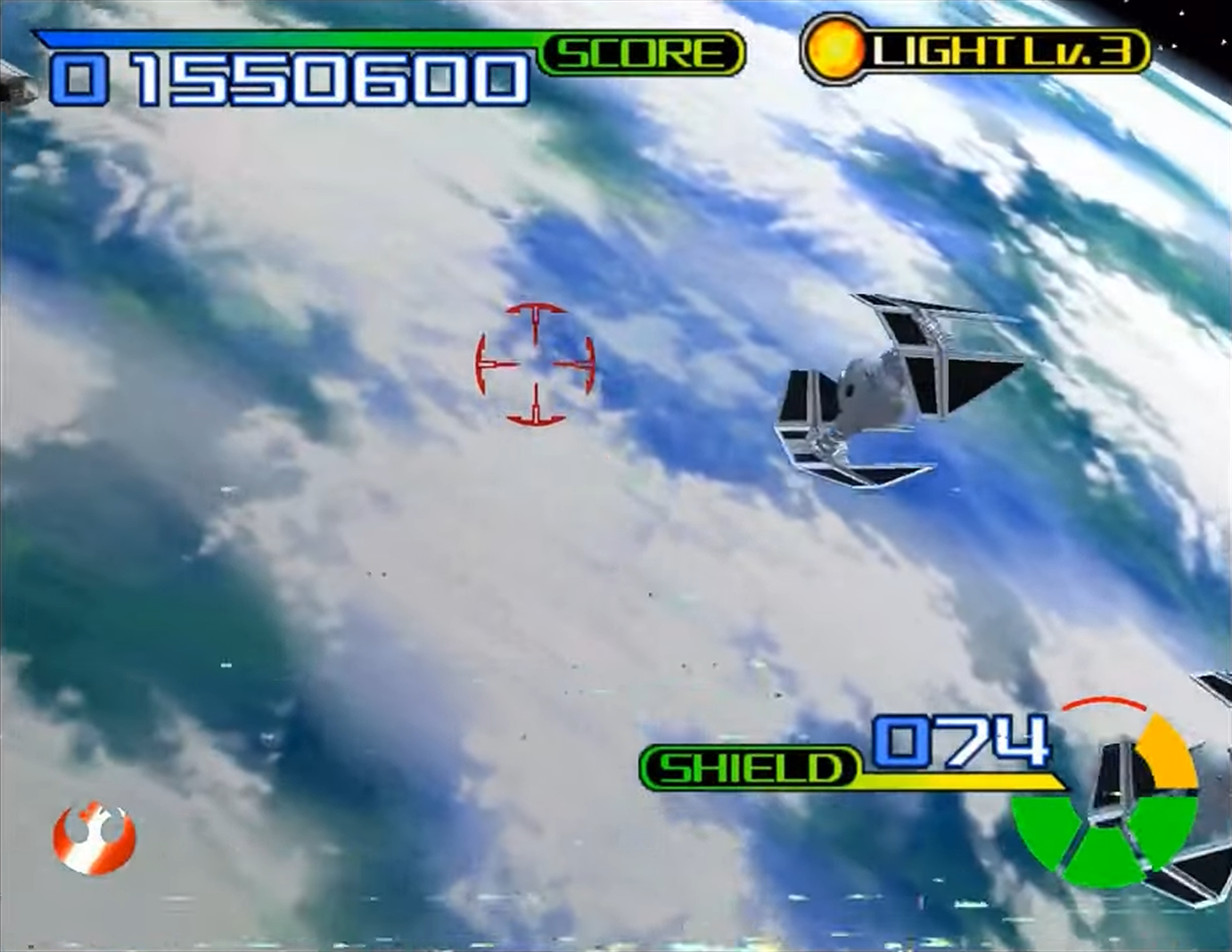
The player flies an X-wing through waves of Imperial fighters, crosses the battle station’s surface while destroying towers and turbolasers, and finally enters the trench to fire proton torpedoes into the exhaust port. Darth Vader’s TIE fighter appears during the attack, because the machine understands that ordinary TIE fighters are apparently not stressful enough.
This section was more than another film recreation.
It was Sega’s high-powered answer to Atari’s Star Wars: The Arcade Game, which had already turned the Death Star assault into one of arcade gaming’s defining experiences back in 1983. Atari’s machine used glowing vector graphics to suggest speed and space. Sega used textured polygons, large explosions, camera movement, sampled dialogue, and the brute force of Model 3 hardware.
The route remained familiar.
Space battle.
Death Star surface.
Trench run.
The technology had changed beyond recognition, but the fantasy was the same.
You were Luke Skywalker.
The targeting computer was off.
Try not to embarrass the Rebellion.
Hoth Turns the Joystick Into a Blaster
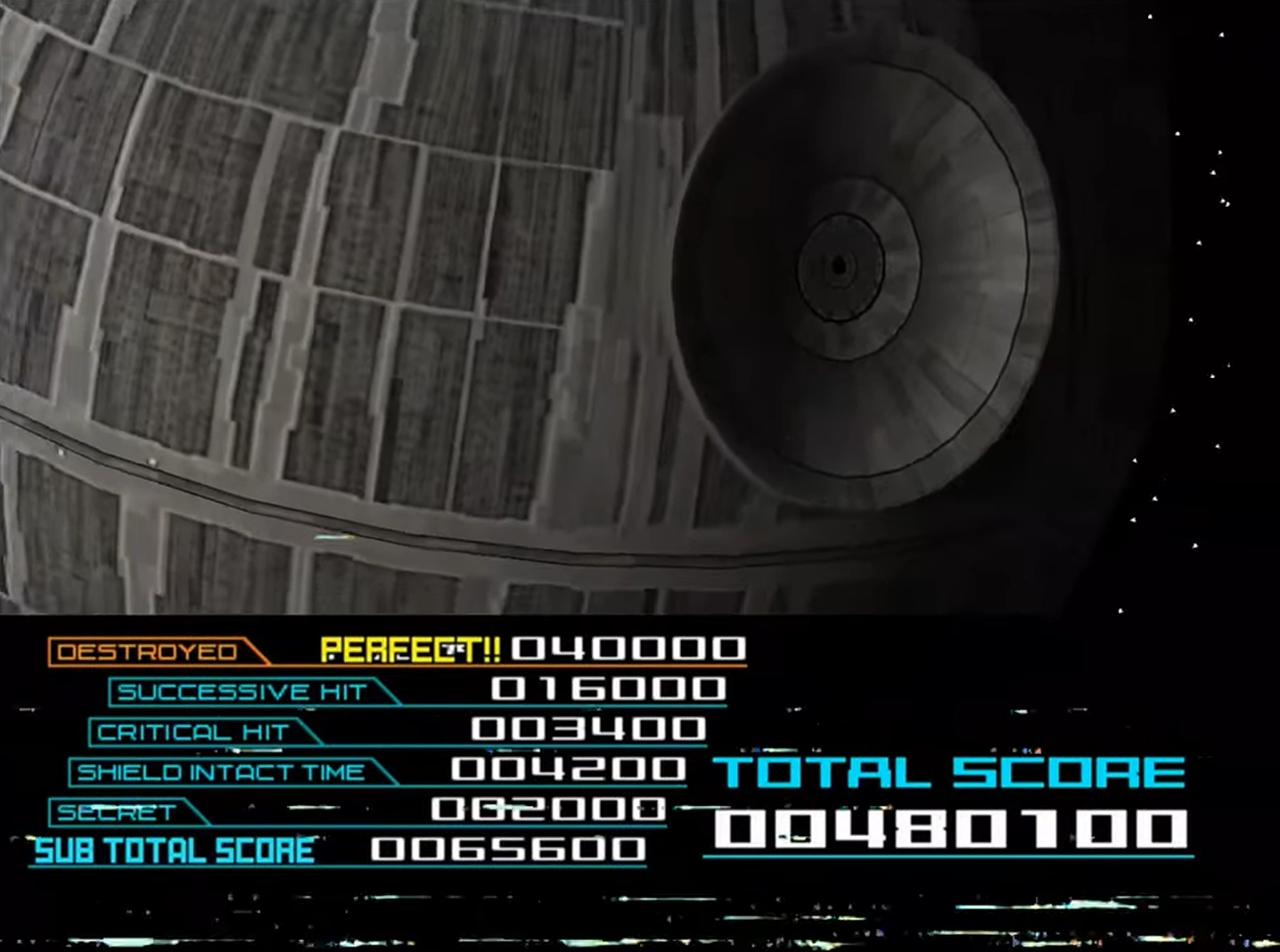
The Empire Strikes Back mission shifts the action to Hoth.
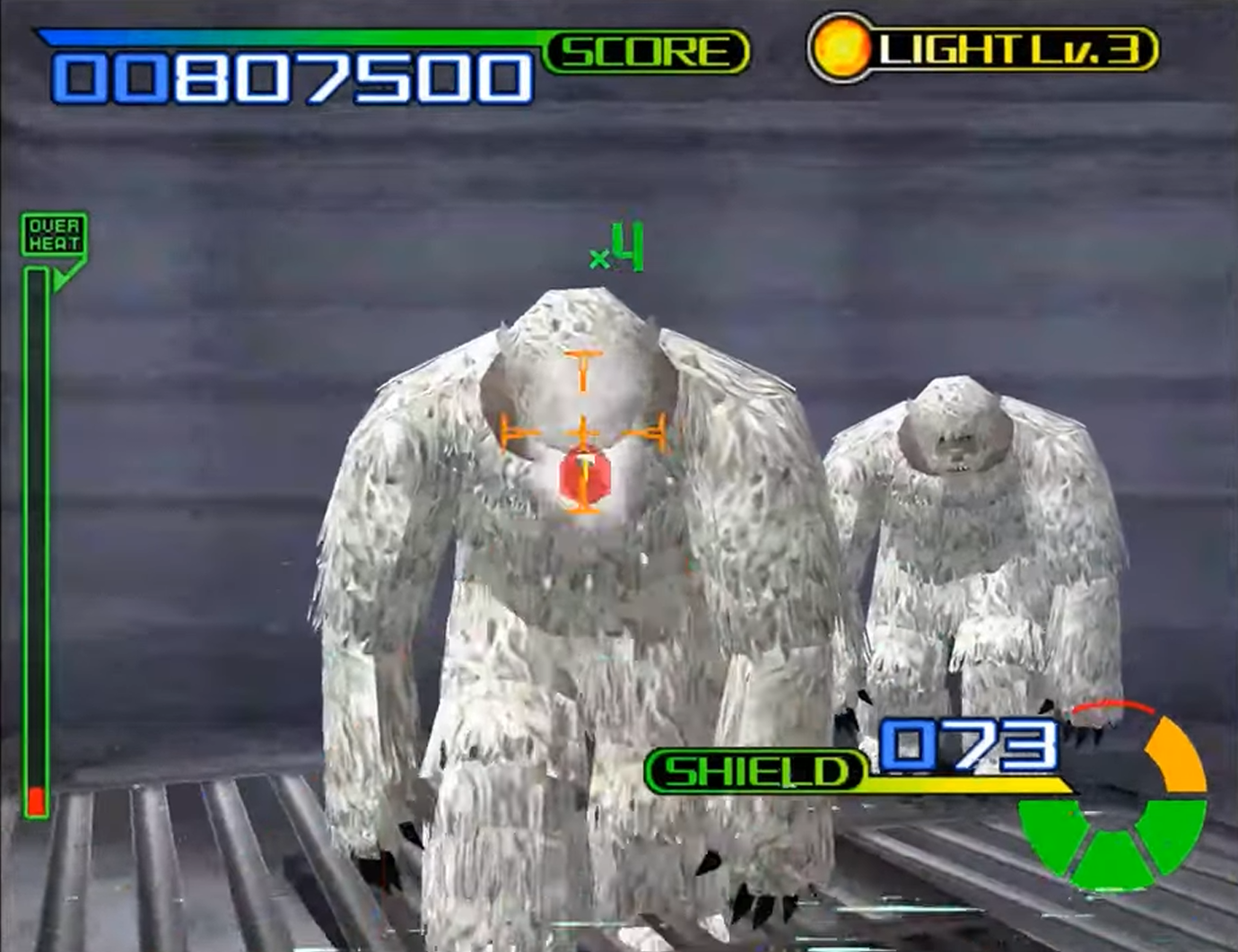
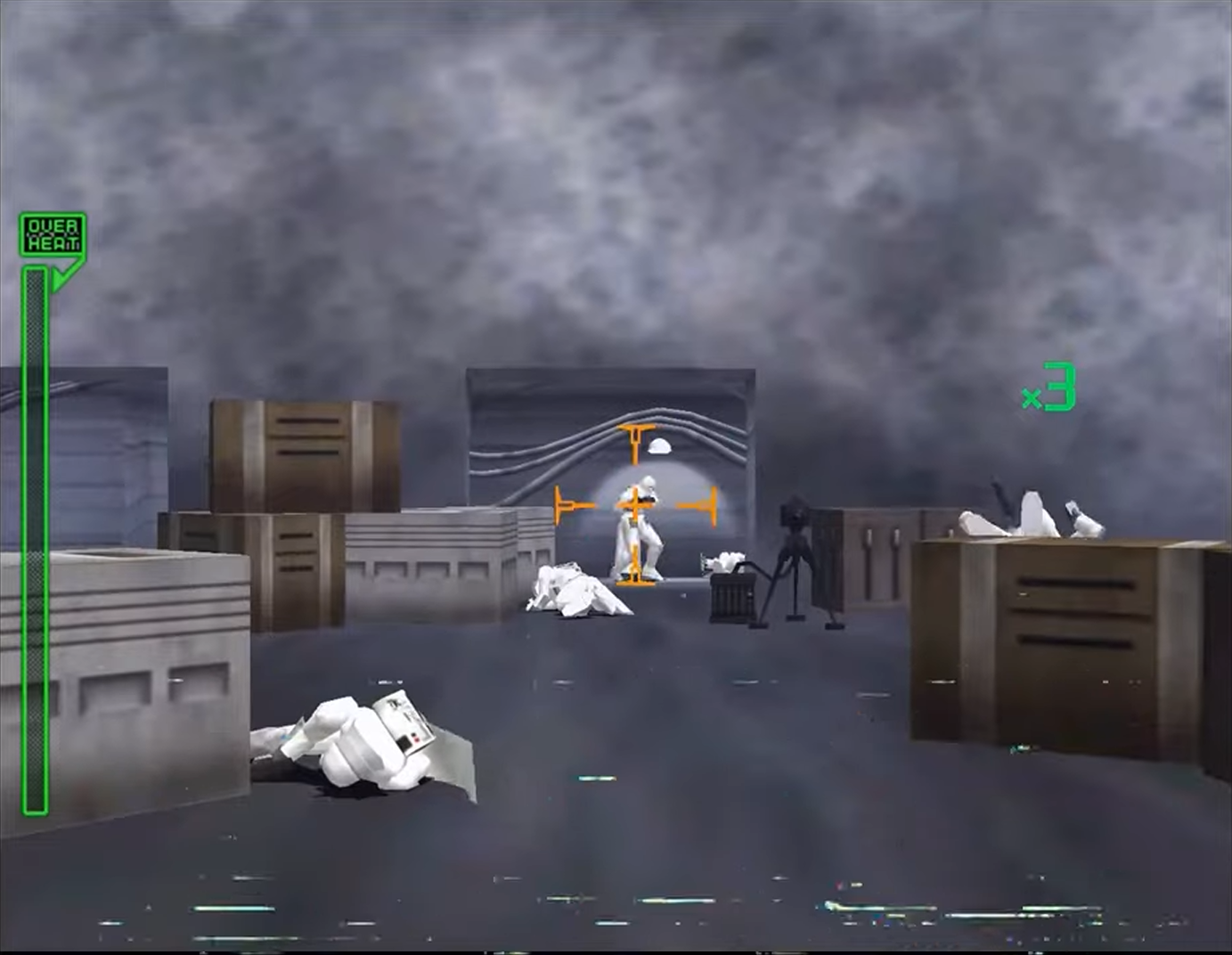
The opening section places the player behind Rebel defenses as Imperial walkers advance across the snow. AT-STs, probe droids, Imperial troops, and eventually the enormous AT-ATs fill the screen. The machine then moves inside Echo Base, where the player shoots stormtroopers, escapes hostile corridors, and reaches the hangar while the evacuation collapses around them.
The transition from vehicle combat to on-foot shooting is one of the game’s smartest tricks.
The controller never physically changes. You still aim using the same large analog stick and fire with the trigger. But context does the work. One moment the stick is guiding an X-wing’s weapons across the Death Star. The next it is acting like a blaster as stormtroopers appear in doorways.
It is not subtle.
It is not especially deep.
It is wonderfully efficient.
The Hoth mission also shows why the game worked so well in an arcade. Every few seconds, something recognizable happens. A walker appears. A snowtrooper collapses. A familiar voice clip plays. The Millennium Falcon prepares to escape.
The machine keeps feeding the player little pieces of Star Wars recognition, just fast enough to encourage another coin when the shield meter disappears.
Endor Is Where the Game Becomes a Ride
The Return of the Jedi mission begins on speeder bikes.
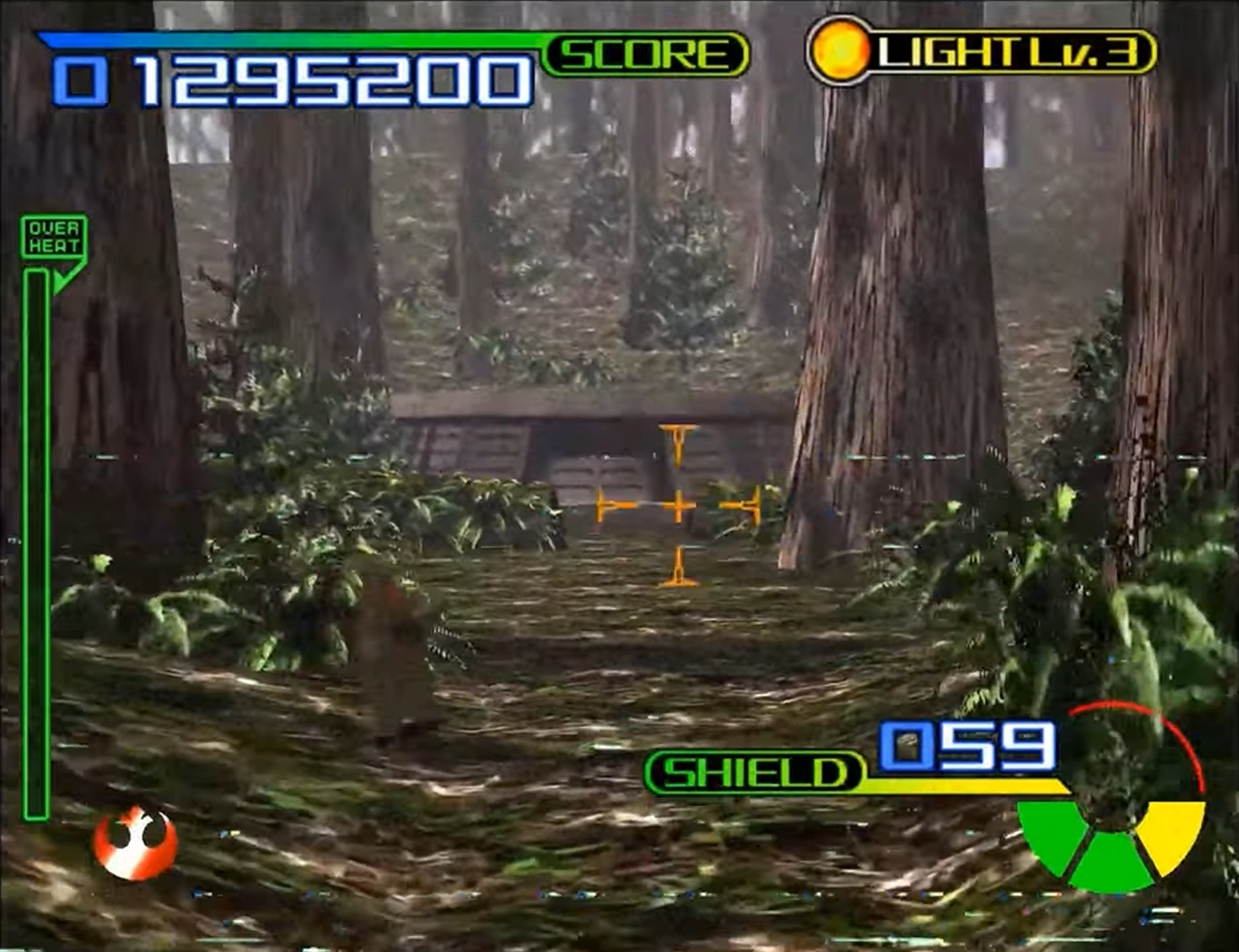
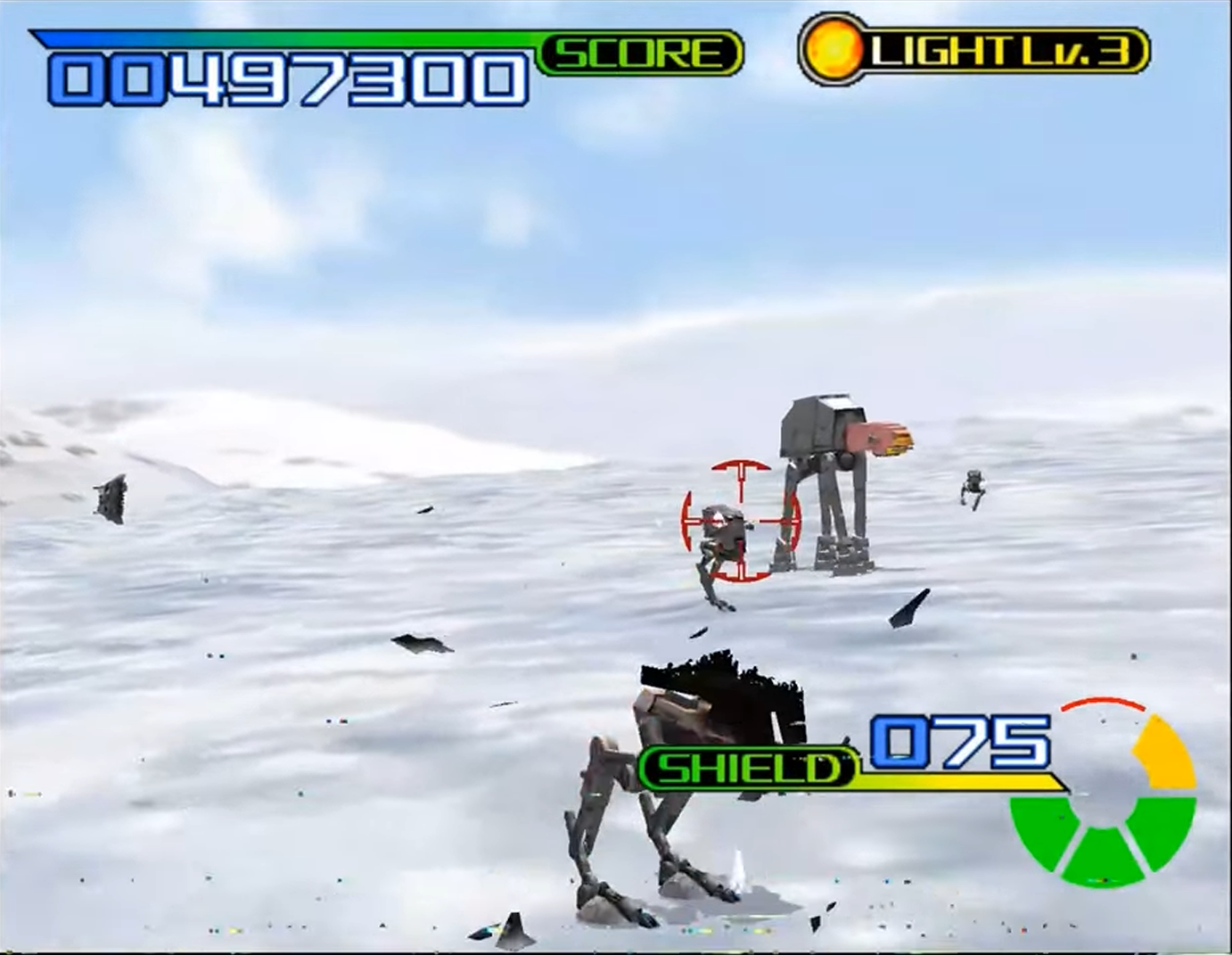
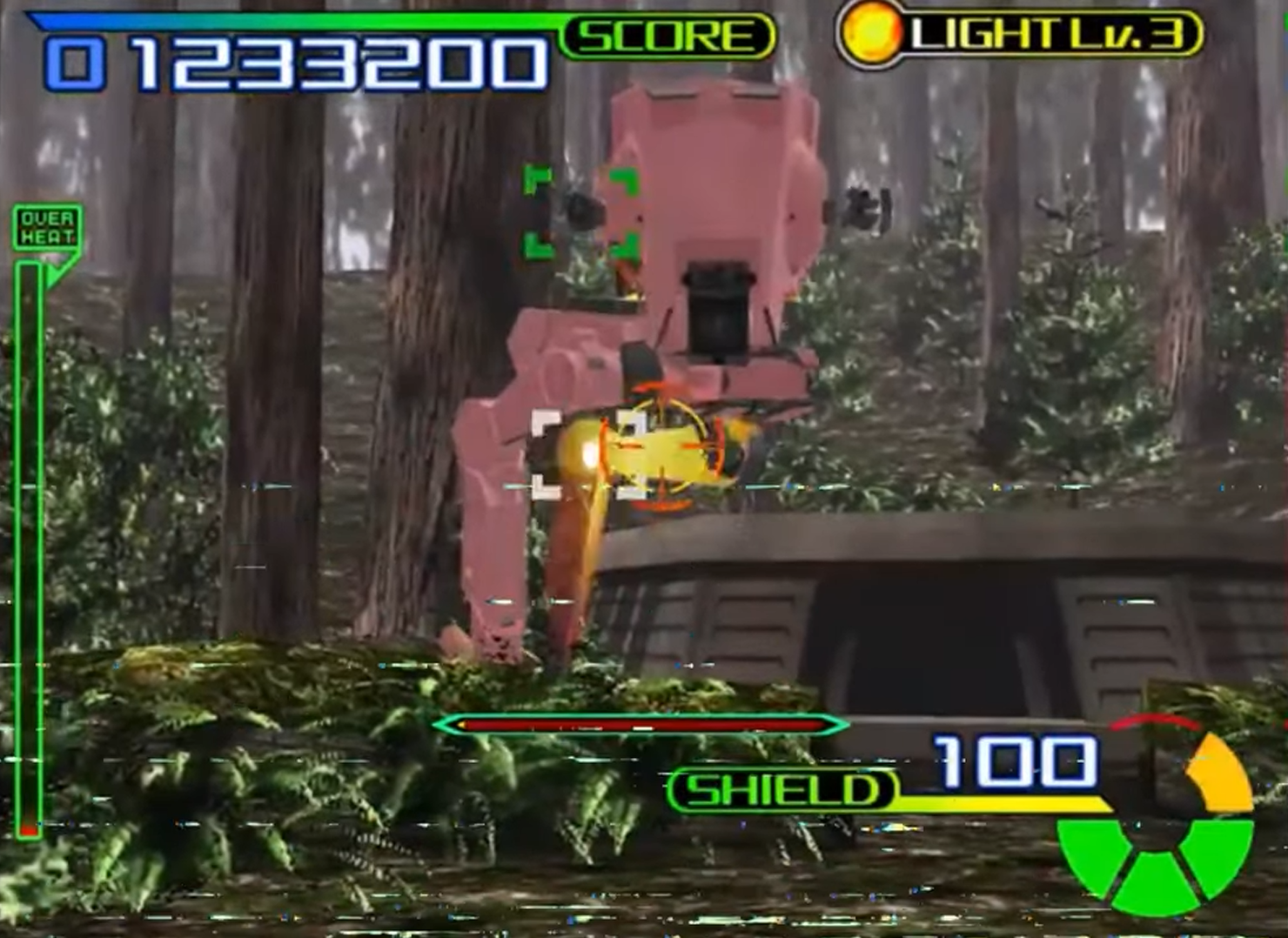
Players race through the forests of Endor, targeting scout troopers while trees and obstacles rush past the screen. It then shifts to the shield-generator bunker, where Rebel troops fight through Imperial defenses and plant charges. The final section puts the player against an AT-ST in the forest battle.
This is arguably where Star Wars Trilogy Arcade feels most like a theme-park attraction.
The route is completely controlled. The camera knows where it is going. The player’s job is to keep up, aim quickly, avoid unnecessary damage, and hit the event button when the machine demands enthusiasm.
That linearity would feel restrictive in a home game designed for long sessions.
In an arcade, it is the point.
Every turn is choreographed. Every target appears with purpose. Every explosion pushes the next set piece into view.
You are not exploring Endor.
You are being fired through Endor.
There is a difference.
The Special Event Button Made You Feel Important
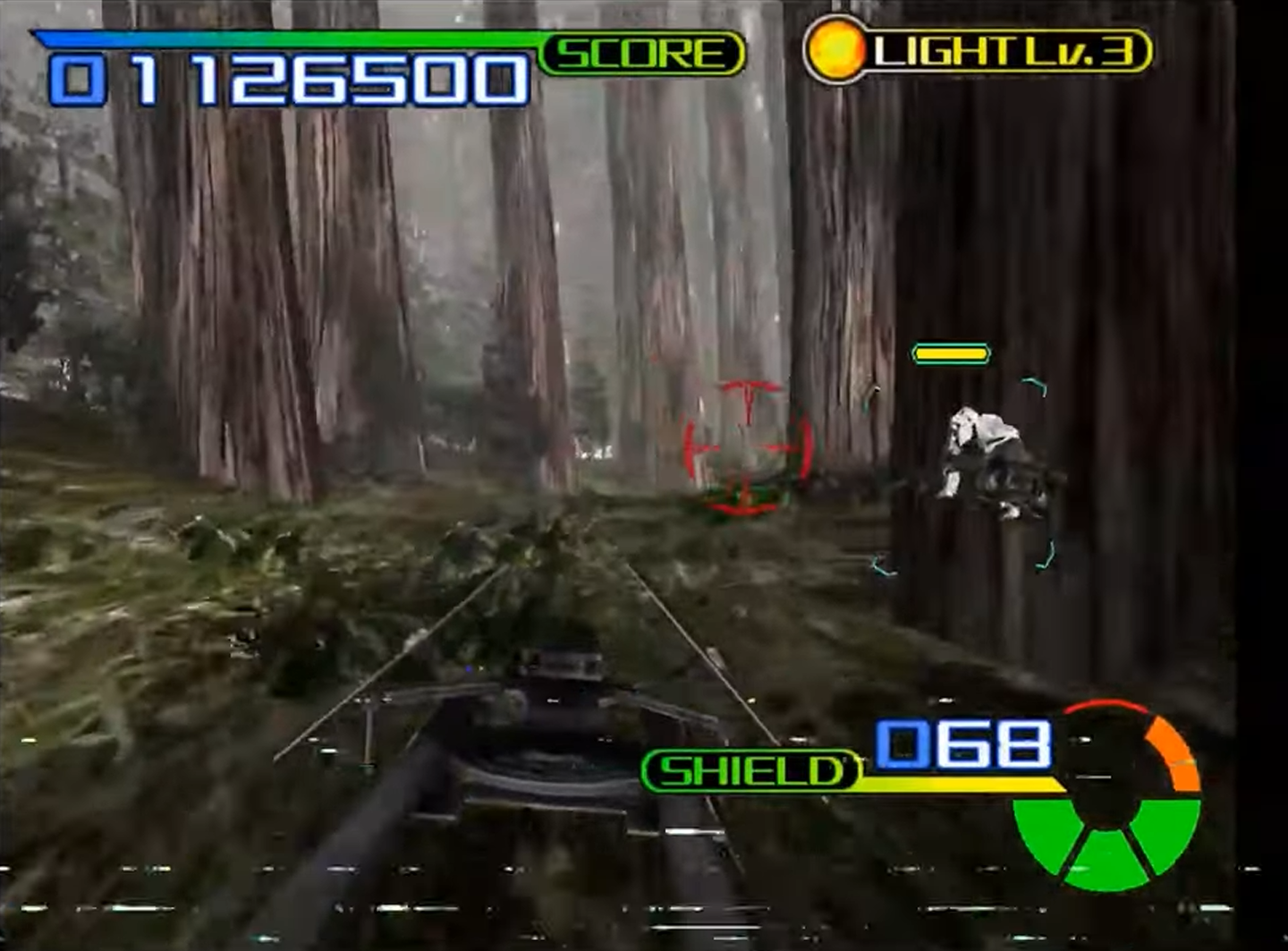
The most memorable piece of the control panel may be the illuminated Special Event button.
At key moments, the button lights up and prompts the player to press it. Doing so triggers a cinematic action, often calling in assistance, avoiding danger, or completing an important maneuver. The system is essentially a highly visible quick-time event, years before games had turned “press this button during the cutscene” into a regular design language.
From a cynical perspective, it is just one more button.
From the perspective of a child standing in front of a huge Star Wars cabinet, it might as well have been the launch control for the Rebel fleet.
The light flashes.
The game shouts.
You press it.
Something enormous explodes.
Perfect design.
The event button also helped break up the constant targeting. Players were not only moving a crosshair and holding the trigger. They were waiting for those brief moments when the machine physically changed state and demanded a different response.
It made scripted spectacle feel interactive.
Not deeply interactive.
But interactive enough to feel heroic.
Boba Fett Finally Learns About the Sarlacc
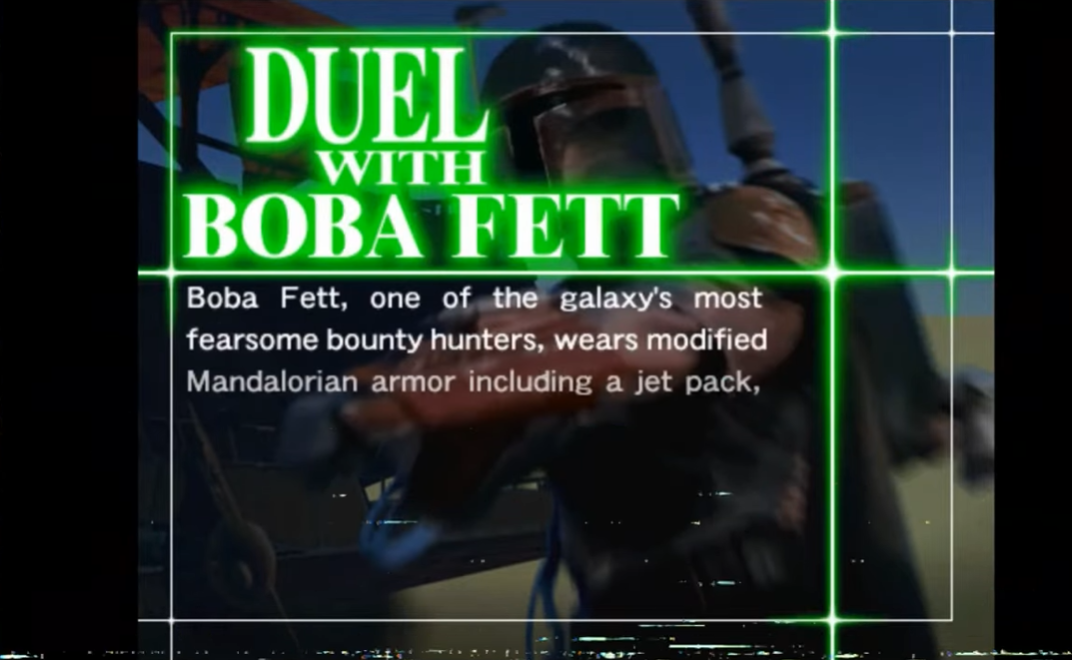
After completing two main missions, players can face Boba Fett in one of the bonus stages.
Luke stands near the Sarlacc pit with his lightsaber while Fett fires from the opposite side. The player moves the joystick to deflect the bounty hunter’s blaster bolts back at him, gradually forcing him toward the pit.
It is not a freeform lightsaber combat system.
The encounter is tightly scripted, closer to an interactive sequence than a traditional duel. Correct movements block attacks. Mistakes cost health. Boba Fett moves closer to the fate that Return of the Jedi had already assigned him.
The scene is also gloriously shameless.
Luke and Boba Fett did not have this duel in the film. Sega simply looked at its Star Wars license, looked at the joystick, and decided players deserved to reflect blaster bolts at the galaxy’s most fashionable bounty hunter.
Correct decision.
The Darth Vader Duel Is Clumsy and Still Fantastic
The second bonus encounter becomes available after the three main missions.
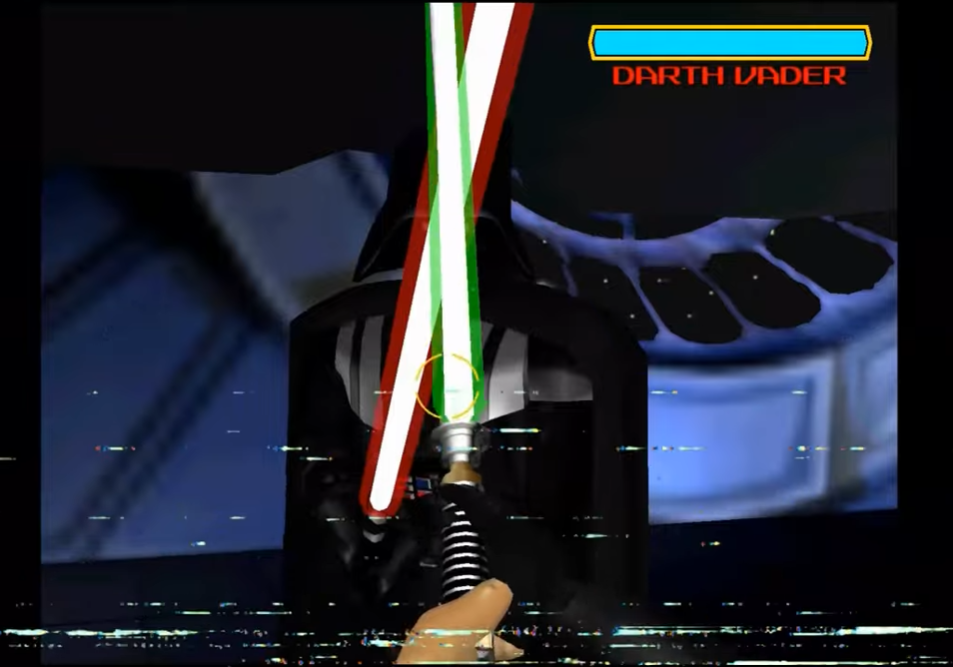
Luke faces Darth Vader aboard the second Death Star. As with the Boba Fett battle, the player follows joystick prompts to block and strike with a lightsaber. The controls are limited and heavily choreographed, but the physical motion of moving the arcade stick gives the encounter a tactile quality that a normal button press would not have delivered.
Contemporary and later critics often identified these boss encounters as the least precise part of the game. The joystick movements can feel awkward, and the sequence offers less control than its presentation suggests. Even positive reviews noted imperfections in the bonus-stage handling.
They are also the sequences people remember.
That tells you something important about arcade design.
Mechanical elegance matters.
But sometimes letting someone swing an enormous joystick while Darth Vader fills a 50-inch screen matters more.
The Final Battle Sends You Inside Death Star II
Once the three film missions are complete, the machine opens the final stage.
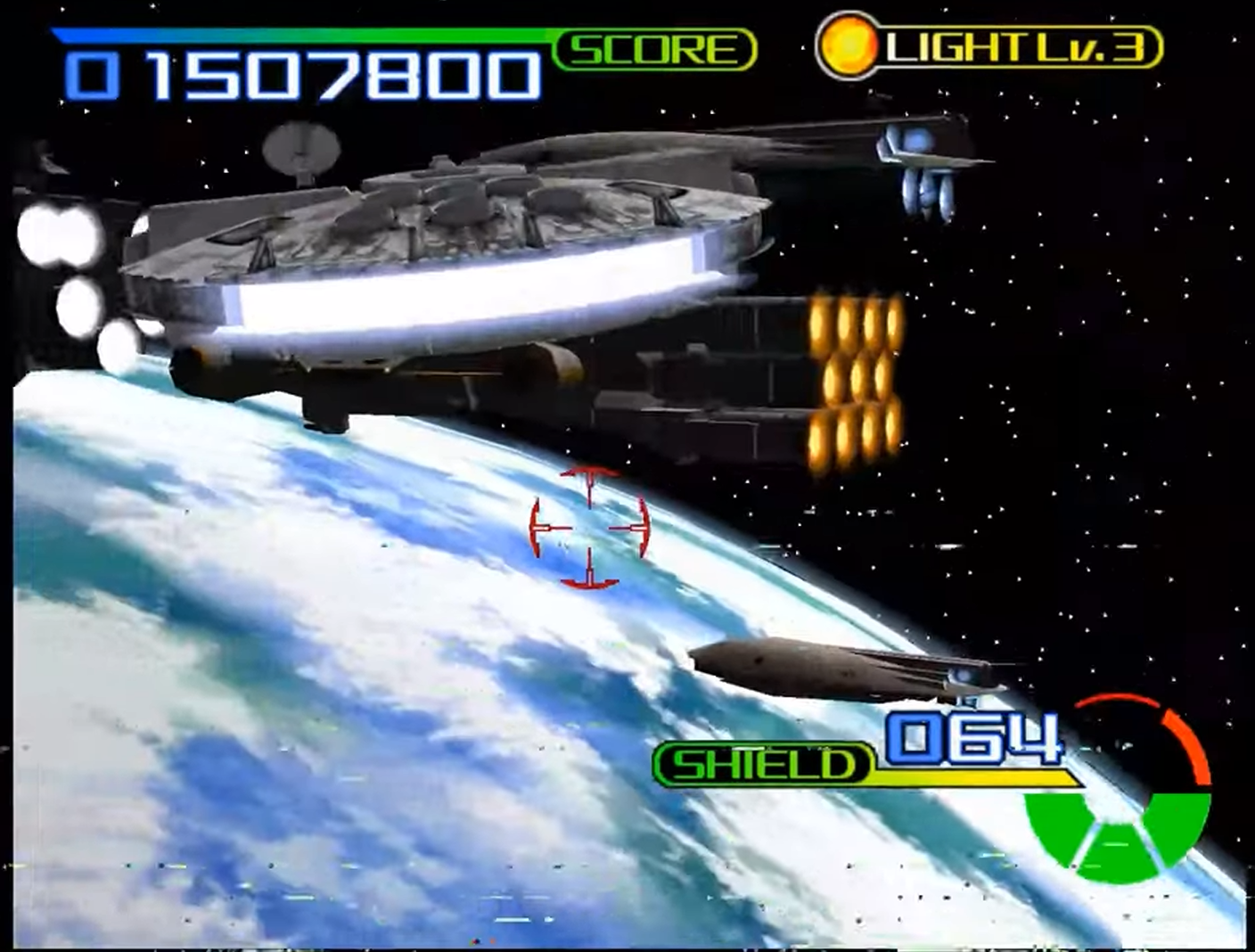
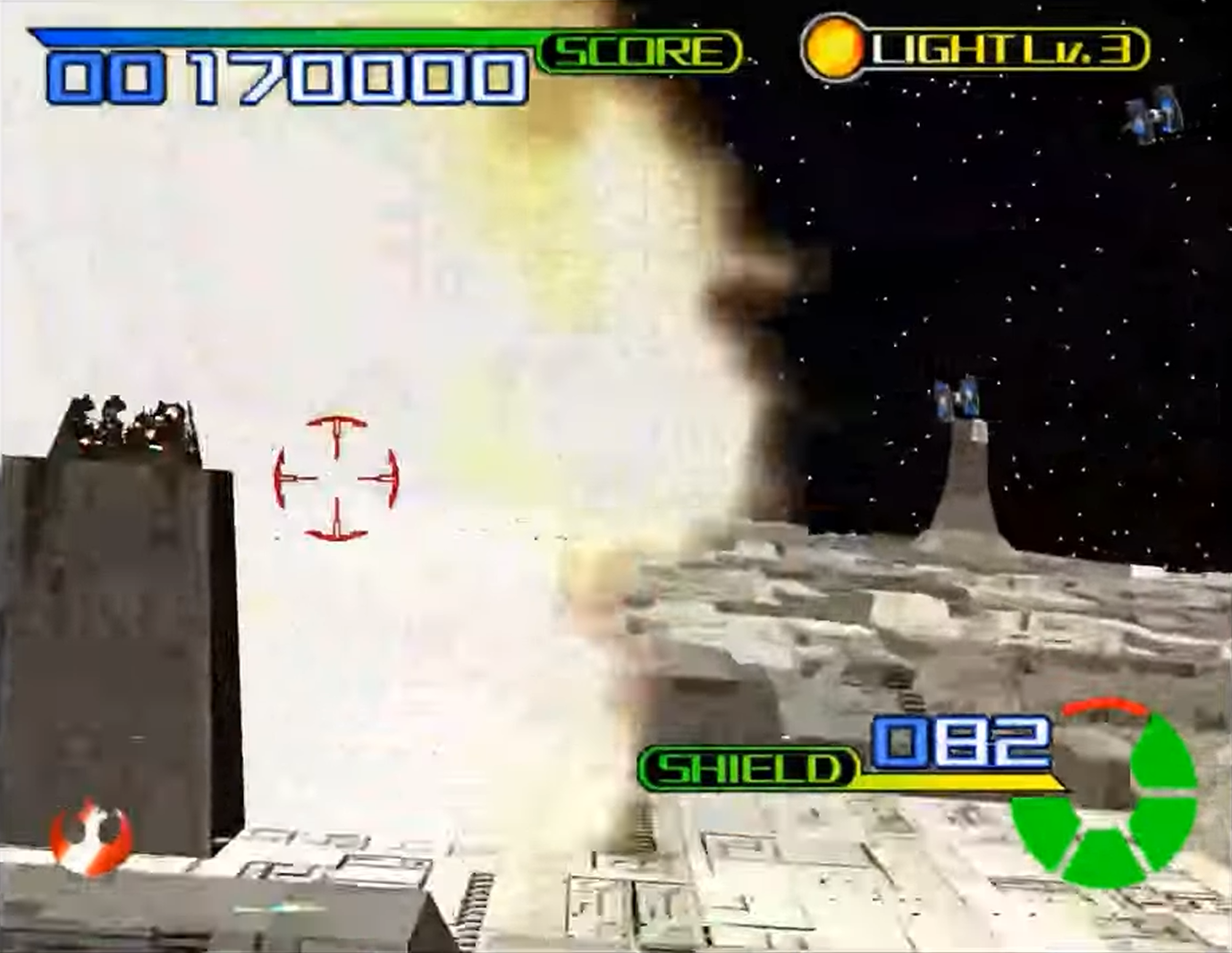
The player joins the space battle over Endor, attacks the second Death Star’s surface, and ultimately flies through its interior toward the reactor core. The stage follows the broad structure of the film’s final assault, compressing one of Star Wars’ biggest space battles into another escalating sequence of targets, explosions, narrow passages, and shouted instructions.
It is exactly the finale the game needs.
The first Death Star mission establishes the formula. Hoth and Endor provide variety. The lightsaber encounters deliver character spectacle. Then the final battle brings everything back to speed.
By this point, the machine is no longer pretending to offer a measured interpretation of the trilogy.
It is throwing the player into the reactor shaft because the arcade may close soon.
Sega Model 3 Made Home Consoles Look Nervous
The game ran on Sega’s Model 3 arcade platform, specifically hardware commonly identified as Model 3 Step 2.1.
That mattered.
During the late 1990s, arcade hardware could still produce visual experiences that home consoles struggled to match. The original PlayStation and Nintendo 64 were capable machines, but a large Sega cabinet running dedicated hardware offered smoother animation, richer environments, more detailed models, and a physical presentation that could not be reproduced by plugging a console into the family television.
Today, the graphics are obviously dated.
Character models are angular. Some textures are muddy. Animation occasionally exposes the limits of the period.
Yet the game still moves with confidence.
TIE fighters swarm across the screen. Walkers dominate the horizon. Speeder-bike sequences create genuine momentum. The camera constantly pushes forward. The Model 3 hardware gives the entire production an expensive, glossy quality that separates it from many licensed games of the same era.
It looked like a Star Wars attraction because Sega had built a machine powerful enough to keep the illusion moving.
Stopping was not part of the design.
The Sound System Did Half the Work
The visuals drew people toward the cabinet.
The sound closed the sale.
Sega equipped the machine with amplified stereo audio and a subwoofer, allowing engines, blaster fire, explosions, music, and sampled dialogue to punch through a crowded arcade.
John Williams’ themes were used aggressively.
There is no restraint because restraint would have been useless. You do not place a large Star Wars cabinet between racing games and light-gun shooters, then quietly suggest the Force.
The music announces itself.
TIE fighters scream between channels.
AT-AT footsteps carry weight.
Dialogue clips tell the player what to shoot next.
The deluxe cabinet did not simply show Star Wars. It occupied the space around it.
For a few minutes, the rest of the arcade became background noise.
It Was Simple, but It Was Not Mindless
At first glance, Star Wars Trilogy Arcade looks like a basic rail shooter.
Move crosshair.
Shoot Empire.
Repeat until financially uncomfortable.
There was more happening beneath the surface.
The game tracked hit chains, critical shots, shield condition, rapid eliminations, hidden tasks, targets destroyed, and special-event performance. Shooting friendly forces could lower the player’s Force level, while completing stages restored shield energy. High-level play required learning target patterns, controlling weapon heat in certain sections, protecting allies, and recognizing opportunities to build scoring combinations.
This gave the machine two identities.
For most players, it was a loud Star Wars experience that could be understood immediately.
For dedicated arcade regulars, it became a scoring game.
They learned when enemies appeared.
They memorized event prompts.
They discovered secret objectives.
They chased higher rankings while everyone else was simply trying to survive Hoth.
That balance is one of Sega’s greatest arcade strengths. The game is easy to start and difficult to play perfectly.
You can understand the fantasy in ten seconds.
Mastering the score takes considerably longer and substantially more money.
Reviews Understood the Spectacle, Even When They Questioned the Depth
Reception was generally positive, although not universal.
Some critics praised the graphics, sound, responsive main controls, varied mission design, and ability to recreate familiar scenes with remarkable intensity. AllGame awarded it 4.5 out of 5, according to surviving review records, while other publications were less impressed by its linearity, bonus-stage controls, and relatively shallow interaction.
That disagreement is understandable.
Judge it as a deep home game, and it is short, guided, and mechanically limited.
Judge it as an arcade attraction, and it is remarkably effective.
The cabinet does not need to provide 40 hours of content. It needs to convince someone walking past that the Battle of Hoth is worth one more credit.
It does.
Very quickly.
The Home Version Everyone Expected Never Arrived
The great frustration surrounding Star Wars Trilogy Arcade is that Sega never released it for a home system.
The Dreamcast seemed like the obvious destination. It was strongly associated with Sega’s arcade output and received conversions of several major arcade games. A home edition of Star Wars Trilogy Arcade would have arrived with a ready-made audience and one of the most recognizable licenses on the planet.
It never happened.
No Dreamcast version.
No PlayStation conversion.
No later console collection.
No official PC release.
The game remained trapped inside increasingly rare arcade cabinets.
That absence changed its legacy.
Home releases can become common. They sit on shelves, enter digital storefronts, receive remasters, and become part of ordinary retro collections.
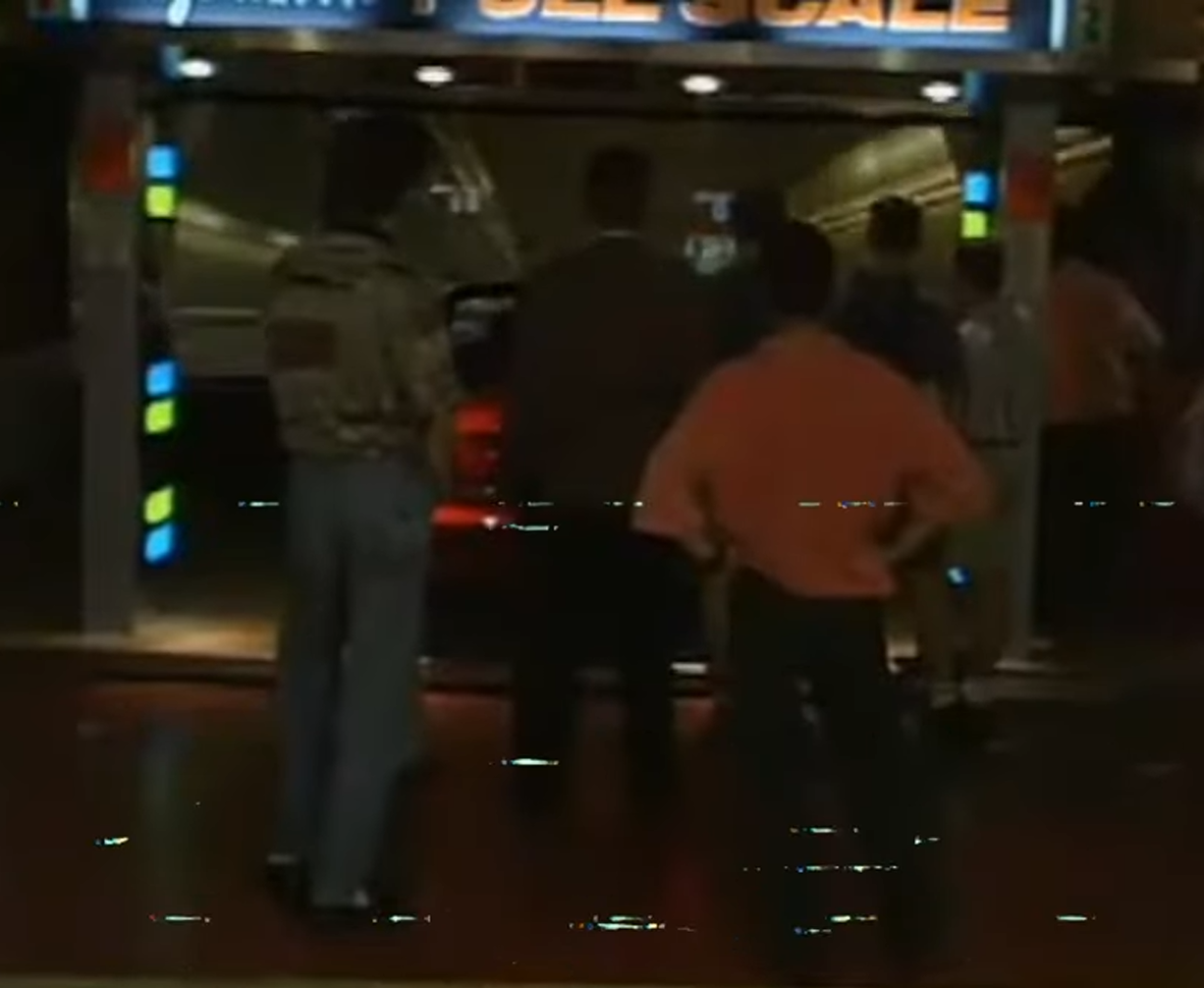
Star Wars Trilogy Arcade became something people remembered finding.
At a cinema.
At a bowling alley.
At a holiday arcade.
At a seaside resort where the joystick had survived a decade of children attempting to physically steer the Death Star.
The machine became tied to places and moments.
That made it harder to preserve, but easier to mythologize.
Preservation Has Kept the Battle Running
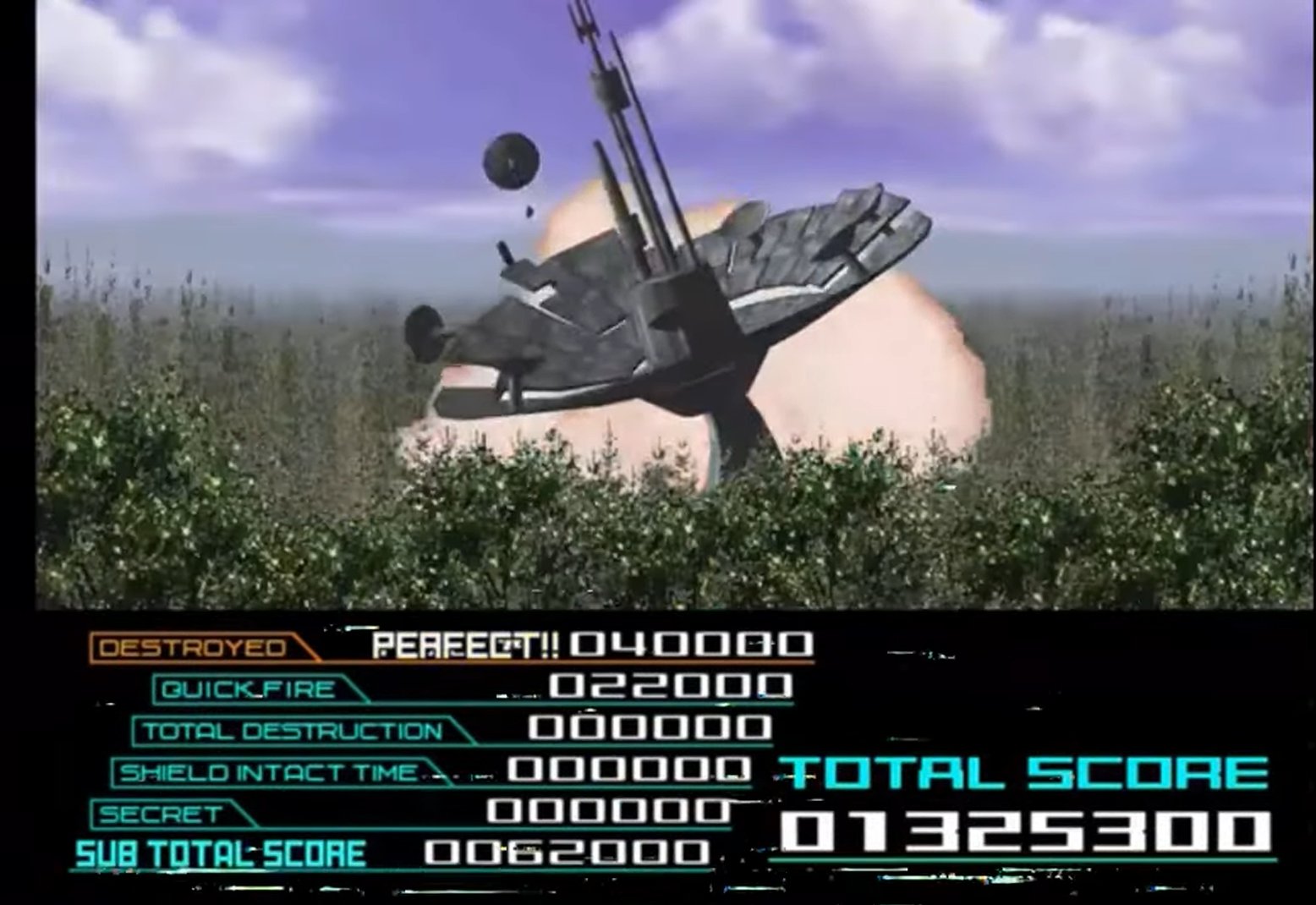
Original cabinets still survive in private collections and some arcades, although maintaining Model 3 hardware, projection displays, control assemblies, and decades-old electronics is not a casual hobby.
Emulation projects have also made Sega Model 3 games accessible on modern computers, allowing Star Wars Trilogy Arcade to survive beyond the physical machines. However, recreating the software does not fully reproduce the cabinet’s scale, controller, audio system, glowing event button, or the quiet terror of realizing your final coin has disappeared during the Death Star trench run.
The code can be preserved.
The room is harder.
That is a recurring problem with arcade history. A home game is usually defined by the software. An arcade game is software, controls, cabinet, sound, screen, location, and the person waiting behind you who believes they could have defeated Vader faster.
Remove enough of those pieces, and something changes.
Why Star Wars Trilogy Arcade Belongs in the Archive
This game is more than a collection of famous movie scenes.
It represents a point when arcades could still offer something home systems genuinely could not match.
The cabinet was huge.
The hardware was expensive.
The sound was physical.
The controls were built around the experience.
Sega did not need to create a virtual world containing every corner of the original trilogy. It selected the moments players most wanted to inhabit and delivered them with almost no delay.
The Death Star trench.
The evacuation of Hoth.
The forests of Endor.
Boba Fett at the Sarlacc.
Luke against Vader.
The reactor core.
It is not the complete original trilogy.
It is the version remembered by someone who watched the films as a child and mentally removed every scene where nobody was shooting at anything.
There is purity in that.
The Original Trilogy, Served Three Minutes at a Time
Modern Star Wars games often chase scale.
Bigger maps.
Longer campaigns.
More characters.
More systems.
More reasons to spend 20 minutes sorting gloves by statistical value.
Star Wars Trilogy Arcade came from a different philosophy.
It knew the player might only have a few minutes.
So it made those minutes count.
The screen filled with ships.
The cabinet shook with sound.
The event button flashed.
The Empire placed another planet-sized battle station directly in front of someone carrying loose change.
Bad planning, really.
But excellent arcade design.
Frequently Asked Questions
What is Star Wars Trilogy Arcade?
Star Wars Trilogy Arcade is a first-person rail shooter developed by Sega’s AM Annex and released for arcades in 1998. It recreates major battles from the original Star Wars trilogy using vehicle combat, first-person shooting, and scripted lightsaber encounters.
What was the primary platform for Star Wars Trilogy Arcade?
The game was developed exclusively for arcade hardware and ran on Sega’s Model 3 platform. It never received an official home-console or PC conversion.
Who developed and published Star Wars Trilogy Arcade?
It was developed by Sega AM Annex, also credited through Sega’s AM3 R&D organization, and published by Sega.
Which missions are included in Star Wars Trilogy Arcade?
The three selectable missions cover the Battle of Yavin, the Battle of Hoth, and the ground battle on Endor. Completing them unlocks the final assault on the second Death Star.
Can you fight Darth Vader in Star Wars Trilogy Arcade?
Yes. One of the bonus stages places Luke Skywalker in a scripted lightsaber duel against Darth Vader. Another bonus encounter involves reflecting Boba Fett’s blaster fire back at him near the Sarlacc pit.
What does the Special Event button do?
The Special Event button lights up during specific scripted moments. Pressing it triggers actions such as assistance, evasive maneuvers, or cinematic attacks.
Was Star Wars Trilogy Arcade released on Dreamcast?
No. Despite its strong association with Sega arcade hardware and frequent interest in a Dreamcast conversion, no official home version was released.
Is Star Wars Trilogy Arcade still playable today?
Original machines can still be found in some arcades and private collections. Sega Model 3 emulation also exists, although playing on a computer cannot completely reproduce the scale, controls, sound, and physical presentation of the original cabinet.
Author

Related Posts

Star Wars: Unlimited’s Ashes of the Empire Launches Today, and Endor Is About to Get Messy
PowerWash Simulator 2 Devs Talk Star Wars, Because Apparently the Galaxy Needed a Cleaning Droid Hero
The Mandalorian and Grogu Is Coming Home, and Star Wars’ Streaming-Cinema Loop Is Still Strange
Star Wars: Masters of Teräs Käsi (1997): The Fighting Game Everyone Remembers for the Wrong Reasons
KOTOR Launched on Xbox 23 Years Ago, and Star Wars RPGs Were Never the Same
Spaceballs 2 Is Already Mocking The Mandalorian and The Rise of Skywalker, Which Is Exactly What It Should Be Doing
George Lucas Says Star Wars Was Always for Kids, and He’s Still Not Letting Fans Make the Movie
George Lucas Says AI Is the Future of Filmmaking, and Honestly, That’s Very George Lucas