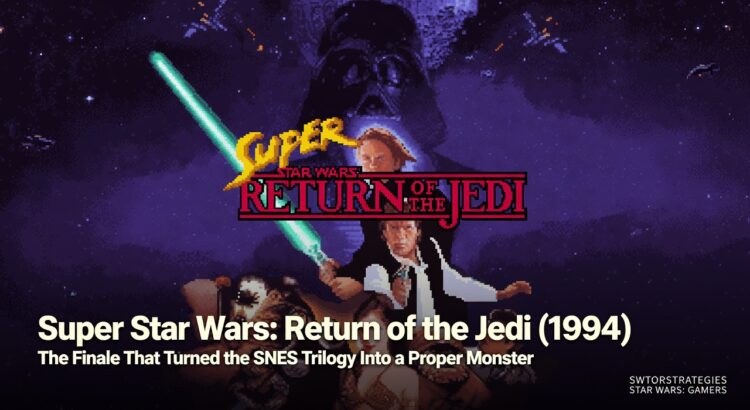
If Super Star Wars (1992) was the moment Star Wars found its 16-bit swagger, and Super Star Wars: The Empire Strikes Back (1993) was the sequel that sharpened that swagger into something a little colder and much meaner, then Super Star Wars: Return of the Jedi (1994) is the finale where the whole thing stops pretending to be a respectable movie adaptation and just becomes a beautiful, aggressive, mildly unhinged SNES beast.
And honestly, that was probably the right move.
This was the third and final game in the Super Star Wars trilogy, and by the time it arrived, the formula was fully locked in. Big sprites. Loud action. Movie scenes remixed into game logic. Enemies everywhere. Bosses where there really did not need to be bosses. Platforming with opinions. A soundtrack doing its best to drag John Williams through the SNES sound chip and come out swinging.
As part of our Complete List of All Star Wars Games Ever Made (1979–Present), this is one of those games that absolutely earns its place. It also fits right into the Star Wars Games (1990–1999) hub, and it works especially well as the natural follow-up to our recent looks at Super Star Wars (1992) and Super Star Wars: The Empire Strikes Back (1993). The first game made Star Wars loud in 16-bit. The second made it cruel. This one decided the finale should be bigger, stranger, and just chaotic enough to leave permanent marks on your memory.
Return of the Jedi Was Always the Wildest Fit for This Formula
One of the best things about Super Return of the Jedi is that it is adapting the loosest, busiest, most tonally all-over-the-place movie in the original trilogy.
That is not an insult. It is a gift.
Return of the Jedi gives the game a ridiculous amount to work with: Jabba’s Palace, the rancor, the Sarlacc pit, speeder bikes on Endor, Ewoks, scout troopers, the shield bunker, the second Death Star, Darth Vader, the Emperor, and the final space battle. There is so much material in that film that the game barely has to fake variety. It just grabs huge chunks of the movie, cranks up the danger, and lets the SNES do the rest.
That immediately gives the game a different energy from the first two.
The original Super Star Wars was iconic, but it was still mostly Tatooine grit, cantina trouble, and Death Star business. Super Empire Strikes Back had stronger atmosphere and probably the better dramatic shape. Super Return of the Jedi is the one that feels the most like it is running on pure sugar and bad ideas in the best possible way. Every time the game needs a new gimmick, vehicle section, boss encounter, or excuse to throw nonsense at you, Return of the Jedi the movie just casually provides another one.
The Game Starts Fast and Stays Loud
This is one of the smartest things it does.
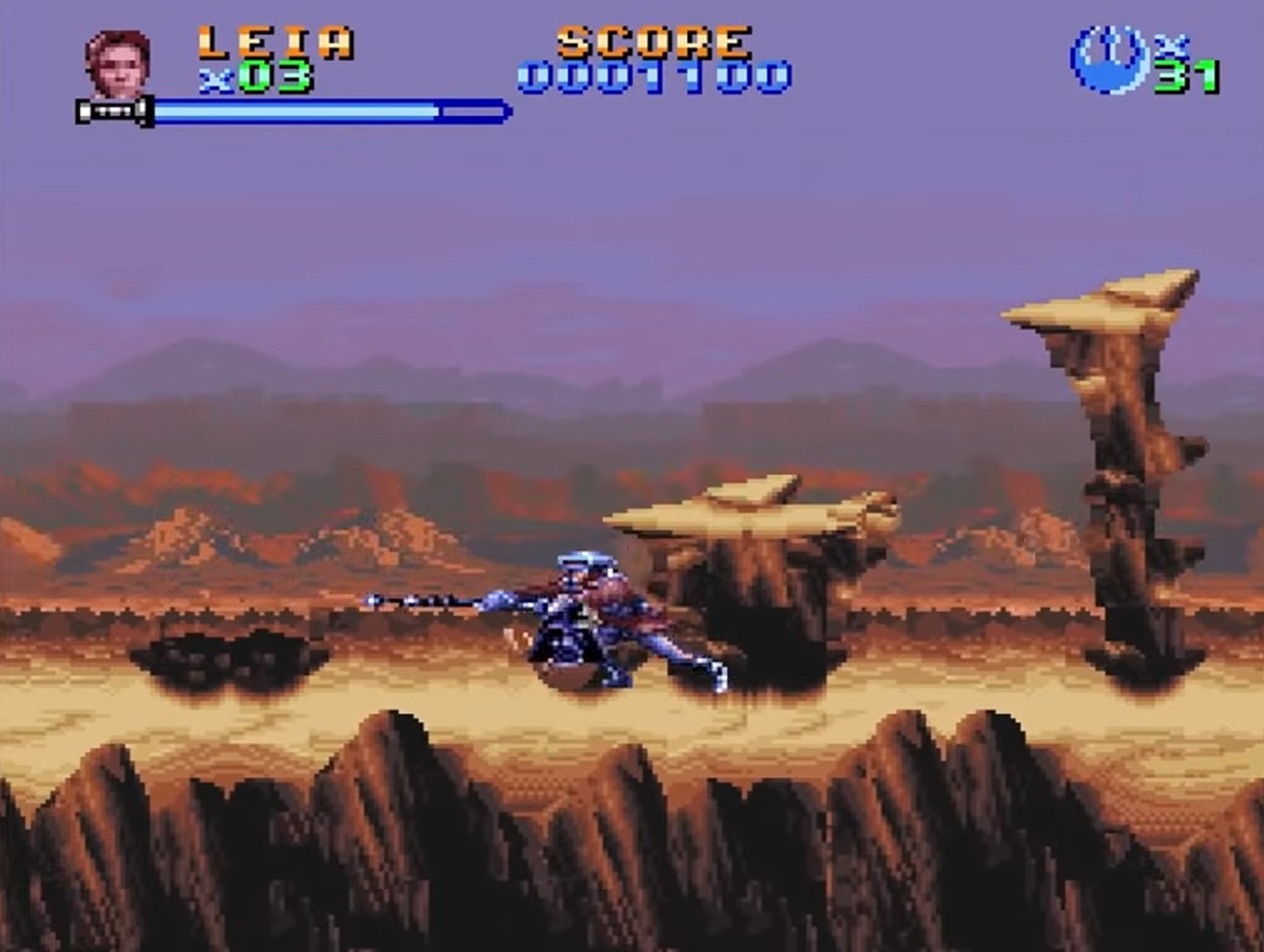
It does not waste half an hour politely warming up. It knows you bought a game called Super Star Wars: Return of the Jedi, so it gets moving. You are into action, set pieces, and weird danger almost immediately. That suits the trilogy by this point, because the series had already trained players to expect something more explosive and more demanding than a slow movie retelling.
And yes, this is still very much a game that believes in making you work for every bit of progress.
But there is a difference between a hard game that feels repetitive and a hard game that keeps changing the scenery while it beats you up. This one benefits enormously from the film’s variety. The game can jump from desert weirdness to palace monsters to forest speed to imperial machinery without ever feeling like it has been trapped in one mood too long. Even when it is difficult, it usually stays lively.
That goes a long way.
Leia and Wicket Help the Game Feel Bigger Than the Earlier Entries
One of the most important upgrades here is the playable cast.
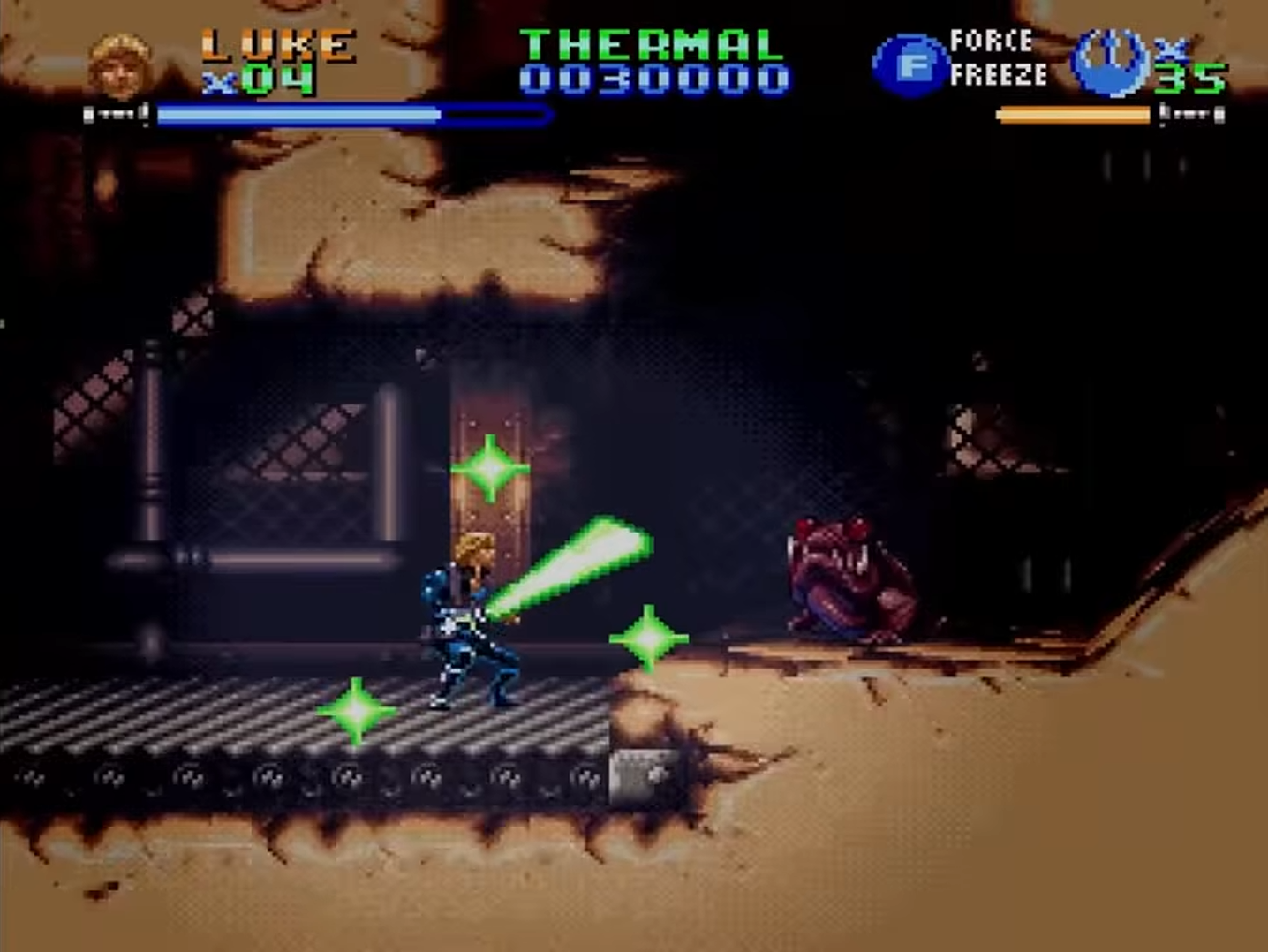
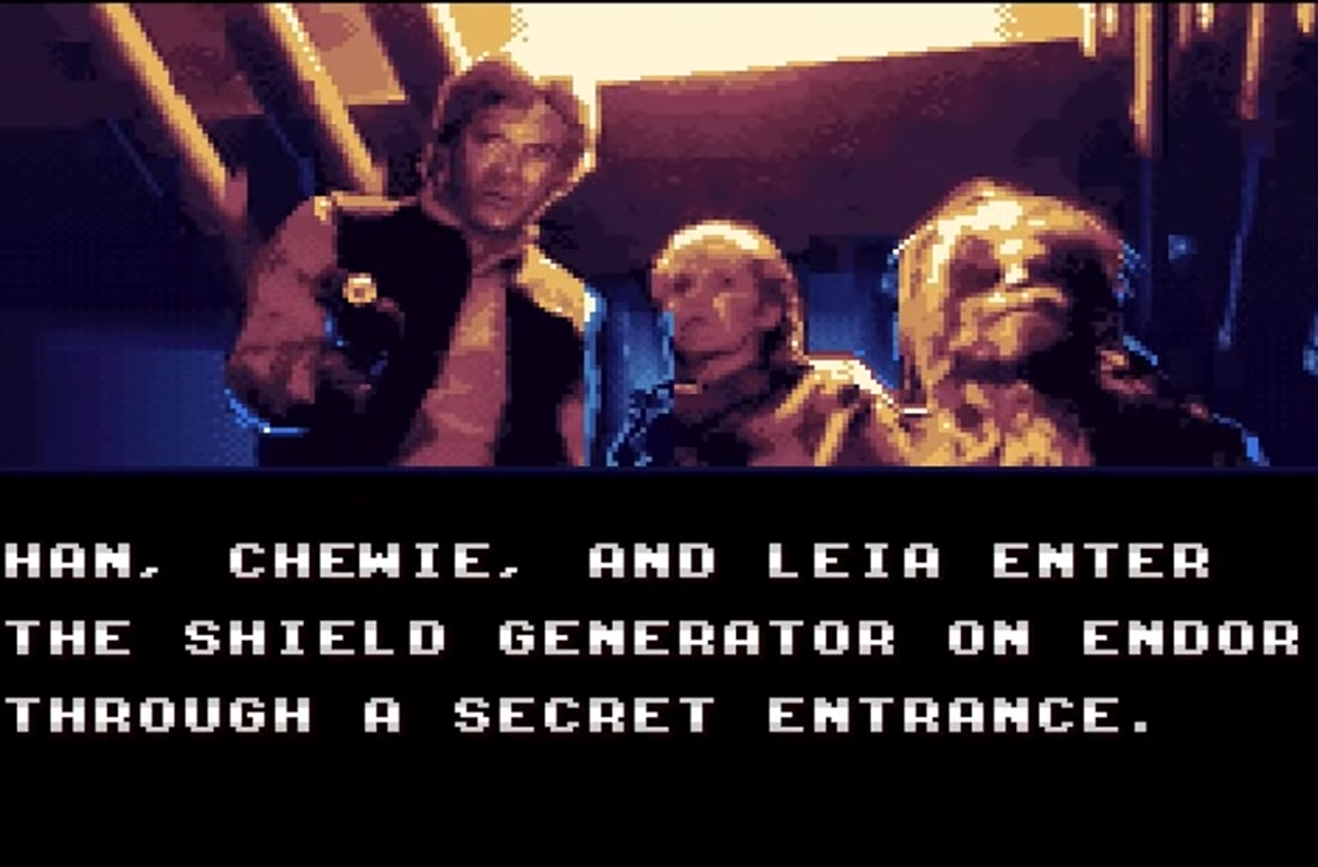
Luke, Han, and Chewie are still here, of course, because it would be strange if they were not. But Super Return of the Jedi also adds Leia and Wicket, which gives the whole campaign a broader and much more playful personality.
That matters more than it might sound.
Part of what makes this game feel like the biggest of the trilogy is that it is not just recycling the same three-character rhythm. Leia adds another texture to the action, and Wicket gives the game something even more unusual: a character who makes this already slightly deranged trilogy feel even more specifically Return of the Jedi. You are no longer just playing the heroes everybody expects in a Star Wars action game. You are playing the actual weird, mixed-up shape of Jedi as a film.
And that is exactly what the game should be doing.
The trilogy had already figured out that playable variety was a strength. This was the moment where that idea got a little more adventurous.
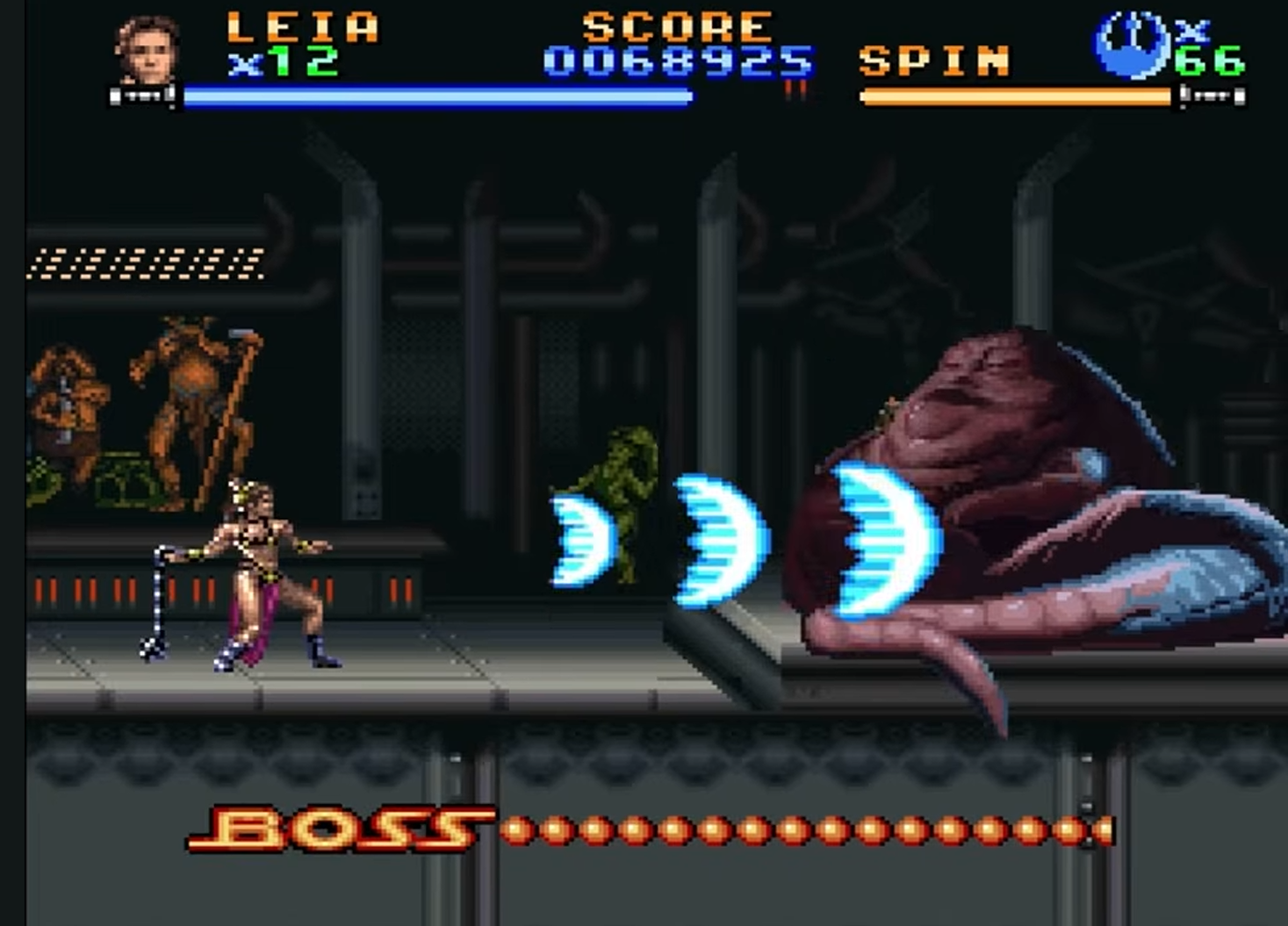
Jabba’s Palace Material Is Exactly the Kind of Stuff These Games Love
The SNES trilogy has always been at its best when it takes a movie location and turns it into a video game version of itself with absolutely no restraint.
Jabba’s Palace is perfect for that.
You have monsters, traps, guards, cramped interiors, dramatic confrontations, and enough room for the game to say, “What if this was all much longer and much angrier?” There is something deeply on-brand about a 16-bit Star Wars game looking at one of the trilogy’s most memorable set pieces and deciding it should also function as a full obstacle course designed by people who maybe had a few issues to work through.
And then the game keeps going.
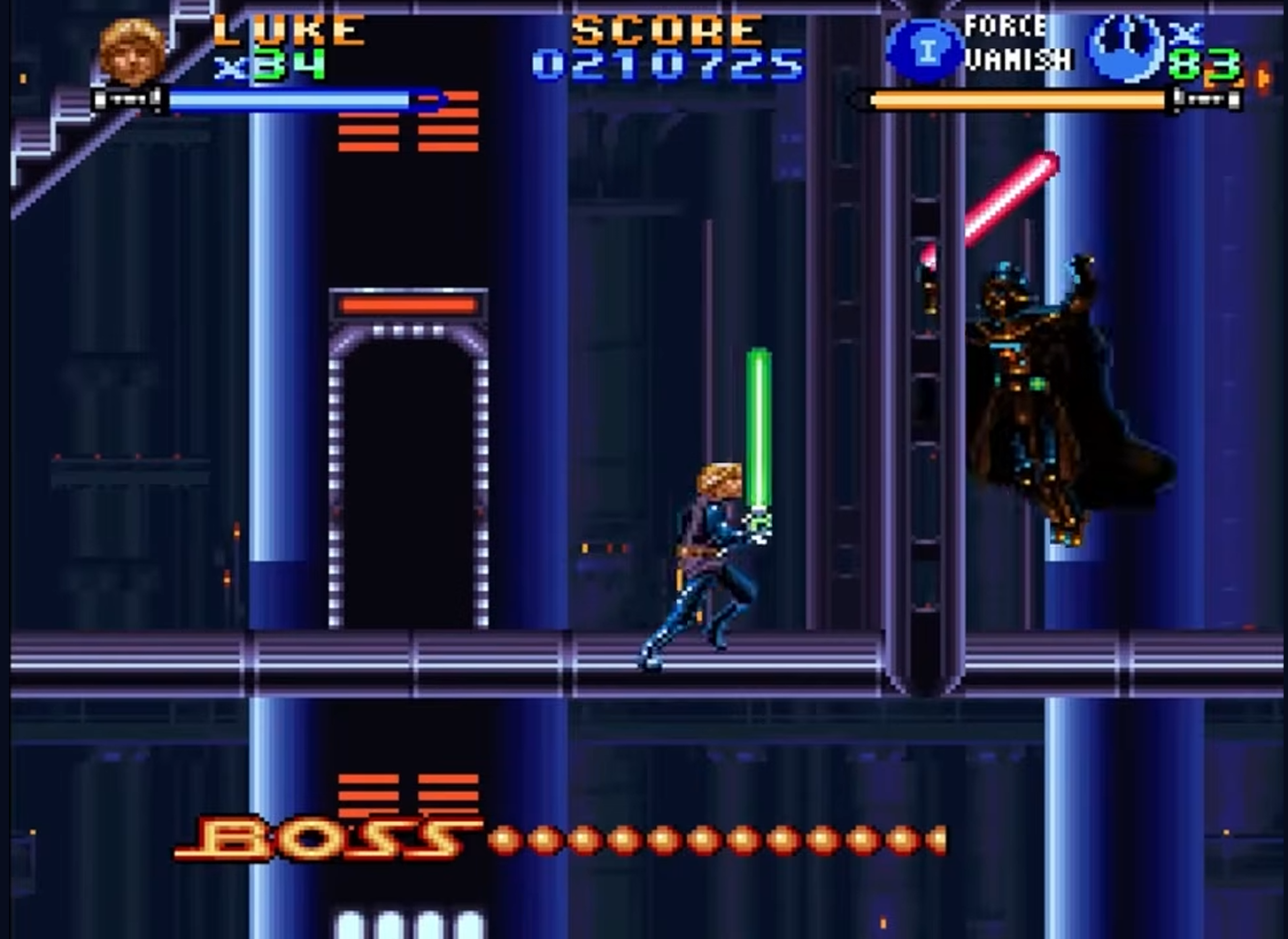
The rancor is obviously exactly the kind of boss this series wants. The Sarlacc material is exactly the kind of sequence it wants. By the time the game gets into its later Endor and Death Star material, it already feels like it has earned the right to be this loud and this ridiculous.
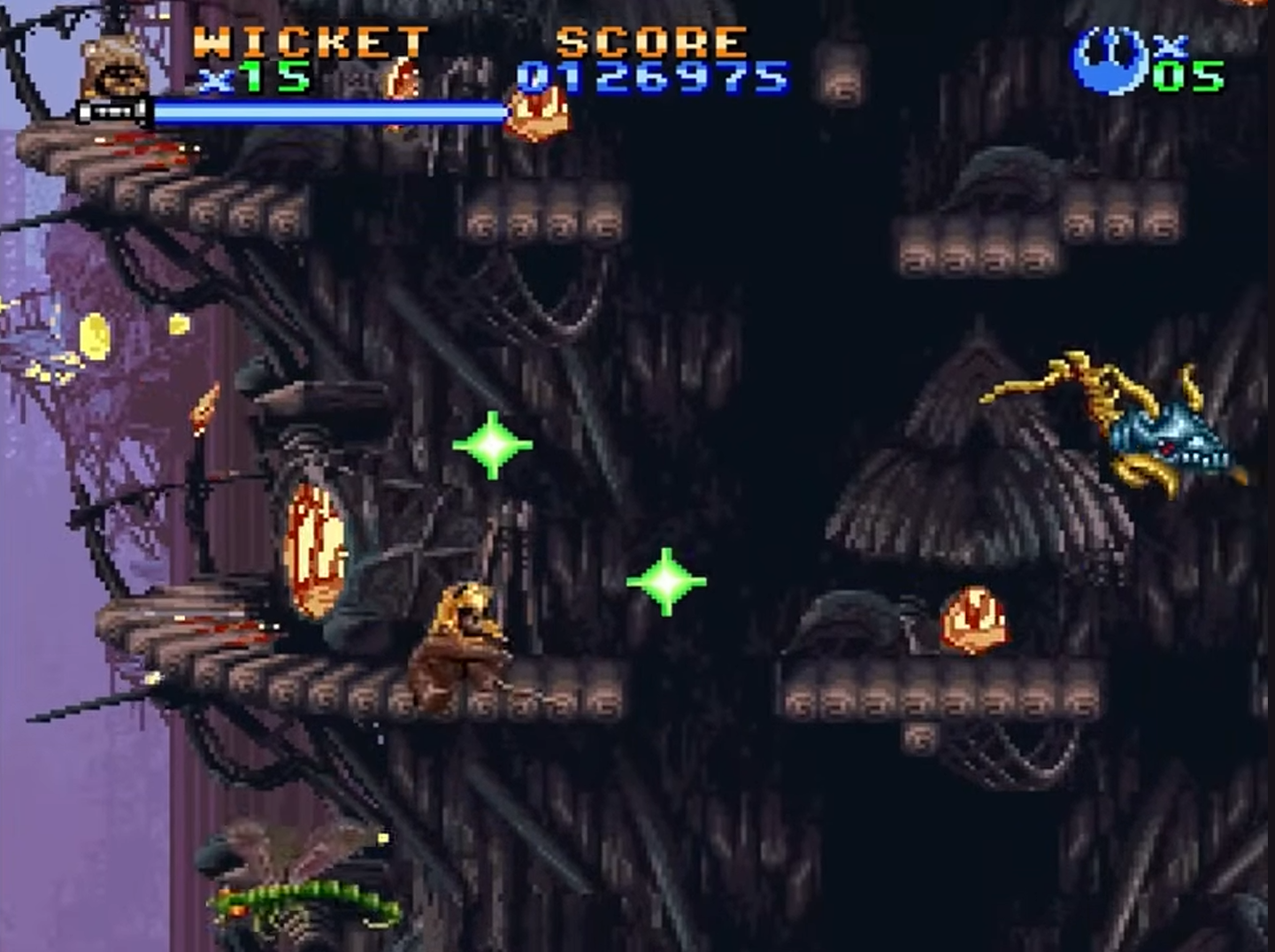
Endor Gives the Game Its Best Kind of Chaos
This might be the part that makes the whole thing really come alive.
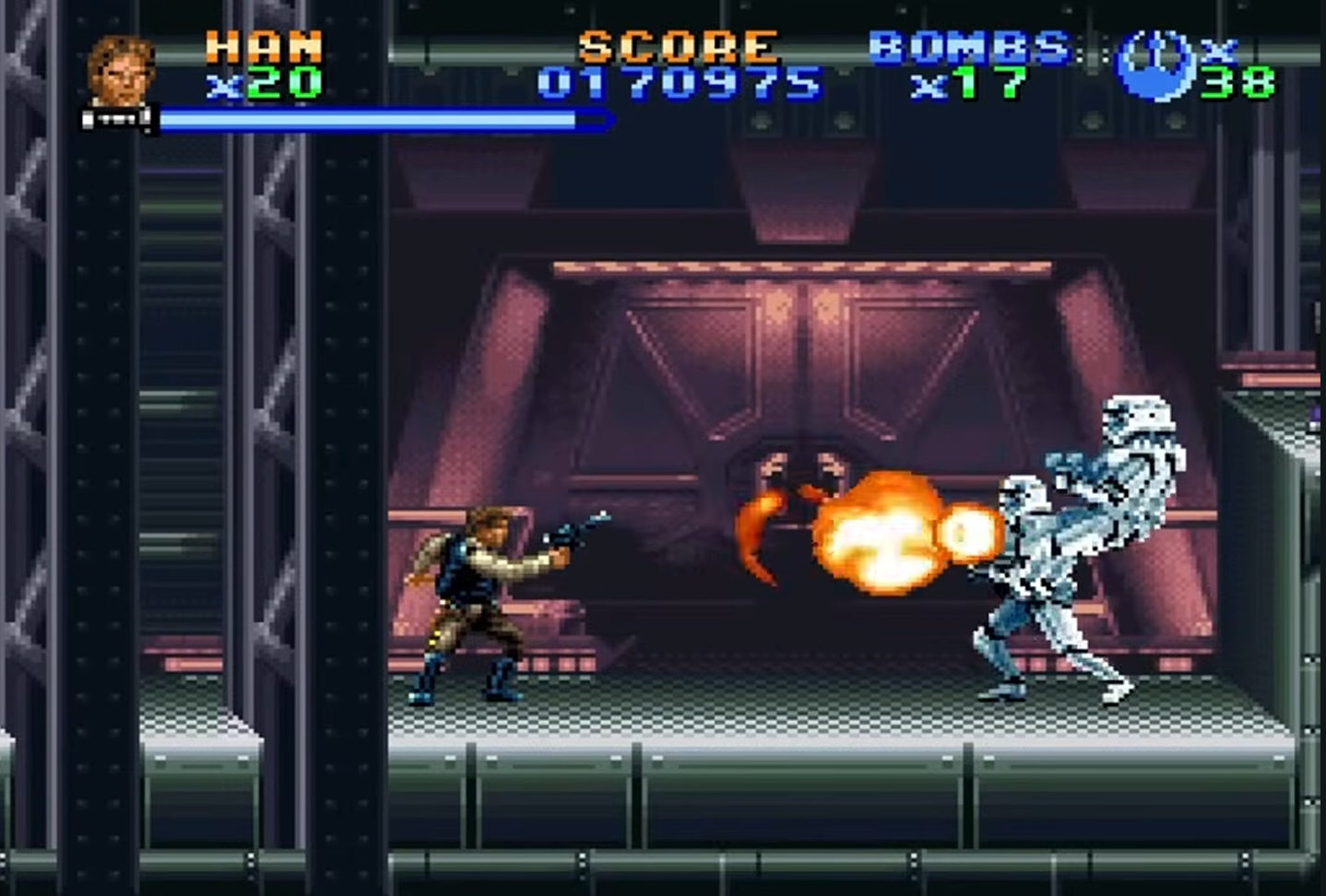
Endor is a fantastic setting for a 16-bit action game because it naturally supports speed, clutter, and panic. The forest moon sections give the game movement and urgency in a way that the earlier trilogy entries only touched occasionally. The famous speeder bike material in particular is exactly the sort of thing this series was built to exploit. It is cinematic already, so the game barely needs to invent a reason to make it intense.
It just needs to make it harder.
And it does.
By this point, the trilogy had become very good at taking recognizable movie moments and turning them into something halfway between adaptation and assault. The Endor sections are where that whole design philosophy really pays off. They are not subtle. They are not especially peaceful. But they absolutely feel alive.
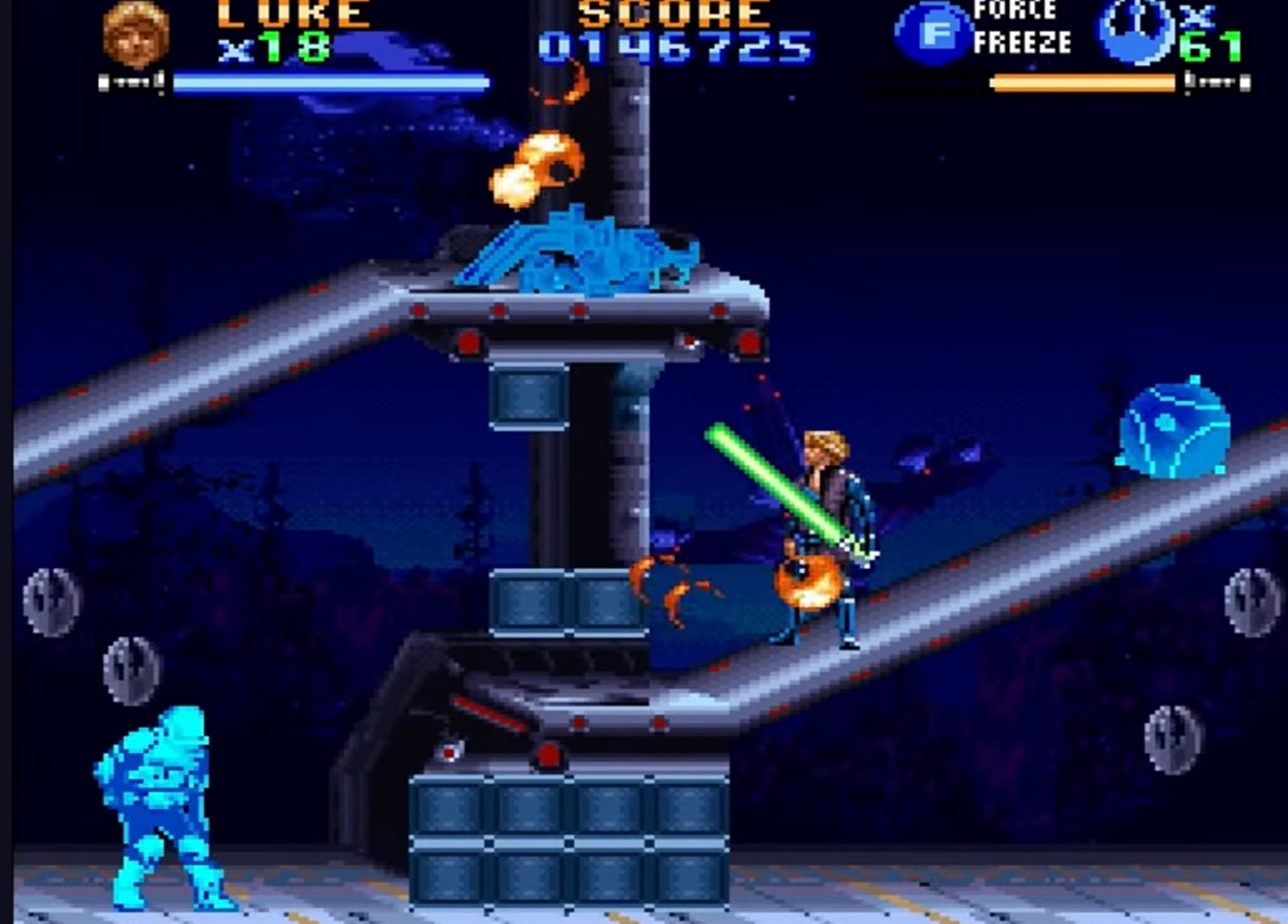
It Still Loves Being a Video Game More Than a Movie Recreation
This is one of the reasons the trilogy remains memorable.
These games are not shy about changing the shape of the films to suit themselves. They expand scenes, invent hazards, rearrange pacing, and generally behave like the source material is a launchpad rather than a sacred text. Super Return of the Jedi is no exception. It takes the broad emotional and visual identity of the movie and turns it into something more aggressive, more immediate, and much more game-shaped.
That is exactly why it works.
A more literal version might have been more “accurate,” but it probably would have been flatter too. The Super Star Wars games survive because they understood that fidelity is not the same thing as energy. You can feel Return of the Jedi in this game even when it is being completely unreasonable. The atmosphere is there. The characters are there. The locations are there. The drama is there. The fact that it occasionally expresses all of that by dumping another wave of enemies on your head is just part of the language.
A rude language, yes. But a language.
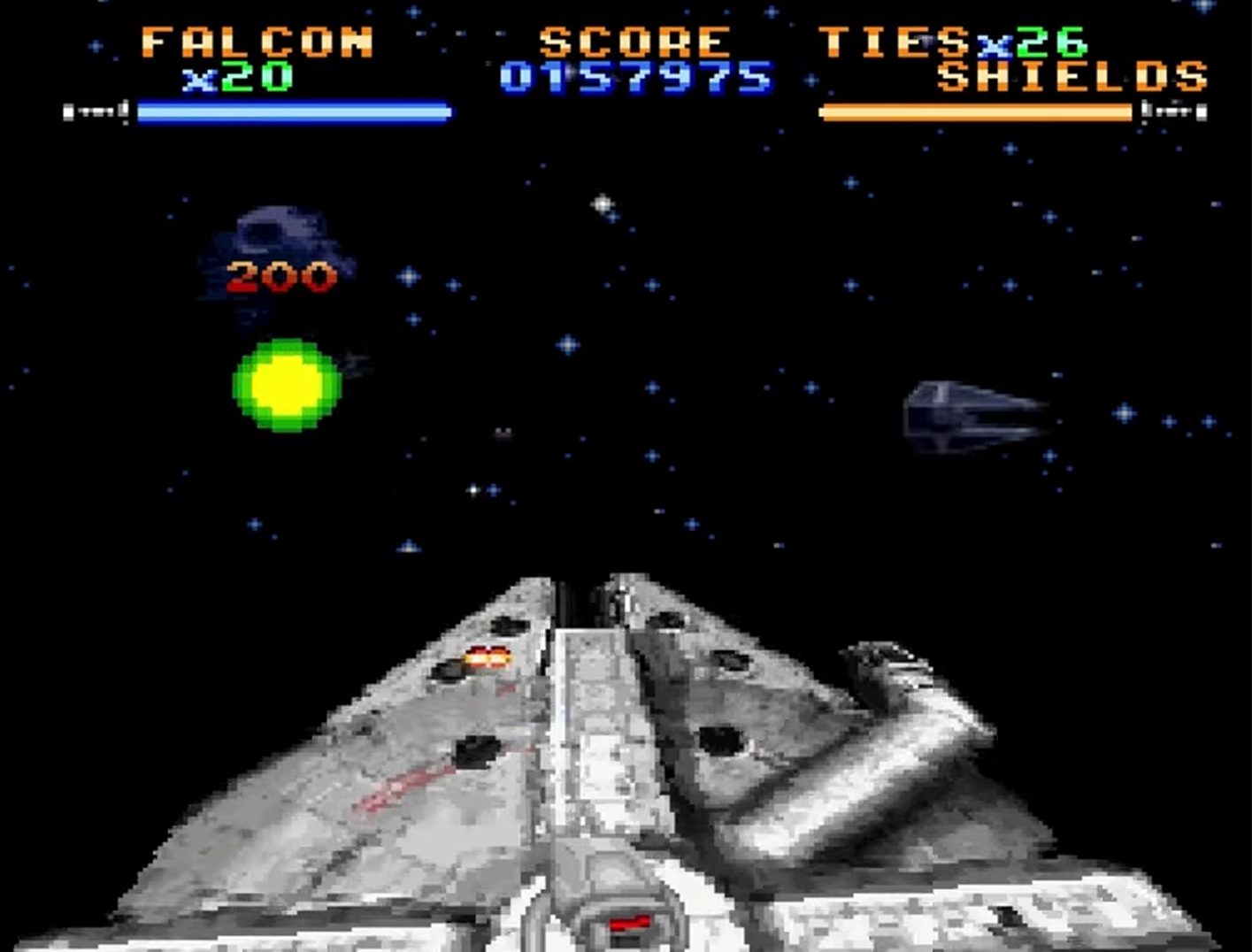
The Presentation Was Still a Huge Part of the Appeal
It would be very easy to talk about this trilogy only in terms of difficulty, but that would sell it short.
The reason people tolerated, loved, or at least vividly remembered these games is that they looked and sounded fantastic for what they were. Super Return of the Jedi keeps that tradition alive. It has that same crunchy, dramatic, very alive 16-bit presentation that made the other two games stand out. Big action. Rich color. Strong atmosphere. A sense that the cartridge is genuinely trying to impress you.
And in 1994, that mattered a lot.
By then the SNES had plenty of strong-looking games, so a movie license could not just show up and expect applause for existing. It had to perform. This one did. Even if players occasionally wanted to throw controllers across the room, they were at least doing it while staring at a game that looked like it cared.
That helps.
Reception Was Mixed in Places, But the Legacy Stayed Strong
This is where things get interesting.
Unlike some nostalgic favorites that were universally adored at the time, Super Return of the Jedi had a slightly more mixed immediate reception depending on who you asked. Some critics praised the visuals, challenge, and overall package. Some found the controls or level design frustrating. That is not surprising. A game this committed to pushing the player around was always going to split opinion a bit.
But history has been kind to it.
Part of that is because it completed the trilogy properly. Part of it is because it added enough variety to feel like more than just “another one of those.” And part of it is because, over time, retro players tend to respect games that had the confidence to be a little excessive. Super Return of the Jedi is definitely excessive. It may not be the most elegant game in the trilogy, but it is probably the one that most fully embraces the idea that this series should be a large, noisy, slightly deranged 16-bit event.
There is something admirable about that.
Why It Matters in the Archive
This is the point where the Super Star Wars trilogy becomes a complete story instead of just a strong run.
Super Star Wars (1992) proved the SNES formula worked.
Super Star Wars: The Empire Strikes Back (1993) sharpened it.
Super Star Wars: Return of the Jedi (1994) finishes the job.
That alone makes it important.
But it also matters because it shows Star Wars game design at a very specific moment in time, before the franchise fully scattered into fighters, shooters, sims, RPGs, and everything else the later 1990s would bring. This was still the era where “make the movie into a punishing action game” felt like a totally reasonable flagship approach. And on SNES, somehow, it kind of was.
That is why this game belongs in the archive. Not because it is flawless. Not because it is gentle. Not because it is even the easiest one to recommend to normal people with healthy blood pressure.
It belongs because it completes one of the most recognizable, demanding, and strangely beloved Star Wars trilogies in gaming history.
The View from Endor Orbit
There are smarter Star Wars games than Super Return of the Jedi.
There are cleaner ones too. There are certainly more relaxed ones.
But this one still matters because it finishes the Super Star Wars trilogy exactly the way it probably needed to be finished: bigger, busier, more varied, more cinematic, and still just mean enough to make sure you remember it.
That is not subtle design.
That is a finale.
FAQ
What is Super Star Wars: Return of the Jedi?
It is a 1994 SNES action game based on Return of the Jedi and the third entry in the Super Star Wars trilogy.
Who developed Super Star Wars: Return of the Jedi?
The SNES version was developed by LucasArts and Sculptured Software and published by JVC Musical Industries.
What platform was it released on originally?
It originally launched on the Super Nintendo Entertainment System in 1994.
Which characters can you play as?
The game expands the trilogy’s cast with playable Luke, Han, Chewbacca, Leia, and Wicket.
Why is Super Return of the Jedi worth revisiting today?
Because it completes the SNES trilogy in full chaotic style, with strong 16-bit presentation, more playable variety, and some of the most memorable set pieces in the whole run.
Is it the best game in the Super Star Wars trilogy?
That is still a proper retro argument, which is usually a sign the game did something right.
Author

Related Posts

Star Wars Eclipse Developers Are Reportedly Striking to Save the Game
LEGO Star Wars: Castaways Gives Players One Last Shot at Attack of the Clones Gear
SWG Legends’ June 2026 Update Brings Empire Day Back and Gives Bespin a Serious Push
Which Star Wars Game Should You Play Next? Take the Quiz

The Mandalorian and Grogu Helping Disney Pass $3B Makes the Box Office Story Messier
From Blank Screen to Stunning Visual: How Nano Banana Pro Transforms the Way You Create Images
Disney’s Star Wars Food-Truck Droids Are Exactly the Kind of Park Chaos Galaxy’s Edge Needs
A Man Played The Imperial March at National Guard Troops. D.C. Just Settled the Lawsuit