
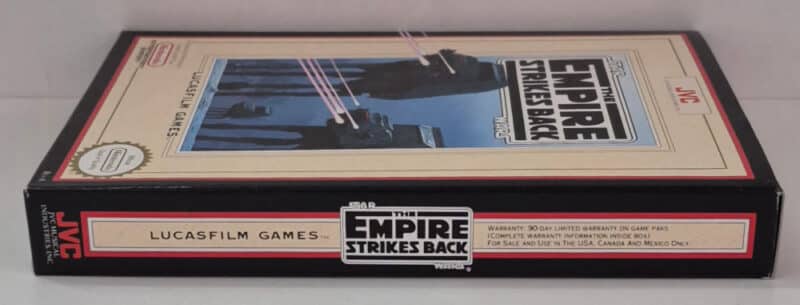
If Star Wars (1991) took A New Hope and turned it into a weird, hard platformer with a surprisingly personal grudge against the player, then The Empire Strikes Back (1992) looked at that formula and decided it needed more snow, more punishment, and a slightly darker mood. That was not a terrible instinct. Based on the 1980 film, the game launched on NES in 1992 and later came to Game Boy, with the NES version credited to Lucasfilm Games and Sculptured Software, and the Game Boy version credited to NMS Software.
As part of our Complete List of All Star Wars Games Ever Made (1979–Present), this one matters because it continues a very specific and very early-90s idea of what Star Wars should feel like on home hardware. It also sits naturally in the Star Wars Games (1990–1999) hub, right after Star Wars (1991), because together they form a sort of accidental two-part thesis: take beloved films, run them through hard console-action logic, and see what survives. Quite a lot, as it turns out.
The same basic formula, just colder and angrier
The easiest way to explain The Empire Strikes Back (1992) is that it is a direct sequel in spirit to the previous NES Star Wars game, but with a better sense of escalation. It is still an action-platform game. It still follows the film in broad strokes rather than literal scene-by-scene reverence. It still expects the player to endure jumps, enemies, bosses, and a fairly rude amount of pressure. But now the material itself is darker, and the game benefits from that.
That shift helps immediately. The Empire Strikes Back the film already has more texture for a game like this: Hoth, the wampa cave, snowspeeders, Dagobah, Bespin, Cloud City, Boba Fett, Vader. The game uses all of that and builds a more varied tour through the movie than the first title managed with A New Hope. MobyGames’ summary points directly to those beats, noting Luke’s route through Hoth, Echo Base, Dagobah, Bespin, and Cloud City, with encounters involving Darth Vader and Boba Fett along the way.
Hoth was always going to carry this thing
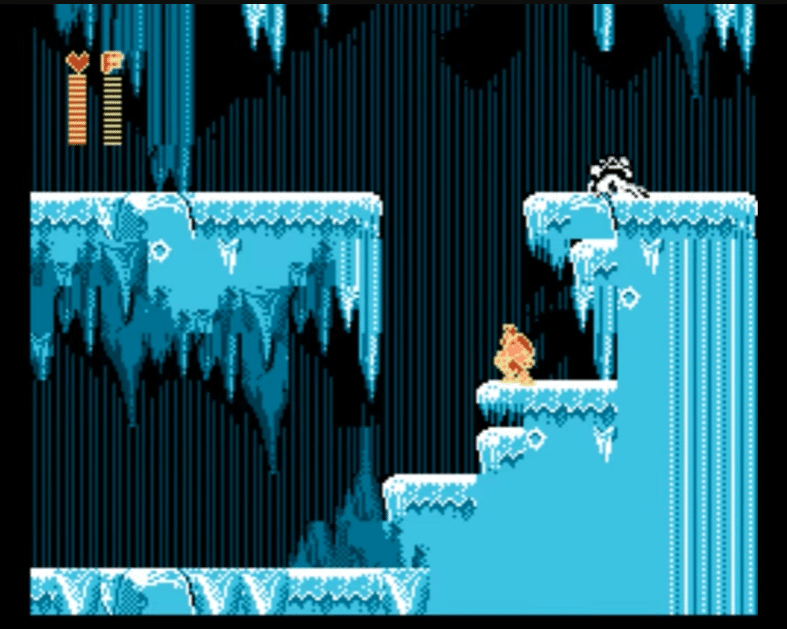
Let us be honest: if you are making a Star Wars console game in 1992 and you get to open on Hoth, you are already in better shape than most licensed games.
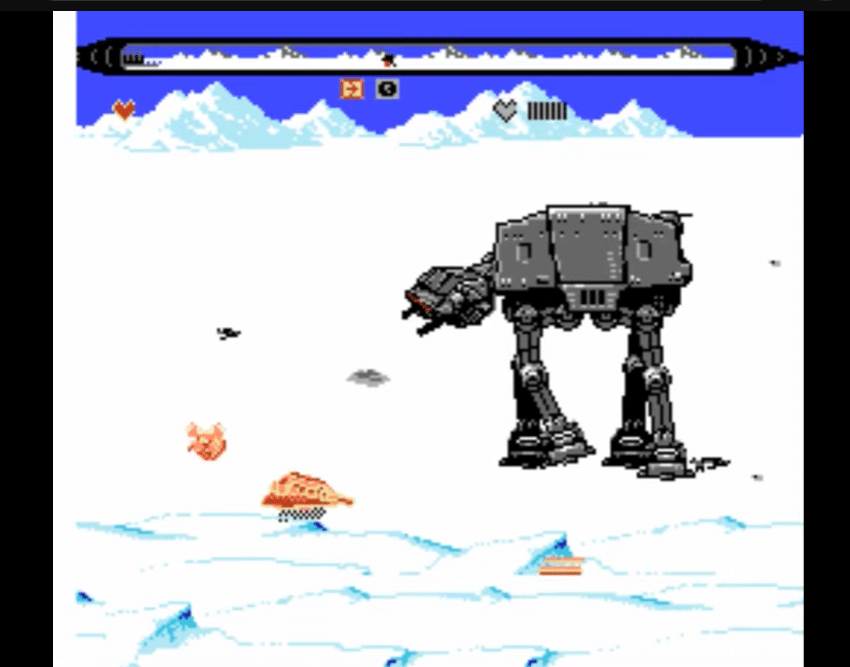
The opening material is exactly the sort of thing these games loved. You get snow, machines, urgency, and the broad feeling that the Empire has arrived to ruin everyone’s day with industrial efficiency. Game summaries and screenshots for the Game Boy version also confirm that the AT-AT battle made the cut, which would have been almost criminal to leave out.
This is one of the reasons the game is easier to like than it is to love. The ingredients are strong. The level fantasy is strong. The movie gives the developers a much richer set of environments than the previous game had. So even when the platforming or combat gets a little stiff, the game still keeps finding ways to remind you why Empire was such a good film to adapt in the first place. Snow trenches and walkers will cover a lot of sins.
It is still a platformer, which means the film gets “video game logic” again
One of the pleasures of revisiting these early-90s Star Wars console games is watching how shamelessly they translate cinema into game language.
That happens again here. Luke does not simply move through the film as it was shot. He moves through a version of the film that has been stretched, gamified, and occasionally made nastier because cartridges needed more game in them than a screenplay naturally provides. So yes, you will still deal with hazards, enemies, and detours that feel more “video game” than “Irvin Kershner.” That was the deal.
And honestly, this game wears that better than the first one did. Maybe because The Empire Strikes Back as a movie already feels like a series of escalating trials. Maybe because Luke training on Dagobah and getting battered across the galaxy fits the tone of an action game better than wandering around Tatooine ever did. Either way, the adaptation feels less like a movie awkwardly forced into platforming and more like a movie that can withstand some cartridge-era violence to its structure.
Dagobah and Bespin give it more personality than the first game
This is where the sequel benefits most from the source material.
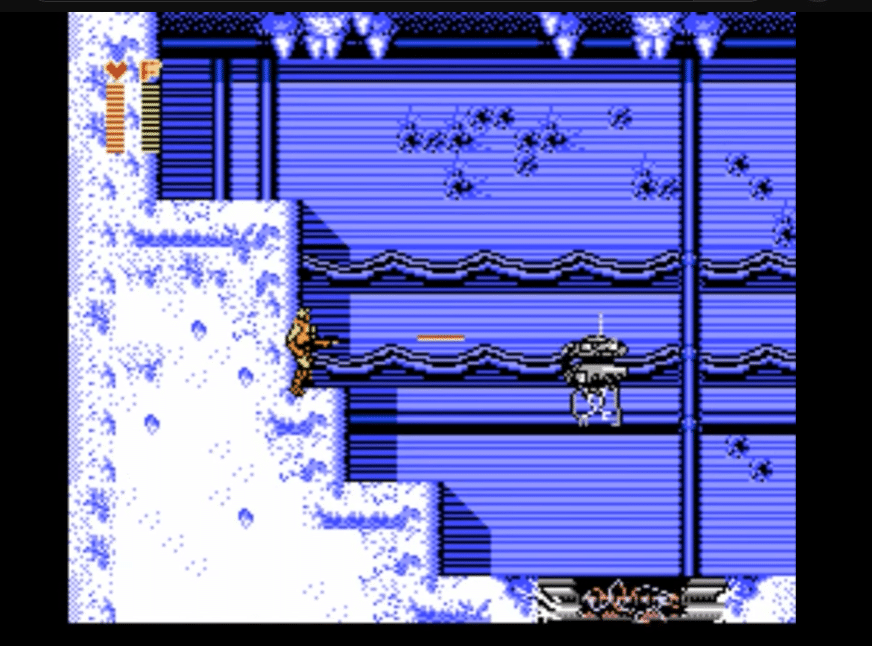
The first NES Star Wars game had memorable bits, but a lot of its early identity came from Tatooine being turned into a hostile obstacle course. The Empire Strikes Back (1992) gets to shift between much more distinct moods. Hoth gives you war and survival. Dagobah gives you eerie training-ground weirdness. Bespin and Cloud City give the game a cleaner, stranger sci-fi feel and eventually push you toward the inevitable confrontation with Vader.
That matters because variety buys a lot of goodwill in games like this. Even if the controls and moment-to-moment difficulty still carry that early-90s stiffness, the changing scenery and stronger dramatic beats keep the journey from feeling like one endless punishment corridor. It is still a hard Star Wars action game. It is just a hard Star Wars action game with better wardrobe changes.
The developers were already on their way to bigger things
There is an interesting historical footnote here too. The Wikipedia entry notes that after this game was completed, the developers were occupied making Super Star Wars for the Super NES, and that a comparable NES sequel covering Return of the Jedi was never produced. That matters because you can feel the technology and the market shifting under this game’s feet. It is still part of the NES/Game Boy line, but it is also standing right at the edge of the 16-bit era, where Star Wars adaptations were about to get louder, slicker, and more visually confident.
So in a way, The Empire Strikes Back (1992) is both a sequel and a last stand. It pushes the original NES idea forward, but it also feels like the point where that particular branch of Star Wars gaming had reached its natural ceiling. There was only so much more you could do with this kind of adaptation before the hardware itself started asking for bigger things.
The Game Boy version is the expected compromise
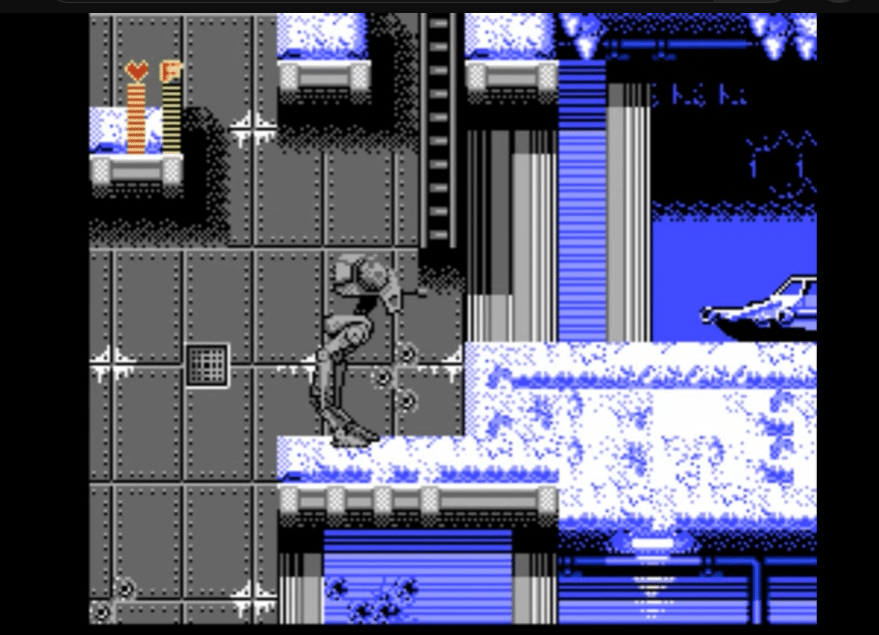
The Game Boy release followed, and like so many Game Boy adaptations of the era, it is easiest to describe as “the same general mission, now squeezed through a much smaller pipe.” Reliable listings place the Game Boy version in 1992 in Europe and January 1993 in North America, with Capcom as publisher on that platform.
That version is historically interesting because it shows how widely the Star Wars license was spreading across hardware by the early 1990s. But the NES version is still the main event here. That is the one people usually mean. The Game Boy version is more like supporting evidence that publishers were determined to make these film adaptations travel, even when it meant compressing them into a tiny monochrome screen and hoping the Force would handle the rest.
Reception was decent, but the legacy is more about memory than prestige
This is not one of those Star Wars games that sits on a golden throne in every retrospective. It is not X-Wing, it is not Dark Forces, and it is not one of the later critical darlings. But it is remembered, and that counts for something.
Part of that is because it continues a recognizable series identity from the 1991 game. Part of it is because Empire gives it stronger raw material. And part of it is simply because early-90s players remember these NES Star Wars games as games that had some real bite. They were not passive little film souvenirs. They made you work.
That kind of memory tends to outlast middling review scores anyway. Retro players do not always preserve the games that were objectively smoothest. They preserve the ones that left a mark. This one definitely did.
Why it matters in the archive
This is the important part.
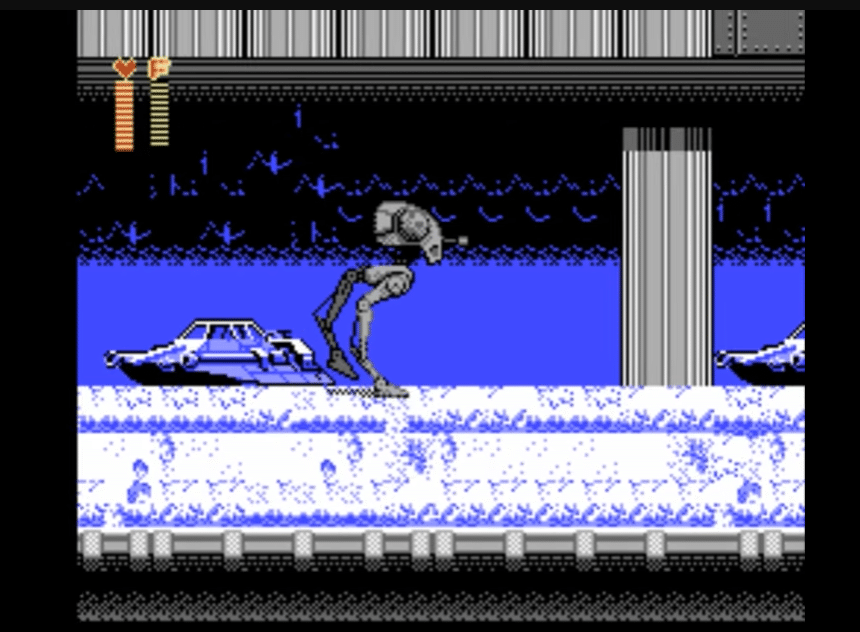
The Empire Strikes Back (1992) deserves a place in the archive because it shows Star Wars gaming becoming more structured as a 1990s console identity. After the smaller, stranger, and more fragmented experiments of the 1980s, this is one of the games that says: right, now we are doing full film adaptations as proper home-console action titles. Not elegantly, not gently, but with real commitment.
It also works beautifully as a follow-up to Star Wars (1991). The first game is the awkward beginning. This one is the refinement. Same broad design language, better film to adapt, stronger environments, more dramatic structure. It is not a revolution. It is the sequel that proves the first game was not a one-off accident.
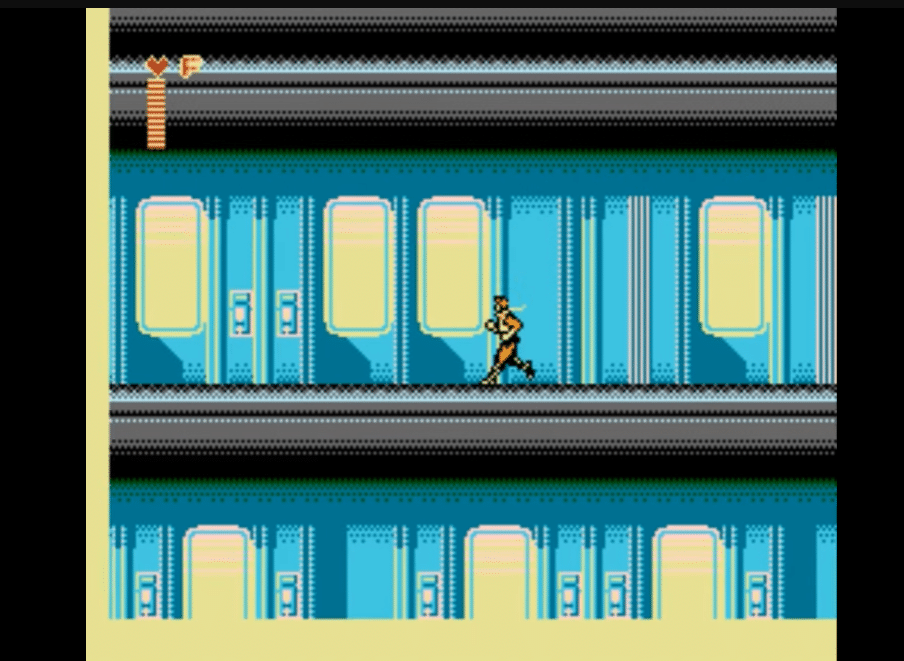
The view from Cloud City
There are better Star Wars games than The Empire Strikes Back (1992). Smoother ones. More beloved ones. Less determined to make your thumbs earn everything.
But it still matters because it sharpened an important early-90s Star Wars formula. It took the strange, hard, memorable console adaptation style of the first NES game and gave it stronger material, better pacing, and a much more naturally dramatic arc.
That is not the same as greatness.
It is, however, very solid Star Wars history.
FAQ
What is Star Wars: The Empire Strikes Back (1992)?
It is an action-platform game based on the 1980 film, released on the NES in 1992 and later on the Game Boy.
Who developed The Empire Strikes Back (1992)?
The NES version is credited to Lucasfilm Games and Sculptured Software, while the Game Boy version is credited to NMS Software.
What platforms was it released on?
It launched on the Nintendo Entertainment System and later appeared on the Game Boy.
What parts of the film does the game cover?
The game includes sections based on Hoth, Echo Base, Dagobah, Bespin, and Cloud City, along with encounters involving Boba Fett and Darth Vader.
Was there a NES Return of the Jedi sequel after this?
No. After this game, the developers moved on to Super Star Wars for the SNES, and a matching NES Return of the Jedi sequel was not made.
Why is The Empire Strikes Back (1992) worth revisiting?
Because it is an important early-90s Star Wars console sequel that refined the strange, tough film-adaptation formula established by Star Wars (1991).