
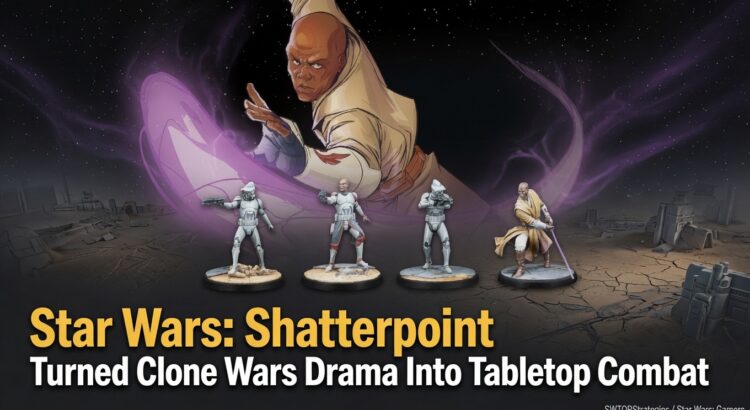
On June 2, 2023, Star Wars: Shatterpoint launched with a very clear idea: Star Wars tabletop battles did not always need to be massive wars. Sometimes, they just needed Anakin, Ahsoka, Maul, Obi-Wan, clones, droids, and one extremely dramatic objective in the middle of the board. Atomic Mass Games describes Star Wars: Shatterpoint as a character-focused, fast-paced miniatures skirmish game built around high-stakes personal confrontations between iconic heroes and villains. That is the key difference. This was not trying to replace Star Wars: Legion as the big battlefield game. It was chasing a different fantasy: the close-up duel, the squad clash, the emotional fight where every move feels like a scene. Clone Wars Energy on the Table From the start, Shatterpoint leaned heavily into the Clone Wars era, which makes sense. That period is basically built for this kind of game. Anakin versus Dooku. Ahsoka surrounded by clones. Maul causing…
Gaming history
On This Day: Star Wars Galaxies: The Total Experience Released in 2005
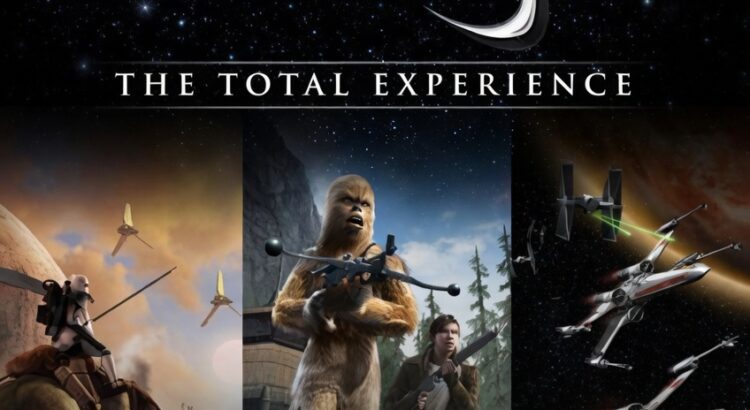
On June 1, 2005, Star Wars Galaxies: The Total Experience arrived with a title that was almost comically confident. The total experience. Not “a few missions.” Not “a quick Jedi fantasy.” Not “press start and save the galaxy before dinner.” This was the MMO-era promise in one box: step into Star Wars, pick a role, join a world, and try to find your place somewhere between cantinas, crafting halls, player cities, blaster fights, creature hunts, and the eternal question of whether becoming a Jedi should be a dream or a spreadsheet. And honestly, that was very Star Wars Galaxies. Yesterday Was the Dream. Today Is the Box It Came In We already looked at why Star Wars Galaxies still represents a fantasy modern Star Wars games keep chasing: the idea of living inside the galaxy instead of just saving it. The Total Experience is interesting because it tried to package…
Star Wars 1313 Was Revealed 14 Years Ago, and It Still Haunts Star Wars Gaming
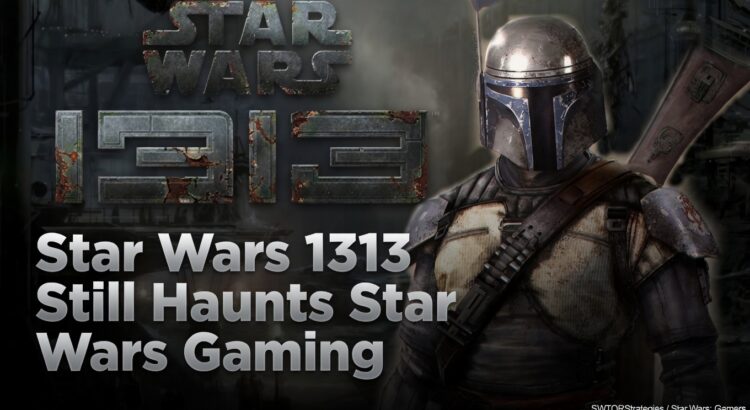
Some cancelled games disappear. Star Wars 1313 did the opposite. It never came out, but somehow it still feels like one of the most famous Star Wars games of the last decade. Revealed in 2012, Star Wars 1313 promised a darker, grittier trip into the Coruscant underworld. No Jedi fantasy. No chosen-one glow. No Force powers solving every problem. Just bounty hunters, crime, vertical city danger, and the kind of Star Wars setting that looked like it had not seen sunlight in years. That is probably why people still talk about it. The Star Wars Game That Looked Different At the time, Game Developer described Star Wars 1313 as a darker and more mature take on the franchise, built around a bounty hunter investigating a criminal conspiracy beneath Coruscant. That pitch still sounds painfully good. It was not trying to retell a movie. It was not asking players to become…
Super Star Wars: The Empire Strikes Back Was SNES Star Wars at Its Most Bruta
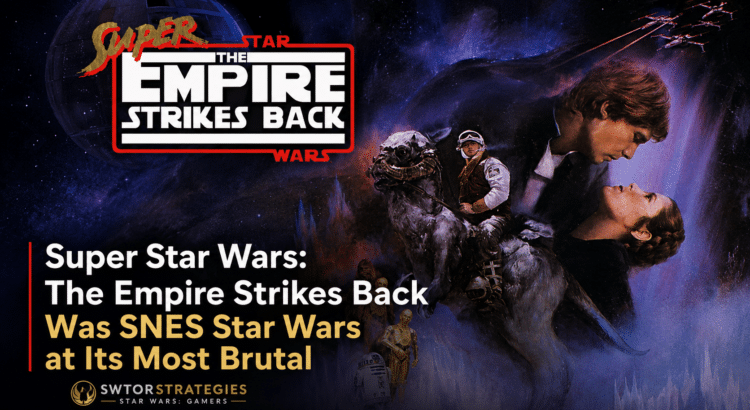
Some Star Wars games gently invite you into the galaxy. Super Star Wars: The Empire Strikes Back kicked the door open, threw you onto Hoth, and started blasting before you had time to ask where the health pickups were. Released for the Super Nintendo in 1993, the game remains one of the most gloriously punishing entries in the long history of Star Wars gaming. It took the darkest chapter of the original trilogy and turned it into fast, loud, side-scrolling chaos full of blaster fire, platforming, boss fights, vehicle sequences, and absolutely no concern for your blood pressure. In the wider complete history of Star Wars games, it stands as a perfect example of early console Star Wars: ambitious, dramatic, slightly unfair, and very willing to hurt you. The Empire Struck Hard on SNES The Super Star Wars trilogy did not adapt the films quietly. These games took familiar movie…
Star Wars: The Empire Strikes Back (1992): The Sequel That Made the NES Star Wars Games Meaner
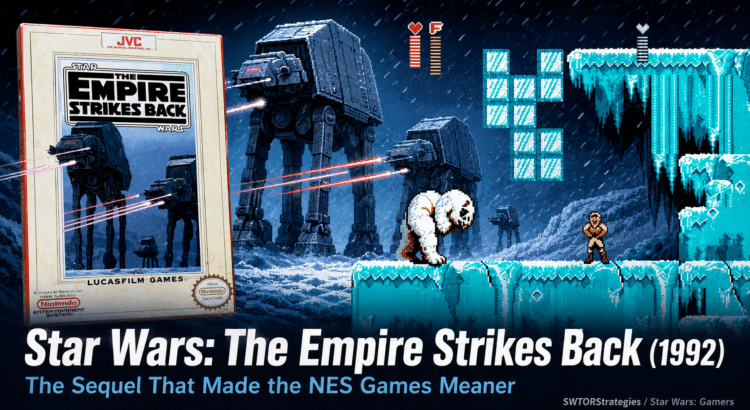
If Star Wars (1991) took A New Hope and turned it into a weird, hard platformer with a surprisingly personal grudge against the player, then The Empire Strikes Back (1992) looked at that formula and decided it needed more snow, more punishment, and a slightly darker mood. That was not a terrible instinct. Based on the 1980 film, the game launched on NES in 1992 and later came to Game Boy, with the NES version credited to Lucasfilm Games and Sculptured Software, and the Game Boy version credited to NMS Software. As part of our Complete List of All Star Wars Games Ever Made (1979–Present), this one matters because it continues a very specific and very early-90s idea of what Star Wars should feel like on home hardware. It also sits naturally in the Star Wars Games (1990–1999) hub, right after Star Wars (1991), because together they form a sort…
Attack of the Clones on GBA Was Peak Early-2000s Star Wars Tie-In Chaos
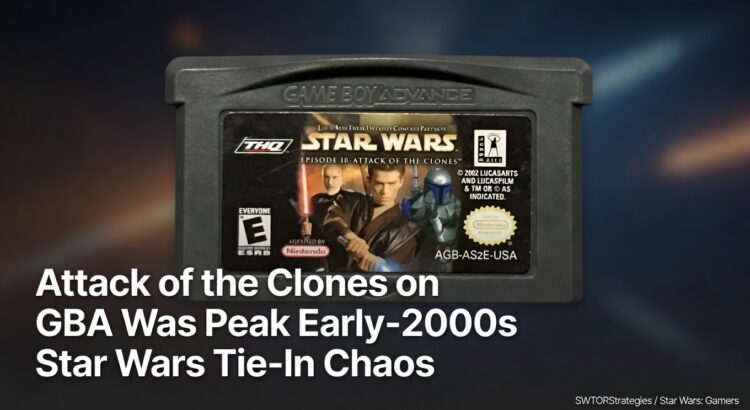
Not every Star Wars game becomes a classic. Some become legends. Some become cautionary tales. And some become tiny Game Boy Advance cartridges trying very hard to squeeze an entire blockbuster movie into your hands. Released during the busy 2002 wave of prequel-era Star Wars gaming, Star Wars: Episode II: Attack of the Clones for Game Boy Advance is a perfect little artifact from the wild age of movie tie-in games. Was it the definitive interactive version of Episode II? No. Was it extremely 2002? Absolutely. When Every Big Movie Needed a Handheld Game The early 2000s were a different galaxy for licensed games. If a major movie landed in theaters, a handheld tie-in was almost guaranteed to follow. Sometimes those games were surprisingly good. Sometimes they felt like a developer had been handed a poster, a deadline, and a very nervous thumbs-up from marketing. Attack of the Clones on…
Star Wars (1991): The Game That Made A New Hope Weird, Hard, and Weirdly Memorable
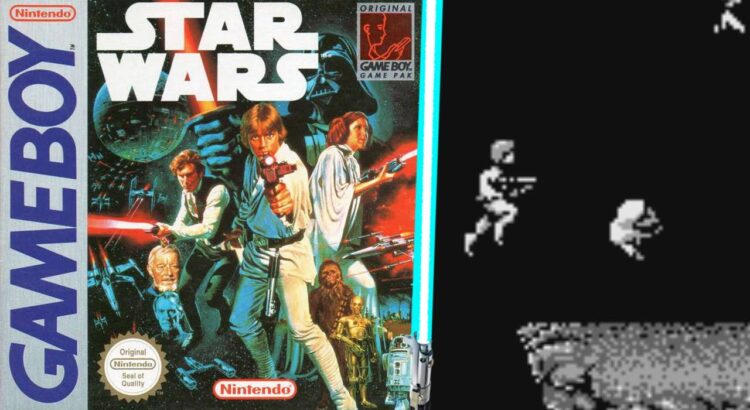
There are Star Wars games that feel elegant. Clean. Heroic. Cinematic. And then there is Star Wars (1991), which looks at A New Hope and decides the best way to honor one of the most beloved films of all time is to make Luke Skywalker jump over bottomless pits, fight a surprising amount of hostile wildlife, and occasionally take on giant enemies that feel like they wandered in from a different genre entirely. And somehow, against all odds, that version of Star Wars stuck. Released in 1991 for the NES and later adapted for the Game Boy in 1992, this was one of the first really visible Star Wars console action games of the 1990s. It was published by JVC Musical Industries and developed by Beam Software, taking the broad story of A New Hope and reshaping it into a side-scrolling action-platformer that was much stranger, harder, and more game-y…
Battlefront II’s Siege of Kamino Update Still Feels Like a Turning Point
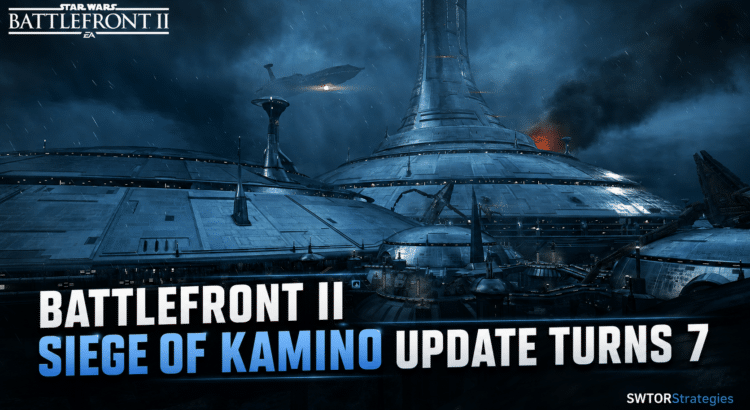
Seven years ago, Star Wars Battlefront II got one of those updates that quietly says a lot about where the game was heading. The Siege of Kamino Update did not add a giant new era, a headline-grabbing hero, or a cinematic trailer that made everyone lose their minds for three days. Instead, it did something more important for the actual people still playing: it made the game feel more complete, more social, and more tuned to what the community had been asking for. Released in May 2019, the update brought Kamino – Cloning Facility to Capital Supremacy, added the in-game Voice Lines Wheel for heroes, raised the level cap for all units to 1000, and adjusted Heroes vs. Villains after removing the old target system. That may sound like patch-note soup. It was not. It was one of the updates that helped turn Battlefront II from a game people argued…
Vader Immortal Episode I Made Darth Vader Feel Too Close for Comfort
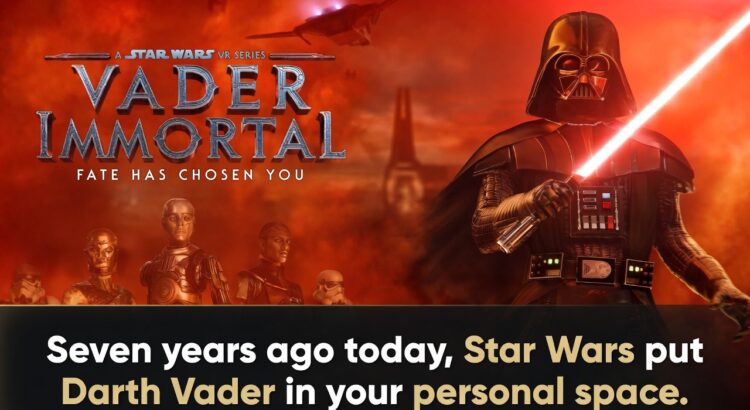
Seven years ago today, Star Wars put Darth Vader in your personal space. Released on May 21, 2019, Vader Immortal: Episode I launched alongside the Oculus Quest and gave Star Wars gaming one of its strangest experiments: a canon VR story built less around “beating” Darth Vader and more around surviving the deeply unpleasant experience of standing near him. That sounds like a small thing. It was not. Because in VR, Vader is not just a character on a screen. He is tall. He is close. He is breathing. And suddenly, all those jokes about Imperial workplace culture feel much less funny when the office manager is eight feet of black armor and unresolved trauma. A Star Wars Story Built for Presence Developed by ILMxLAB, Vader Immortal was structured as a three-part VR adventure set on Mustafar. Episode I introduced players as a smuggler pulled into Vader’s orbit, with ancient…
The Empire Strikes Back Turns 46, and Hoth Still Owns Star Wars Gaming
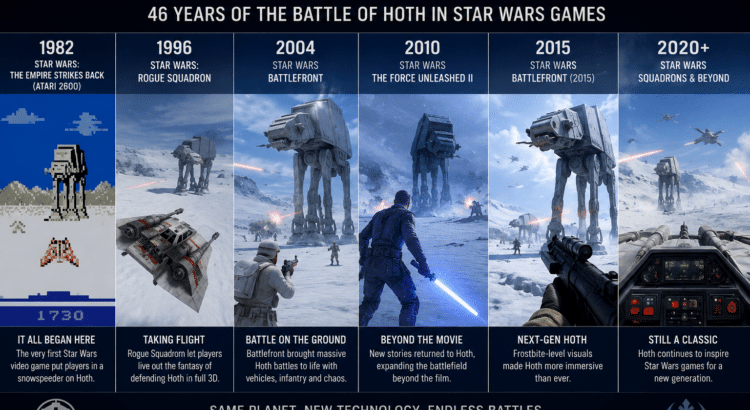
The Empire Strikes Back turns 46 today, and somehow Hoth is still doing unpaid overtime in Star Wars games. Released in the United States on May 21, 1980, The Empire Strikes Back did more than make Star Wars darker, colder, and emotionally meaner. It gave the franchise one of its most endlessly reusable gaming scenarios: Rebel snowspeeders versus Imperial AT-AT walkers on a frozen battlefield. That sequence is so clean, so readable, and so instantly interactive that it basically arrived pre-packaged as a video game level. Big walkers.Small ships.A generator to defend.Tow cables.Lasers.Snow.Panic. What more does a game designer need? Hoth Was Star Wars Gaming Before Star Wars Gaming Knew Itself The first licensed Star Wars video game was Star Wars: The Empire Strikes Back, released by Parker Brothers for the Atari 2600 in 1982. And what was it about? Hoth, naturally. Players controlled Luke Skywalker in a snowspeeder, fighting…
Star Wars: Droids (1988): The Odd Little Cartoon Tie-In That Took Star Wars Somewhere Else
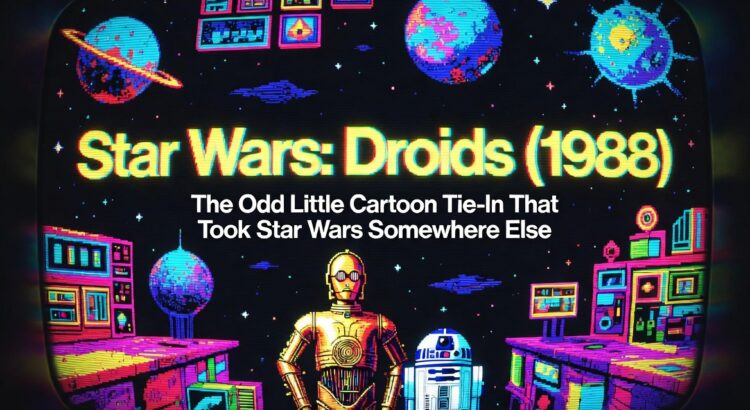
Not every Star Wars game begins with a trench run, a lightsaber, or an exploding space station. Some begin with R2-D2 and C-3PO wandering into another problem, which is more or less the permanent condition of their lives anyway. That is what makes Star Wars: Droids such an interesting little side road in the archive. Released in 1988 for the ZX Spectrum, Amstrad CPC, and Commodore 64, the game was published by Mastertronic Added Dimension and developed by Binary Design as a tie-in to the animated Droids series, also known as Star Wars: Droids – The Adventures of R2-D2 and C-3PO. As part of our Complete List of All Star Wars Games Ever Made (1979–Present), this is exactly the kind of title that deserves more attention than it usually gets. It also sits comfortably in the Star Wars Games (1979–1989) era, because it shows how strange and flexible Star Wars…
Revenge of the Sith Turns 21, and Its Games Hit Harder Than People Remember
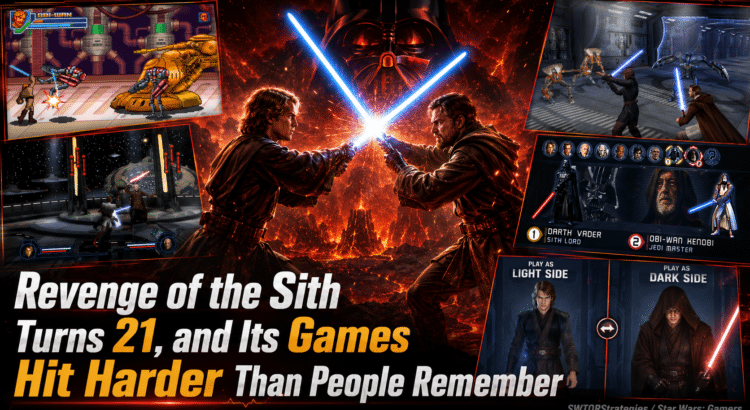
May 19 is not just The Phantom Menace day. Yes, Episode I arrived in theaters on this date in 1999 and kicked off a strange, messy, wonderfully experimental era of Star Wars games. But six years later, on May 19, 2005, Star Wars: Episode III – Revenge of the Sith arrived and gave that same prequel era its darker, louder, lava-soaked finale. This was the movie that finally did the thing everyone knew was coming: it broke Anakin Skywalker. The film was heavier, angrier, and far less interested in being cheerful than parts of the prequel trilogy had been before it. Jedi died. The Republic collapsed. Padmé cried. Obi-Wan developed the look of a man who had just watched twenty years of institutional failure catch fire on Mustafar. But Revenge of the Sith did not just land as a movie. It hit Star Wars gaming at exactly the right moment….
How The Phantom Menace Launched the Weirdest Era of Star Wars Games
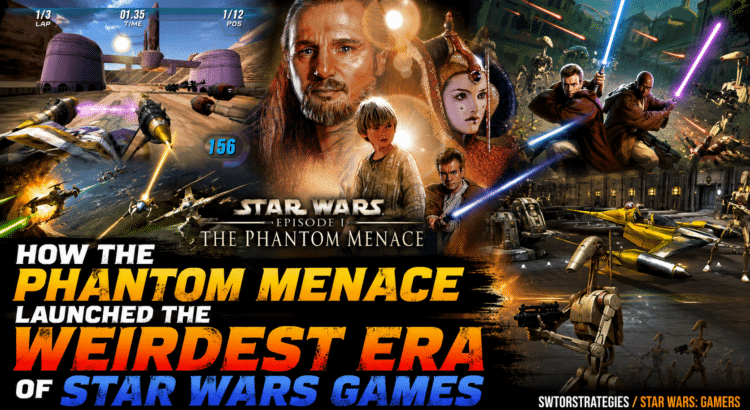
On May 19, 1999, Star Wars: Episode I – The Phantom Menace arrived in theaters and detonated like a merchandised thermal bomb. The film itself is still debated, memed, defended, roasted, rewatched, and quoted with suspicious enthusiasm. But for Star Wars gaming, The Phantom Menace did something far more important than introduce midi-chlorians and senate procedure to a confused generation. It opened the floodgates. The prequel era gave LucasArts a new toybox: podracers, Naboo starfighters, battle droids, Gungan battlefields, Sith assassins, Republic cruisers, bounty hunters, clone armies, Jedi starfighters, and planets that did not look like the same three Original Trilogy backdrops wearing different hats. And the games got weird. Gloriously weird. The Movie Was Only the Beginning The gaming push started immediately. Star Wars: Episode I – Racer launched for Nintendo 64 and Windows right as the film hit theaters, turning the podrace into one of the fastest and…
On This Day: Star Wars Episode I: Racer Made Podracing Feel Impossible Fast
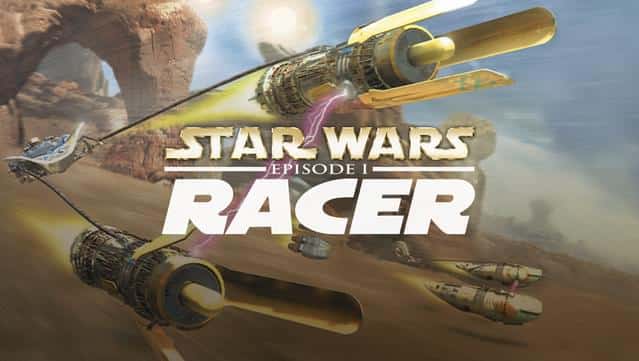
Before Star Wars racing became nostalgic, it was just fast enough to make your childhood reflexes file a formal complaint. On May 18, 1999, Star Wars: Episode I – Racer launched in North America for Nintendo 64 and Windows PC, arriving right alongside the Phantom Menace hype machine. It took one of the most kinetic sequences in the movie — the Boonta Eve Classic podrace — and turned it into a full racing game that somehow felt faster than the film itself. That was the magic trick. A lot of movie tie-in games in the late ‘90s felt like merchandise with a health bar. Episode I: Racer felt like LucasArts had looked at the podrace scene and said: “What if this was the whole game, but louder, faster, and more likely to make your palms sweat?” Podracing Finally Had Its Game The concept was wonderfully simple: choose a podracer, survive…
Star Wars: Return of the Jedi: Ewok Adventure — The Weird Lost Star Wars Game That Should Not Be This Interesting
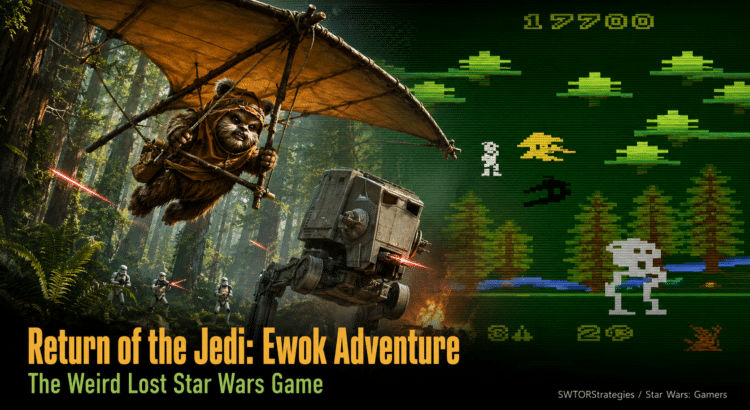
There are cancelled games that sound boring the second you describe them, and then there are cancelled games that make you stop, blink, and say: hang on, they were going to let us play as an Ewok in a hang glider? That is Star Wars: Return of the Jedi: Ewok Adventure. Planned in 1983 for the Atari 2600, developed by Atari Games for publication by Parker Brothers, Ewok Adventure never made it to store shelves, even though the game was reportedly completed. It later became one of those fascinating lost corners of Star Wars gaming history — the kind of title that sounds half ridiculous, half brilliant, and somehow ends up being both. As part of our Complete List of All Star Wars Games Ever Made (1979–Present), this is exactly the kind of side road worth stopping for. It also fits naturally beside our recent looks at The Empire Strikes…
On This Day: Star Wars Celebration Europe 2016 Put Gaming Front and Center
There was a moment in 2016 when Star Wars gaming looked like it was absolutely everywhere. On May 17, 2016, StarWars.com announced that Star Wars video games would be coming to Star Wars Celebration Europe 2016 in London — and not as a tiny side booth hidden somewhere near the emergency exit. The official announcement promised Star Wars Battlefront, LEGO Star Wars: The Force Awakens, Star Wars: Commander, Star Wars: Galaxy of Heroes, Star Wars: The Old Republic, and Star Wars: Force Collection at the event. StarWars.com even called it the highest volume of gaming content in Celebration history. Ten years later, that line hits a little differently. A Very 2016 Star Wars Gaming Snapshot The lineup is almost a time capsule. Star Wars Battlefront was still the big modern console shooter, carrying EA’s first major post-Disney Star Wars gaming push. LEGO Star Wars: The Force Awakens was turning the…
On This Day: Star Wars Outlaws Let Hondo Ohnaka Steal the Show
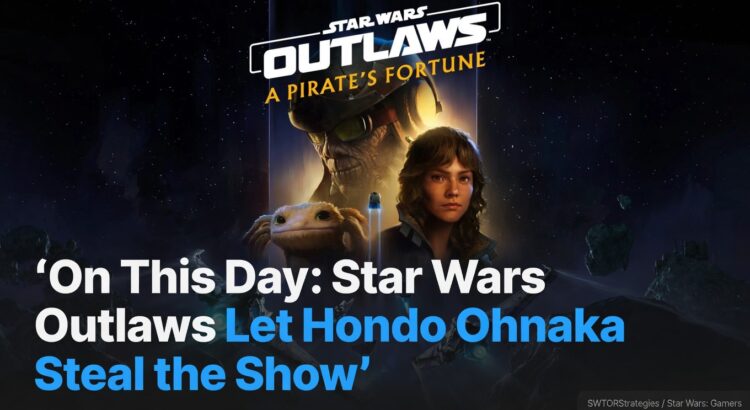
One year ago today, Star Wars Outlaws remembered an important truth: every underworld story gets better the moment Hondo Ohnaka walks in and starts smiling like a crime is already happening. Star Wars Outlaws: A Pirate’s Fortune released on May 15, 2025, as the game’s second story pack, bringing Kay Vess and Nix into a new pirate-flavored adventure with the galaxy’s most charmingly untrustworthy Weequay. Steam lists the DLC with a May 15, 2025 release date, while Ubisoft described it as a new story expansion centered on Hondo, hidden treasure, and the dangerous Khepi system. (Steam, Ubisoft) Hondo Was Built for Outlaws The base game already had the right ingredients: syndicates, smuggling, betrayal, blaster trouble, and Kay Vess trying very hard to survive people with better funding and worse morals. Then A Pirate’s Fortune added Hondo Ohnaka, which is basically Star Wars turning the scoundrel dial until it breaks. According…
On This Day: Jedi Starfighter Still Deserves More Love
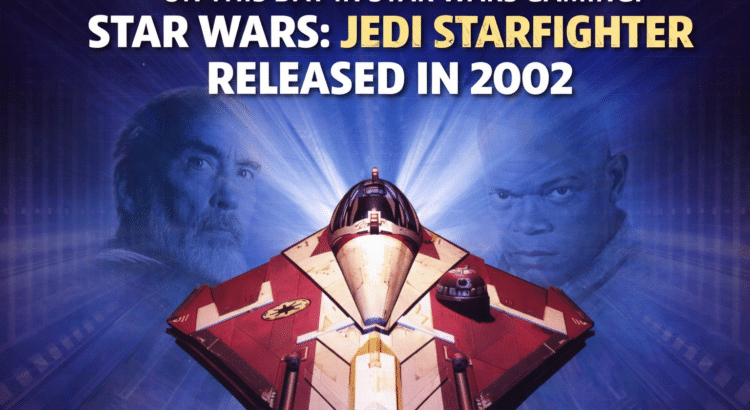
Before every Star Wars game needed a galaxy map, three progression systems, and a roadmap with seasonal feelings, LucasArts could casually drop a starfighter combat game and let players blast through the Clone Wars from a cockpit. That is basically the charm of Star Wars: Jedi Starfighter, which launched for Xbox around this week in May 2002, with GameFAQs listing the Xbox release date as May 13, 2002, while the current Xbox store lists it under May 14. Either way, this is very much a “happy anniversary, you slightly forgotten prequel-era space shooter” moment. And honestly? It deserves one. A Prequel-Era Flight Game With Actual Personality Released during the Attack of the Clones buildup, Star Wars: Jedi Starfighter put players into the cockpit of Adi Gallia’s Jedi starfighter while also bringing back Nym, the pirate from Star Wars: Starfighter. That combination gave the game a fun identity. It was not…
On This Day: Revenge of the Sith Put Darth Vader in Your Pocket
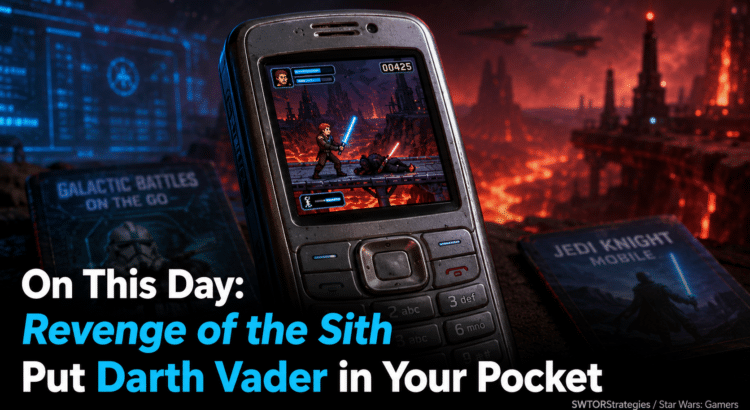
Before smartphones, app stores, and mobile games asking for your credit card every 11 seconds, Star Wars was already trying to squeeze the fall of Anakin Skywalker into your pocket. On May 11, 2005, Star Wars: Revenge of the Sith was released for ExEn mobile platforms in parts of Europe, according to MobyGames’ May 11 game history archive. It was not the big PlayStation 2 or Xbox version most players remember. It was the tiny, old-school mobile version — the kind of game designed for feature phones, small screens, stiff buttons, and heroic levels of thumb patience. And honestly? That makes it even more fascinating. A Sith Lord, But Make It Pocket-Sized The ExEn version of Star Wars: Revenge of the Sith was based on Episode III and turned the movie’s chaos into a compact action game. Players could control Anakin, Obi-Wan, Mace Windu, and Yoda across 12 levels inspired…
Return of the Jedi: Death Star Battle (1983): When Star Wars Games Were Still Built Around One Big Scene
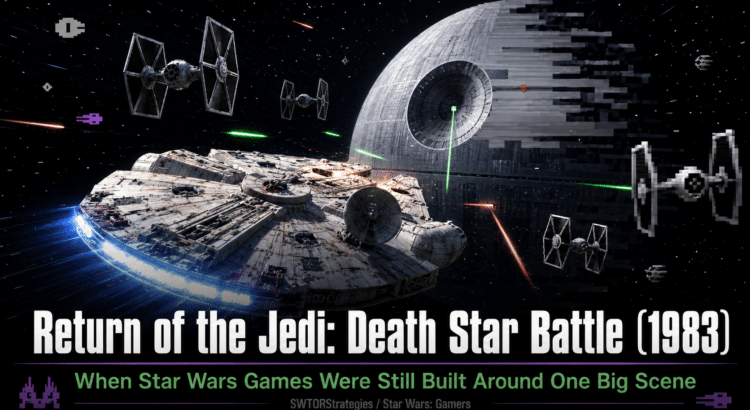
There is something very pure about early Star Wars games. They did not try to retell entire trilogies. They did not promise open worlds, branching morality, or a hundred hours of side content. Most of them just looked at one great movie moment and said, more or less, “Right, that bit. Let’s make that playable.” That is exactly what Return of the Jedi: Death Star Battle does. Released by Parker Brothers in 1983 for the Atari 2600, Atari 5200, and Atari 8-bit computers, and later bundled for the ZX Spectrum+ in 1985, it was one of the earliest Star Wars video games and the first one based on Return of the Jedi. And if The Empire Strikes Back (1982) showed how early home consoles could turn Hoth into a tiny, scrappy war, then Death Star Battle is the next logical step: same early-console ambition, same movie-to-game instinct, just with the…
The Empire Strikes Back (1982): The First Real Star Wars Game Was a Tiny Hoth War
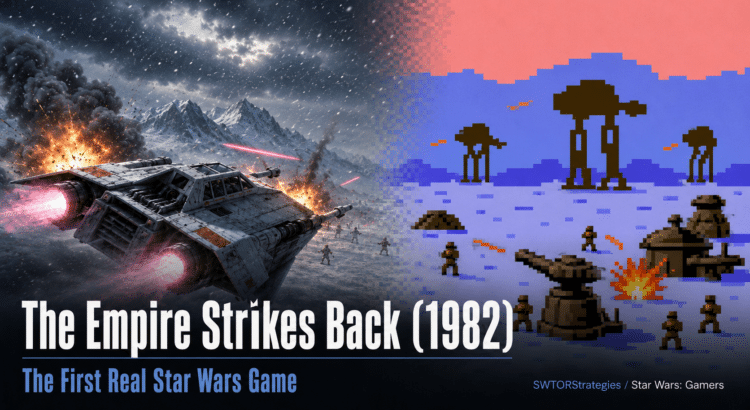
Before Star Wars games became sprawling RPGs, online sandboxes, or massive shooter franchises, they had to solve a much simpler problem: how do you squeeze one of the biggest sci-fi universes on Earth into a home console that could barely keep its own snowstorm together? The Empire Strikes Back for the Atari 2600 is one of the first answers to that question, and it is still a fascinating one. Released by Parker Brothers for the Atari 2600 in July 1982, with an Intellivision version following in 1983, the game is widely recognized as the first officially licensed Star Wars video game. It was programmed by Rex Bradford, based on the Battle of Hoth, and built around one very clean fantasy: you are in a snowspeeder, Imperial walkers are marching toward Echo Base, and your day is getting worse at speed. That makes it a perfect follow-up to Star Wars: The…
On This Day: EA’s Star Wars Deal Changed a Decade of Games
On May 6, 2013, Star Wars gaming changed overnight. Disney and Lucasfilm announced a major multi-year agreement with Electronic Arts, giving EA the keys to Star Wars games for the “core gaming audience.” At the time, the official Lucasfilm announcement framed it as an exciting new phase, with DICE, Visceral Games, and BioWare all attached to future Star Wars projects. In hindsight, it was not just a licensing deal. It was the beginning of an era — messy, controversial, occasionally brilliant, and impossible to ignore. The Deal That Replaced LucasArts The timing mattered. Disney had acquired Lucasfilm in 2012, and LucasArts’ days as a major internal game studio were effectively over. As WIRED reported at the time, EA would become the exclusive provider of Star Wars games for the core gaming market, while Disney kept certain rights for mobile, social, tablet, and online categories. That distinction would shape everything that…
On This Day: Revenge of the Sith Turned Star Wars’ Darkest Movie Into a Brutal Action Game
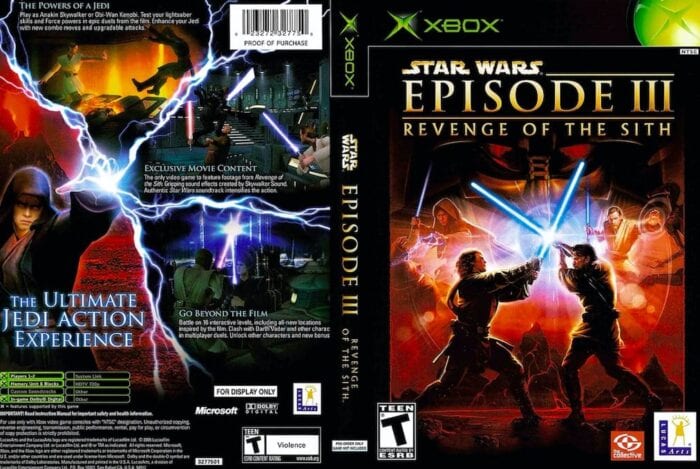
Before Revenge of the Sith reached theaters and emotionally ruined an entire generation of prequel kids, LucasArts let players swing the lightsaber themselves. On May 4, 2005, Star Wars: Episode III – Revenge of the Sith launched for PlayStation 2 in North America, according to MobyGames and GameFAQs listings, with the Game Boy Advance version also listed for the same date. The wider multi-platform rollout is often cited as May 5, but May the 4th gives the PS2 and GBA releases a perfect little Star Wars history stamp. A Movie Tie-In From the Last Great LucasArts Rush The early 2000s were a very different era for Star Wars games. LucasArts was still firing out titles with the confidence of a studio that owned half your childhood: Knights of the Old Republic, Republic Commando, Battlefront, Rogue Squadron, Jedi Knight, and then this — a full action-game adaptation of the final prequel…
Star Wars: The Arcade Game (1983): The Cabinet That Let You Blow Up the Death Star
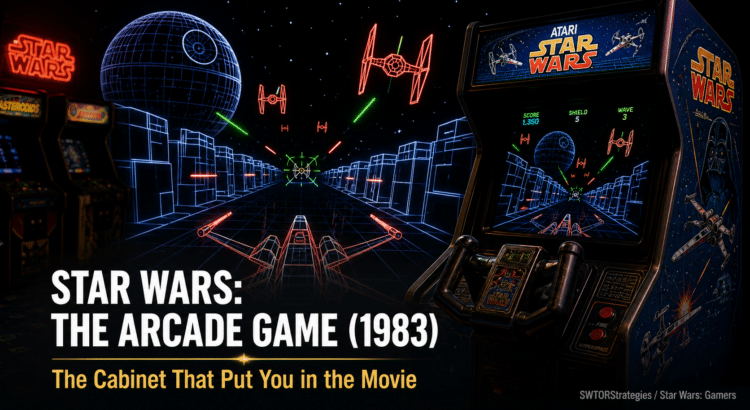
Before Star Wars games got big enough to swallow entire weekends, before they started chasing cinematic storytelling, RPG choices, or multiplayer wars with patch notes and balance drama, there was a much simpler fantasy: sit down, grab the controls, and blow up the Death Star yourself. That is the magic of Star Wars: The Arcade Game. Released by Atari in 1983, it turned the final act of A New Hope into a first-person vector-graphics shooter and, in the process, gave Star Wars one of its earliest true gaming classics. And this is exactly why it feels like the right next stop after Star Wars: Battle for Naboo (2000). That game showed how polished and expansive Star Wars vehicle combat had become by the N64 era. The Arcade Game shows the raw original spark: the point where Star Wars game design realized that “you are in the cockpit now” was already…